
filter_list Showing 3 results for "Colossus" close Clear
search
dashboard All 6 article culture 3museum exhibitions 2trending_up market 1
date_range Range Today This Week This Month All
Subscribe

roman sculpture

This article explores the rediscovery of Roman sculpture during the Renaissance and its profound influence on artists like Raphael, Donatello, Michelangelo, and Leonardo da Vinci. It details how Roman sculptors, inspired by Greek methods after the conquest of Greece in 146 B.C.E., created highly realistic works that served both artistic and political purposes, glorifying emperors and reinforcing imperial power. The piece highlights six iconic Roman sculptures—including the Equestrian Statue of Marcus Aurelius, the Colossus of Constantine, Trajan's Column, and the Augustus of Prima Porta—describing their historical context, artistic features, and enduring legacy.
Art on Location

The article introduces 'Art on Location,' a curated focus on outdoor art experiences, covering public art, sculpture parks, urban and rural artist trails, and location-specific technology. It highlights examples such as Caravaggio's Rome, John Constable's Dedham Vale, and public sculptures from the Colossus of Rhodes to Anish Kapoor's Cloud Gate. The piece also features a guide to all existing paintings by Leonardo da Vinci by expert Martin Kemp, a Vincent van Gogh artist trail by Martin Bailey, and discussions of exo-architecture, memorial art, land art, and virtual repatriation through location-specific technology.

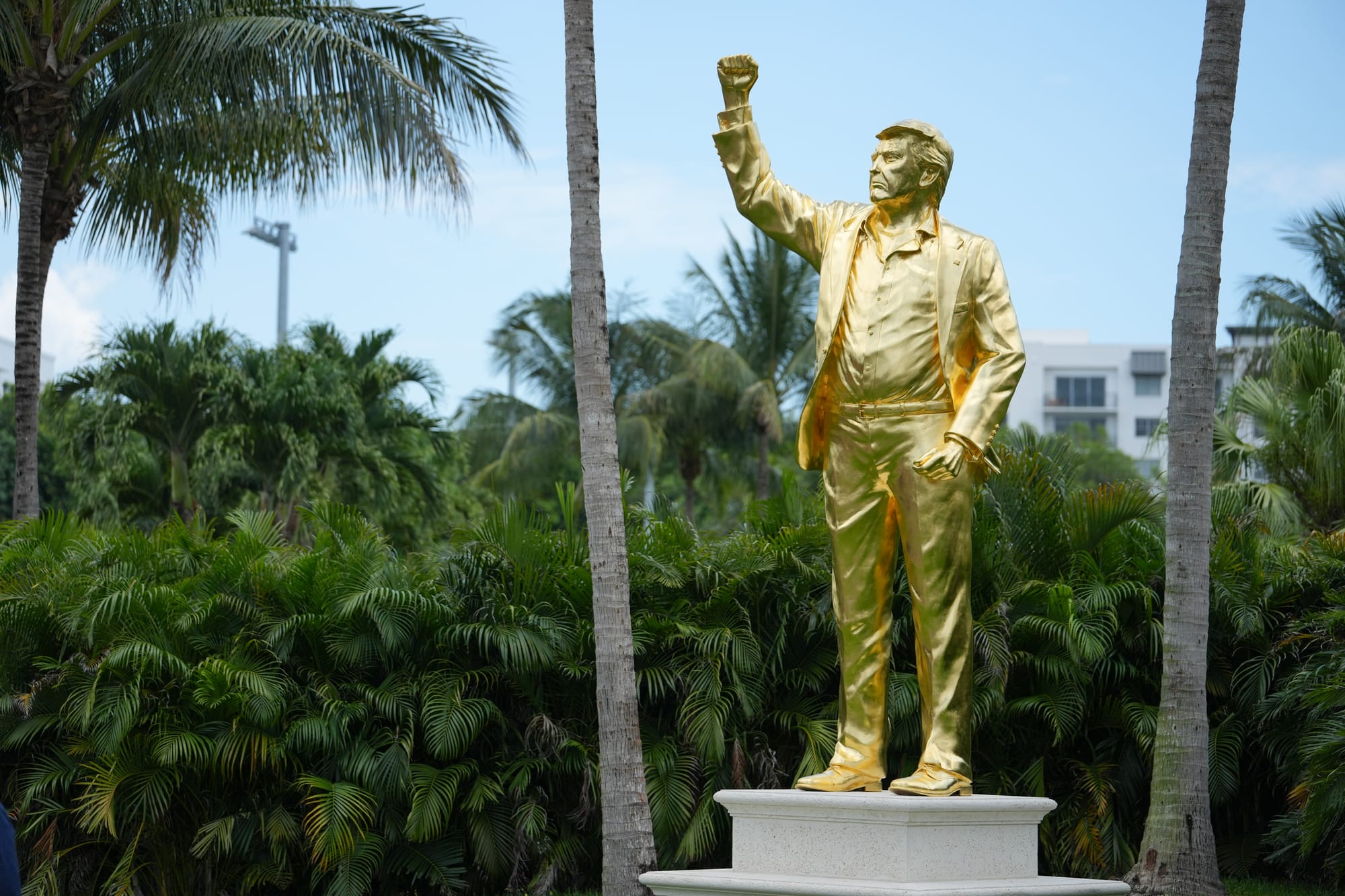
Genuflecting Before “Don Colossus”

A 15-foot-tall gold-leafed bronze statue of Donald Trump, titled "Don Colossus," was unveiled at his National Doral golf club in Miami, Florida, ahead of the G20 summit. The statue, funded by $450,000 raised by cryptocurrency moguls and sculpted by Alan Cottrill (founder of Four Star Pizza), depicts Trump raising a triumphant fist with a plaque reading "FIGHT, FIGHT, FIGHT!" The unveiling was organized by televangelist Mark Burns of "Pastors for Trump," who posted that the statue was "not a golden calf," and was attended by evangelical Christian leaders and reportedly some Hassidic rabbis.