
filter_list Showing 3 results for "Entanglements" close Clear
search
dashboard All 25 museum exhibitions 13article culture 3trending_up market 3article news 3person people 2rate_review review 1
date_range Range Today This Week This Month All
Subscribe

Global Art Biennials: Renovation, Revelation—or Repetition?

The article examines the current state of global art biennials, arguing that recent controversies—such as the 2022 documenta antisemitism crisis and geopolitical tensions at the 61st Venice Biennale—reveal these exhibitions as deeply politicized platforms rather than neutral cultural events. It highlights how juries and curators have introduced geopolitical criteria, and cites ongoing debates in Artforum (April 2026) featuring voices like Daniel Birnbaum, Michelle Grabner, and Adam Szymczyk, who diagnose visible tensions but overlook deeper structural conditions.

art bites michelangelo military fortifications

Michelangelo, best known for masterpieces like the Sistine Chapel ceiling and the Pietà, also served as the governor and procurator general of fortifications for Florence in 1529, tasked with designing military defenses against the Medici family. After the Medici were expelled in 1527, Michelangelo joined the "Nine of the Militia" committee, but his overly complex drawings were so impractical that almost none were built. The Medici, backed by Pope Clement VII, successfully besieged Florence in 1529–30, forcing Michelangelo into hiding in a secret chamber beneath the Medici Chapel, where he drew figurative works rediscovered in 1975. He was eventually pardoned and went on to create major commissions like the tomb of Pope Julius II and The Last Judgement, but left Florence for Rome in 1534.

Arts of Oceania

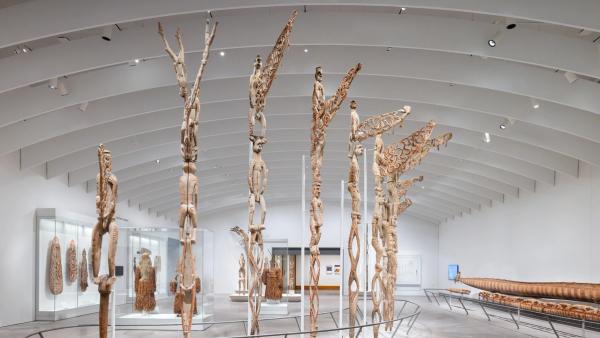
The article explores the rich artistic traditions of Oceania, emphasizing how the vast network of islands and ocean passageways fostered a dynamic exchange of cultures, materials, and ideas over millennia. It describes Oceanic art as vessels for metaphysical journeys, with objects like fishhooks, stick charts, and carved figures serving as tangible expressions of ancestral power and cultural knowledge. The text highlights the role of artists as chiefs and orators who manipulate local materials to manifest spirits, and traces the region's entanglements with European colonial powers from the sixteenth century onward.