filter_list Showing 14 results for "Institutional Critique" close Clear
search
dashboard All 22 museum exhibitions 14rate_review review 3article culture 1candle obituary 1person people 1article news 1article local 1
date_range Range Today This Week This Month All
Subscribe

MONUMENTS at MOCA and The Brick

The article reviews the exhibition "MONUMENTS" held at both MOCA (Museum of Contemporary Art, Los Angeles) and The Brick, as covered by Contemporary Art Review LA. The review, written by Qingyuan Deng, appears in Issue 43 (February 2026) of the publication, which also features other reviews, interviews, and essays on topics ranging from olfactory art to tarot and video art.

6 Rising Artists to Watch at This Year’s Venice Biennale

The article profiles six rising artists at the 2026 Venice Biennale, focusing on Sung Tieu and Gala Porras-Kim. Tieu transforms the German Pavilion with a tile shell recreating a former housing complex for Vietnamese contract workers, while inside she scatters chocolate ladybugs as a symbol of occupation. Porras-Kim presents work in the Arsenale examining 'institutionally defined damage' and how decay can realign objects with their natural state.

No Hay Banda: Vandria Borari, Petra Feriancová, Karoliina Hellberg, and Sofia Silva, 29th May – 26th June 2026, CFA, Milan, Italy. Private View: 28th May 2026.

CFA in Milan presents "No Hay Banda," a group exhibition running from 29 May to 26 June 2026, featuring four international artists: Vandria Borari (Brazil/Germany), Petra Feriancová (Slovakia), Karoliina Hellberg (Finland), and Sofia Silva. The show brings together ceramicist and Indigenous activist Borari, whose work includes the Yupirungáwa series and the Fluid Forest project; Feriancová, a Slovak artist who represented the Czech and Slovak Pavilion at the 55th Venice Biennale; and Hellberg, a Finnish artist who recently won the Visual Artist Award from the Marcus Collins Memorial Fund. The private view is scheduled for 28 May 2026.

Maia Chao Performs the Museum

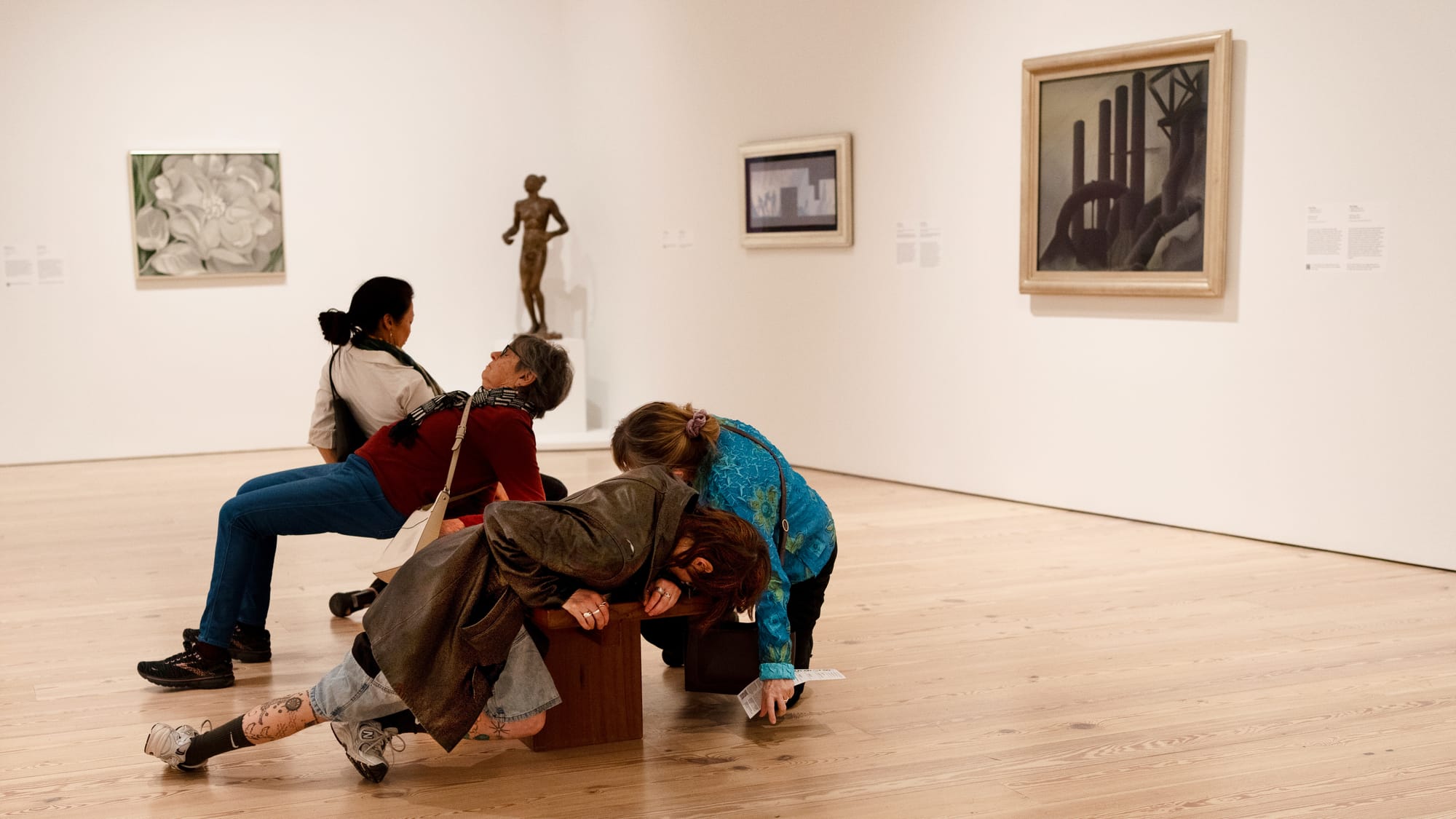
Artist Maia Chao will activate the seventh-floor galleries of the Whitney Museum of American Art with her performance "Being Moved" as part of the 2026 Whitney Biennial programming. The work explores the theatricality and choreography of a museum visit, examining the gap between the fantasy of profound encounter and the ambivalence of spectatorship. Chao, who studied cultural anthropology at Brown University and grew up with artist parents in Providence, Rhode Island, approaches the museum as a structure that quietly trains behavior and participation. Her earlier projects include "My Business (Cards)" (2017), which invokes Adrian Piper's work, and "Look at Art, Get Paid" (2015–20), which paid non-museum-goers to serve as guest critics.

The Carnegie International Makes Its Mark

The 59th Carnegie International opens in Pittsburgh, featuring 61 artists from around the world in the oldest survey of its kind in the United States. Critic Ed Simon reviews the exhibition, noting it captures the excitement of earlier editions while providing vital commentary on authoritarianism and militarism. In other news, activists protested Jeff Bezos's co-chair role at the Met Gala with a costumed action and guerrilla projections on his penthouse; Iran withdrew from its national pavilion at the Venice Biennale; MoMA PS1 announced the first US survey of Mexican artist Teresa Margolles; and Hakim Bishara reflects on MoMA's Marcel Duchamp exhibition.

A Poetic and Material Institutional Critique: Gala Porras-Kim at kurimanzutto and the Venice Biennale

UNA CRÍTICA INSTITUCIONAL POÉTICA Y MATERIAL: GALA PORRAS-KIM EN KURIMANZUTTO Y LA BIENAL DE VENECIA

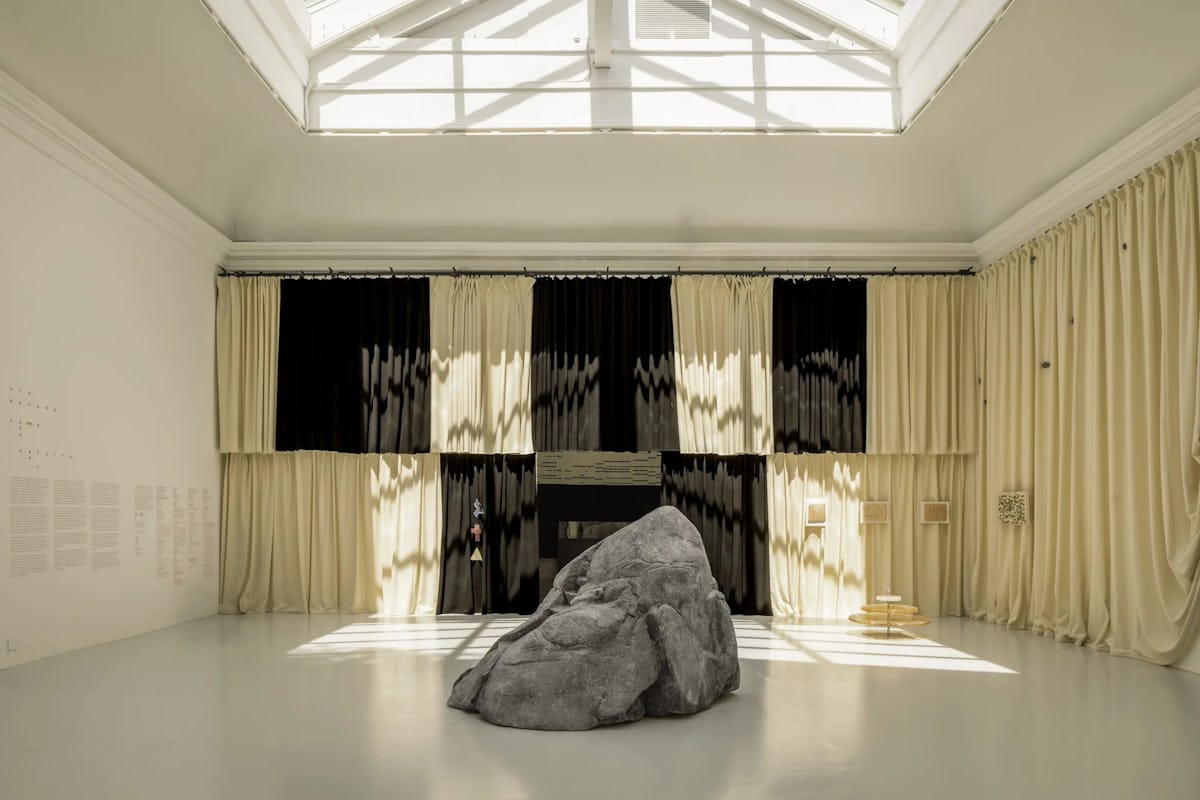
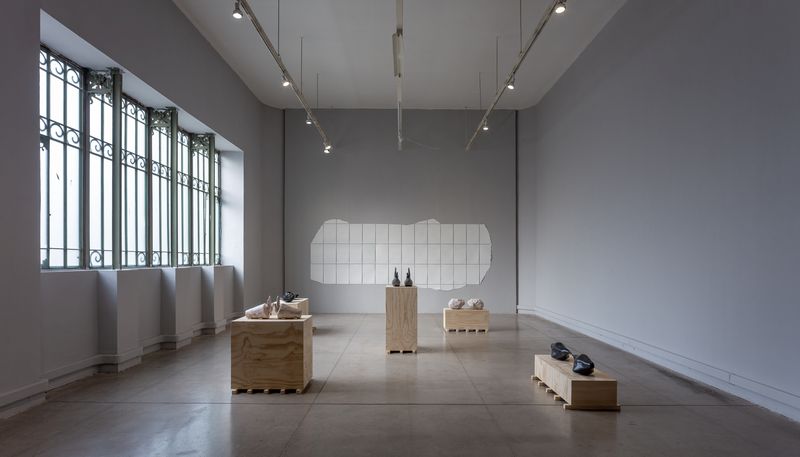
Colombian artist Gala Porras-Kim presents her first solo exhibition at kurimanzutto gallery in Mexico City, titled "Espacios del futuro replican los del pasado" (2026), alongside her participation in the 2026 Venice Biennale. The show critically examines how museum conservation protocols transform objects by detaching them from their original material, ritual, and spiritual contexts. Central to the exhibition is "The Motion of an Alluvial Record" (2024), a greenhouse that recreates the humidity and temperature of Yucatecan mangroves, allowing clay and sediment to shift continuously, resisting the linear, stratified time of Western archives and evoking cyclical Maya cosmologies. Another series, "Uprooted" (2026), reproduces fragments of looted Teotihuacan murals from Techinantitla, now held by the Metropolitan Museum of Art and the Ethnological Museum of Berlin, reinstalling them near the floor to restore their original architectural scale and orientation.

LA LECHUZA DE MINERVA

The Círculo de Bellas Artes in Madrid, founded in 1926 by a small group of artists, has launched a centenary exhibition titled "La lechuza de Minerva" (The Owl of Minerva). Curated by Isabella Lenzi, the project revisits the institution's most disruptive exhibition, "El sueño imperativo" (1991), curated by Mar Villaespesa, which invited twelve artists to intervene in both exhibition spaces and transit areas, challenging traditional display logic. The new exhibition features works by artists including Dagoberto Rodríguez, Elo Vega, Rogelio López Cuenca, Isidoro Valcárcel Medina, Itziar Okariz, Los Carpinteros, María Salgado, Pedro G. Romero, Regina Silveira, Silbatriz Pons, and Tino Sehgal, who activate hidden and unexpected corners of the building through visual and sound actions. The project also restores Nancy Spero's 1991 intervention "Minerva, Sky Goddess," which had largely disappeared, through archaeological research led by restorer Rocío Casasus.

Renée Green at Bortolami

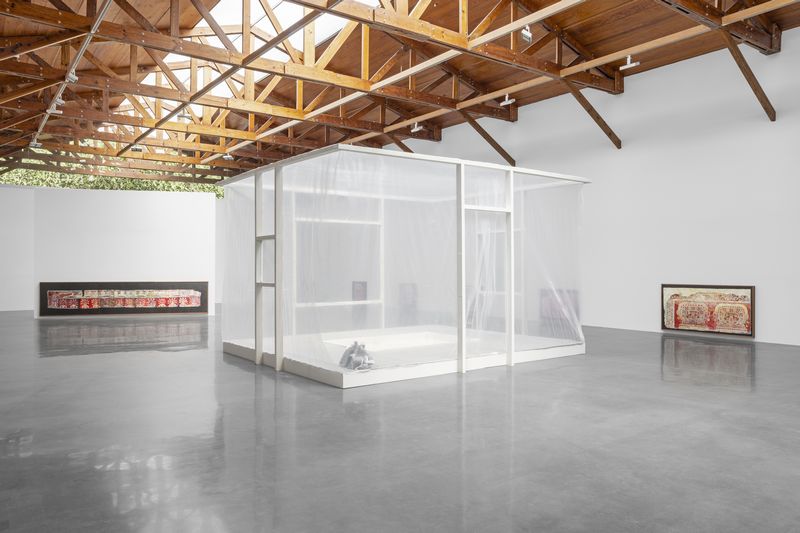
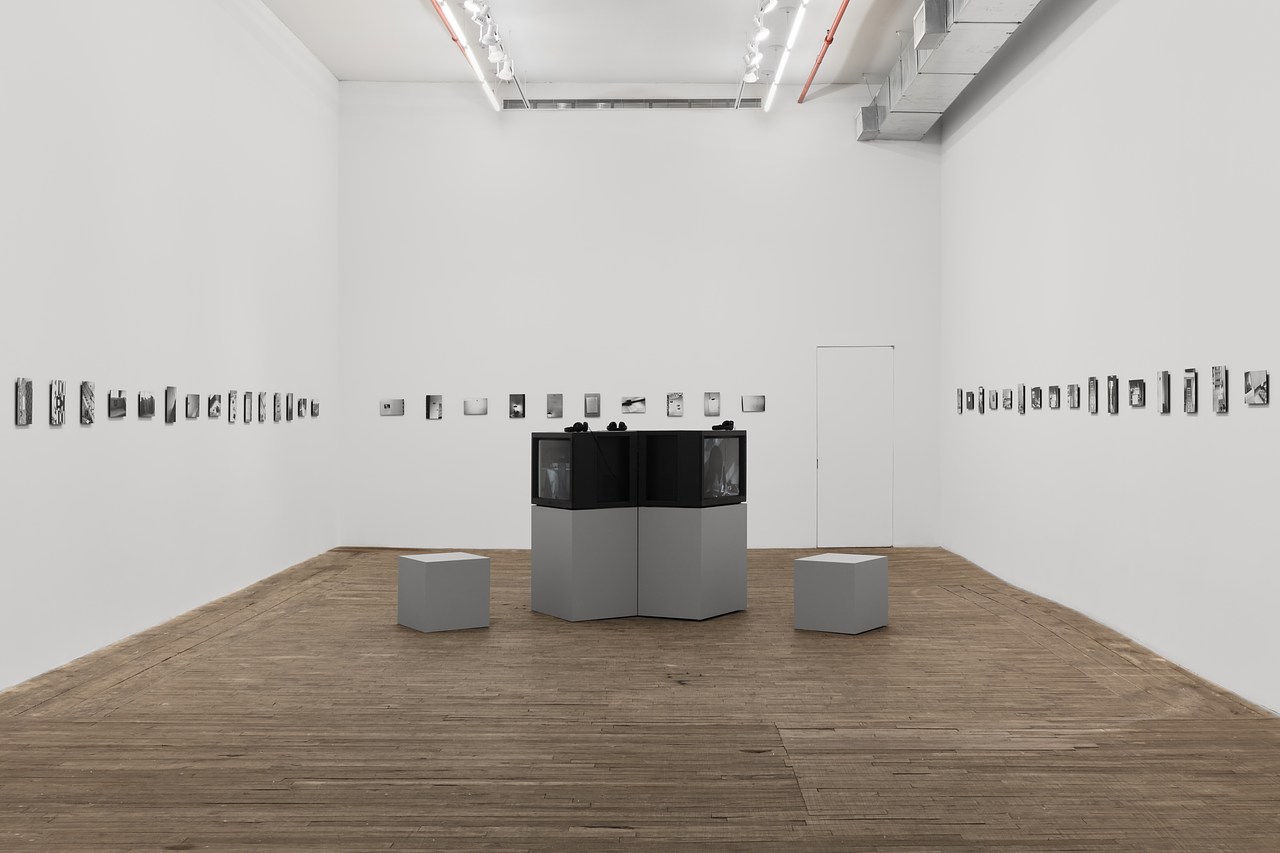
Renée Green presents her exhibition "Secret" at Bortolami gallery in New York, running from April 10 to May 16, 2026. The show features works by the artist, supported by Free Agent Media, with installation photography by Guang Xu.

Stano Filko “Painting” at Layr, Vienna

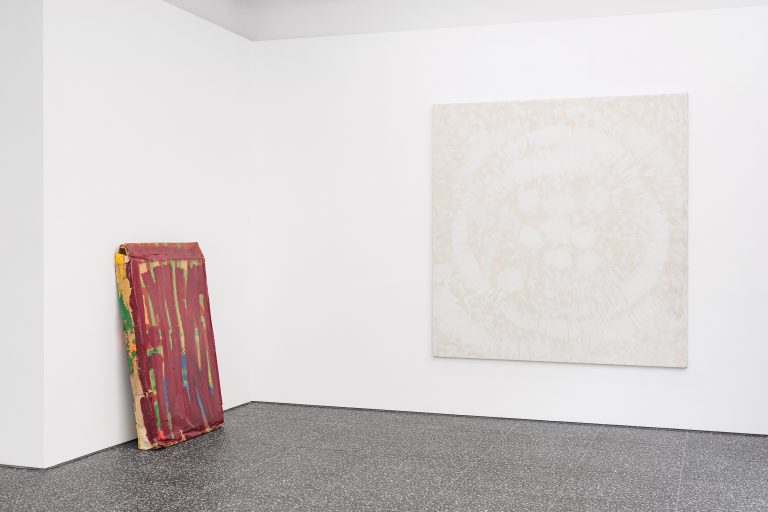
Stano Filko's exhibition "Painting" at Layr in Vienna challenges the persistent binary opposition between painting and conceptualism. The show presents Filko's work from around 1980, a period when debates over the merits of painting versus conceptual art were at their peak, offering a nuanced perspective that complicates this historical divide.

Sung Tieu on Representing Germany at the 61st Venice Biennale

Sung Tieu, who is co-representing Germany at the 61st Venice Biennale alongside Henrike Naumann, responds to a questionnaire from ArtReview about her plans for the German Pavilion. She describes her inspiration as her mother and childhood home, a site built for foreign contract workers in the GDR that later became a refuge for the diaspora. Tieu states that her work relates to the Biennale theme "In Minor Keys" through the lens of Gehrenseestrasse, a concrete record of collective memory. She also expresses skepticism about the Biennale's importance, noting that the German Pavilion's fascist architecture compels artists to work against it, and that national pavilions reveal how much work remains in undoing nationalism.

ON THE IM-POSSIBILITY OF COMMUNICATING. “DICHO A MANO”, BY FELIPE PINEDA

SOBRE LA IM-POSIBILIDAD DE COMUNICARSE. “DICHO A MANO”, DE FELIPE PINEDA

The exhibition "Dicho a mano" by Chilean artist Felipe Pineda, curated by Ayelén Ruiz at the Museo de Arte Contemporáneo de Santiago, explores the difficulty of communication when words fail, turning to the body and hands as alternative languages. Pineda draws on his migratory experience in London and references mutilated classical sculptures from the British Museum, while a recent theft of one piece adds an unexpected dimension. The show reflects on barriers in art and human connection, proposing that even failed communication carries a desire to be understood.

FROM SÃO PAULO TO NEW YORK: THE MUSEUM OF ERRANCY OF ÉDOUARD GLISSANT

DE SÃO PAULO A NUEVA YORK: EL MUSEO DE LA ERRANCIA DE ÉDOUARD GLISSANT

The exhibition "La tierra, el fuego, el agua y los vientos: Por un Museo de la Errancia con Édouard Glissant" has traveled from the Instituto Tomie Ohtake in São Paulo to the Center for Art, Research and Alliances (CARA) in New York, marking its first U.S. presentation. Curated by Manuela Moscoso with Marian Chudnovsky, and building on prior work by Ana Roman and Paulo Miyada, the show engages with the philosophy of Martinican poet and philosopher Édouard Glissant, particularly his concepts of errantry, Relation, opacity, and the Tout-Monde. It centers on Glissant's unrealized idea of a museum as a fluid, porous space that resists colonial frameworks and fixed origins, featuring works by artists such as Melvin Edwards, Gerardo Chávez, and Eduardo Zamora.

Zum Lachen aufgelegt

A brilliant retrospective at the Wiels art center in Brussels examines how Lutz Bacher used bitter humor and readymades to dissect American visual culture, power, and gender roles—all while keeping her own identity hidden. The exhibition highlights Bacher's practice of working under a pseudonym since the 1970s, refusing interviews, and letting her art speak for itself.

SPAIN ORIOL VILANOVA AND THE ABOLITION OF THE MUSEUM AND THE ARCHIVE

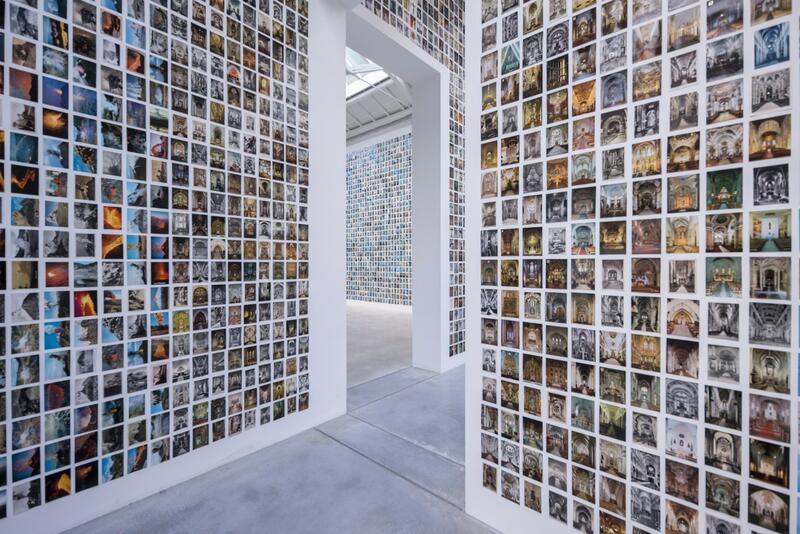
The Spanish Pavilion at the 61st Venice Biennale presents "Los restos," a project by Catalan artist Oriol Vilanova, curated by Carles Guerra. The installation transforms the pavilion into an anti-museum or pseudo-museum, featuring Vilanova's collection of postcards sourced from flea markets over more than twenty years. The work critiques traditional archival systems through accumulation, repetition, and fragmentation, and includes a publication and a performative action titled "El fantasma de la libertad" (2026), inspired by Luis Buñuel, which will take place across the Giardini and Arsenale.