filter_list Showing 6 results for "Replaced" close Clear
search
dashboard All 25 article news 11museum exhibitions 6trending_up market 2article culture 2article policy 2person people 1article local 1
date_range Range Today This Week This Month All
Subscribe

First Impressions of a Venice Biennale Torn Apart by the Present

The 61st Venice Biennale, titled "In Minor Keys," opens amid turmoil: its curator Koyo Kouoh died of cancer during planning, and the festival jury resigned after a controversial statement about excluding Israel and Russia from prizes, replaced by a Eurovision-style people's choice award. The main exhibition, completed by a team of five collaborators using Kouoh's plans, features over 110 artists and collectives, with highlights including works by Big Chief Demond Melanchon, Tammy Nguyen, Guadalupe Maravilla, Ayrson Heráclito, and a section focused on Michael Armitage's Nairobi Contemporary Art Institute.
‘It has become a symbol of hope’: the epic journey of Ukraine’s origami deer to the Venice biennale

Ukrainian artist Zhanna Kadyrova's concrete origami deer sculpture, originally installed in Pokrovsk in 2018, has been evacuated from the war-torn Donetsk region and transported across Europe to become the centerpiece of Ukraine's national pavilion at the 2026 Venice Biennale. The sculpture, which replaced a Soviet fighter-bomber monument in a local park, was rescued in August 2024 by co-curator Leonid Marushchak amid intensifying Russian attacks, with the help of city authorities and museum staff.

art abbas akhavan venice biennale canadian pavilion

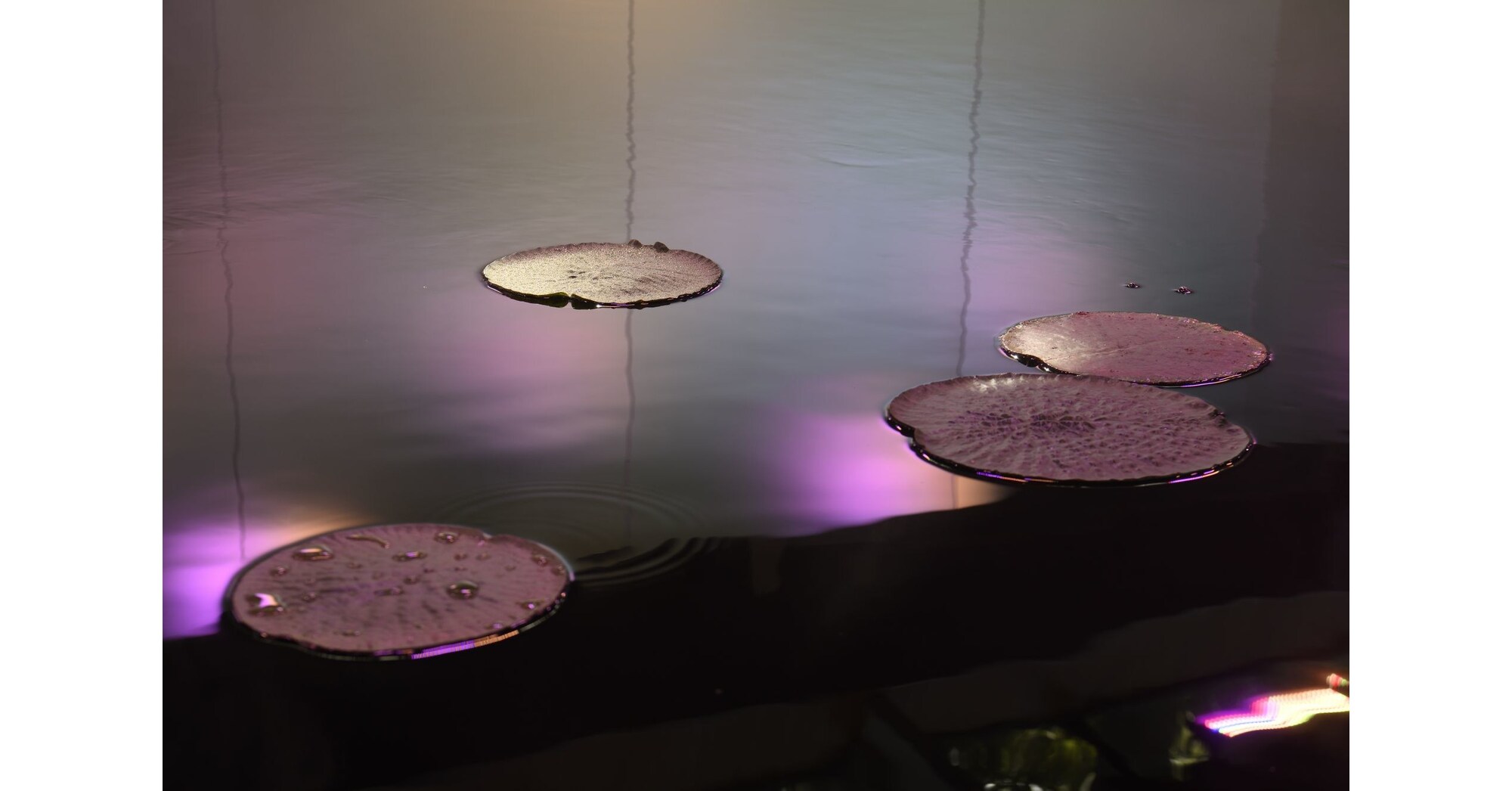
Abbas Akhavan has transformed the Canadian Pavilion at the Venice Biennale into a greenhouse-like installation titled "Abbas Akhavan: Entre chien et loup." The pavilion's wooden doorway has been replaced with glass, revealing a pond with pinkish water illuminated by sunlight and LED grow-lamps. Visitors encounter mossy boulders, a vintage fur coat sprayed with water, sharpened bronze sticks, and custom frosted mirrors that blur the architecture. The centerpiece will be three giant Bolivian water lilies, grown from seeds sent from Kew Gardens to Padua, which will gradually take over the pond over the summer. The exhibition is curated by Kim Nguyen, commissioned by the National Gallery of Canada, and supported by the Canada Council for the Arts.

‘Art’s Selfish’: Canada Pavilion Artist Abbas Akhavan on What Comes After Venice

Abbas Akhavan, representing Canada at the 2026 Venice Biennale, has transformed the Canada Pavilion into a greenhouse-like installation titled “Abbas Akhavan: Entre chien et loup.” The pavilion’s wooden door has been replaced with glass, revealing a pond of pinkish water illuminated by sunlight and LED grow-lamps. Visitors encounter mossy boulders, a vintage fur coat sprayed with mist, sharpened bronze sticks, and frosted mirrors that blur the architecture. Three giant Bolivian water lilies, grown from seeds sent from Kew Gardens to Padua, will gradually fill the pond over the summer. Akhavan describes his role as a “custodian” rather than a controller, emphasizing the unpredictability of nature.

The National Gallery of Canada, commissioner of Canada's participation in the 61st International Art Exhibition - La Biennale di Venezia, unveils the exhibition Abbas Akhavan: Entre chien et loup

The National Gallery of Canada has unveiled the exhibition "Abbas Akhavan: Entre chien et loup" for the Canada Pavilion at the 61st International Art Exhibition – La Biennale di Venezia in 2026. The site-specific installation reimagines the pavilion's architecture as a Wardian case, a precursor to the terrarium used to transport plants across the British Empire, featuring a custom pool with giant Victoria water lilies. The artist replaced the facade with glass panels, making the plants visible from outside, and the installation is framed by additional sculptural works. The exhibition is curated by Kim Nguyen and accompanied by a fully illustrated publication.

Venice Biennale opens without a jury amid strife over Russian and Israeli participation

The Venice Biennale, one of the world's most prestigious contemporary art exhibitions, opens its most contested edition in memory without a jury after the jury resigned in protest over the participation of Israel and Russia, both under investigation by the International Criminal Court for human rights abuses. Protests have erupted outside the Israeli and Russian pavilions, with demonstrators clashing with police, while feminist groups from Ukraine and Russia converged on the Russian Pavilion and Palestinians remembered artists killed in Gaza. The Biennale has replaced the jury with a public vote via email, with winners announced at the close on November 22.