filter_list Showing 15 results for "SeaWorld Venice" close Clear
dashboard All 16 museum exhibitions 15article news 1
date_range Range Today This Week This Month All
Subscribe

Venice Biennale 2026 Highlights: Arsenale & Giardini

ArtReview editors highlight the must-see national pavilions at the 61st Venice Biennale, running from 9 May to 22 November 2026. Notable presentations include Austria's Florentina Holzinger turning her pavilion into a toilet and sewage-treatment plant with naked performers, and Germany's pavilion featuring works by Sung Tieu and the late Henrike Naumann, who died in February 2026, exploring East German memory and conceptual minimalism.
Our pick of the best pavilions at the 61st Venice Biennale

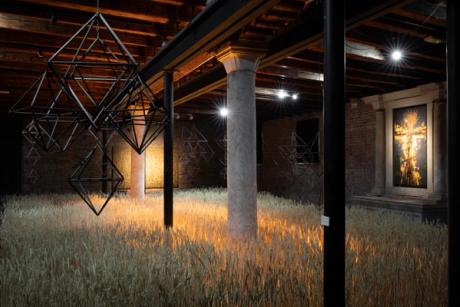
The article highlights standout national pavilions at the 61st Venice Biennale. The Belarus Pavilion features a powerful installation by the Belarus Free Theatre, including a wheat field built by former political prisoners, straw spiders made from prison bars, and a confession booth that runs facial recognition. The Brazil Pavilion presents a joint exhibition by Rosana Paulino and Adriana Varejão, focusing on colonial wounds and trauma through works like Paulino's 'Aracnes' and Varejão's 'Still Life amid Ruin'. The Bosnian Pavilion by Mladen Bundalo invites tactile engagement with themes of diaspora and migration, while the Austrian Pavilion by Florentina Holzinger draws attention with nude performers in water-filled pools.

Female nudity and art that stinks: key takeaways from Venice Biennale 2026

The 2026 Venice Biennale opened with 99 participating countries, including first-timers Somalia and Qatar, under the shadow of curator Koyo Kouoh's death. Her planned theme of "enhancement" and the main show "In Minor Keys" were disrupted by political protests: Pussy Riot objected to Russia's inclusion, and a strike against Israel's participation forced several national pavilions (UK, Austria, France) to close. Key takeaways include pervasive female nudity across pavilions, debates over Russia's presence, criticism of the US pavilion's lackluster art, maritime themes dominating several shows, and the rise of olfactory art.

We visited the 2026 Venice Art Biennale: the exhibitions and pavilions you shouldn’t miss

The 2026 Venice Art Biennale has opened across the Giardini, Arsenale, and venues throughout the city, with geopolitics, climate collapse, and national identities dominating the exhibitions. Notable pavilions include Austria's "Seaworld Venice" by Florentina Holzinger, the Czech and Slovak Pavilion's "Il Silenzio della Talpa" by Jakub Jansa and Selmeci Kocka Jusko, India's "Geographies of Distance: remembering home" featuring multiple artists, and the Taiwan Pavilion's "Screen Melancholy" by Li Yi-Fan. The Russian Pavilion has become a focal point of controversy, with guards and empty beer bottles outside, and the Pussy Riot collective staging a protest nearby.

Best in Show: 6 Standouts at the 2026 Venice Biennale

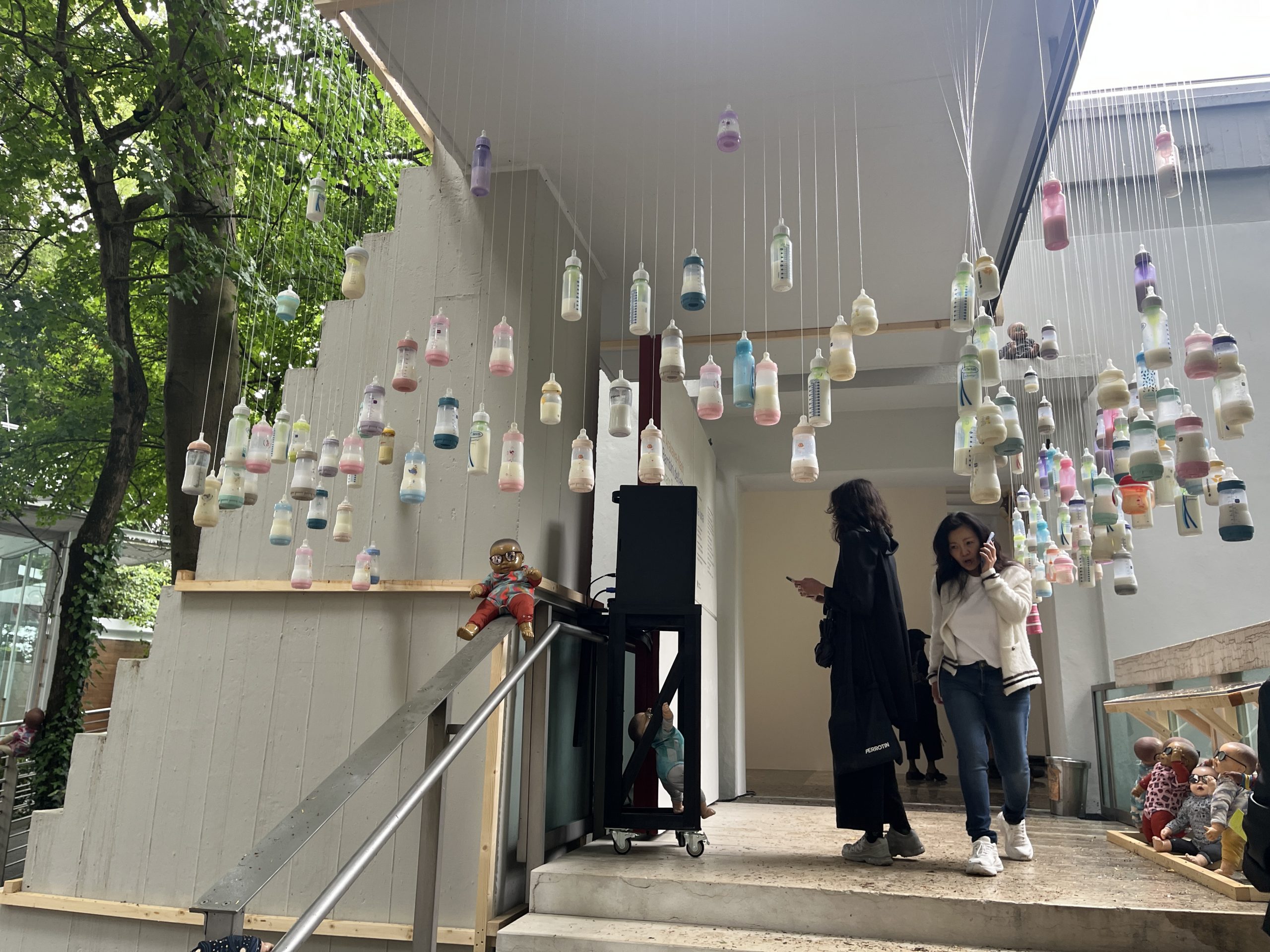
Artnet News writers highlight six standout exhibitions at the 2026 Venice Biennale, which opens to the public on May 9. Among the picks are Ei Arakawa-Nash's interactive installation "Grass Babies, Moon Babies" at the Japan Pavilion, featuring baby dolls and diaper-changing stations; Florentina Holzinger's provocative performance "Seaworld Venice" at the Austria Pavilion, involving nude performers, jet skis, and recycled wastewater; and Dayanita Singh's photographic exhibition "Archivio" at the State Archives of Venice, presenting intimate black-and-white images arranged as freestanding columns.

Welcome to Venice: the shows you won’t want to miss at the 61st Biennale

The 61st Venice Biennale, titled "In Minor Keys," opens with a keynote exhibition conceived by the late Koyo Kouoh and realized by her team after her sudden death in May 2025. The show spans the Central Pavilion in the Giardini and the Arsenale, featuring 110 artists and collectives. Highlights include Bracha L. Ettinger's installation at the Hotel Metropole, where she transforms a room where Sigmund Freud wrote part of *The Interpretation of Dreams* into a feminist 'borderspace,' and works by artists such as Arthur Jafa, Richard Prince, Issa Samb, Beverly Buchanan, and Daniel Lind-Ramos. The exhibition explores themes of history, colonialism, war, and environmental destruction, aiming for a 'sotto voce' tone that nonetheless delivers powerful, liberating statements.

‘We are complicit’: Austrian artist Florentina Holzinger’s immersive Venice Biennale pavilion brings apocalypse to the city

Austrian artist Florentina Holzinger has created 'Seaworld Venice,' an immersive and confrontational installation for the Austrian Pavilion at the 2024 Venice Biennale. The work explores climate change, technology, and a dystopian flooded future, drawing comparisons to the 1995 film 'Waterworld'—though neither Holzinger nor curator Nora-Swantje Almes had seen it. Known for extreme performance art involving nudity, blood, live piercing, and heavy machinery, Holzinger's previous works have caused audience members to faint or require medical treatment. The pavilion marks a significant platform for her radical, hybrid practice that blends theatre, dance, opera, and performance art.

The Most Provocative Performance in Venice

Florentina Holzinger, a performance artist known for extreme feminist works involving nudity, bodily fluids, and physical endurance, is representing Austria at the 2026 Venice Biennale with a pavilion titled “Seaworld Venice.” Opening May 9, the installation transforms the Austrian Pavilion in the Giardini into an underwater theme park and a functioning sewage treatment plant, where audience urine collected from portable toilets is cleaned and recycled into the tanks. The work explores themes of the human body, ecology, and Venice’s own struggles with sinking infrastructure and mass tourism.

Currents of the 61st Biennale: Inside Venice’s Flow of Art and Power

The 61st Venice Biennale jury, composed of five curators—Solange Oliveira Farkas, Zoe Butt, Elvira Dyangani Ose, Marta Kuzma, and Giovanna Zapperi—resigned on April 30th amid internal tensions over decisions that conflicted with the late Koyo Kouoh's curatorial vision. The jury had previously stated it would refrain from considering countries whose leaders are charged with crimes against humanity by the International Criminal Court. Meanwhile, Filipino artist Jon Cuyson prepares to present his installation at the Philippine Pavilion, featuring works shipped 60 days before geopolitical conflict escalated, navigating unstable maritime routes. His project includes the film series "Sea of Love (Dagat ng Pag-ibig)" and a new fourth film, "Sea of Echoes," exploring themes of migration, queer experience, and ecological resilience through mussels as non-human protagonists.

The 2026 Venice Biennale is light and conscious

Quella del 2026 è una Biennale di Venezia leggera e consapevole

The 2026 Venice Biennale, titled "In Minor Keys" and curated by the late Koyo Kouoh, has opened with a focus on ecology and humanity's relationship with nature. The central pavilion at the Giardini presents a festive, craft-heavy exhibition that emphasizes connections with plants and animals, while the Arsenale offers a more spacious, symphonic experience featuring standout works such as Alfredo Jaar's "End of the World" (2023-2024) and Kader Attia's "Whisper of Traces" (2026). National pavilions, including those of Austria, Denmark, France, Germany, and Spain, explore themes of the body, memory, and ruin with notable installations.

The Great Shitshow

Die große Shitshow

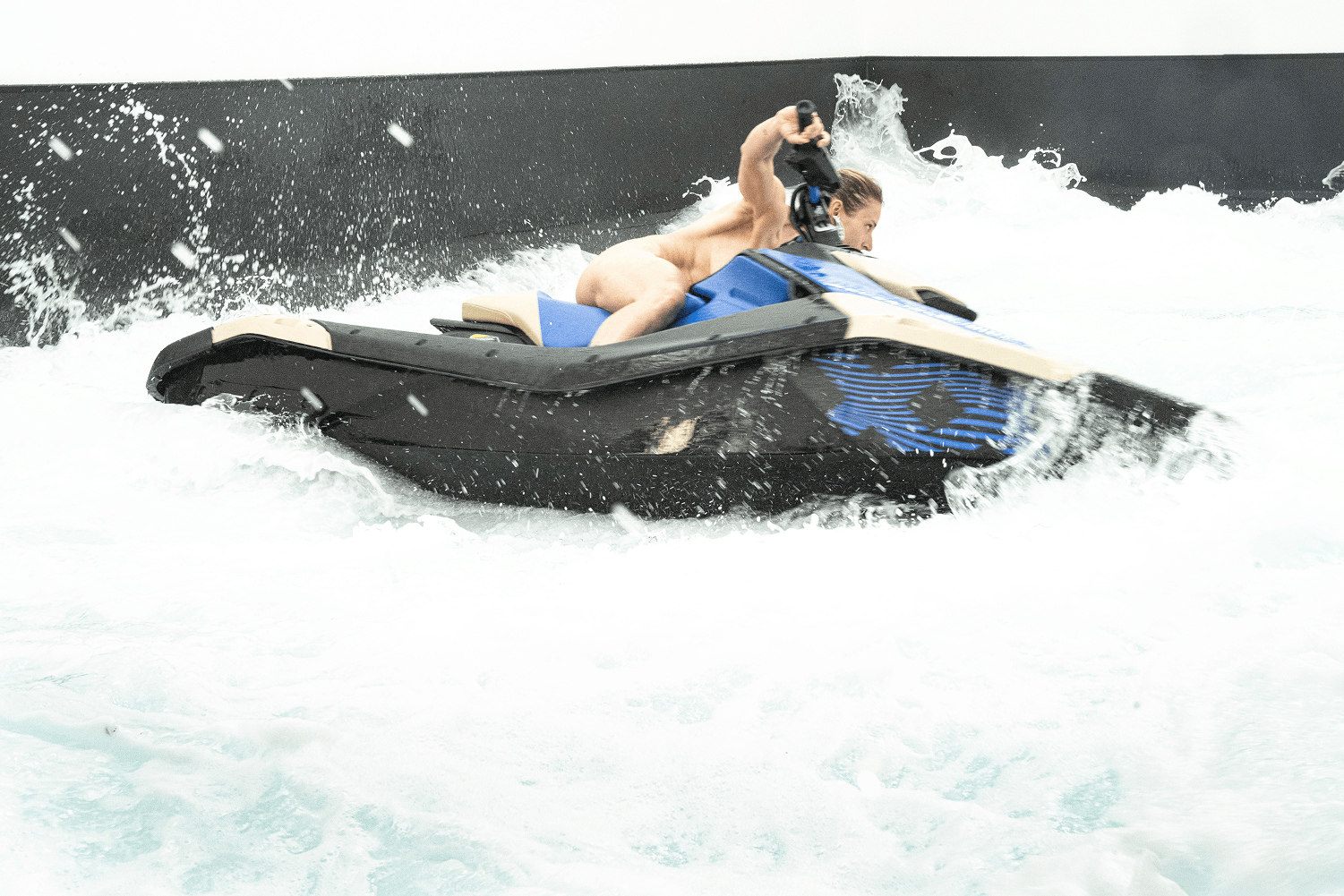
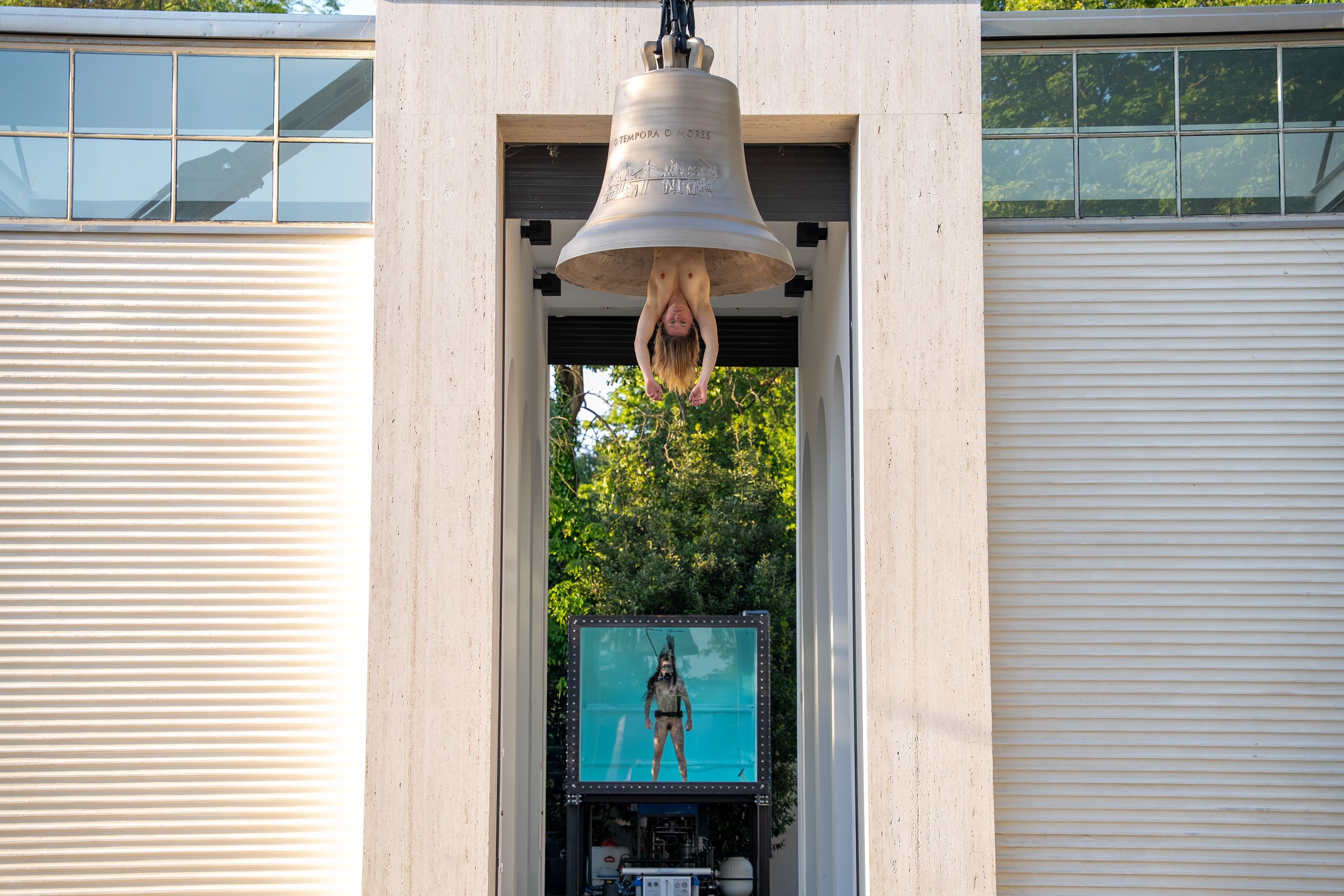
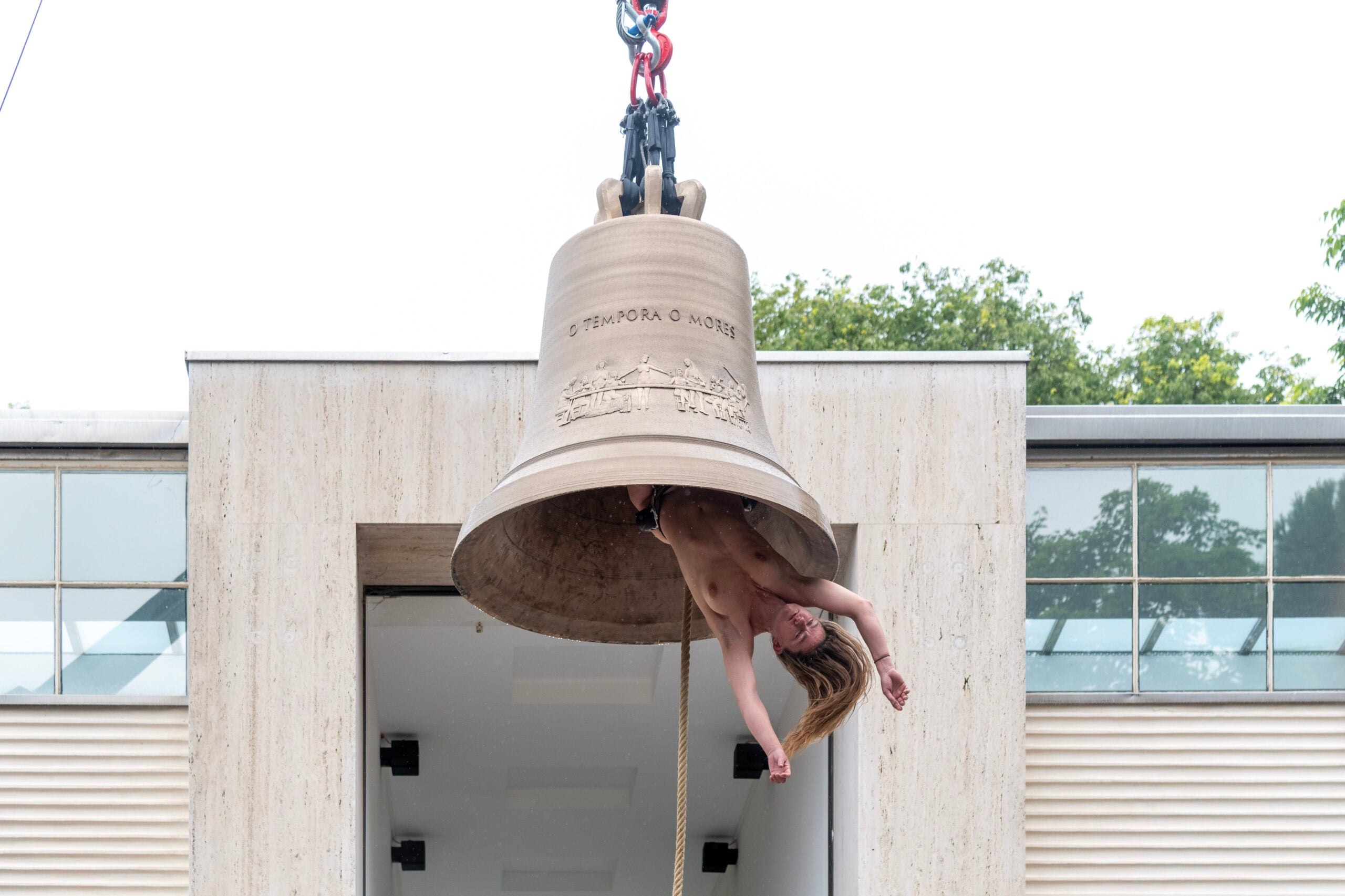
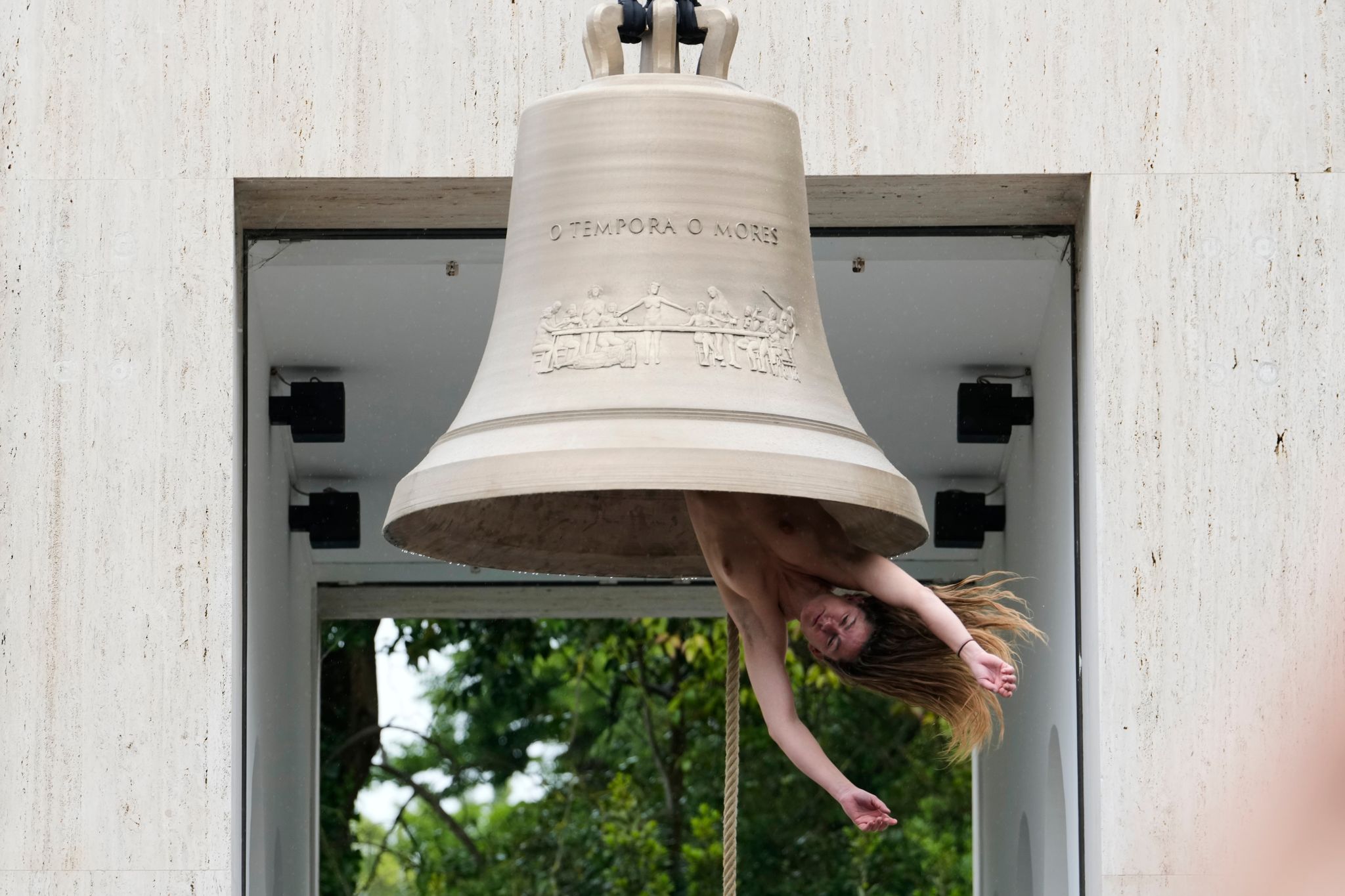
Florentina Holzinger has transformed the Austrian Pavilion at the Venice Biennale into a radical performance installation titled "Seaworld Venice." The piece features naked performers suspended from meat hooks, a performer ringing a bell while dangling upside down from a crane, a woman on a jetski circling inside a flooded pavilion, and a system where visitors are invited to urinate into portable toilets, with the waste processed and recirculated into the water. The work combines extreme physical stunts, nudity, and bodily fluids to create a visceral, immersive experience that has drawn long queues and stunned reactions from the art world.

I Try to Allow Chaos

"Ich versuche, Chaos zuzulassen"

Florentina Holzinger presents her exhibition "Seaworld Venice" at the Austrian Pavilion of the Venice Biennale, a spectacular underwater-themed installation that combines a theme park, sacred building, and sewage treatment plant. The work explores transformation from dirt to cleanliness, featuring water, dolphins in the lagoon, and boundary-pushing performance elements.

Here are the photos of the Austrian Pavilion at the Venice Biennale (the one full of nude performers that it is forbidden to photograph)

Ecco le foto del Padiglione Austria alla Biennale di Venezia (quello pieno di performer nude che è vietato fotografare)

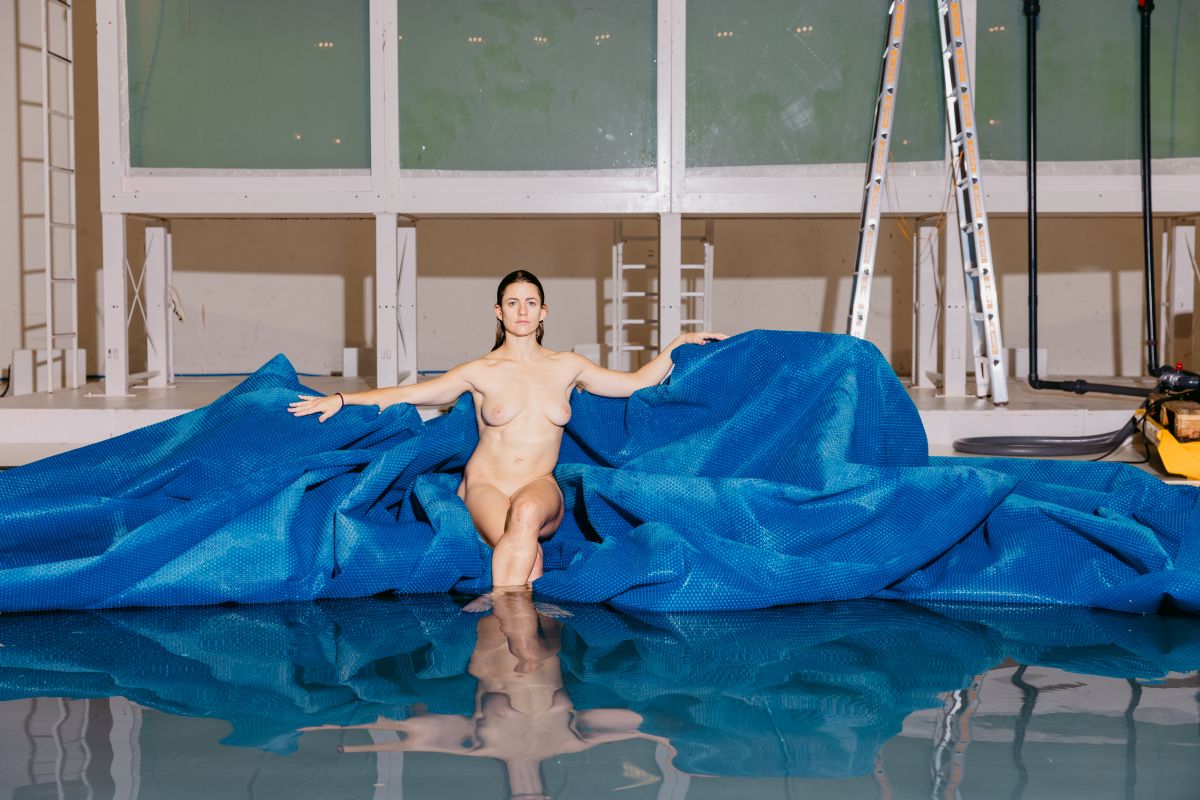
The Austrian Pavilion at the 2026 Venice Biennale, titled "Seaworld Venice" and curated by Nora-Swantje Almes, features provocative performances by artist and choreographer Florentina Holzinger. The installation includes four distinct nude female performances: a performer acting as a bell clapper on the hour, a female Deposition of Christ scene with three women on a rotating vertical structure, a nude woman riding a jet ski in circles, and a reenactment of Giorgione's Sleeping Venus in a urine-filled tank. The pavilion has become the most talked-about and Instagrammed at the Biennale, drawing long queues despite a ban on photography.

The Austrian Pavilion at the Biennale brings performances and installations around the Venice Lagoon

Il Padiglione Austria in Biennale porta performance e installazioni in giro per la Laguna di Venezia

Austrian artist and choreographer Florentina Holzinger (Vienna, 1986) will represent Austria at the 61st International Art Exhibition of the Venice Biennale with a project titled "SeaWorld Venice." Curated by Nora-Swantje Almes, the interdisciplinary initiative combines a permanent installation at the Austrian Pavilion with a series of site-specific performances and actions spread across Venice and its lagoon. The project explores the body, water, and the tensions between nature and technology, drawing on mythological and classical imagery populated by aquatic creatures. It includes "Études," performative formats developed by Holzinger since 2020, which activate urban spaces through participatory and immersive experiences, engaging both spectators and citizens.

Venice Biennale opens without a jury amid strife over Russian and Israeli participation

The Venice Biennale, one of the world's most prestigious contemporary art exhibitions, opens its most contested edition in memory without a jury after the jury resigned in protest over the participation of Israel and Russia, both under investigation by the International Criminal Court for human rights abuses. Protests have erupted outside the Israeli and Russian pavilions, with demonstrators clashing with police, while feminist groups from Ukraine and Russia converged on the Russian Pavilion and Palestinians remembered artists killed in Gaza. The Biennale has replaced the jury with a public vote via email, with winners announced at the close on November 22.