
filter_list Showing 3 results for "betye saar" close Clear
search
dashboard All 4 museum exhibitions 3person people 1
date_range Range Today This Week This Month All
Subscribe

Betye Saar’s Birthday Present

Betye Saar, the iconic assemblage artist, is donating her collection of Black dolls to the New York Historical on the occasion of her 100th birthday. The article also covers strong performance art at the Venice Biennale, including works by Florentina Holzinger and Miet Warlop at the Austrian and Belgian pavilions, amidst a fraught edition marked by the death of artistic director Koyo Kouoh, canceled pavilions, and protests. Additional features include a review of Ceija Stojka's exhibition at the Drawing Center and a profile of sculptor Edmonia Lewis.

How Betye Saar Set Black Dolls Free

An exhibition at the New York Historical celebrates Betye Saar’s promised gift of her collection of over 100 Black dolls to the institution, coinciding with her upcoming 100th birthday. The show, on view through October 4, features dolls alongside Saar’s paintings, prints, and sculptures, including works like “The Liberation of Aunt Jemima” (1972) and “Indigo Mercy” (1975). Saar began collecting Black dolls in 1949 and has incorporated them into her art since the 1970s, using watercolors during the COVID-19 pandemic to reimagine them in mystical scenes.

Insider’s Look at Curating a Show Inspired by the Declaration of Independence’s 250th Anniversary [Interview]

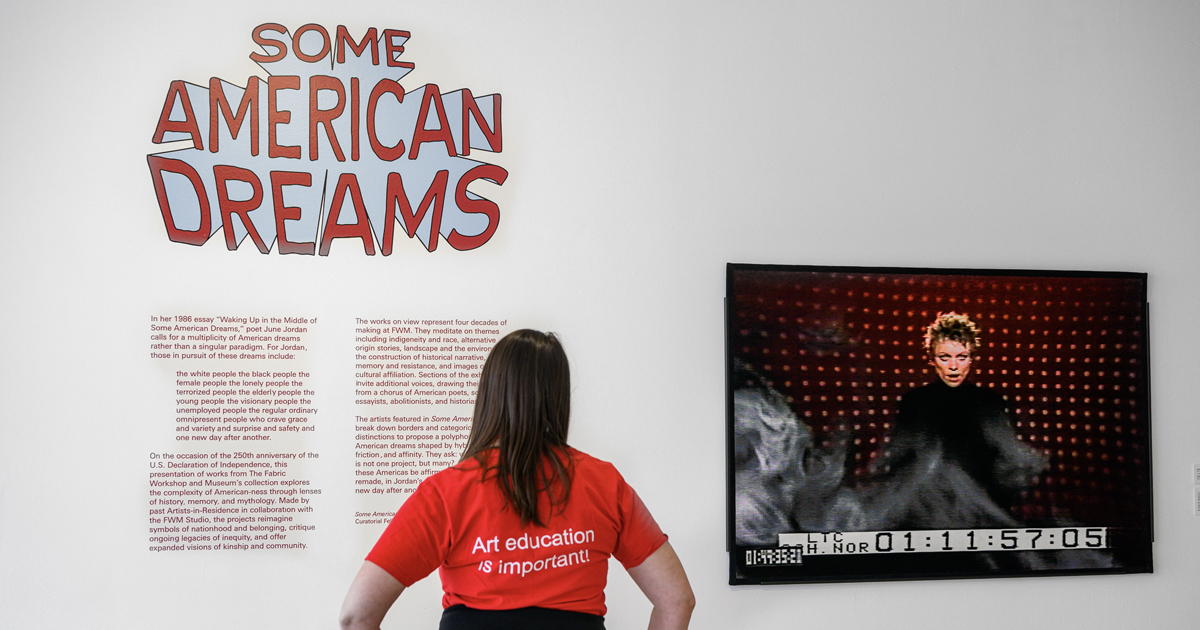
The Fabric Workshop and Museum (FVM) in Philadelphia has opened "Some American Dreams," an exhibition marking the 250th anniversary of the U.S. Declaration of Independence. Curated by Hilde Nelson, FVM curatorial fellow, the show features 27 works by 20 artists created during the museum's Artist-in-Residence Program over four decades. The exhibition includes pieces in furniture, sculpture, textiles, clothing, video, and photography, and is on view until June 14, 2026. In an interview with My Modern Met, Nelson discusses her curatorial approach, which poses the question, "What if 'America' is not one project, but many?" and explores how these multiple Americas are affirmed, resisted, or remade through the artworks.