filter_list Showing 11 results for "beverly buchanan" close Clear
search
dashboard All 16 museum exhibitions 11rate_review review 4article local 1
date_range Range Today This Week This Month All
Subscribe

While the world is ending outside

Während draußen die Welt untergeht

The ninth edition of the art festival "Various Others" opened in Munich amid rain, with galleries, institutions, and off-spaces presenting their exhibitions. Highlights include Jana Schröder's large-format paintings at Jahn und Jahn, juxtaposed with Willem de Kooning's works on newspaper; André Butzer's solo show at Galerie Christine Mayer, featuring his transition from monochrome 'N-Bilder' back to color; and Anselm Reyle's solo exhibition at Walter Storms in collaboration with Galerie Dirimart. Two standout shows are inspired by Persian miniature painting: Elif Saydam's 'Glory' at Galerie Rüdiger Schöttle, where silver and gold leaf works will oxidize over centuries, and another exhibition exploring bodies in transitional states—pupating, oxidizing, and escaping fixed forms.

Beverly Buchanan’s Anti-Monuments

Beverly Buchanan's outdoor sculptures, such as 'Marsh Ruins' (1981) and 'Unity Stones' (1983), are quietly eroding in landscapes across Georgia, Florida, and North Carolina. These anti-monuments, made from tabby concrete and stone, blend into their surroundings while subtly referencing the region's layered histories, including Indigenous shell middens, plantation ruins, and the 1803 slave revolt on St. Simons Island. Buchanan, who died in 2015, is now receiving renewed attention: her work will be featured at the Venice Biennale this spring, and a touring retrospective is currently at Frac Lorraine in Metz, following a posthumous show at the Brooklyn Museum in 2016–17.

At the Venice Biennale, Koyo Kouoh’s ‘In Minor Keys’ Looks Deeply at Lush Gardens and a Scarred Earth

Koyo Kouoh's exhibition 'In Minor Keys' at the 2026 Venice Biennale centers on the practices of two deceased artists, Issa Samb and Beverly Buchanan, whose ways of thinking animate the show through dedicated 'Shrines' in the Central Pavilion. The exhibition also draws on Marcel Duchamp's legacy, featuring works by over a dozen contemporary artists including Akinbode Akinbiyi, Guadalupe Rosales, Natalia Lassalle-Morillo, Guadalupe Maravilla, Sofía Gallisá Muriente, and Avi Mograbi, whose installation 'Between a River and a Sea' contrasts pre-1948 business directories with a 2023 Gaza Yellow Pages. A section called 'The Schools' highlights artist-run spaces such as Denniston Hill, Guest Artists Space (G.A.S.) Foundation, blaxTARLINES, and the Nairobi Contemporary Art Institute.

ArtReview April & May 2026 Issue Out Now

ArtReview's April & May 2026 issue explores boundaries and limitations in art, with a focus on the 61st Venice Biennale opening amid global conflicts. The cover features Japanese-American performance artist Ei Arakawa-Nash with his husband and twin babies, whose collaborative installation at the Japanese Pavilion incorporates the unpredictability of childcare. The issue includes coverage of controversial national pavilions (Russian, Israeli, American), profiles of artists representing Mongolia and Singapore, and features on Beverly Buchanan, Arthur Jafa, Richard Prince, and Zehra Doğan's report from Rojava. It also reviews the 82nd Whitney Biennial, the 25th Biennale of Sydney, and the 15th Shanghai Biennale.

Five Whirlwind Days in Venice, at (and Beyond) the Biennale

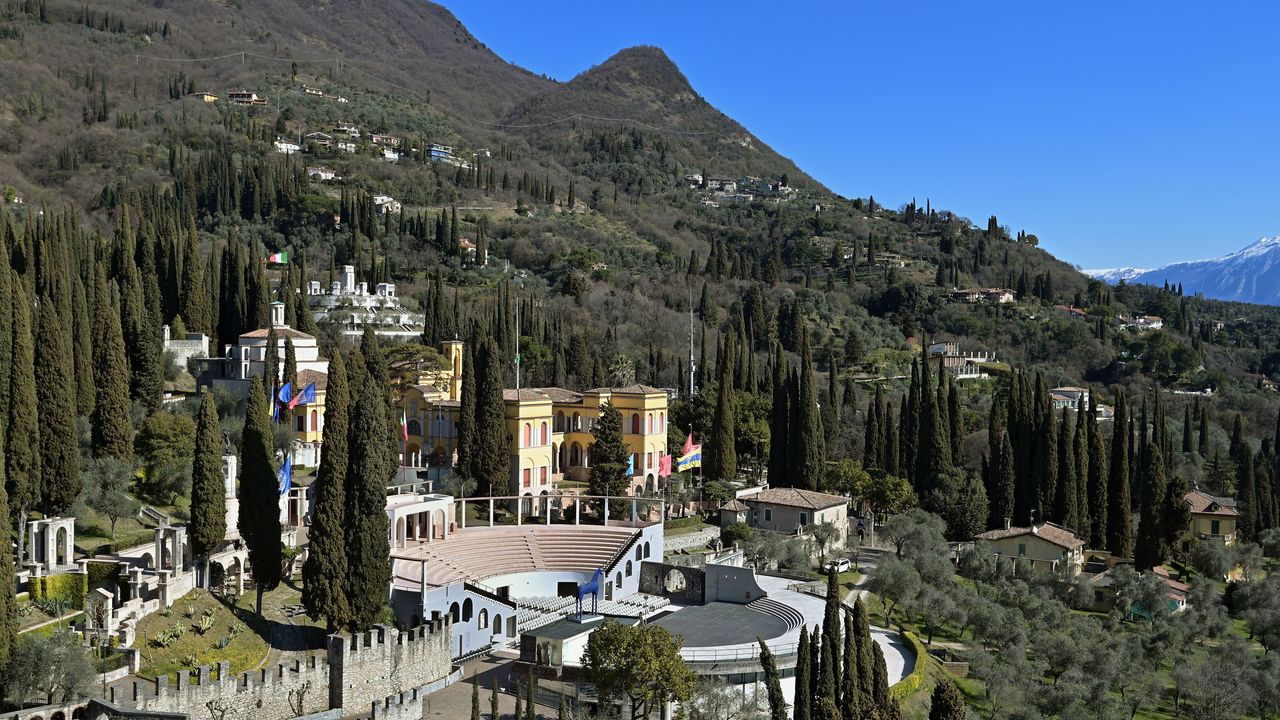
The article recounts a whirlwind three-day visit to the 61st Venice Biennale, focusing on the main exhibition at the Giardini della Biennale curated by the late Koyo Kouoh, titled "In Minor Keys." The author highlights textile works by artists such as Thania Petersen, Billie Zangewa, and Annalee Davis, as well as Beverly Buchanan's "Spirit Jars" and Maria Magdalena Campos-Pons's portrait of Kouoh and Toni Morrison. The trip also includes visits to collateral events, a performance at Jordan Roth's palazzo, and a side trip to Gabriele D'Annunzio's estate on Lake Garda.

In Minor Keys: how Venice's international exhibition was brought to life after the death of artistic director Koyo Kouoh

The 61st Venice Biennale's international exhibition, titled "In Minor Keys," was realized after the sudden death of its artistic director, Koyo Kouoh, in May 2025. A team of five of Kouoh's collaborators, known as "la squadra di Koyo Kouoh," worked with her before her death and finalized the exhibition's themes, artist list, and scenography. The exhibition features 111 invited artists, duos, collectives, and artist-led organizations, with the team emphasizing that this remains Kouoh's vision rather than a replacement.

Welcome to Venice: the shows you won’t want to miss at the 61st Biennale

The 61st Venice Biennale, titled "In Minor Keys," opens with a keynote exhibition conceived by the late Koyo Kouoh and realized by her team after her sudden death in May 2025. The show spans the Central Pavilion in the Giardini and the Arsenale, featuring 110 artists and collectives. Highlights include Bracha L. Ettinger's installation at the Hotel Metropole, where she transforms a room where Sigmund Freud wrote part of *The Interpretation of Dreams* into a feminist 'borderspace,' and works by artists such as Arthur Jafa, Richard Prince, Issa Samb, Beverly Buchanan, and Daniel Lind-Ramos. The exhibition explores themes of history, colonialism, war, and environmental destruction, aiming for a 'sotto voce' tone that nonetheless delivers powerful, liberating statements.

First Impressions of a Venice Biennale Torn Apart by the Present

The 61st Venice Biennale, titled "In Minor Keys," opens amid turmoil: its curator Koyo Kouoh died of cancer during planning, and the festival jury resigned after a controversial statement about excluding Israel and Russia from prizes, replaced by a Eurovision-style people's choice award. The main exhibition, completed by a team of five collaborators using Kouoh's plans, features over 110 artists and collectives, with highlights including works by Big Chief Demond Melanchon, Tammy Nguyen, Guadalupe Maravilla, Ayrson Heráclito, and a section focused on Michael Armitage's Nairobi Contemporary Art Institute.

Venice Biennale 2026 Roundup

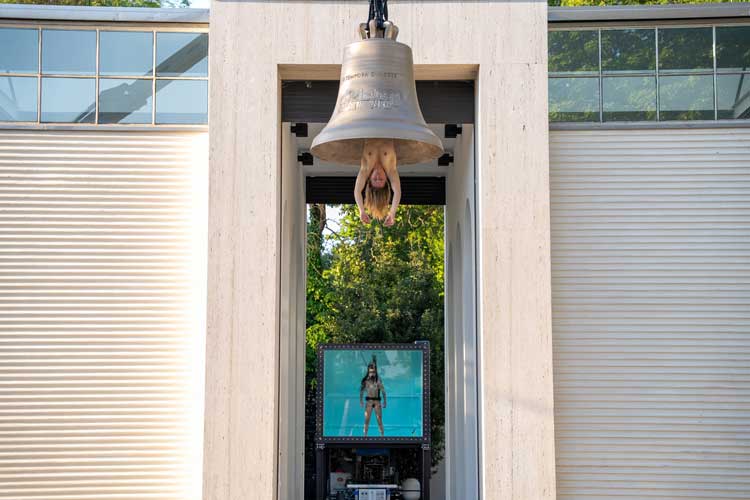
The 61st Venice Biennale, titled "In Minor Keys" and curated by the late Koyo Kouoh, opened in May 2026 amid significant turmoil. The Austrian Pavilion features Florentina Holzinger's performance piece "Seaworld Venice," centered on a giant bell that chimes hourly. The biennale has been marked by the death of its curator, the resignation of the international jury over the inclusion of Russia and Israel, protests by Pussy Riot and the Art Not Genocide Alliance, and the cancellation of the South African Pavilion over Gabrielle Goliath's "Elegy," which honors murdered women including a Palestinian poet. The US Pavilion's state-sponsored offerings have also drawn criticism.

At this year's Venice Biennale, a clash of politics and art exposes the need for a rethink

The 2026 Venice Biennale is plagued by controversy and structural issues. Curator Koyo Kouoh died of cancer in 2025, leaving her team to execute the main exhibition "In Minor Keys" without her. The Biennale's jury resigned after refusing to judge entries from countries charged with war crimes, and media coverage during preview week focused on protests against the Israeli and Russian pavilions rather than the art. The sprawling exhibition features 96 national pavilions and 110 artists, with works ranging from Daniel Lind-Ramos's found-material figures to María Magdalena Campos-Pons's tribute to Toni Morrison and Kouoh.

"In Minor Keys" Hits All the Right Notes

The 61st Venice Biennale's international exhibition, titled "In Minor Keys," opened with a somber curatorial press conference, as artistic director Koyo Kouoh, who died in May 2024 at age 57, was not physically present. The exhibition features 110 invited participants across the Arsenale and Giardini, including works by Buhlebezwe Siwani, Johannes Phokela, Wangechi Mutu, Ebony G. Patterson, and Kambui Olujimi. Protests marked the opening, with gatherings at the temporary Israeli pavilion and Pussy Riot's presence at the Russian pavilion, while the exhibition itself asks viewers to look closer at overlooked forms of representation and consider innovative models of measuring the world.