filter_list Showing 10 results for "miet warlop" close Clear
search
dashboard All 21 museum exhibitions 10article news 8rate_review review 3
date_range Range Today This Week This Month All
Subscribe

Venice Biennale 2026: all the national pavilions, artists and curators so far

The 61st edition of the Venice Biennale, the world's oldest and most prestigious art biennial, will open on 9 May 2026 and run through 22 November. The main exhibition follows the curatorial plan of the late Koyo Kouoh, while national pavilions have been announcing their participating artists and organizers. The article provides a comprehensive list of confirmed pavilions so far, including artists such as Genti Korini (Albania), Matías Duville (Argentina), Khaled Sabsabi (Australia), Florentina Holzinger (Austria), Faig Ahmed (Azerbaijan), and many others, with details on venues and organizers.
2026 Venice Biennale pavilions: your go-to list [Updated]

ArtReview has compiled a running list of national pavilions for the 61st Venice Biennale, running from 9 May to 22 November 2026. The Biennale was set to be curated by Koyo Kouoh, who died on 10 May 2025. Recent announcements include Haitham Al Busafi representing Oman, Genti Korini representing Albania with a three-channel video installation titled 'A Place in The Sun (still)', and Matías Duville representing Argentina with an interactive salt-and-charcoal installation. The Australia Pavilion will feature artist Khaled Sabsabi and curator Michael Dagostino, who were initially dropped due to controversy over Sabsabi's 2007 film 'You' but later reinstated. Florentina Holzinger will represent Austria with a water-themed performance.

Betye Saar’s Birthday Present

Betye Saar, the iconic assemblage artist, is donating her collection of Black dolls to the New York Historical on the occasion of her 100th birthday. The article also covers strong performance art at the Venice Biennale, including works by Florentina Holzinger and Miet Warlop at the Austrian and Belgian pavilions, amidst a fraught edition marked by the death of artistic director Koyo Kouoh, canceled pavilions, and protests. Additional features include a review of Ceija Stojka's exhibition at the Drawing Center and a profile of sculptor Edmonia Lewis.

Naked jetskiers, giant bells and a celebrity seagull! Venice Biennale’s wildest moments – in pictures

The Guardian presents a photo essay capturing the most eccentric and memorable moments from the 61st Venice Biennale, running until 22 November 2026. Photographer David Levene documents installations including a concrete 'Origami Deer' evacuated from war-torn Pokrovsk, Ukraine, by artist Zhanna Kadyrova; a seagull that became a minor celebrity after nesting outside the Polish pavilion; and the Holy See pavilion's immersive sound installation curated by Hans Ulrich Obrist and Ben Vickers. Other highlights include the Egyptian pavilion's touch-and-smell 'Silence Pavilion' and a Polish pavilion film featuring deaf and hearing singers.

Our pick of the best pavilions at the 61st Venice Biennale

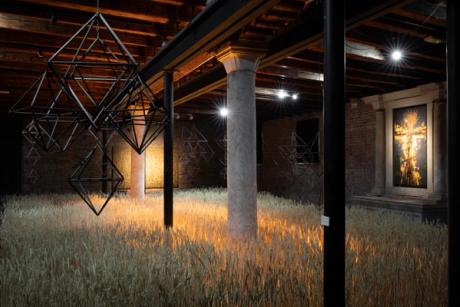
The article highlights standout national pavilions at the 61st Venice Biennale. The Belarus Pavilion features a powerful installation by the Belarus Free Theatre, including a wheat field built by former political prisoners, straw spiders made from prison bars, and a confession booth that runs facial recognition. The Brazil Pavilion presents a joint exhibition by Rosana Paulino and Adriana Varejão, focusing on colonial wounds and trauma through works like Paulino's 'Aracnes' and Varejão's 'Still Life amid Ruin'. The Bosnian Pavilion by Mladen Bundalo invites tactile engagement with themes of diaspora and migration, while the Austrian Pavilion by Florentina Holzinger draws attention with nude performers in water-filled pools.

Venice Biennale 2026: What are the major trends that will mark the 99 national pavilions?

Biennale de Venise 2026 : quelles sont les grandes tendances qui vont marquer les 99 pavillons nationaux ?

The article previews the 2026 Venice Biennale, highlighting key trends across its 99 national pavilions. Major themes include the hybridization of theater, dance, and performance, particularly in pavilions from Austria, Luxembourg, Belgium, and Lithuania, where artists like Florentina Holzinger, Aline Bouvy, Miet Warlop, and Eglė Budvytytė use radical, body-centric works. Geopolitical engagement is also central, with the Ukrainian pavilion featuring Zhanna Kadyrova's work on resistance and the British pavilion exploring themes of exile and migration. Other notable pavilions include Spain's focus on imagery, a sound installation for the Vatican, a polyphonic piece for Romania, and a film on sign language song for Poland.

Venice’s Chicest Invite This Week? A Pizza Party Where the Artists Chose the Ingredients

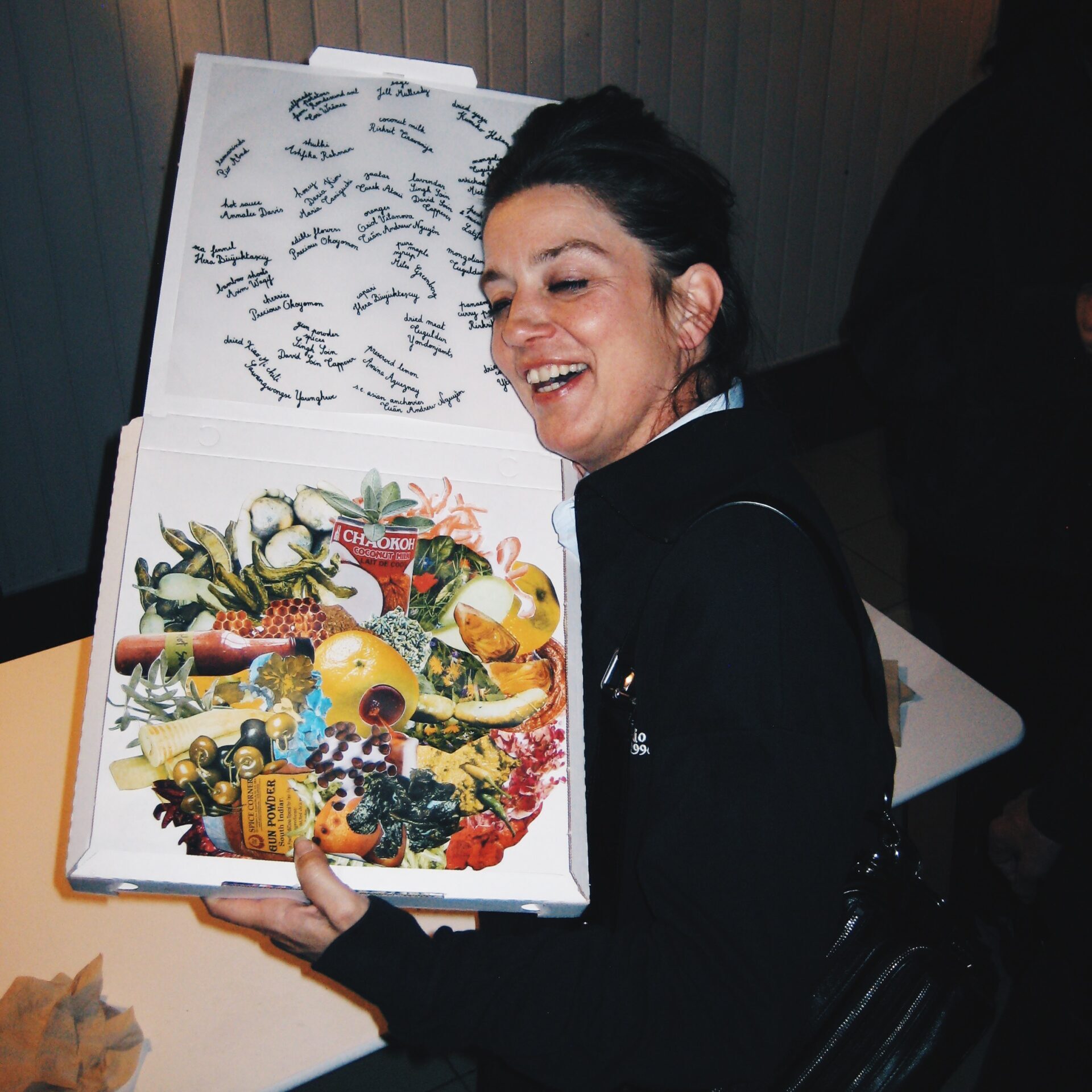
Diana Campbell, Chomwan Weeraworawit, and Paris-based art advisors Samy Ghiyati and Nicolas Nahab of NG Partners organized a pizza party called Pizzalo Mundo during the Venice Biennale. Each artist contributed an ingredient from home: Rirkrit Tiravanija brought a Penang coconut base, Precious Okoyomon added flowers, Daria Kim wild honey, Tarek Atoui za'atar on hummus, Miet Warlop artichoke hearts, Tori Wrånes self-grown potatoes, and Alexa Kumiko Hatanaka fig leaf oil with yuzu salt. The event drew a crowd of curators, directors, and collectors from institutions including Tate, Musée d'Orsay, Guggenheim Abu Dhabi, MoMA, and Centre Pompidou.

Miet Warlop on Representing Belgium at the 61st Venice Biennale

Miet Warlop, the artist representing Belgium at the 61st Venice Biennale (2026), discusses her plans for the Belgian Pavilion in the Giardini in an interview with ArtReview. Her installation, inspired by the Belgian motto 'L'union fait la force' ('unity makes strength'), aims to create a space between a workspace, exhibition, and performance that brings people together in introspection. She cites time spent with Venice's artistic communities, including students at the Accademia, as influential, and notes that her work engages with the Biennale's theme 'In Minor Keys' by incorporating minor-key music to evoke nuanced, introspective emotions.

Can a Venice Biennale Pavilion Be Rock ‘n’ Roll? At the Belgium Pavilion, Miet Warlop Makes the Case.

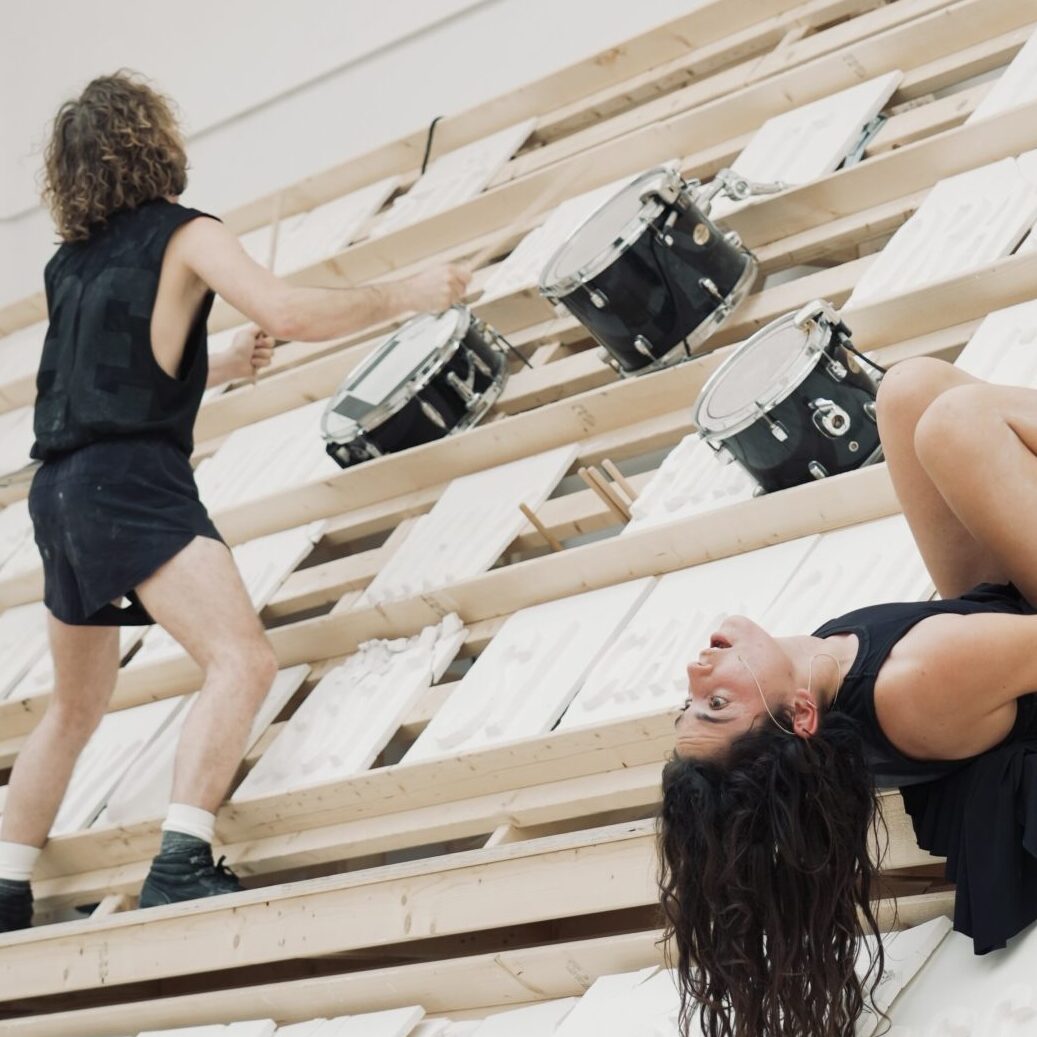
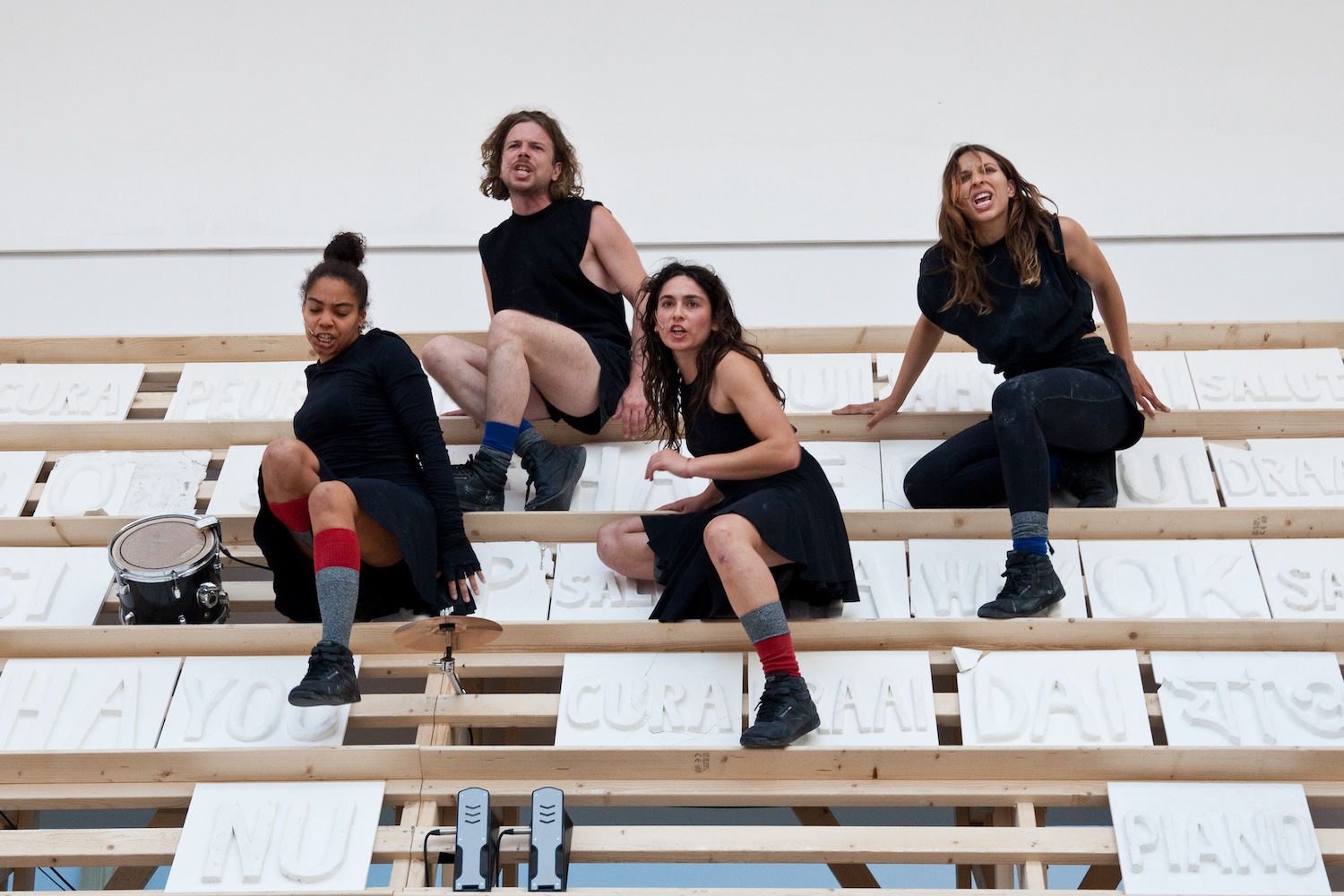
Miet Warlop, a Belgian artist known for her avant-garde theater work, is representing Belgium at the 2026 Venice Biennale with a performance-installation titled "IT NEVER SSST." The project transforms the Belgian Pavilion into a chaotic, sensory-filled space where performers climb wooden structures, bang drums, and break plaster boards inscribed with multilingual text, reflecting the noise and misunderstandings of contemporary life. Curated by Caroline Dumalin, the pavilion blurs the line between theater and visual art, with live performances occurring only part of the time while sculptors continuously remake plaster reliefs throughout the Biennale's run.

Can we practice for crises in art?

"Können wir in der Kunst für die Krisen üben?"

Belgian theater director Miet Warlop is presenting her work "It never SSST" at the Belgian Pavilion during the Venice Biennale. The installation combines performance, sculpture, a radio show, and objects, featuring six performers, musicians, dancers, and a sculptor who periodically calls "Freeze" to capture movements in plaster reliefs. Warlop, known for her physically exhausting ritualistic performances like "One Song," discusses the piece's themes of ceaseless activity and the body as a resource, as well as the challenge of engaging visitors who often rush through the pavilion.