filter_list Showing 5 results for "Brian Eno" close Clear
search
dashboard All 29 museum exhibitions 21article news 5article culture 2rate_review review 1
date_range Range Today This Week This Month All
Subscribe

The Holy See Pavilion asks Venice Biennale Visitors to Slow Down and Listen, and Other News.

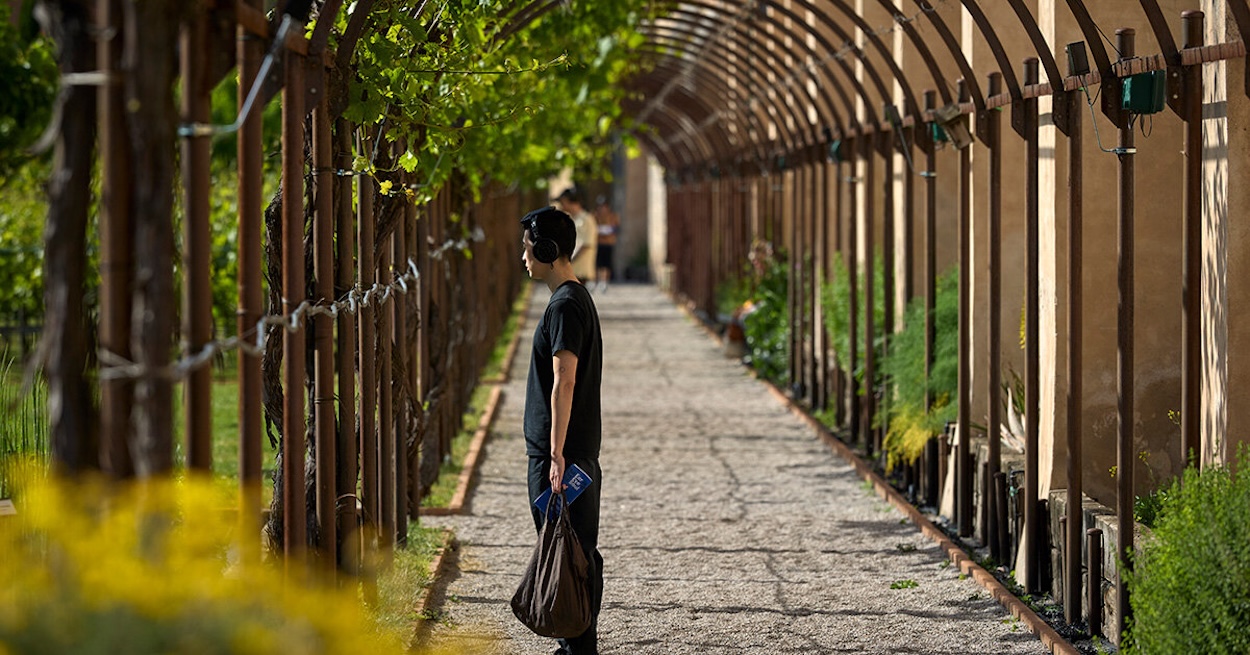
The Holy See's pavilion at the 61st Venice Biennale presents "The Ear is the Eye of the Soul," a multi-sensory exhibition centered on deep listening and inspired by Hildegard von Bingen, curated by Hans Ulrich Obrist and Ben Vickers with Soundwalk Collective, featuring new commissions by 24 artists including Patti Smith, Brian Eno, FKA twigs, and Dev Hynes across two Venetian sites. Separately, Chanel and the Solomon R. Guggenheim Foundation have launched the Chanel Culture Fund Fellowship, a transatlantic curatorial program for postgraduate scholars at the Guggenheim Museum in New York and the Peggy Guggenheim Collection in Venice. In other news, a father-daughter duo from New Jersey pleaded guilty to a $2 million counterfeit art scheme involving forged works attributed to Andy Warhol, Banksy, and others; Vienna's Burgtheater is offering guided scaffolding tours of Gustav Klimt's early ceiling paintings during restoration; and the sixth edition of the Head Hi Lamp Show opens in New York.
Numerous Venice Biennale Pavilions and Artists Go on Strike in Protest over Israel’s Participation

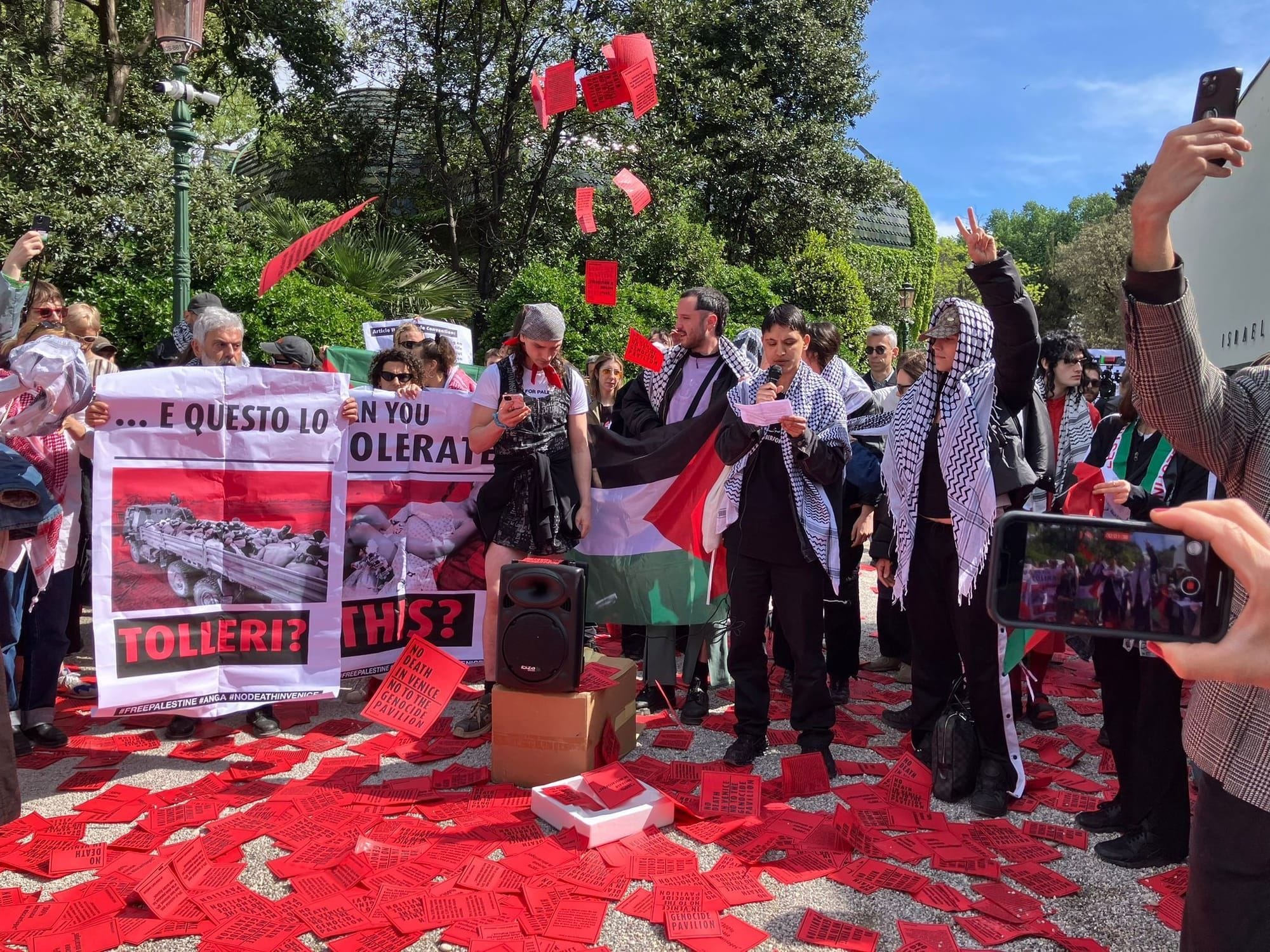
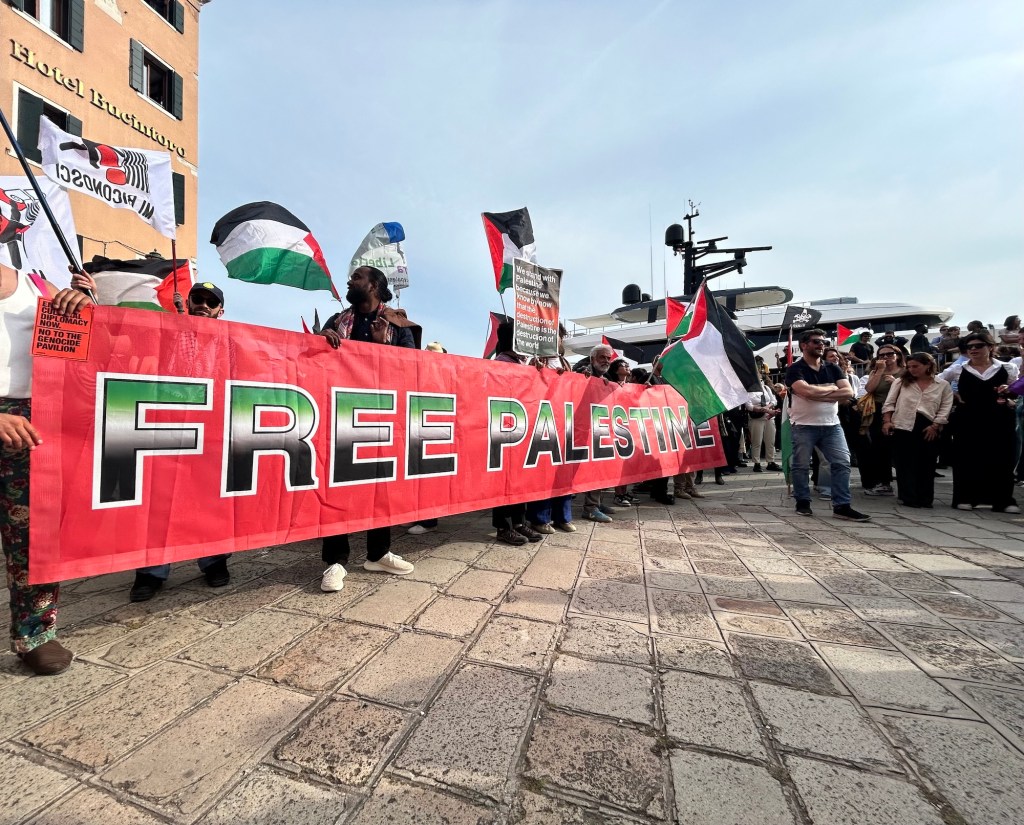
Thousands of protesters marched through Venice on the eve of the Venice Biennale's public opening, organized by Art Not Genocide Alliance (ANGA), to demand Israel's exclusion from the event. At least 18 national pavilions—including Austria, Belgium, France, Great Britain, and Ukraine—participated in a 24-hour strike, shutting down completely or partially. Protesters chanted slogans, waved Palestinian flags, and carried banners reading "no genocide pavilions," while ANGA released a statement with 236 signatories calling for Israel's removal, citing the humanitarian crisis in Gaza.

Venice Bound? Here’s All the News You Need to Know About This Year’s Biennale

The 61st Venice Biennale is embroiled in geopolitical controversy over Russia's return to the event in 2026, which has sparked widespread backlash. Nearly 10,000 artists and cultural leaders signed an open letter opposing Russia's participation, and the European Union withdrew €2 million in funding for the 2028 edition. Leaked emails reveal Biennale officials worked with Russian pavilion commissioner Anastasia Karneeva to circumvent EU sanctions, while Italy's culture minister Alessandro Giuli plans to boycott the opening week. Meanwhile, activists continue to push for Israel's removal from the Biennale, though Israel will be accommodated in the Arsenale this year.

Culture Workers Announce Venice Biennale Strike in Israeli Pavilion Protest

Cultural workers, unions, and grassroots groups are planning a 24-hour strike on Friday, May 8, at the Venice Biennale to protest Israel's participation amid the ongoing genocide in Gaza. Organized by the Art Not Genocide Alliance (ANGA), the action includes a rally on Viale Garibaldi and calls for a boycott of Israel's "genocide pavilion." Participating groups include Biennaleocene, Sale Docks, Mi Riconosci, Vogliamo Tutt’altro, and several Italian trade unions. The strike follows months of activism, including a letter signed by over 200 event participants, and comes after the Biennale jury resigned over award eligibility rules that initially excluded Israel and Russia.

Venice Biennale in crisis: The controversies explained

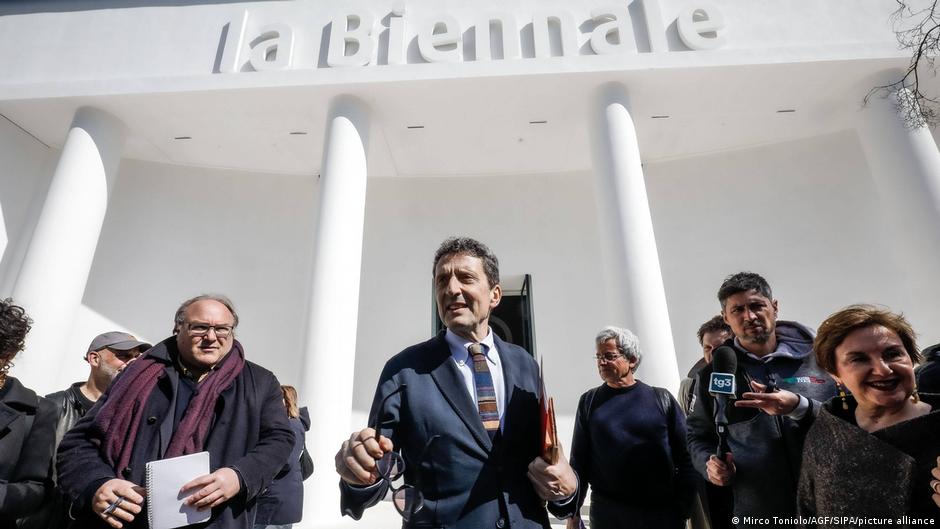
The Venice Art Biennale's official awards ceremony, scheduled for May 9, has been canceled after the entire five-member jury resigned days before the event. The jury had previously announced they would not consider countries whose leaders face International Criminal Court charges, directly impacting Russia and Israel. Instead of jury-selected prizes, visitors will vote throughout the Biennale's run, with "Visitor Lions" awarded on November 22. The event, running from May 9 to November 22, features 100 national participations, including seven first-time countries, and a posthumous main exhibition titled "In Minor Keys" curated by the late Koyo Kouoh, the first African woman to lead the show. Iran withdrew on May 4 amid Middle East tensions, while Russia's return to the Biennale in 2026 has sparked EU threats to cut funding.