filter_list Showing 6 results for "The Week" close Clear
search
dashboard All 46 museum exhibitions 26article local 9article news 6article culture 3trending_up market 2
date_range Range Today This Week This Month All
Subscribe

The week around the world in 20 pictures

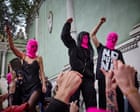
This photo essay from The Guardian presents 20 images capturing global events from the past week, including a protest by Femen and Pussy Riot activists against Russia's participation at the Venice Biennale art show, Israeli strikes in Gaza, the hantavirus outbreak, and Emma Chamberlain at the Met Gala. Other images document the war in Ukraine, with scenes of Russian military rehearsals in Moscow, damaged monuments, and drone strike aftermath, as well as a political protest in Nashville where Democratic state representative Justin J Pearson was removed from the house gallery during a redistricting protest.
New York auctions, James McNeill Whistler at Tate Britain, Edvard Munch—podcast

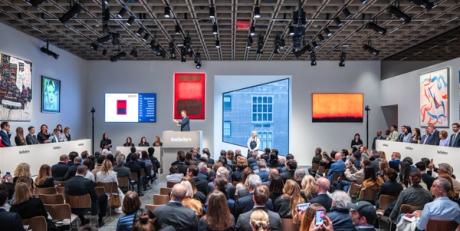
This episode of The Art Newspaper's podcast 'The Week in Art' covers three major stories: the spring auction results in New York, which saw record prices for works by Jackson Pollock, Constantin Brancusi, and Mark Rothko; the opening of the largest James McNeill Whistler exhibition in Europe in over 30 years at Tate Britain in London, which will later travel to the Van Gogh Museum and The Mesdag Collection in the Netherlands; and a feature on Edvard Munch's 1922 frieze from the Freia Chocolate Factory, currently on loan to the Munch museum in Oslo for the exhibition 'Edvard Munch and the Chocolate Factory.'

Several Venice Biennale pavilions shut in protest over inclusion of Israel

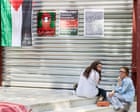
Several national pavilions at the 2026 Venice Biennale shut down during the final preview day in a strike organized by the Art Not Genocide Alliance (Anga) protesting Israel's inclusion due to its war in Gaza. Pavilions from Belgium, the Netherlands, Austria, Japan, Macedonia, and Korea closed entirely, while others like Britain, Spain, France, Egypt, Finland, and Luxembourg partially closed or reopened later. Artists in the main exhibition added Palestinian flags and posters reading "Palestine is the future of the world." The Israeli pavilion was closed for a private event, and earlier in the week Pussy Riot staged a protest at the Russian pavilion.

Venice Biennale opening marked by protests

The 2026 Venice Biennale opened for professionals on Tuesday amid a series of protests, with more planned throughout the week. Around 60 artists from the exhibition "In Minor Keys" gathered at the Giardini for a collective action called "Solidarity Drone Chorus," inspired by Gazan composer Ahmed Muin's "Drone Song," to draw attention to genocide and war in Palestine. The Art Not Genocide Alliance (ANGA) organized a 24-hour strike for Friday 8 May, protesting Israel's participation. Pussy Riot staged a protest outside the Russian pavilion, and the Latvian pavilion launched a campaign against Russia's involvement. The protests follow a highly politicized lead-up, including calls for boycotts of the Russian, Israeli, and US pavilions, EU funding cuts over Russia's participation, and the resignation of the Biennale jury.

Dozens of Venice Biennale Artists Stage ‘Drone’ Perfomance in Protest of Israel’s Participation

On the opening day of the Venice Biennale, around 60 artists and dozens of other participants staged a protest titled “Solidarity Drone Chorus” at the Giardini entrance, humming a viral song by Gazan composer Ahmed “Muin” Abu Amsha to sonically occupy the space. The action, organized by artists in the main exhibition over several months, protested Israel’s participation in the Biennale and expressed support for Palestine, with participants wearing T-shirts bearing the names and artworks of Gazan and Palestinian artists, many of whom have been killed. The protest follows an open letter from the Art Not Genocide Alliance demanding Israel’s exclusion.

Venice Biennale 2026: controversy in contemporary art

The 2026 Venice Biennale has been overshadowed by controversy rather than its art. The main curator, Cameroon-born Koyo Kouoh, died unexpectedly in May. Russia, absent since 2022, returned to the exhibition, prompting the biennale jury to resign in protest after declaring it would not award prizes to countries accused of war crimes, with protests also targeting Israel.