filter_list Showing 6 results for "ALWAYS" close Clear
search
dashboard All 106 museum exhibitions 52trending_up market 15article culture 11rate_review review 6article local 6article news 6person people 4candle obituary 3article policy 2gavel restitution 1
date_range Range Today This Week This Month All
Subscribe

raymond saunders carnegie museum retrospective review

Raymond Saunders's first retrospective, a small but potent exhibition at the Carnegie Museum of Art in Pittsburgh, surveys 35 of his bewitching paintings. The works, described as elusive and Rauschenbergian, feature messy scrawls, collected trinkets, and media clippings, with pieces like *Passages: East, West 1* (1987) layering chess boards, paint strokes, and appropriated still lifes. Saunders, who joined Andrew Kreps and David Zwirner last year, has never before received a retrospective, despite his influential 1967 essay "Black Is a Color" and steady institutional acquisitions.

martin puryear mfa boston review

Martin Puryear's 1978 sculpture *Self* opens a survey of his work at the Museum of Fine Arts, Boston, titled “Martin Puryear: Nexus,” which runs through Sunday before traveling to the Cleveland Museum of Art in April. Curated by Emily Liebert, Reto Thüring, and Ian Alteveer, the exhibition argues that Puryear's abstract, craft-intensive sculptures—like *A Column for Sally Hemings* (2021)—are not merely formalist exercises but carry political and historical meanings that are deliberately withheld, challenging viewers to read beyond elegant surfaces.

blank space book review cultrure over men

W. David Marx's book "Blank Space: A Cultural History of the Twenty-First Century" argues that 21st-century culture has stagnated, blaming the Internet and its economies for a lack of innovation. The book cites critics like Jason Farago and Alex Ross who lament the death of monoculture and the failure of the Internet's promised diversity, while Marx himself longs for a past era of linear artistic progress defined by -isms like Realism and Cubism. However, the review criticizes Marx's framework as rooted in a 19th-century positivist fallacy, noting that art history has never been a clean linear progression and that overlooked artists—such as Hilma af Klint and Hector Hyppolite—have always complicated the canon.

Between Tropes and Treats at NADA New York

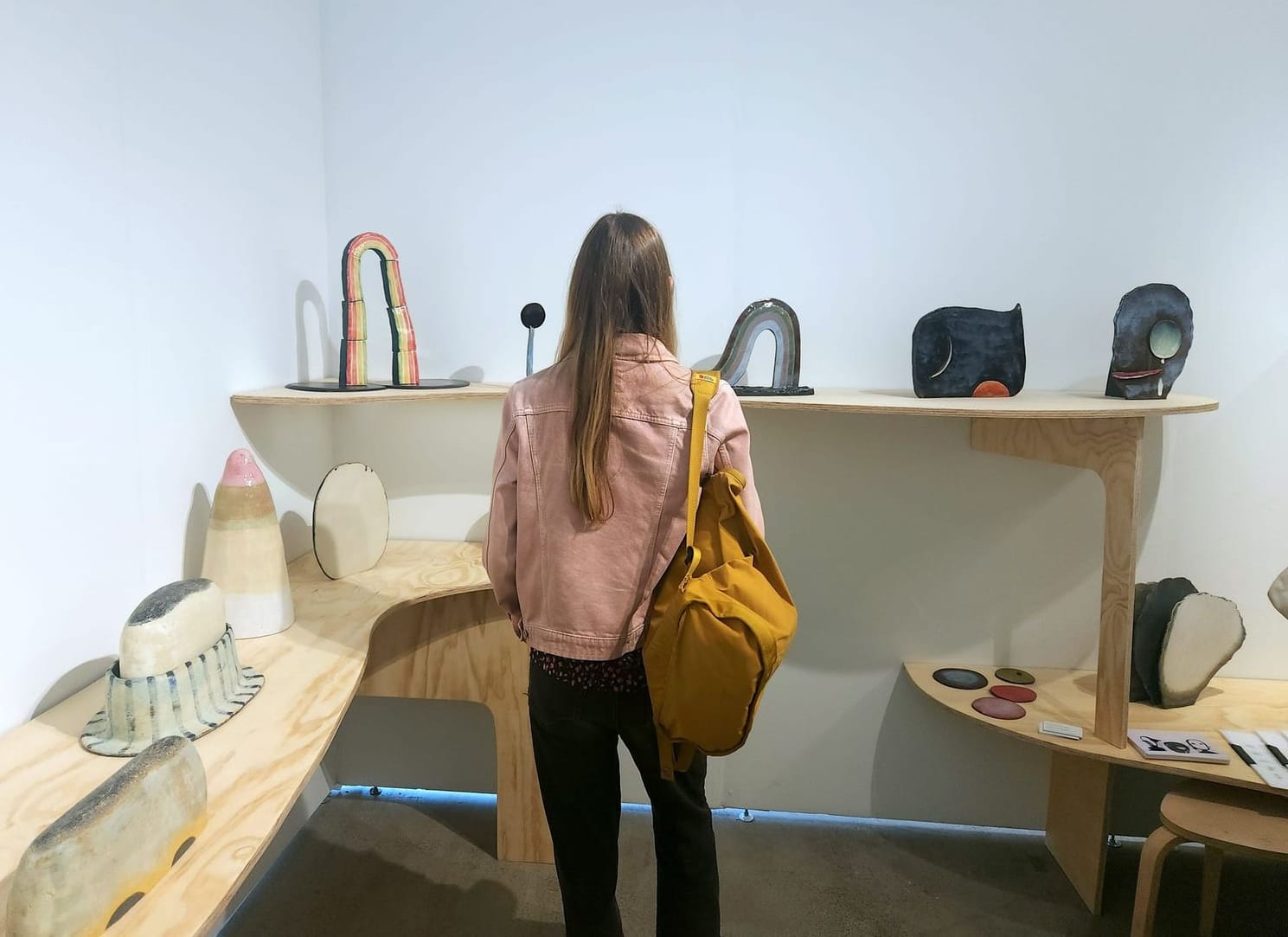
The 12th annual New Art Dealers Alliance (NADA) fair opened at the Starrett-Lehigh Building in Manhattan, featuring a wide array of contemporary works. Critic Rhea Nayyar notes that while many booths felt interchangeable due to prevalent trends like zany sculptures, shiny materials, and kitschy vibrancy, several standout pieces offered genuine engagement. Highlights include Elena Roznovan's maternal ephemera embedded in concrete with bondage tape, Kelly Tapia-Chuning's deconstructed serapes addressing colonial violence, and Niniko Morbedadze's folkloric illustrations.

Ballast review: emerging artist Isabella Kennedy considers submerged histories

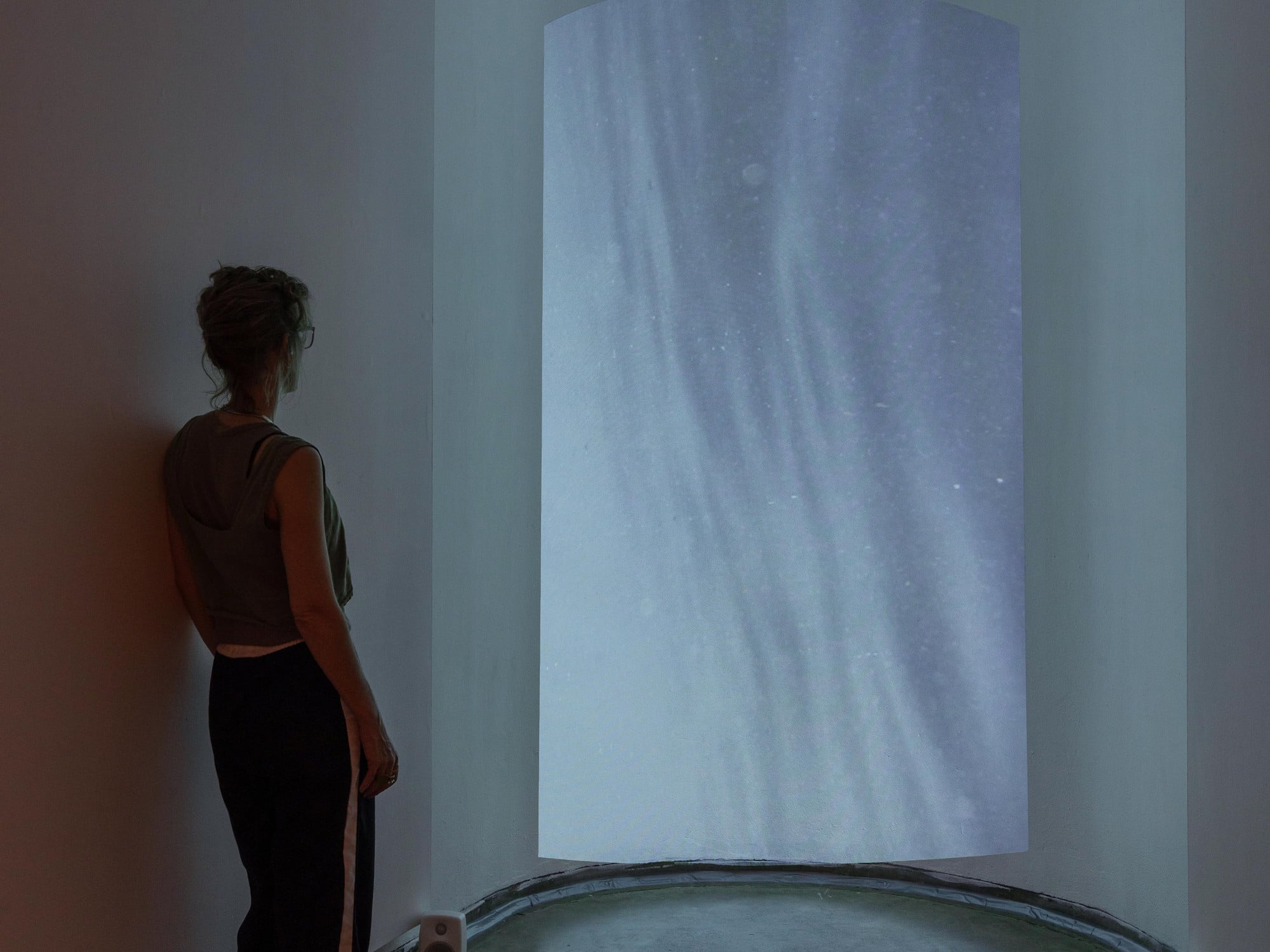
Emerging multidisciplinary artist Isabella Kennedy has unveiled her installation 'Ballast' at Firstdraft in Sydney, a site-specific work that blends paper sculpture, video projection, and sound. The exhibition draws on the unfinished research of her late father, journalist Les Kennedy, regarding the 1941 disappearance of the HMAS Sydney II. Through delicate stitched paper forms and immersive blue light, Kennedy explores themes of familial grief, maritime history, and the meditative acts of remembrance that bridge personal and national narratives.

Before We Knew Better or We Should All Know Better

The article reviews "Before We Knew Better," a group exhibition at Elise Seigenthaler Gallery featuring artists Sarah Bedford, Day Brièrre, Josiah Ellner, and Léa LeFloc'h. The critic reflects on the show's thematic framing around narrative, folklore, and personal mythology, while expressing frustration with its open-endedness and lack of clear intent. Specific works are discussed, including Ellner's psychedelic unicorn paintings, LeFloc'h's enigmatic works on paper, Bedford's nocturnal flowers, and Brièrre's intricate ceramics, though the critic notes the installation does not always serve the pieces well.