filter_list Showing 197 results for "CONTRA" close Clear
search
dashboard All 197 museum exhibitions 78rate_review review 32article culture 31article news 26article local 11trending_up market 11article policy 3person people 2gavel restitution 2candle obituary 1
date_range Range Today This Week This Month All
Subscribe

Christie’s Double-Header Totals $1.1 B., With Several Trophy Works Notching New Records

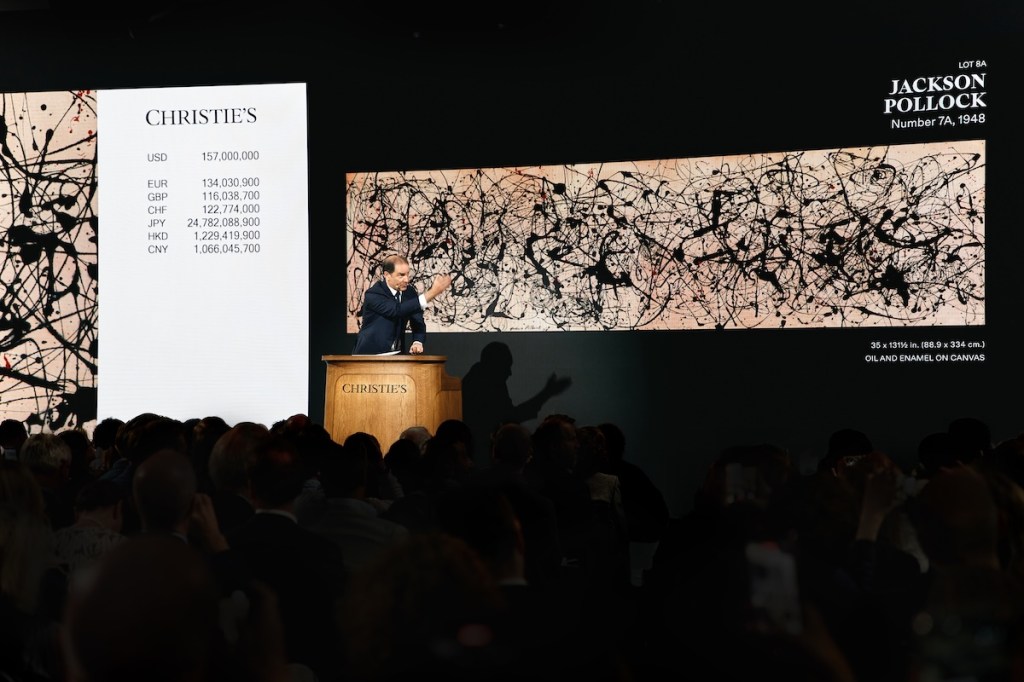
Christie’s held two evening sales on Monday—the S.I. Newhouse collection and a 20th-century art sale—that together generated $1.1 billion across 64 lots. The Newhouse tranche alone made $630.8 million, bringing the cumulative total of the collection to over $1 billion, making it likely the most expensive collection ever sold at auction after Paul Allen’s $1.7 billion blockbuster. Top lots included Jackson Pollock’s *Number 7A, 1948* at $181.2 million (the fourth most expensive painting ever sold at auction), Constantin Brâncuși’s *Danaïde* at $107.6 million, and a Mark Rothko work at $98.4 million.
Eyes Wide Open! Kenny Schachter Dishes on Delinquent Dealers, Secret Deals, and That Other ‘Salvator Mundi’

Kenny Schachter offers a sardonic, first-person account of the spring 2025 art season in New York, weaving together observations from auctions, art fairs, and gallery openings. He notes brisk business at Sotheby's and Phillips, citing specific sales like James Ensor's tiny "Still life with Stingray" ($140,800) and Georgia O'Keeffe's double-sided "Maple Leaves and Flowering Cactus" ($1.68 million). Schachter also recounts his experience at Larry Gagosian's new Madison Avenue gallery, where security guards outnumbered the artworks, and reflects on the broader economic climate, including a tax lawyer moonlighting as a 3-D printer for his own sculpture project. He contrasts the wealthiest collectors—one driving a Lamborghini but staying at a Holiday Inn Express—with dealers wearing grim faces at TEFAF, painting a picture of a bifurcated art economy.

Why did Van Gogh sign his paintings as ‘Vincent’?

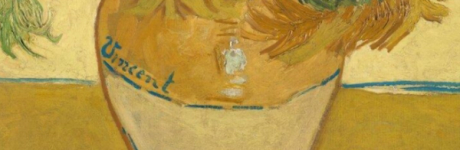
Art historian Julia Engelmayer has published a study titled 'Simply ‘Vincent’: An Overview of Van Gogh’s Signed Paintings' on the Van Gogh Museum's website, analyzing why and how Vincent van Gogh signed his works. The research reveals that only 133 of his 840 surviving paintings bear a signature (16%), an unusually low proportion for a 19th-century artist. Van Gogh signed with only his first name due to strained family relations and the difficulty non-Dutch speakers had pronouncing his surname. The study also highlights his predominant use of red signatures (on 75 works), angled signatures on over half of his signed pieces, and a distinctive horseshoe-shaped 'V' used during his Arles period.

The village where Van Gogh spent his final days celebrates its most distinguished visitor

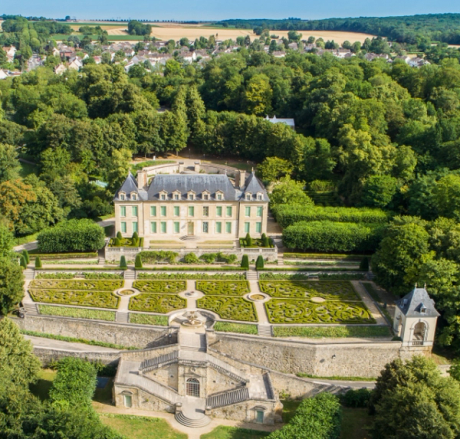
An exhibition titled "Van Gogh, Influencer: Legacies in Motion" has opened at the Château of Auvers-sur-Oise, the village near Paris where Vincent van Gogh spent his final 70 days and died by suicide in July 1890. The show, running until 3 January 2027, features nearly a hundred works by artists influenced by Van Gogh, including Léonide Bourges, Charles-François Daubigny, and Léo Gausson, though no original Van Gogh paintings are included. Curated by Wouter van der Veen, the exhibition explores visual parallels and stylistic contrasts between Van Gogh’s iconic works—such as *Church at Auvers* and *Wheatfield with Crows*—and those of his contemporaries and followers.

Esther fair goes out on top

The Esther art fair, a satellite of Frieze New York, opened its third and final iteration at Estonian House on East 34th Street. Founded by Estonian gallerists Olga Temnikova and Margot Samel, the fair eschews conventional stands, instead arranging 22 participating galleries and three bespoke projects throughout the historic Beaux-Arts building’s basement, salons, and upper floors. Highlights include sold-out presentations at Adams and Ollman and Management, works by Katja Novitskova, Jill Goldstein, and Elīna Vītola, and a special project by Darja Popolitova and Madlen Hirtentreu turning beauty-industry equipment into installations. Gallerists praised the cooperative atmosphere, contrasting it with larger, more institutionalized fairs.

No Attitude, Nowhere: Conviction, Zero Meaning

Keine Haltung, nirgends Gesinnung, null Bedeutung

The article critiques the current state of the art world and broader culture, arguing that right-wing calls for depoliticized art are intensifying while the progressive art establishment silently tolerates a culture war that restricts free expression. It uses the 2025 Met Gala as a prime example, describing the event as a heartless display of wealth and power aligned with Trump-era capitalism, where celebrities and artists perform progressive values while participating in a spectacle sponsored by anti-union figures like Jeff Bezos. The author draws on Hannah Arendt's ethics lectures to suggest that moral norms have collapsed overnight, and that the commercial art world now legitimizes anti-democratic tendencies through its silence.

Notes from New York: The World in a Convex Mirror

The article reviews the sixth edition of MoMA PS1's quinquennial survey 'Greater New York 2026,' which coincides with the institution's 50th anniversary. It highlights works by artists such as Covey Gong, Win McCarthy, Mekko Harjo, and Sophie Friedman-Pappas, noting how the exhibition's themeless structure and use of reflective surfaces create a hall of distorted reflections. The show includes 53 emerging and midcareer artists, mostly millennials, and is accompanied by a block party and gala rather than a dedicated commemorative exhibition like FORTY (2016).

The Box Shutters in Los Angeles After Nearly Two Decades

The Box, a pioneering Los Angeles gallery known for its nonprofit-style support of experimental and performance art, has announced its closure after nearly two decades. Founded in 2007 by Mara McCarthy, the gallery’s final exhibition featured late California painter Wally Hedrick, and a closing event will include a fashion show by Johanna Went. Mara McCarthy cited the shifting market for her father Paul McCarthy’s work and the loss of family homes in the Eaton Fire as factors behind the decision.

Sotheby’s Buoyant $303.4 Million Modern Art Evening Sale: By the Numbers

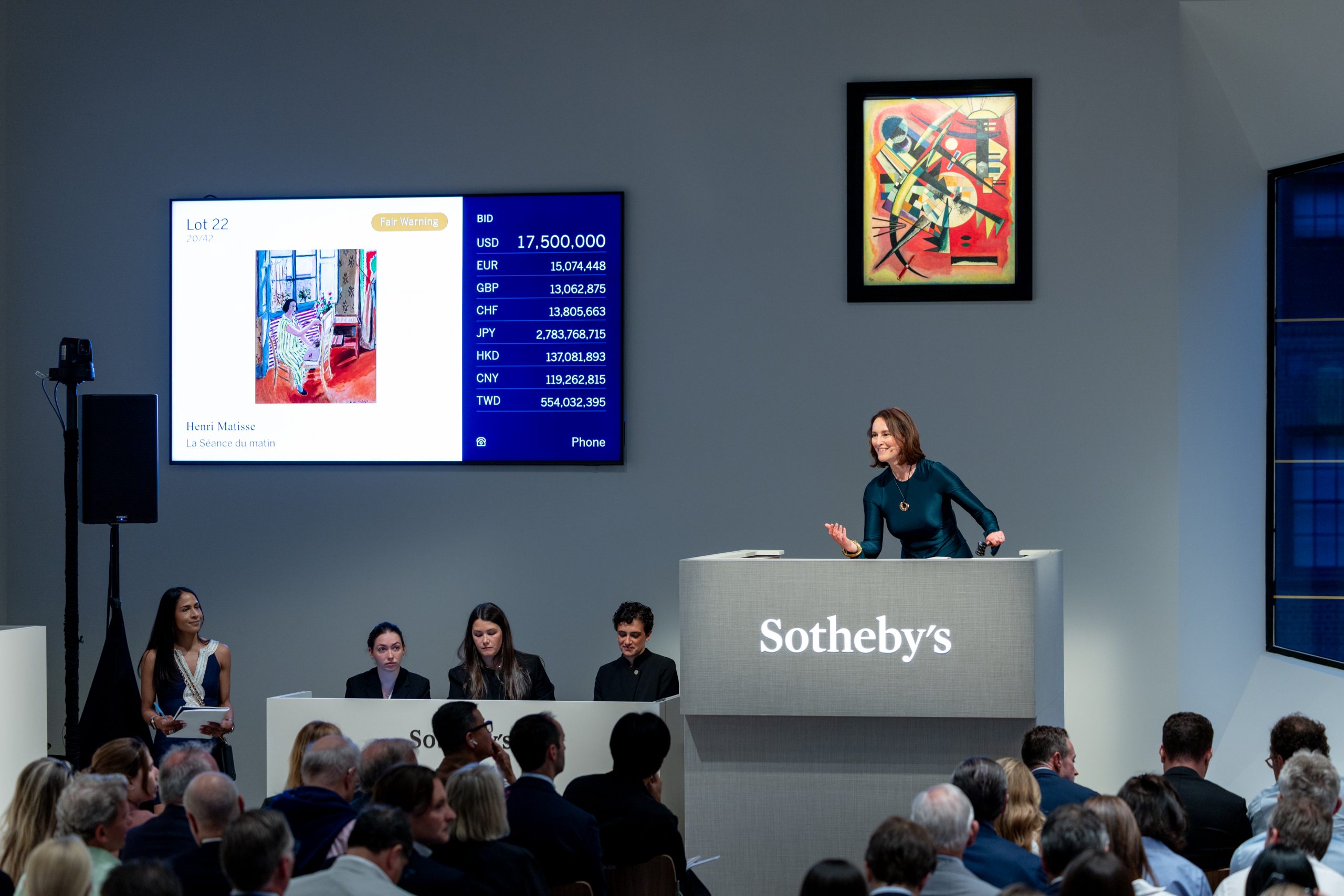
Sotheby’s modern art evening sale on Tuesday night generated $303.4 million, with a 97.6% sell-through rate and a hammer total of $256.5 million. The top lot was Henri Matisse’s *La Chaise Lorraine* (circa 1919), which sold for $48.4 million after a prolonged bidding war. The house withdrew three lots before the sale to improve optics, and 85% of the lots were guaranteed, mostly by third parties. Asian collectors were active at seven-figure price points, contrasting with sparse high-end bidding at Christie’s the previous night.

Big Crisis, Small Gestures

Große Krise, kleine Gesten

The article reviews the second edition of the Klima Biennale Wien, which opened in early April in Vienna. It notes that while the biennale aims to address the urgent triple crisis of climate change, biodiversity loss, and pollution, its execution falls short. The exhibition features symbolic works such as a beached whale, a broken boat, and a compostable SUV sculpture, but these motifs feel repetitive and lack the necessary impact. The author contrasts these with historical precedents like Menashe Kadishman's 1978 Venice Biennale installation and Joseph Beuys' "7000 Eichen" (1982), arguing that the themes of nature and sustainability are not new, only the urgency has intensified.

Venice Biennale 2026 Highlights: Off-Site Exhibitions

ArtReview editors highlight off-site pavilions and exhibitions at the 61st Venice Biennale, running from 9 May through 22 November 2026. Featured works include Li Yi-Fan's film *Screen Melancholy* at Palazzo delle Prigioni, which uses motion capture and a free-trial videogame engine to explore digital alienation and the 'enshittosphere,' and Roberto Diago's installation *Free Men* at the Pavilion of Cuban Republic, comprising rusted iron heads, fragmented wooden figures, and text works critiquing political oppression in Cuba.

Nicholas Pope, sculptor whose career came in two acts, 1949–2026

Nicholas Pope, a British sculptor known for his organic, post-minimalist works, has died at age 76. His career unfolded in two distinct acts: an early phase in the 1970s producing roughly-hewn wooden columns like *Oak Tree Column* (1973) and *Drooping Column* (1975), which earned him a spot in the British Pavilion at the 1980 Venice Biennale, followed by a decades-long hiatus after contracting viral encephalitis in Tanzania. He later returned to sculpture with brighter, brasher works in ceramic, glass, and felt, including *The Apostles Speaking in Tongues Lit By Their Own Lamps* (1993–96) and collaborations like *The Conundrum of the Chalices of the Seven Deadly Sins and Seven Virtues* (2015) with James Maskrey.

One Erased Vermeer, Two Books, and No Consensus

Two new books examine the legacy of Johannes Vermeer from contrasting angles. Ruth Bernard Yeazell's "Vermeer's Afterlives" (Princeton University Press) explores how the artist's open-ended, figureless interiors have inspired later creators, from painter George Deem to novelist Tracy Chevalier. Andrew Graham-Dixon's "Vermeer: A Life Lost and Found" restores the historical and religious context of 17th-century Delft, arguing that modern readings have overlooked the original meanings of Vermeer's works.

10 Ausstellungen, die Sie zum Gallery Weekend nicht verpassen sollten

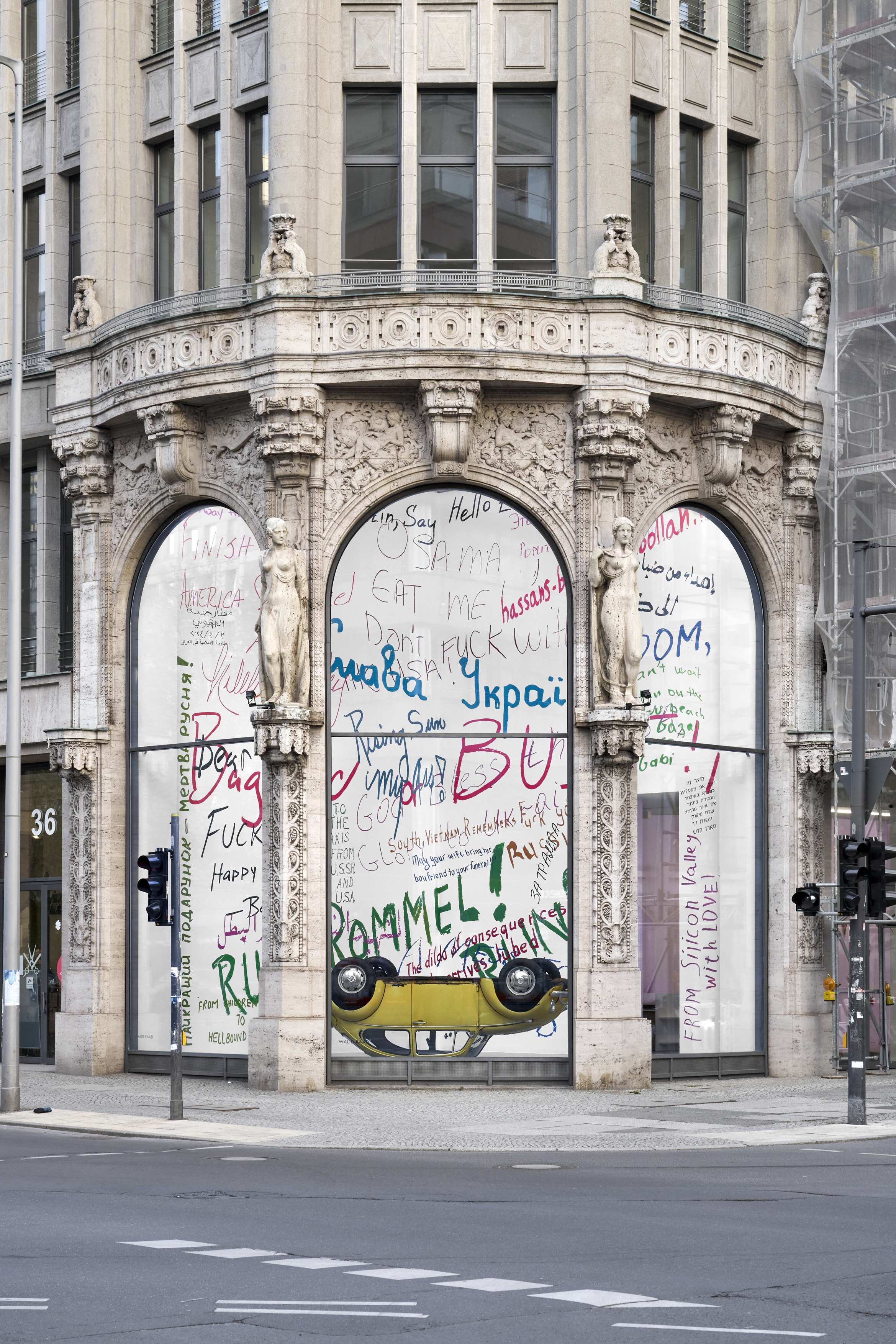
The article highlights ten must-see exhibitions during Berlin's Gallery Weekend, curated by the editorial team of Monopol magazine. Featured shows include Jiyoon Chung's installation "Dead End" at Anton Janizewski, which explores perception and anxiety through subtle triggers; Giorgio Griffa's retrospective at Walter Storms Galerie, showcasing his poetic abstract paintings on un-stretched linen; Walid Raad's "Like a Rubber Rung on a Ladder" at Galerie Thomas Schulte, referencing the Lebanese Civil War with a crashed VW Beetle and graffiti; and Thomas Demand's exhibition at Sprüth Magers, where his photographs printed on copper plates reflect on current events like the Gaza war and climate change.

10 exhibitions you can still see after Berlin's Gallery Weekend

10 Ausstellungen, die Sie auch nach dem Gallery Weekend in Berlin sehen können

The Monopol editorial team highlights ten standout exhibitions from Berlin's Gallery Weekend, including Jiyoon Chung's installation "Dead End" at Anton Janizewski, which uses subtle triggers to explore perception and anxiety; Giorgio Griffa's retrospective at Walter Storms Galerie, featuring his poetic abstract paintings on raw linen; Walid Raad's narrative-driven show at Galerie Thomas Schulte, referencing the Lebanese civil war with a crashed VW Beetle and bomb graffiti; and Thomas Demand's new works at Sprüth Magers, printed on copper plates to create a shimmering aura. The article provides a curated tour of these shows, many of which remain open after the weekend.

Think you have strong opinions about the 2026 Archibald prize? Check out the portraits that didn’t make the cut | Dee Jefferson

The article explores the annual ritual of the Archibald Prize, Australia's most famous portrait competition, through the lens of the 2026 edition. The author, Dee Jefferson, describes the predictable cycle of public enthusiasm, critical disdain, and media coverage that surrounds the prize, noting recurring trends like brown suits, oversized heads, and the dominance of male artists painting male subjects. The piece highlights specific works in this year's exhibition, including a portrait of musician Keli Holiday by Sindy Sinn that the author finds disorienting, and contrasts the main exhibition with the Salon des Refusés, the showcase of rejected entries, which includes a provocative portrait of Patricia Piccinini by Wendy Sharpe featuring exaggerated anatomy.

The Permanence of Refusal: Interview with Ding Yi

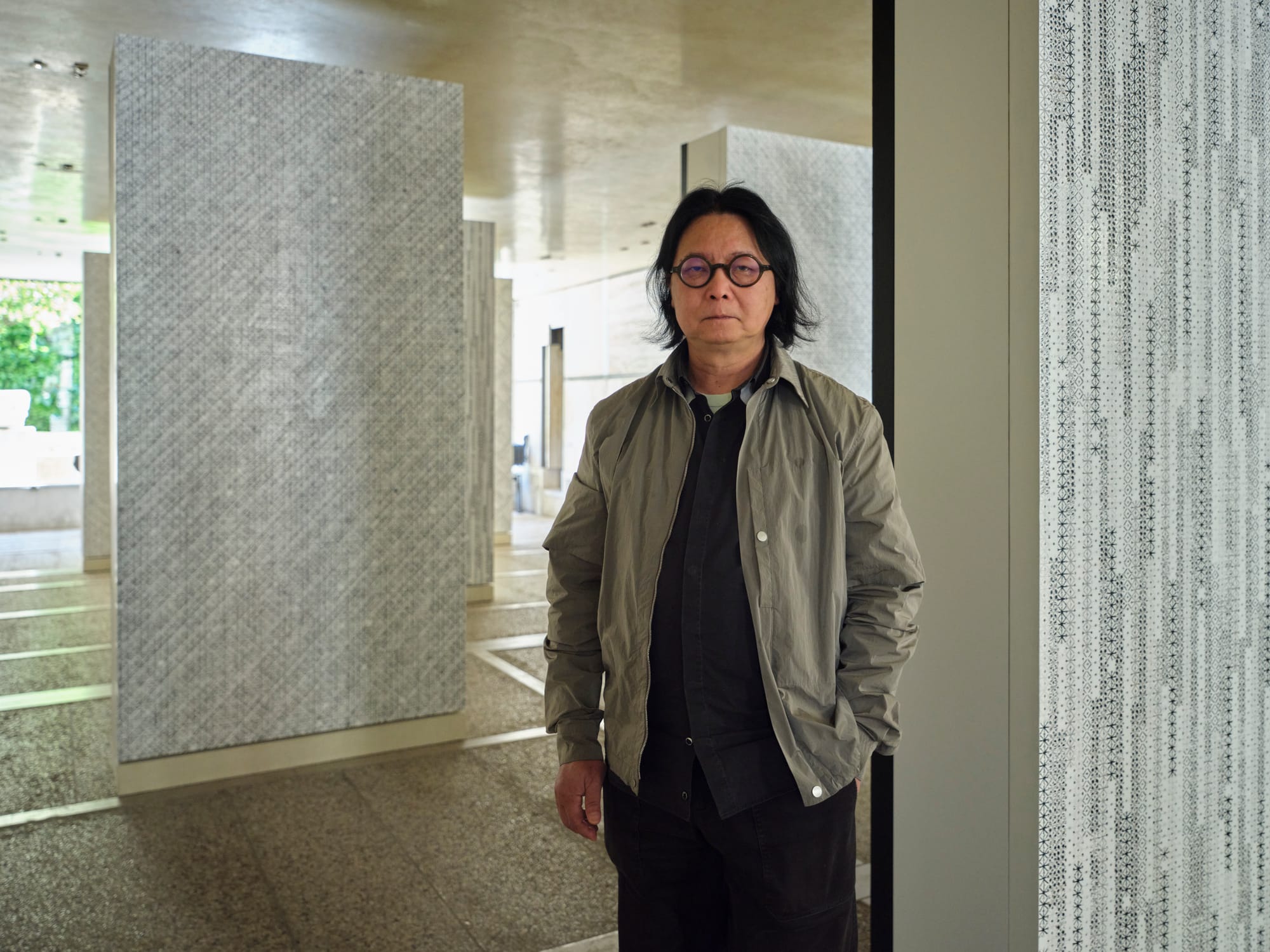
Chinese artist Ding Yi, who first appeared at the Venice Biennale in 1993 as part of the inaugural Chinese contemporary art exhibition, has returned to Venice with his first solo show in the city, titled “Cosmotechnics: Ding Yi as a Planetary Code” at Fondazione Querini Stampalia. The exhibition, referencing philosopher Yuk Hui's concept of cosmotechnics, traces Ding Yi's abstract visual language from the 1980s to the present, featuring new and historic works that engage with the modernist architecture of Carlo Scarpa. In an interview with ArtAsiaPacific during the 61st Venice Biennale preview week, Ding Yi reflects on the evolution of his practice, his travels, and the deep perceptual frameworks of ancient civilizations.

A $433 Million Boost for the Market

Sotheby's May 2026 auctions in New York generated $433.1 million in sales over under three hours, a 132.7 percent increase compared to the same period last spring, despite offering fewer lots. This strong performance signals a top-heavy recovery in the art market after three years of contraction. Separately, the Neue Galerie will merge with the Metropolitan Museum of Art in 2028, and Art Dubai continues despite disruptions from the U.S.-Iran war.

Shared Crafting, Touching, and Lying Down

"Gemeinsames Basteln, Anfassen und Hinlegen"

Christie's in New York achieved record auction results, with Jackson Pollock's "Number 7A, 1948" selling for $181.2 million and Constantin Brâncuși's bronze sculpture "Danaïde" reaching $107.6 million, both from the S. I. Newhouse collection. Meanwhile, critic Gesine Borcherdt published a scathing review of the Marina Abramović exhibition "Balkan Erotic Epic" at Gropius Bau Berlin, arguing that museums increasingly demand audience participation—crafting, touching, lying down—under the guise of democracy, which she likens to group therapy and warns carries authoritarian tendencies. In London, makeup artist and designer Isamaya Ffrench opened a hybrid gallery and concept store called Studio Iron, featuring works by Abramović, Paul McCarthy, Kelly Wearstler, and Anne Imhof, aiming to blur boundaries between art, design, and function.

How Did Phillips Pull Off a $115.2 Million ‘White Glove’ Sale? Here’s What the Numbers Say

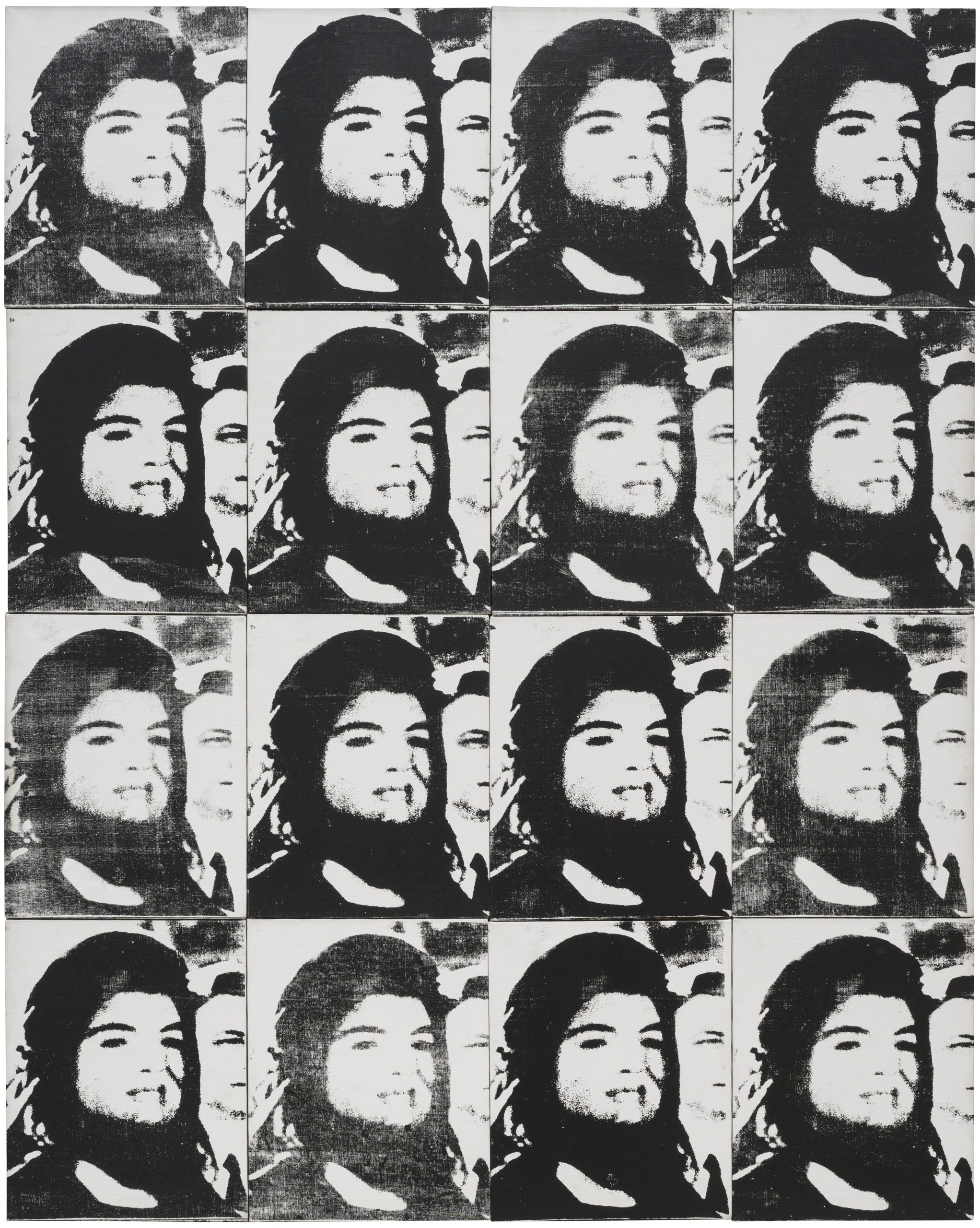
Phillips achieved a $115.2 million 'white glove' evening sale in New York on Tuesday night, with 41 of 43 lots sold and a 100% sell-through rate after withdrawals. The auction more than doubled last year's $52 million total, led by Andy Warhol's *Sixteen Jackies* (1964) at $16.2 million. Only three records were set—for P.S. Krøyer, Pat Passlof, and Joseph Yaeger—but the sale's success was driven by third-party guarantees on 21 lots and newly launched priority bids.

Inside the Unlikely Bond Between Lucian Freud and Kate Moss

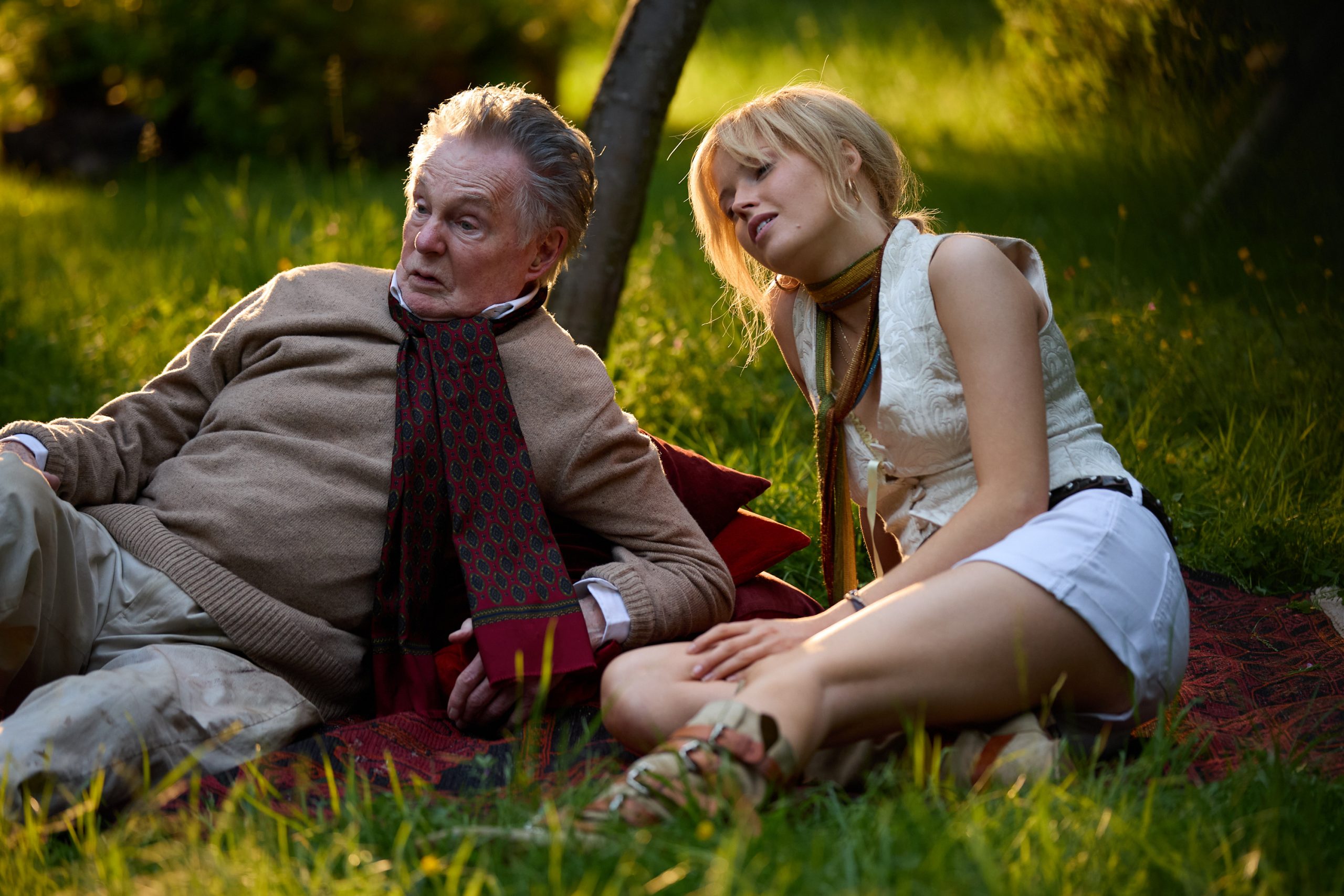
In 2002, Lucian Freud unveiled a portrait of a naked and pregnant Kate Moss, a rare celebrity subject for the artist who had turned down Princess Diana. A new film, *Moss & Freud*, dramatizes the unlikely friendship that developed between the aging painter and the supermodel during the creation of *Naked Portrait (2002)*. Directed by James Lucas, the film stars Ellie Bamber as Moss and Derek Jacobi as Freud, and explores their intense studio sessions, personal revelations, and the bond that formed despite their contrasting lifestyles.

‘I shared a single bed with my mother for three years’: Sung Tieu on her monument to immigrant workers in Venice

Artist Sung Tieu has clad the German pavilion at the 2024 Venice Biennale with a mosaic replica of the Gehrenseestrasse complex, a now-abandoned housing estate in Berlin where she lived as a child. The work, titled "Human Dignity Shall Be Inviolable," uses three million mosaic stones to recreate the facade of the prefabricated blocks that housed Vertragsarbeiter—contract workers from Vietnam, Mozambique, Angola, and Cuba who bolstered East Germany's economy. Tieu, who shared a single bed with her mother in the complex for three years, conceived the pavilion alongside the late artist Henrike Naumann.

At the Venice Biennale, Koyo Kouoh’s ‘In Minor Keys’ Looks Deeply at Lush Gardens and a Scarred Earth

Koyo Kouoh's exhibition 'In Minor Keys' at the 2026 Venice Biennale centers on the practices of two deceased artists, Issa Samb and Beverly Buchanan, whose ways of thinking animate the show through dedicated 'Shrines' in the Central Pavilion. The exhibition also draws on Marcel Duchamp's legacy, featuring works by over a dozen contemporary artists including Akinbode Akinbiyi, Guadalupe Rosales, Natalia Lassalle-Morillo, Guadalupe Maravilla, Sofía Gallisá Muriente, and Avi Mograbi, whose installation 'Between a River and a Sea' contrasts pre-1948 business directories with a 2023 Gaza Yellow Pages. A section called 'The Schools' highlights artist-run spaces such as Denniston Hill, Guest Artists Space (G.A.S.) Foundation, blaxTARLINES, and the Nairobi Contemporary Art Institute.

On Paranoid Time

Film Notes has published Qingyuan Deng's essay exploring the intersection of Lacan's concept of retroactive meaning and Eve Kosofsky Sedgwick's distinction between paranoid and reparative reading, as applied to recent artists' films and moving-image installations. The essay examines how works like Alison Nguyen's installation "Perforation, Ellipse" at New York's Storefront for Art and Architecture use cinematic techniques—such as perforations, splices, and missing scenes—to hold the temporal gap between an event and its belated political comprehension, focusing on the censorship of Vietnamese bolero songs after the American War.

In Giverny, Monet does not benefit everyone

À Giverny, Monet ne profite pas à tout le monde

The article examines the economic paradox of Giverny, the French village where Claude Monet lived and painted. While Monet's gardens attract nearly one million visitors annually—with ticket sales estimated at €9-10 million—the village itself, with a population of just 430 and an annual budget of €600,000, sees almost none of that revenue. Visitors flood in for half-day trips, queue for hours to see the gardens, and leave by evening, spending little in local shops. The gardens, run by the Académie des beaux-arts, are tax-exempt and operate as a closed economic loop, with their boutique and restaurant generating income that stays within the institution.

With New Tribeca Outpost, Gratin Gallery Doubles Down on Young Artists

Gratin Gallery, founded by Talal Abillama, is opening a new outpost in Tribeca at 15 White Street, leased for ten years. The space will debut on May 15 with “Blinds and Shutters,” the first U.S. solo exhibition of Spanish sculptor Mónica Mays. The gallery, which started on Avenue B in 2022 and later moved to Grand Street, is expanding despite a challenging art market. Abillama cites the need to be closer to collectors who avoid the 15-minute walk from Tribeca to Chinatown. The new location sits near Luhring Augustine and Ortuzar Projects, and will officially open in November after renovations.

Alma Allen Offers a Quiet Vision in Venice—Even as Questions Swirl the U.S. Pavilion

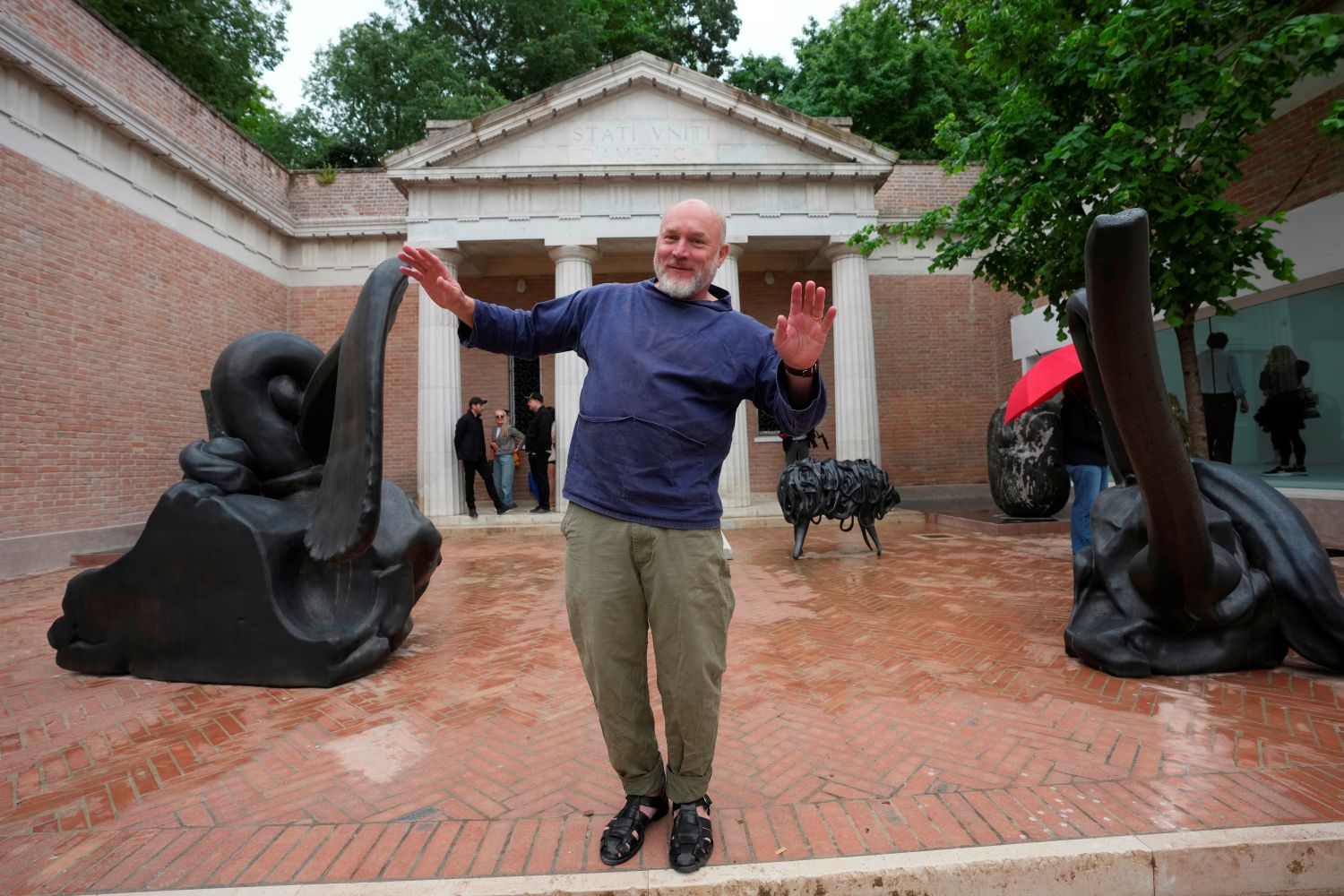
Alma Allen's exhibition "Call Me the Breeze" has opened at the U.S. Pavilion for the 61st Venice Biennale. The Utah-born sculptor presents a pared-down, whimsical show that contrasts with the bombastic work of his predecessors, grouping new and old pieces to explore themes of conflict, mourning, and transcendence inspired by Hieronymus Bosch's *Visions of the Afterlife*. The exhibition was produced hurriedly over a few months, and Allen, who typically leaves his works untitled, felt compelled to explain his art for the first time in 30 years amid controversy surrounding his commission.

If fashion is art, why doesn’t CNZ fund it?

Creative New Zealand (CNZ) explicitly states on its website that it does not fund fashion design, classifying it as primarily part of the commercial creative industries. The article highlights the contradiction that while major institutions like The Dowse Art Museum, Auckland Art Gallery, and World of WearableArt treat fashion as art, CNZ denies funding to fashion designers, with rare exceptions for non-commercial, cross-cultural, or collaborative projects. Fashion designer Doris de Pont, founder of The New Zealand Fashion Museum, notes that even when her trust received CNZ support, it was for the art connection, not the fashion itself.

6 Rising Artists to Watch at This Year’s Venice Biennale

The article profiles six rising artists at the 2026 Venice Biennale, focusing on Sung Tieu and Gala Porras-Kim. Tieu transforms the German Pavilion with a tile shell recreating a former housing complex for Vietnamese contract workers, while inside she scatters chocolate ladybugs as a symbol of occupation. Porras-Kim presents work in the Arsenale examining 'institutionally defined damage' and how decay can realign objects with their natural state.

Venice off the beaten track

The article highlights collateral exhibitions at the 2024 Venice Biennale that take place beyond the main venues of the Giardini and Arsenale, offering visitors unexpected discoveries in historic Venetian palazzos and warehouses. Featured shows include Hernan Bas's 'The Visitors' at Ca' Pesaro, exploring tourism's contradictions; 'Turandot: To the Daughters of the East' at Palazzo Franchetti, a group exhibition of women artists from Central Asia; and Amoako Boafo's first solo show in Italy at Palazzo Grimani, presented by Gagosian.