filter_list Showing 94 results for "US pavilion" close Clear
search
dashboard All 94 article news 37museum exhibitions 26rate_review review 23article policy 3trending_up market 2candle obituary 2article culture 1
date_range Range Today This Week This Month All
Subscribe

10 Shows Around Venice Not to Miss During the Biennale

ARTnews has published a guide to 10 exhibitions in Venice worth seeing during the 2026 Biennale, beyond the central show "In Minor Keys" curated by the late Koyo Kouoh and the national pavilions. Highlights include a major survey of Lee Ufan at the San Marco Art Centre (SMAC Venice), organized by the Dia Art Foundation and curated by Jessica Morgan; "Helter Skelter: Arthur Jafa and Richard Prince" at Fondazione Prada, curated by Nancy Spector; and "Strange Rules" at Palazzo Diedo, conceived by Hans Ulrich Obrist with Mat Dryhurst and Holly Herndon, introducing the concept of "Protocol Art." Other venues include the Gallerie dell'Accademia, Pinault Collection, Berggruen Arts & Culture, Fondazione Sandretto Re Rebaudengo, and a three-night-only performance at Teatro Goldoni.

The Venice Biennale’s Polite Fiction of Being ‘Above the Market’ Is Wearing Thin

The 61st Venice Biennale is underway, with art world figures flocking to Venice for the opening. While the Biennale is officially a non-selling curatorial platform, commercial interests are increasingly visible: galleries are funding artists' projects to recoup investments, auction houses like Christie's are hosting private selling exhibitions (including a 'Ghost Pavilion' at the Ca' Dario Palazzo), and fashion houses such as Bottega Veneta and Chanel are sponsoring events. Sotheby's has pulled support for the U.S. Pavilion, which is now crowdfunding, while Frieze is bankrolling the British Pavilion for a second time.

U.S. Crowdfunds Its Venice Biennale Pavilion

The United States is crowdfunding its pavilion at the 61st Venice Biennale, which opens in ten days, due to the absence of major sponsors like the Ford Foundation and the Mellon Foundation. The pavilion, featuring sculptures by Alma Allen, is being organized by the American Arts Conservancy (AAC), which is soliciting donations through a campaign that has been live since at least November. The U.S. government contributes $375,000, but the installation costs significantly exceed that amount. Donors include Nevada-based Republican donors Jim and Aimee Battista, talent manager Tom Ierna, and actor Alex Pita. The AAC has not disclosed the campaign's fundraising goal, amount raised, or end date.

Alma Allen Speaks Out on Backlash Over U.S. Pavilion Commission: ‘A Little Stressful’

Sculptor Alma Allen has spoken out for the first time about the backlash he faced after accepting the commission to represent the United States at the Venice Biennale. In a rare interview on the podcast *Time Sensitive*, recorded at his home in Tepotzlán, Mexico, Allen described the response as “a little stressful” but said he never hesitated when curator Jeffrey Uslip invited him last fall. His selection sparked controversy because the State Department’s requirement that proposals “reflect and promote American values” while not promoting DEI initiatives led higher-profile artists like William Eggleston and Barbara Chase-Riboud to refuse. Allen’s former galleries, Mendes Wood and Olney Gleason, dropped him after he accepted, though he has since joined Perrotin. He also hinted that his exhibition, “Call Me the Breeze,” will include work about conflict and surveillance.

alma allen gallery representation perrotin venice biennale

Sculptor Alma Allen has officially joined Galerie Perrotin, a major international blue-chip gallery, ahead of his representation of the United States at the upcoming Venice Biennale. The move follows a period of representation turnover, as Allen was recently dropped by Olney Gleason and Mendes Wood DM after accepting the prestigious commission. Perrotin will provide essential logistical and operational support for the U.S. Pavilion, with Allen’s first solo exhibition at the gallery’s Paris location scheduled for this fall.

alma allen american pavilion 2026 venice biennale

Alma Allen, a Utah-born, Mexico-based sculptor, has been selected to represent the United States at the 2026 Venice Biennale, according to ARTnews sources. The pavilion's commissioning curator is Jeffrey Uslip, who previously curated the Malta Pavilion in 2022. The official announcement is pending the end of the government shutdown. Allen, known for large-scale stone, wood, and bronze sculptures, is in talks with Perrotin gallery for representation after his previous gallery, Kasmin, closed and rebranded as Olney Gleason.

Who is Alma Allen, US Pavilion Artist for the 2026 Venice Biennale?

who is alma allen us pavilion artist 2026 venice biennale

The US Department of State has confirmed that sculptor Alma Allen will represent the United States at the 2026 Venice Biennale. Allen, a Utah-born, Mexico-based artist known for abstract biomorphic sculptures, was selected after a fraught selection cycle that included updated guidelines requiring proposals to promote American values. He was approached directly by curator Jeffrey Uslip, who will organize the US pavilion, and accepted the offer despite reportedly being advised against it by his former galleries Mendes Wood DM and Olney Gleason, which subsequently cut ties with him.

who is alma allen venice biennale

Alma Allen, a self-taught Utah-born sculptor based in Mexico, has been confirmed as the U.S. representative for the 61st Venice Biennale, opening in May. His pavilion exhibition, titled “Alma Allen: Call Me the Breeze,” will be curated by Jeffrey Uslip and commissioned by Jenni Parido of the American Arts Conservancy. Allen’s selection is notably unconventional: he has no major museum solo exhibitions and was dropped by his galleries, Mendes Wood and Olney Gleason, after accepting the commission. The U.S. State Department’s brief release frames the presentation as highlighting “alchemical transformation of matter” and “elevation,” aligning with the Trump Administration’s focus on “American excellence.”

us pavilion venice biennale robert lazzarini proposal

The United States Pavilion at the upcoming Venice Biennale faces an uncertain future after a proposal by artist Robert Lazzarini and independent curator John Ravenal collapsed. The proposal, selected by the US State Department in early September, fell through when the University of South Florida’s Contemporary Art Museum declined to sign the contract, citing a shortened timeline and financial obligations. Ravenal attributed the breakdown to bureaucratic misalignment rather than ideological disagreement, while the State Department declined to comment. The selection process also shifted this year, with the National Endowment for the Arts excluding itself due to staffing transitions, leaving the State Department to handle it alone.

Alma Allen Flops in Venice

Hyperallergic reports on the 2026 Venice Biennale, with Editor-in-Chief Hakim Bishara criticizing the U.S. pavilion's exhibition of Alma Allen's work as a disappointing departure from the previous editions' profound explorations of Indigenous life and Black sovereignty. Editor-at-Large Hrag Vartanian offers a positive review of the main exhibition "In Minor Keys," while Greta Rainbow covers a poetry procession honoring the late artistic director Koyo Kouoh. Additional stories include a review of the film "The Christophers" about an artist and forger, and news of workers at the American Folk Art Museum picketing for higher wages.

alma allen us venice biennale pavilion non political artist

Alma Allen, a sculptor known for sleek, abstract works, has been selected to represent the United States at the 2026 Venice Biennale, marking the country's 250th anniversary. The selection process, run by the US State Department and funded by the newly formed American Arts Conservancy—which the article notes is stocked with Trump allies—has drawn criticism for favoring politically neutral art. Allen's sculptures, often made of marble and wood with digital technology, are described as aesthetically inoffensive and reminiscent of Constantin Brâncuși, with no apparent commentary on current US issues.

The US Pavilion Is Taking Online Donations

The American Arts Conservancy (AAC), the nonprofit tasked with executing Alma Allen's 2026 US Pavilion at the Venice Biennale, is soliciting online donations from the public after receiving no corporate or foundation funding. Unlike previous pavilions backed by major foundations like Ford and Mellon, AAC's fundraising relies on private citizens, with a minimum $100 donation requested via its website. The State Department provided $375,000 but requires additional funding, and AAC's Executive Director Jenni Parido, a former pet food store owner, declined to name specific donors, though Instagram posts suggest wealthy Trump allies attended benefit events. Perrotin Gallery, which represents Allen, is providing operational support but not funding.

There Has Never Been an Apolitical Venice Biennale

"Es hat niemals eine unpolitische Venedig-Biennale gegeben"

The Venice Biennale is embroiled in political controversy, with the US Pavilion's selection process criticized for bypassing traditional curatorial expertise in favor of a politically connected outsider. Simultaneously, a collective of artists and academics is protesting Russia's return to the Biennale, arguing it uses art as a political instrument to normalize its actions amid the war in Ukraine. An analysis in ArtReview contends the Biennale has never been apolitical, serving as a stage for geopolitical power plays since its inception.

state department confirms alma allen 2026 us pavilion

The US Department of State confirmed that Mexico-based artist Alma Allen will represent the United States at the 2026 Venice Biennale, opening next May. Jeffrey Uslip will serve as curator, and the commissioning institution is the American Arts Conservancy (AAC), with its executive director Jenni Parido as official commissioner. Allen, who has had only two museum solo shows in three decades, was approached directly by Uslip in October after the State Department had already approved him. The selection process broke from tradition: the National Endowment for the Arts was not involved due to time constraints and staffing transitions, and a prior proposal by artist Robert Lazzarini and curator John Ravenal fell through after negotiations with the University of South Florida’s Contemporary Art Museum collapsed. Allen’s pavilion, titled "Call Me the Breeze," will feature about 30 works exploring elevation and transformation, framed by the State Department as furthering the Trump Administration’s focus on American excellence.

At the ‘art world Olympics,’ Team USA is chaotic

The US Pavilion at the 2026 Venice Biennale, often called the 'art world Olympics,' is mired in controversy and delays under the Trump administration. Curator Jeffrey Uslip insists the process has been smooth and artistically autonomous, but the selection of sculptor Alma Allen and commissioner Jenni Parido—a former pet supply shop owner with a new nonprofit—has raised eyebrows. The usual vetting process by the National Endowment for the Arts was disrupted, new language banning diversity, equity, and inclusion efforts was added to applications, and a government shutdown left only six months to fundraise and plan the exhibition, which coincides with the US's 250th anniversary.

american arts conservancy venice biennale

The Trump administration has selected Mexico-based sculptor Alma Allen to represent the United States at the 61st Venice Biennale, with the pavilion organized by curator Jeffrey Uslip and sponsored by the newly formed American Arts Conservancy (AAC). The AAC, founded in July 2024 and based in Tampa, is run by executive director Jenni Parido, a pet foods entrepreneur with no prior art-world experience, and its board includes figures from construction, conservative media, and high-end event planning, raising questions about its qualifications for this high-profile role.

It’s the Most Controversial Venice Biennale in Years. Can the Art Stand Up to the Noise?

The 2026 Venice Biennale is embroiled in controversy, with the US Pavilion at the center of a political storm. The Trump administration's State Department overhauled the selection process, bypassing the usual NEA panel and commissioning a nonprofit, the American Arts Conservancy, to organize the pavilion. Artist Alma Allen, who accepted the invitation despite threats from galleries and curators, presents a show that critics find politically muted. The Biennale's jury resigned days before the opening, and annual prizes were canceled, adding to the turmoil.

Venice Biennale Strike Makes History

On May 8, thousands marched through Venice and more than two dozen national pavilions were partially or fully shuttered during a 24-hour strike organized by the Art Not Genocide Alliance and local activist groups. The strike, which included Palestinian flags draped over artworks, marks the first cultural strike in the Venice Biennale's 131-year history. Italian police beat back protesters as Editor-in-Chief Hakim Bishara reported from the scene. Separately, a nesting seagull near the Polish pavilion became an unexpected star, and the LA Art Book Fair opened with a focus on archival materials.

The US Pavilion Wants Your Money

The American Arts Conservancy, a new nonprofit with MAGA-aligned leadership, is fundraising for Alma Allen's 2026 US Pavilion at the Venice Biennale through a "Donate" button on its website, having received no institutional financial support. Meanwhile, a sculpture by Pedro Reyes at the newly unveiled LACMA building has sparked controversy for recalling a 2021 commission rejected by Mexico City after Indigenous and feminist protests, and the experimental LA nonprofit The Box has closed after 19 years.

Our pick of the best pavilions at the 61st Venice Biennale

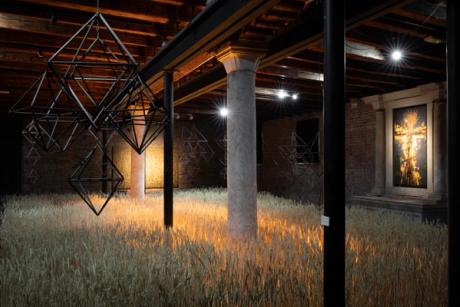
The article highlights standout national pavilions at the 61st Venice Biennale. The Belarus Pavilion features a powerful installation by the Belarus Free Theatre, including a wheat field built by former political prisoners, straw spiders made from prison bars, and a confession booth that runs facial recognition. The Brazil Pavilion presents a joint exhibition by Rosana Paulino and Adriana Varejão, focusing on colonial wounds and trauma through works like Paulino's 'Aracnes' and Varejão's 'Still Life amid Ruin'. The Bosnian Pavilion by Mladen Bundalo invites tactile engagement with themes of diaspora and migration, while the Austrian Pavilion by Florentina Holzinger draws attention with nude performers in water-filled pools.

kathleen goncharov curator dead

Kathleen Goncharov, a curator known for her work at Just Above Midtown gallery and the Boca Raton Museum of Art, died at her home in Boca Raton, Florida, on December 31 at age 73. Over her career, she served as senior curator at the Boca Raton Museum of Art from 2012 to 2025, curated exhibitions internationally from Rio de Janeiro to Rome, and was commissioner of the US Pavilion for the Venice Biennale in 2003, presenting Fred Wilson's exhibition "Speak of Me as I Am." She also held positions at Creative Time, the New School, MIT, the Nasher Museum of Art, and the Brodsky Center for Innovative Editions, and was a working artist for 40 years.

jeffrey gibson met animal sculptures

Jeffrey Gibson has installed four large bronze animal sculptures—a deer, a coyote, a squirrel, and a hawk—on the facade of the Metropolitan Museum of Art in New York, collectively titled “The Animal That Therefore I Am.” At a talk with Met curator Jane Panetta, Gibson explained that the works draw on his early paintings on brain-tanned elk hides and his ongoing exploration of Indigenous kinship philosophies, which honor all living beings as extensions of ourselves. The sculptures, each adorned with ceremonial regalia inspired by Native American traditions, are designed to be viewed as four-sided paintings and connect the museum’s Central Park location to Gibson’s home in the Hudson River Valley.

curtis yarvin us pavilion venice biennale titian proposal

Curtis Yarvin, a computer engineer and far-right political thinker, has proposed a controversial US Pavilion for the 2026 Venice Biennale centered on Titian's *Rape of Europa* (1559–62), on loan from the Isabella Stewart Gardner Museum in Boston. Yarvin is collaborating with Dutch Egyptian artist Tarik Sadouma on the concept, which he describes as "rape-themed," though he notes room for feminist perspectives. The proposal, first reported by the *New Yorker* and detailed further by *Vanity Fair*, includes alternative plans such as forging and burning the painting or using AI if the loan is denied. Applications for the pavilion close July 30, with a final decision expected later in the summer.

will the us participate in the 2026 venice biennale

As President Donald Trump cuts U.S. art programs and funding, questions surround the country's participation in the 2026 Venice Biennale. A Vanity Fair piece by Nate Freeman reports that the selection process is already behind schedule, with the U.S. State Department's typical 18-month lead time now reduced to just one year. The National Endowment for the Arts, which convenes the advisory committee for the pavilion, has been halted, and a key assistant secretary position is vacant. The application portal remains open but now includes new language requiring art that "reflects and promotes American values" and scrubbing references to diversity, equity, and inclusion (DEI).

Female nudity and art that stinks: key takeaways from Venice Biennale 2026

The 2026 Venice Biennale opened with 99 participating countries, including first-timers Somalia and Qatar, under the shadow of curator Koyo Kouoh's death. Her planned theme of "enhancement" and the main show "In Minor Keys" were disrupted by political protests: Pussy Riot objected to Russia's inclusion, and a strike against Israel's participation forced several national pavilions (UK, Austria, France) to close. Key takeaways include pervasive female nudity across pavilions, debates over Russia's presence, criticism of the US pavilion's lackluster art, maritime themes dominating several shows, and the rise of olfactory art.

The US pavilion's curator on the controversial choice of Alma Allen for the Venice Biennale

The US pavilion at the Venice Biennale has selected Alma Allen, a Utah-born, Mexico-based sculptor, as its representative artist—a controversial and surprising choice given his relative obscurity compared to past pavilion artists. The selection process was unusually fraught: the first artist chosen was dropped before official announcement, and the announcement was delayed by the US government shutdown. The pavilion's curator, Jeffrey Uslip, discusses the exhibition titled "Call Me the Breeze," which will feature Allen's sculptures in stone, bronze, and wood that appear to defy their own weight, emphasizing artistic autonomy despite the State Department's framing of the choice as showcasing "American excellence."

Alma Allen’s US Pavilion Is One of the Emptiest Shows at the Venice Biennale

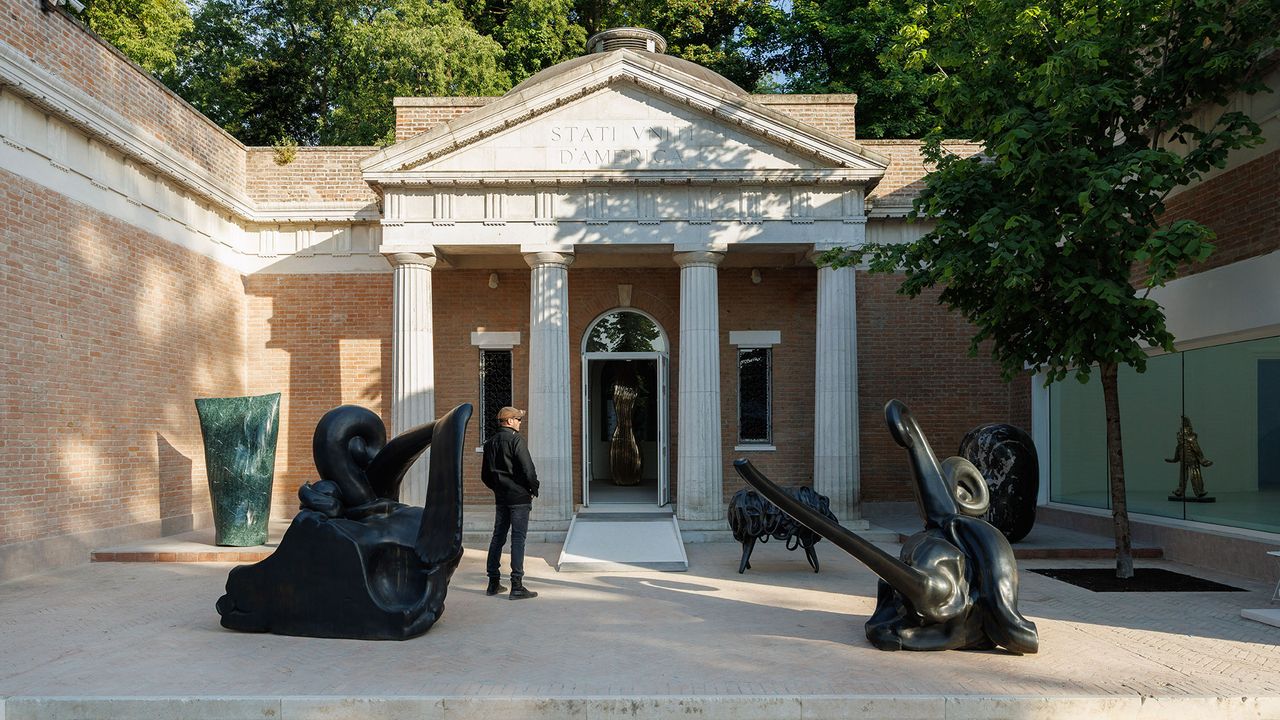
Alma Allen represents the United States at the 2026 Venice Biennale with a subdued, apolitical exhibition inside the US Pavilion. The show features roughly 25 sculptures—mostly in bronze, wood, and stone—many titled "Not Yet Titled," and deliberately avoids overt political messaging. This marks a stark departure from the previous two US pavilions, curated by Simone Leigh (2022) and Jeffrey Gibson (2024), which directly confronted colonialism and empire. The Trump administration’s call for proposals explicitly asked for work that "reflects and promotes American values," and Allen’s presentation has been criticized as safe, unremarkable, and lacking the incisive edge of contemporary American art.

Alma Allen Offers a Quiet Vision in Venice—Even as Questions Swirl the U.S. Pavilion

Alma Allen's exhibition "Call Me the Breeze" has opened at the U.S. Pavilion for the 61st Venice Biennale. The Utah-born sculptor presents a pared-down, whimsical show that contrasts with the bombastic work of his predecessors, grouping new and old pieces to explore themes of conflict, mourning, and transcendence inspired by Hieronymus Bosch's *Visions of the Afterlife*. The exhibition was produced hurriedly over a few months, and Allen, who typically leaves his works untitled, felt compelled to explain his art for the first time in 30 years amid controversy surrounding his commission.

Barbara Chase-Riboud Says She Declined US Pavilion Offer Because It Was ‘Not the Moment’

Sculptor Barbara Chase-Riboud has revealed she declined an offer to represent the United States at the 2025 Venice Biennale, stating that for her, "this was not the moment." The offer was made by the American Arts Conservancy, the nonprofit organization commissioning the US Pavilion. The revelation comes amid ongoing scrutiny of the selection process that ultimately led to artist Alma Allen being chosen, following reports that the Trump administration removed diversity language from application materials.

andres serrano us pavilion venice

Andres Serrano has publicly proposed to represent the United States at the 61st Venice Biennale in 2026 with an installation expanding his ongoing project "The Game: All Things Trump," a collection of Trump-themed memorabilia acquired largely from eBay. The proposal includes a site-specific iteration of the work at the U.S. Pavilion in Venice's Giardini, potentially incorporating his controversial film "Insurrection" about the January 6 riots. The U.S. State Department is accepting submissions through July 30 and will announce its choice on September 1, leaving the winner only eight months to prepare.