filter_list Showing 3756 results for "SEA" close Clear
search
dashboard All 3756 museum exhibitions 1778article news 476trending_up market 422article local 389article culture 242person people 159article policy 104gavel restitution 78rate_review review 68candle obituary 35article event 2article events 1article satire 1article school 1
date_range Range Today This Week This Month All
Subscribe

‘I was relieved I got the shot without my phone ending up in the sea!’: Easelyn Pineda’s best phone picture

Photographer Easelyn Pineda captured an image of two local men spearfishing in rough weather off Laiya beach in the Philippines. The photo, taken on her phone while wading into the water, was later shortlisted in the motion category of the 2026 Sony World Photography Awards.

Comment | Climate change is forcing tough choices—how much heritage can we save before it is too late?

Climate change is accelerating the degradation of archaeological sites worldwide, forcing archaeologists to make urgent, difficult choices about what to save. From thawing permafrost in the Canadian Arctic threatening Inuit heritage to landslides endangering ancient Buddhist temples in Nepal, researchers are now deploying innovative technologies like ground-penetrating radar, 3D scanning, and even cosmic-ray muon detectors to digitally document and monitor at-risk sites before they are lost.

artists trump epstein statue washington d c titanic

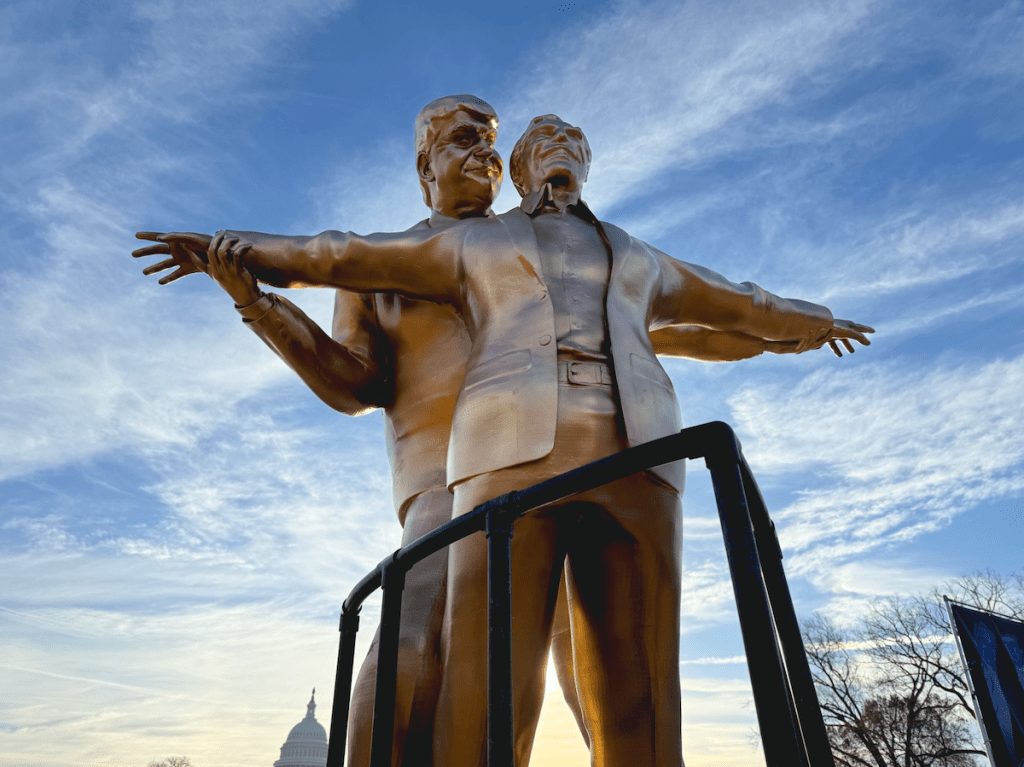
An anonymous artist collective known as The Secret Handshake has installed a provocative 12-foot-tall guerrilla statue in Washington, D.C., titled 'KING OF THE WORLD.' Located near the U.S. Capitol, the monument depicts Donald Trump and Jeffrey Epstein recreating the iconic 'Titanic' film pose, accompanied by ten banners and a plaque satirizing their historical friendship.

newly excavated maya settlement climate change adaptation

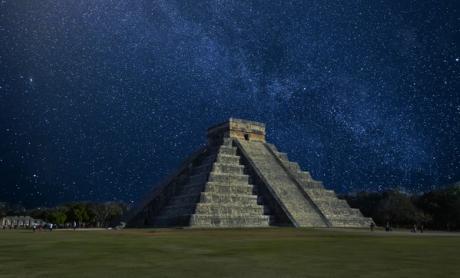
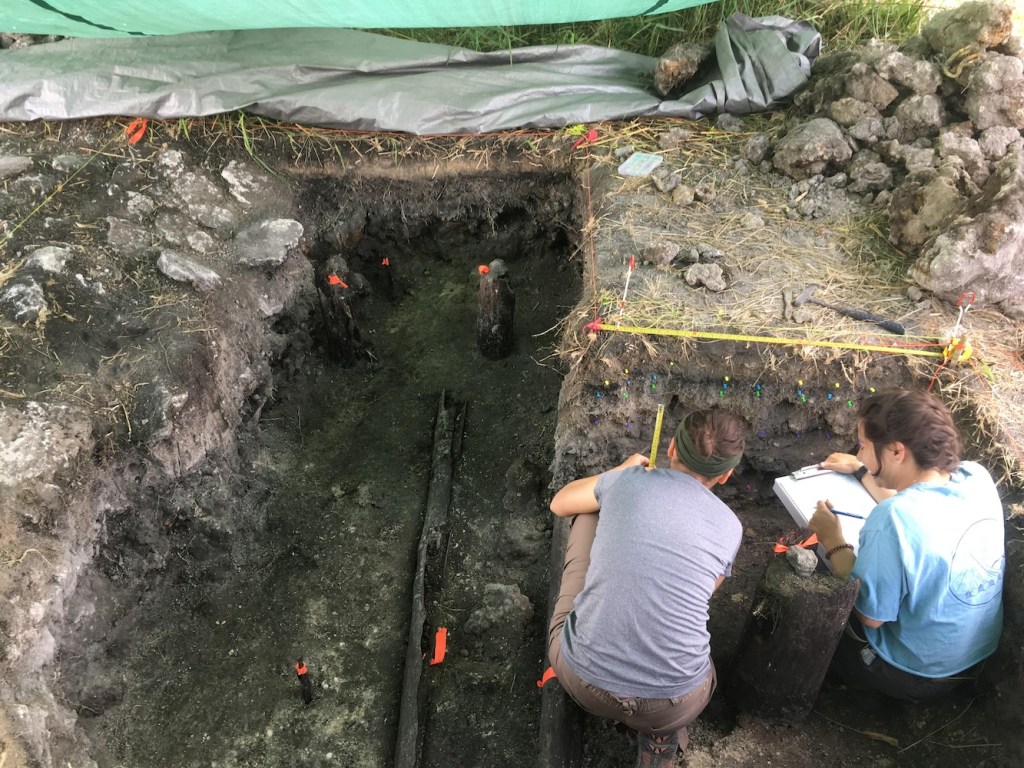
Archaeologists and geologists have uncovered a Postclassic Maya settlement at the Birds of Paradise field complex in the Rio Bravo floodplain of Belize. Utilizing LiDAR mapping and 20 years of field research, the team discovered exceptionally preserved wooden architecture, stone structures, and domestic artifacts dating from 800–1500 CE. These findings reveal that Maya communities successfully migrated to wetland environments after inland urban centers were abandoned due to prolonged droughts.

object museum oldest egyptian drilling tool found

A small copper-alloy object, excavated nearly a century ago from a predynastic cemetery at Badari in Upper Egypt, has been re-identified as the world's oldest known Egyptian bow drill. Dating to the late 4th millennium BCE, the tool pushes back the earliest evidence for this technology in Egypt by about 2,000 years, revealing that Egyptian craftspeople mastered efficient rotary drilling much earlier than previously thought.

digitally rebuilding lighthouse of alexandria as 3d model

A team of historians, architects, and programmers is digitally reconstructing the Lighthouse of Alexandria, one of the Seven Wonders of the Ancient World. The Pharos Project, led by archaeologist Isabelle Hairy, is scanning thousands of submerged granite blocks and artifacts from the seabed to create a comprehensive 3D model of the structure, which was destroyed by an earthquake in 1303.

humans not glaciers moved stonehenge rocks geological study

Researchers at Curtin University in Australia have published a study in Communications Earth and Environment providing geological evidence that humans, not glaciers, transported the massive stones used to build Stonehenge. The team tested sediments from streams near the monument and found no signs of glacial activity during the Pleistocene, ruling out the theory that ice sheets carried the megaliths. The stones, including sandstone boulders from the Marlborough Downs and bluestones from Wales, weigh up to 40 tons, but exactly how ancient peoples moved them remains unknown.

smithsonians national museum of asian art returns three looted sculptures to india

The Smithsonian's National Museum of Asian Art announced it will return three looted bronze sculptures to India: "Shiva Nataraja" (ca. 990), "Somaskanda" (12th century), and "Saint Sundarar with Paravai." Provenance research linked the works to art dealers known for trafficking looted antiquities. The museum partnered with the Photo Archives of the French Institute of Pondicherry in 2023, finding the bronzes had been photographed in Tamil Nadu temples between 1956 and 1959 and removed in violation of Indian laws. This follows the museum's December return of three Khmer-period sculptures to Cambodia, also determined to be looted.

worlds oldest known rock art in indonesia 67800 years old

Researchers have discovered a hand stencil in a cave on the Indonesian island of Sulawesi that dates to 67,800 years ago, making it the oldest known rock art in the world. The faded 14 × 10 cm patch of pigment, found on the southeastern peninsula of Sulawesi, was dated using Uranium-series analysis of mineral crusts that formed on top of the painting. The discovery was made by a team from Griffith University in Australia, Indonesian archaeological organizations, and the National Research and Innovation Agency, who have been documenting cave art sites in the region since 2019.

3d tech reveals new gladiator graffiti in pompeii

Researchers using Reflectance Transformation Imaging (RTI) and 3D photogrammetry have uncovered 79 previously invisible graffiti fragments on a 90-foot walled corridor in Pompeii's theater district. Among the discoveries are a dynamic sketch of two gladiators in combat and a love declaration beginning "Erato amat…" (Erato loves…). The work, detailed in Pompeii's e-journal, was conducted by teams from Sorbonne University and the University of Québec at Montréal, who developed a custom 3D-image platform to visualize and digitally annotate the ancient carvings.

pompeii multilevel buildings digital reconstructions

A new study published in the Pompeii Archaeological Park's online journal reveals that the ancient Roman city featured multilevel buildings far more impressive than previously understood. Using digital technology, the Pompeii Reset project—a collaboration between the Pompeii Archaeological Park and Humboldt University of Berlin—created 3D reconstructions of structures encased in ash during the 79 CE eruption of Mount Vesuvius. The case study focused on the House of Thiasus in Regio IX, where a 39-foot-tall tower with two levels, including a dining room with city views, was reconstructed. Researchers employed laser scanners, structured-light scanning, and photography to build digital models, then virtually added missing architectural elements like staircases and windows, testing them for structural plausibility.

easter island 3d map carved statues

Researchers from Binghamton University, at the request of an indigenous community group on Easter Island, have created a high-resolution 3D model of the Rono Raraku quarry, where 95 percent of the island's moai statues were carved. Using drone flights and over 11,000 overlapping photographs stitched together via photogrammetry, the model documents the quarry in unprecedented detail, including 133 quarried voids, 400-plus unfinished moai, and evidence of 30 distinct clan-based carving areas. The model is freely available online and was motivated by a 2022 wildfire that threatened the site.

christies paris suspends sale pascaline calculating machine

Christie’s Paris suspended the sale of a rare Pascaline calculating machine, one of only nine surviving examples built by 17th-century French mathematician Blaise Pascal, after a court-ordered export ban prevented it from leaving France. The device, expected to fetch between $2.3 million and $3.5 million, was part of an auction of the collection of late manuscript collector Léon Parcé. French scientists and researchers argued the calculator is a national treasure, prompting the ban despite an export certificate issued in May.

university of leicester trans inclusive museum guideline updates

The University of Leicester has updated its guidance on trans-inclusivity for museums and galleries, despite facing litigation threats from the campaign group Freedom in the Arts (FITA). The 44-page document, originally published two years ago by the university’s Research Center for Museums and Galleries (RCMG), offers a framework for creating inclusive public spaces and workplaces, addressing legal and ethical questions about trans inclusion. FITA sent two letters threatening legal action, arguing the guidance is “misleading” and “unlawful,” particularly objecting to bathroom etiquette that states trans visitors should use the bathroom they feel most comfortable using. The university is reviewing the latest correspondence and declined further comment.

museum worker satisfaction 2025 report

A new survey by Museums Moving Forward (MMF), the 2025 Report on Workplace Equity and Organizational Culture in U.S. Art Museums, finds that employees at smaller U.S. museums report higher job satisfaction than those at major institutions, despite persistent issues of low pay, burnout, and inequity. The report surveyed over 3,100 staff across 91 institutions, nearly double the number in MMF's 2023 study, and notes a sharp rise in union organizing, with 55% of art museum unions formed in the last five years. Non-union staff earn about 78% of unionized counterparts, though unionized workers report higher dissatisfaction. Smaller museums (budgets under $15 million) outperformed larger ones on well-being measures, suggesting workplace culture and agency matter more than pay.


world monuments fund suzanne deal booth institute launch

World Monuments Fund (WMF) has announced the launch of the Suzanne Deal Booth Institute for Heritage Preservation, backed by $19 million in funding as part of its $60 million endowment campaign marking the organization's 60th anniversary. The institute is established through a $10 million endowment gift from philanthropist and ARTnews Top 200 collector Suzanne Deal Booth, with additional support from the Gerard B. Lambert Foundation, Denise Littlefield Sobel, and Virginia James. The institute will serve as a global hub for research, training, and innovation in heritage preservation, focusing on greenspace stewardship, digital preservation, and workforce development, including programs like the Greenspace Heritage Training initiative and Bridge to Crafts Careers.

austin black artists matter rainbow crosswalk to be removed

The city of Austin, Texas, is set to remove a 'Black Artists Matter' street mural and a rainbow crosswalk after Governor Greg Abbott directed the Texas Department of Transportation to comply with a federal order from President Donald Trump. The July 1 directive from Transportation Secretary Sean P. Duffy requires states to eliminate political messages and artwork from roadways, citing driver and pedestrian safety. Austin Mayor Kirk Watson has identified about 16 locations that may be affected and warned that non-compliance could jeopardize $175 million in state and federal grant funding. The mural, painted in June 2020 in Austin's historically Black East side neighborhood by local artists with the Austin Justice Coalition and Capitol View Arts, was created in response to the police killing of George Floyd and the rise of the Black Lives Matter movement.

massive moai statues walked to platforms easter island new study

A new study in the Journal of Archaeological Science by archaeologists Carl Lipo of Binghamton University and Terry Hunt of the University of Arizona proposes that the 92-ton moai statues on Easter Island, Chile, were transported in a vertical position using ropes to “walk” them onto their stone platforms. The research combines three-dimensional modeling, field experiments with a scaled replica, and analysis of 62 abandoned statues along ancient roads, finding that wider bases and a forward lean of 6–15 degrees enabled a rocking motion that allowed a team of 18 people to move a statue 328 feet in about 40 minutes.

the rubin names 2025 art prize research and art projects grants

The Rubin Museum of Himalayan Art, which closed its New York physical space in 2024 to become a "global museum," has announced the winner of its 2025 Himalayan Art Prize: Khadhok – Tibetan Artists’ Collective, a Dharamshala-based group founded in 2023. The prize includes a $30,000 purse, the largest of its kind for Himalayan artists. Additionally, the museum named 15 recipients of its 2025 Research and Art Projects grants, distributing $200,000 total among projects ranging from $3,000 to $25,000, selected from 132 applications.

the oldest blue pigment found in europe identified

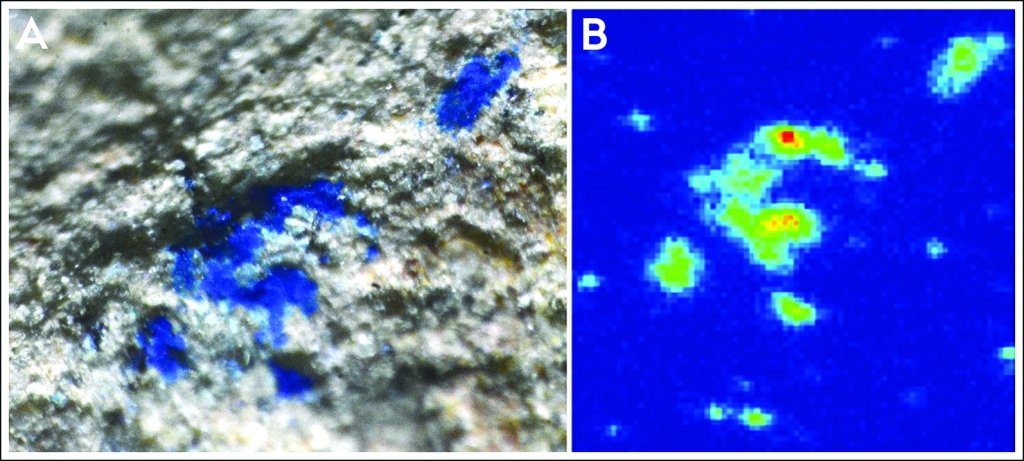
Researchers analyzing a stone from the Paleolithic site Mühlheim-Dietesheim in Germany have identified the earliest known use of blue mineral pigment in Europe. The study, published in the journal Antiquity, found traces of azurite on a roughly 13,000-year-old stone artifact, which is thought to have served as a palette for mixing pigments. This discovery challenges the long-held belief that Paleolithic art relied primarily on red and black pigments, as blue minerals like azurite had not been detected in Europe’s Paleolithic art until now.

nazi looted painting search argentina house arrest

A court in Argentina has placed Patricia Kadgien and her husband Juan Carlos Cortegoso under house arrest as police search for a Nazi-looted painting by Giuseppe Ghislandi. The work, which once belonged to Jewish dealer Jacques Goudstikker, was spotted in a real estate listing for their house in Mar del Plata by the Dutch newspaper Algemeen Dagblad. The listing has been deleted, and police failed to find the painting during a raid, but prosecutors are also investigating two other works held by another of Kadgien's daughters.

egypt alexandria artifacts lifted sea

Egypt's Ministry of Tourism and Antiquities recovered underwater ruins from a sunken city off the coast of Alexandria on August 21. Divers and cranes retrieved ancient statues, including royal figures and sphinxes from the pre-Roman era, such as a partially preserved sphinx with the cartouche of Ramses II. The site in Abu Qir bay also revealed limestone buildings, residential and commercial structures, a 125-meter dock over 2,000 years old, a merchant ship, stone anchors, and a harbor crane from the Ptolemaic and Roman eras. Tourism and Antiquities Minister Sherif Fathy noted that only specific material meeting strict criteria is brought up, with the rest remaining underwater heritage.

fita campaign group threatens leicester university trans inclusive museum guidelines

A campaign group called Freedom in the Arts (FITA) has threatened to sue the University of Leicester in the UK over its “Trans-Inclusive Culture” guidelines for museums and galleries, demanding their removal. The guidelines, published two years ago by the university’s Research Center for Museums and Galleries (RCMG), aim to help cultural institutions create inclusive spaces for transgender people. FITA, co-founded by choreographer Rosie Kay and former Arts Council England staffer Denise Fahmy, argues the guidance misrepresents the legal definition of “sex” under the Equality Act 2010, following a UK Supreme Court ruling that “woman” and “sex” refer only to biological women and biological sex. The group claims the guidelines could encourage unlawful policies, such as allowing toilet access based on gender identity, and discriminate against staff with gender-critical beliefs.

rapa nui easter island moai statues sea levels flooding

A new study published in the Journal of Cultural Heritage warns that rising sea levels will impact Chile’s Rapa Nui National Park, a UNESCO World Heritage site, by 2080. Coastal flooding threatens at least 51 culturally significant artifacts, including the iconic Moai statues—nearly 1,000 volcanic tuff figures created by a native Polynesian tribe over 500 years ago, some weighing up to 80 tons. Researchers from the University of Hawai’i at Mānoa used advanced computer models to simulate wave patterns and map projected flooding, overlaying this data with the locations of cultural assets provided by local partners.

22 stone blocks alexandria ancient lighthouse seafloor

A team from the French National Center for Scientific Research has lifted 22 massive stone blocks from the Lighthouse of Alexandria from the seafloor, 30 years after the remains were first discovered in Egypt. The blocks include monumental door lintels, jambs weighing 70 to 80 tons, a threshold, large base slabs, and parts of a previously unknown pylon with an Egyptian-style door from the Hellenistic period. Each block will be scanned and studied to add to a digital collection of over 100 blocks already digitized, aiming to construct a virtual model of the lighthouse. The excavation was supervised by archaeologist Isabelle Hairy and conducted under the Egyptian Ministry of Tourism and Antiquities, with support from La Fondation Dassault Systèmes and French documentary company GEDEON Programmes, which filmed the work for a 90-minute documentary.

polish venus of kolobrzeg

Experts from the Polish Conservator of Monuments have authenticated a Neolithic Venus carving discovered by a Polish farmer in 2022. The Venus of Kołobrzeg, a 6,000-year-old limestone sculpture, is one of the oldest artifacts from an agricultural community in this part of Europe. The figurine, now owned by the Polish Arms Museum in Kołobrzeg, was unveiled after extensive analysis including microscopic residue analysis that found traces of mussel and snail shells. Unlike other prehistoric Venus figures, it lacks distinct facial features but shares the characteristic pronounced breasts and voluptuous hips.

france deepest shipwreck camarat 4

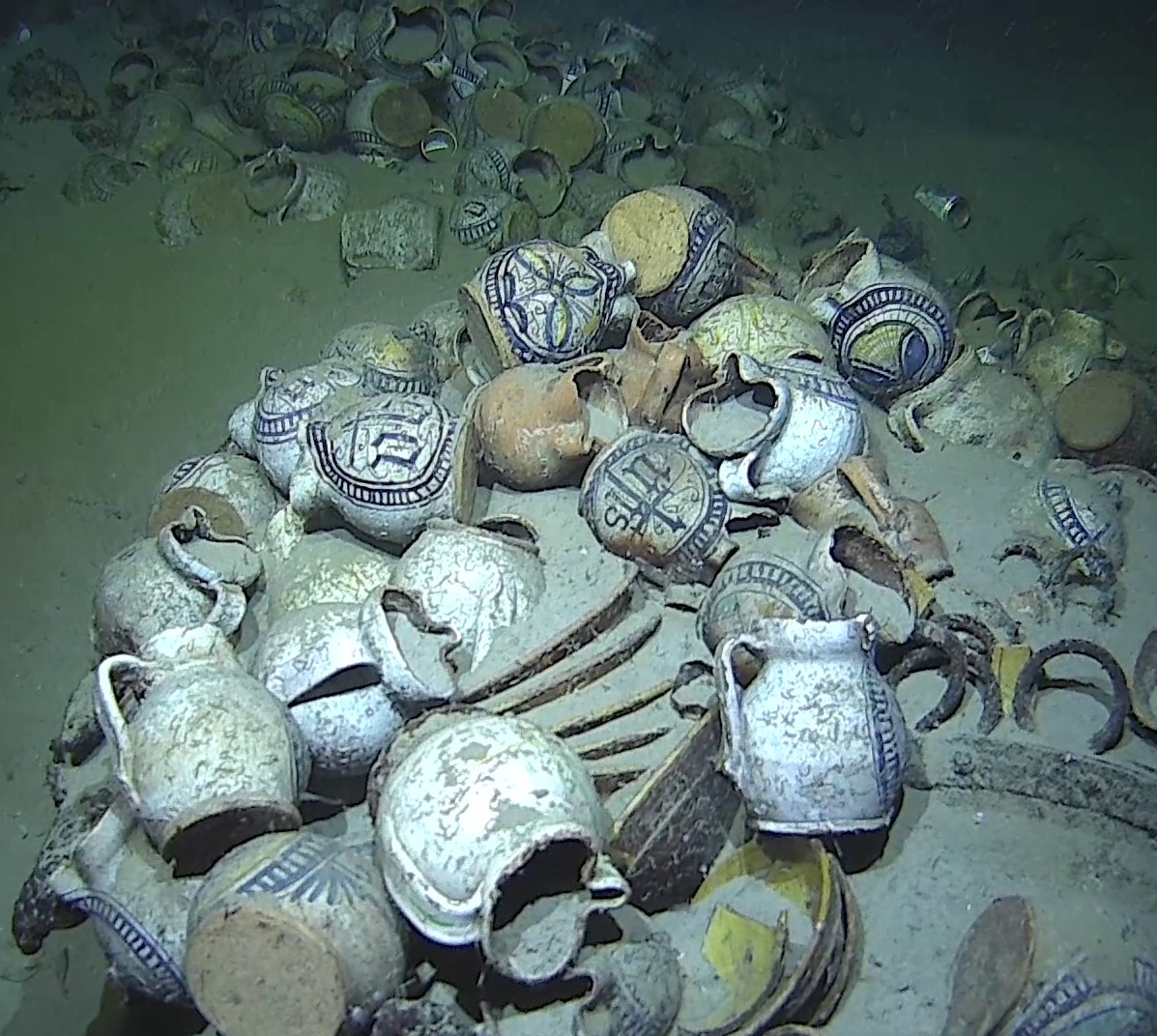
French archaeologists have discovered the wreck of a 16th-century merchant vessel, named Camarat 4, 1.6 miles below the Mediterranean Sea—the deepest shipwreck ever found in French waters. The French Navy first detected the site via sonar during a routine mission off the coast near Saint Tropez, then deployed an underwater drone that captured images of hundreds of ceramic pots. The Department of Underwater and Submarine Archaeological Research (DRASSM) confirmed the 98-foot-long ship sank nearly 500 years ago, carrying cargo including polychrome earthenware pitchers and plates traced to Liguria, Italy, along with cannons and iron bars.

san jose wreck found coins

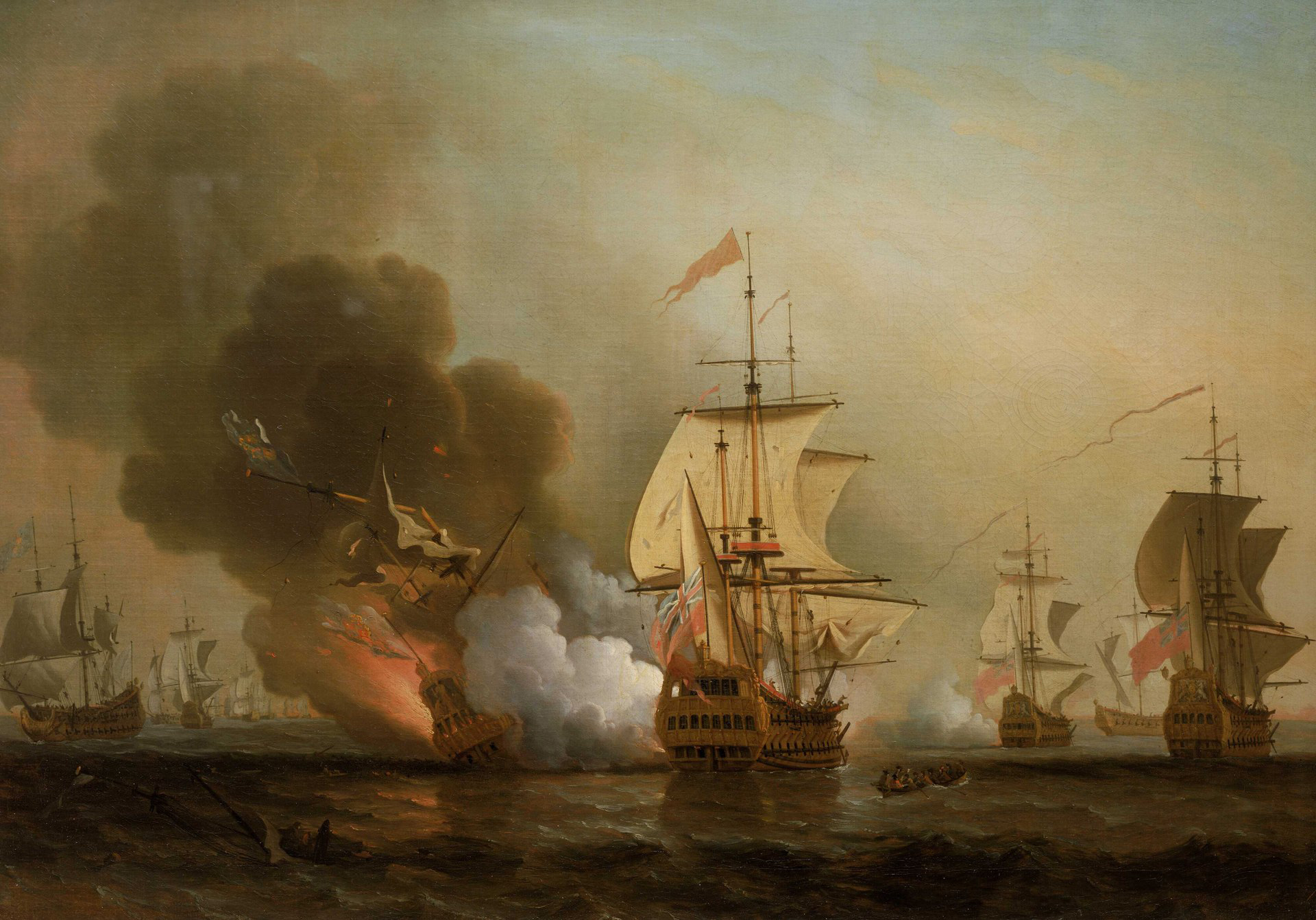
Researchers have confirmed the identity of the Spanish galleon San José, which sank off the coast of Colombia in 1708 carrying billions of dollars in gold, silver, and gems. Using high-resolution photographs and digital models from remotely operated vehicle surveys, they identified hand-struck coins (cobs) minted in Lima in 1707, along with Chinese porcelain and cannon inscriptions, as key evidence. The findings were published in the journal Antiquity on June 10.

viking gold metal detectorist declared treasure

Ronald Clucas, a metal detectorist with 50 years of experience on the Isle of Man, discovered an intricately plaited gold fragment identified as a Viking arm-ring from roughly 1,000 years ago. The artifact, found folded and measuring 1.5 inches, was declared treasure by the Isle of Man Deputy Coroner of Inquests on May 29 and is now displayed at the Manx Museum's Viking gallery. Archaeologist Allison Fox noted cut points indicating the arm-ring was portioned for use as currency, reflecting the Viking dual economy of coins and bullion.

new regulation around eu import law promises art market shakeup

A new European Union regulation, Regulation (EU) 2019/880, will take effect on June 28, requiring thorough provenance documentation for cultural objects over 200 years old (or 250 for archaeological items) imported into the EU. Importers must provide material evidence proving lawful acquisition from the country of origin, including the object's origin, export date, and chain of ownership, or face potential seizure. The rule builds on a 2019 anti-trafficking law and has sparked concern among EU-based dealers, who warn it could stifle the market for antiquities and non-European art.