filter_list Showing 206 results for "Minor Keys" close Clear
search
dashboard All 206 museum exhibitions 123article news 65rate_review review 9person people 4article culture 3article event 1article policy 1
date_range Range Today This Week This Month All
Subscribe

"Kultursenator ist kein Nebenjob"

Berlin's finance senator Stefan Evers is set to additionally take on the role of culture senator following the resignation of Sarah Wedl-Wilson, a move criticized as a stopgap solution that creates a conflict of interest between austerity and cultural advocacy. Meanwhile, the Venice Biennale faces multiple controversies: critics question how to evaluate curator Koyo Kouoh's posthumous main exhibition "In Minor Keys," completed after her death in May 2025; Israeli artist Belu-Simion Fainaru speaks out against his exclusion from the Biennale competition, calling it politically biased and reminiscent of historical persecution; and German press decries the politicization of the Biennale, particularly the exclusion of Israel and Russia from the competition.

ArtReview April & May 2026 Issue Out Now

ArtReview's April & May 2026 issue explores boundaries and limitations in art, with a focus on the 61st Venice Biennale opening amid global conflicts. The cover features Japanese-American performance artist Ei Arakawa-Nash with his husband and twin babies, whose collaborative installation at the Japanese Pavilion incorporates the unpredictability of childcare. The issue includes coverage of controversial national pavilions (Russian, Israeli, American), profiles of artists representing Mongolia and Singapore, and features on Beverly Buchanan, Arthur Jafa, Richard Prince, and Zehra Doğan's report from Rojava. It also reviews the 82nd Whitney Biennial, the 25th Biennale of Sydney, and the 15th Shanghai Biennale.

Venice Biennale 2026: How Do You Critique a Posthumous Exhibition?

The article, published by ArtReview, examines the upcoming 61st Venice Biennale (2026), titled *In Minor Keys*, which was conceived by artistic director Koyo Kouoh before her death from cancer in May 2025 at age 57. The exhibition, based on Kouoh's drafted concept and completed by a curatorial team including Rory Tsapayi, Siddhartha Mitter, Marie Hélène Pereira, Gabe Beckhurst Feijoo, and Rasha Salti, adopts a musical metaphor of "minor-ness" and aims to avoid the pitfalls of previous Biennales by focusing on soul frequencies and dissonant harmony rather than direct commentary on world crises. The author, Martin Herbert, questions how critics will respond to a posthumous exhibition of this unprecedented scale, noting that previous artistic directors like Robert Storr, Cecilia Alemani, Christine Macel, and Adriano Pedrosa have faced varied critical receptions.

In Minor Keys: how Venice's international exhibition was brought to life after the death of artistic director Koyo Kouoh

The 61st Venice Biennale's international exhibition, titled "In Minor Keys," was realized after the sudden death of its artistic director, Koyo Kouoh, in May 2025. A team of five of Kouoh's collaborators, known as "la squadra di Koyo Kouoh," worked with her before her death and finalized the exhibition's themes, artist list, and scenography. The exhibition features 111 invited artists, duos, collectives, and artist-led organizations, with the team emphasizing that this remains Kouoh's vision rather than a replacement.

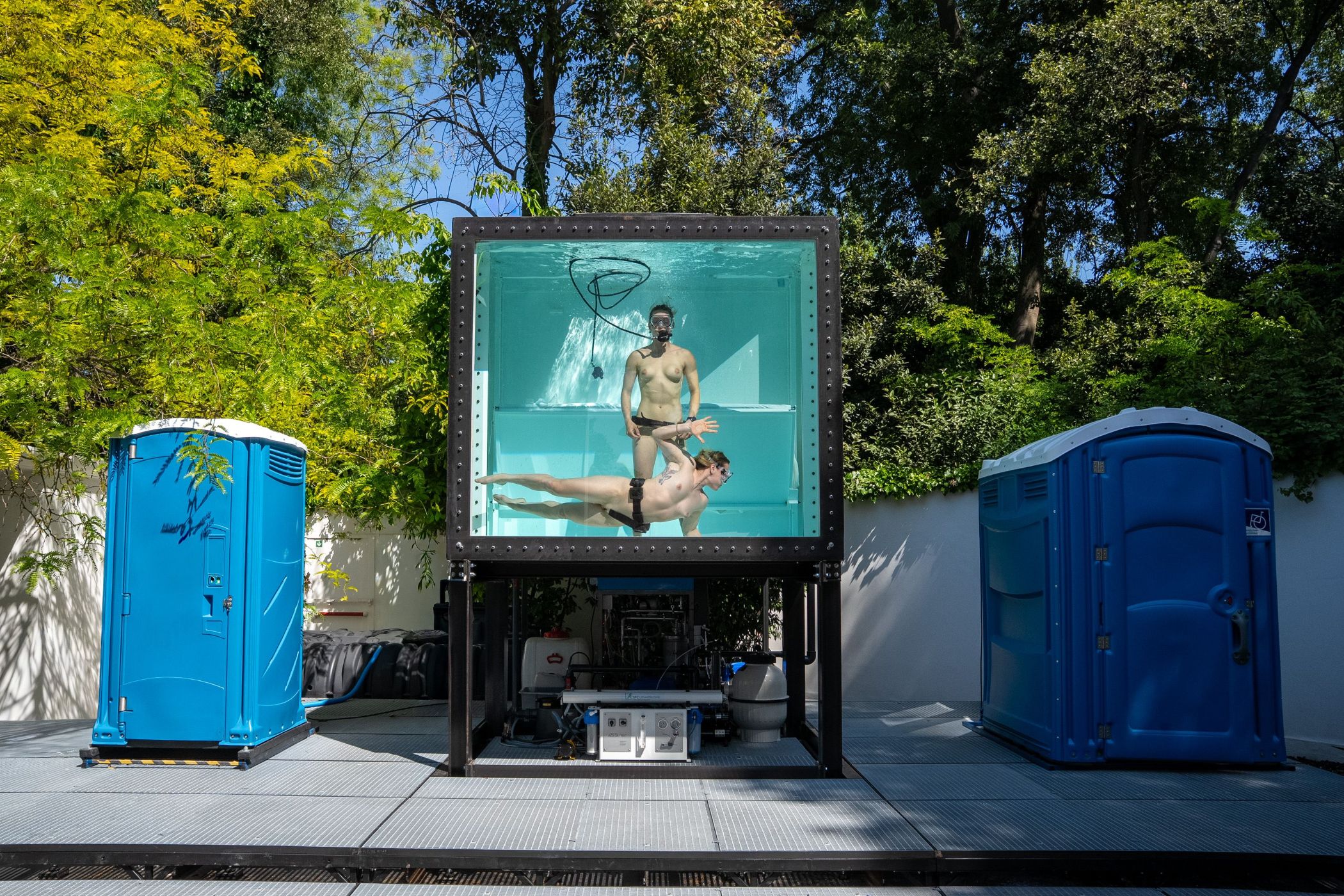
Female nudity and art that stinks: key takeaways from Venice Biennale 2026

The 2026 Venice Biennale opened with 99 participating countries, including first-timers Somalia and Qatar, under the shadow of curator Koyo Kouoh's death. Her planned theme of "enhancement" and the main show "In Minor Keys" were disrupted by political protests: Pussy Riot objected to Russia's inclusion, and a strike against Israel's participation forced several national pavilions (UK, Austria, France) to close. Key takeaways include pervasive female nudity across pavilions, debates over Russia's presence, criticism of the US pavilion's lackluster art, maritime themes dominating several shows, and the rise of olfactory art.

Khaled Sabsabi on Representing Australia at the 61st Venice Biennale

Khaled Sabsabi, the artist representing Australia at the 61st Venice Biennale (2026), will exhibit works both in the Australia Pavilion in the Giardini and in the main Biennale exhibition titled "In Minor Keys." His pieces explore spirituality, migration, and shared humanity through Tasawwuf (Sufi) sensibilities, emphasizing flux and collective experience. Sabsabi is the first Australian artist to have work in both the national pavilion and the main exhibition in the same year, and he honors the curatorial vision of the late Koyo Kouoh.

A Time of Transition

During the preview week of the 61st Venice Biennale, escalating protests targeted the national pavilions of Israel and Russia, with demonstrations by Pussy Riot, ANGA (Art Not Genocide Alliance), and Baltic pavilions. A major protest on May 8 drew over 3,000 people in solidarity with Palestine, and 27 national pavilions—including Austria, the Netherlands, France, and Japan—staged a strike, the first at the Biennale since 1968. The Golden Lion jury resigned after declaring they would not consider countries under ICC investigation (Israel and Russia), and the Biennale administration replaced the prize with a visitors' award, from which half the artists in the main exhibition have withdrawn.

We visited the 2026 Venice Art Biennale: the exhibitions and pavilions you shouldn’t miss

The 2026 Venice Art Biennale has opened across the Giardini, Arsenale, and venues throughout the city, with geopolitics, climate collapse, and national identities dominating the exhibitions. Notable pavilions include Austria's "Seaworld Venice" by Florentina Holzinger, the Czech and Slovak Pavilion's "Il Silenzio della Talpa" by Jakub Jansa and Selmeci Kocka Jusko, India's "Geographies of Distance: remembering home" featuring multiple artists, and the Taiwan Pavilion's "Screen Melancholy" by Li Yi-Fan. The Russian Pavilion has become a focal point of controversy, with guards and empty beer bottles outside, and the Pussy Riot collective staging a protest nearby.

Where to go this weekend?

Wohin am Wochenende?

This week's art tips include Anton Corbijn's birthday exhibition at Fotografiska Berlin, featuring iconic portraits alongside personal favorites; the 25th anniversary of Daniel Libeskind's extension at the Jewish Museum Berlin; Refik Anadol's first Belgian AI-driven installation at Brusk in Bruges; the Schirn Kunsthalle Frankfurt's 40th anniversary weekend with free entry and performances; and a Lee Ufan solo show at Dia Beacon in New York, following his Wolfgang Hahn Prize.

Previews: 61st Venice Biennale: In Minor Keys

The 61st Venice Biennale, titled "In Minor Keys" and curated by the late Koyo Kouoh, opens amid global turmoil and internal controversy. Kouoh, who passed away in May 2025, conceived the exhibition around the metaphor of a "creole garden," emphasizing deep affinities between 111 artists from diverse locations such as Dakar, Beirut, and Salvador. The Biennale is overshadowed by recent geopolitical events, including US-Israeli airstrikes on Iran, and faces protests: over 70 participating artists signed an open letter opposing the participation of Israel, Russia, and the US, while the Australian pavilion saw the reinstatement of Khaled Sabsabi after being dropped, and South Africa withdrew its official pavilion over Gabrielle Goliath's femicide project, which she will still present independently.

Review: The Good, The Bad and The Venice Biennale

The article reviews the 2024 Venice Biennale, focusing on controversies over Russia's and Israel's participation. Protests erupted during opening week, leading the EU to cut funding and the International Jury to resign. As a result, awards like the Golden Lion and Silver Lion will be decided by public vote, with many pavilions and artists withdrawing in protest. The main exhibition, curated under the theme 'Minor Keys,' features standout works by Alfredo Jaar and Carrie Schneider, alongside national pavilions like Austria's provocative entry by Florentina Holzinger.

Koyo Kouoh’s Legacy Shapes the 2026 Venice Biennale

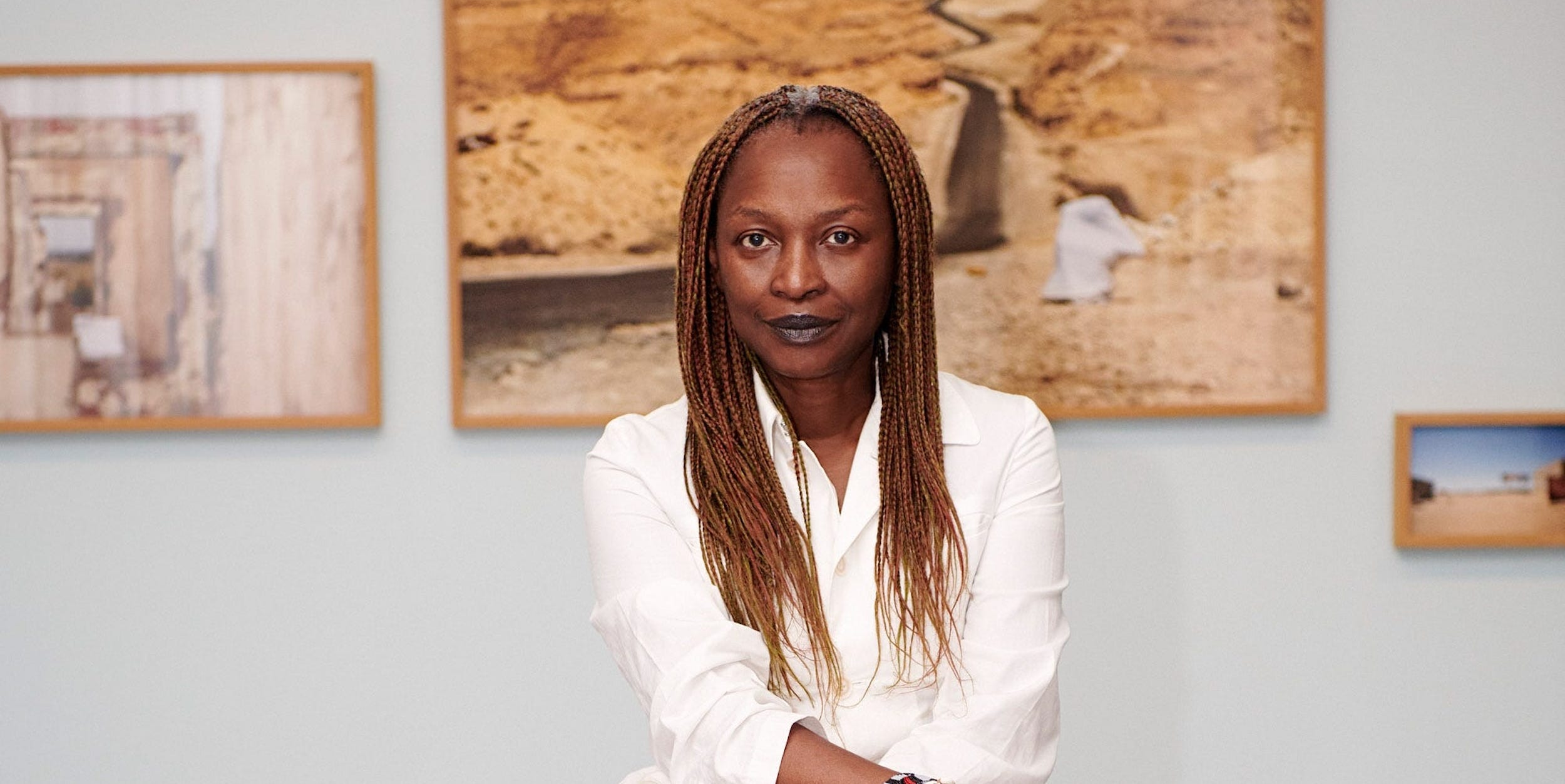
Koyo Kouoh, the first African woman to curate the Venice Biennale, was appointed curator of the 2026 edition and began shaping the main exhibition titled 'In Minor Keys' in October 2024. She died of cancer in May 2025 at age 57, but the Biennale organizers have committed to realizing her vision. The exhibition features 111 artists, collectives, and organizations from cities including Nairobi, New Orleans, Kingston, New Delhi, Beirut, and Bangkok, many of them her longtime collaborators. Kouoh was also the founder of Raw Material Company in Dakar and executive director and chief curator of the Zeitz Museum of Contemporary Art Africa (MOCAA) in Cape Town.

FAD’s Fab Five: 5 Must-See Highlights at the 2026 Venice Biennale

Lee Sharrock selects five must-see highlights at the 61st Venice Biennale, titled "In Minor Keys" and conceived by the late curator Koyo Kouoh, who passed away in 2025. The Biennale runs from May 9 to November 22, 2026, at the Giardini, Arsenale, and various Venetian venues. Featured highlights include Marina Abramović's historic exhibition "Transforming Energy" at the Gallerie dell'Accademia—the first major show for a living woman artist there—the Holy See Pavilion's "The Ear is the Eye of the Soul" with artists like Patti Smith and Brian Eno, and Lubaina Himid's British Pavilion presentation "Predicting History: Testing Translation."

A True-to-Life Biennale

Hakim Bishara, editor-in-chief of Hyperallergic, reflects on the 61st Venice Biennale after returning to New York, describing it as historical, political, and thrilling. He counters critics who claimed the Biennale imploded due to boycotts and resignations, arguing it was more alive than ever. The late Koyo Kouoh's main exhibition "In Minor Keys" is praised for reflecting global woes and joys. The article also highlights a major strike by artists and cultural workers that disrupted the pre-opening, the first cultural strike in the Biennale's 131-year history, with 54 artists in the international exhibition and 22 national pavilion teams withdrawing from awards consideration in solidarity with the jury's resignation.

Across Venice, Artists Defy Censorship to Mourn and Memorialize Gaza

The 2026 Venice Biennale, titled “In Minor Keys,” features numerous artworks that mourn and memorialize the destruction of Gaza, despite censorship pressures. The main exhibition opens with a poem by slain Palestinian poet Refaat Alareer, and includes works by artists such as Theo Eshetu, Mohammed Joha, Manuel Mathieu, and Avi Mograbi that directly or indirectly address the conflict. Outside the official Biennale, South African artist Gabrielle Goliath’s performance series “Elegy” was censored by her country’s culture minister after she proposed a version honoring murdered Palestinian poet Hiba Abu Nada, leading her to present the work independently at a church in Venice.

The Kyrgyzstan Pavilion at the Venice Biennale Builds a Bridge Between Two Cultures

Il Padiglione del Kirghizistan alla Biennale di Venezia getta un ponte tra due culture

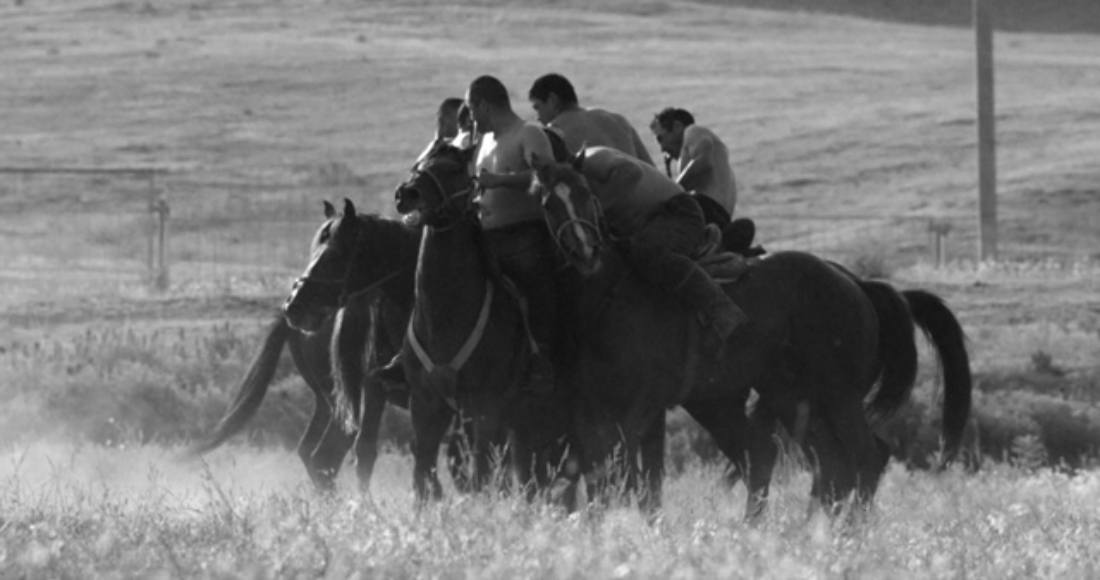
Alexey Morosov presents "BELEK" at the Kyrgyzstan Pavilion of the 61st Venice Biennale, a project inspired by the mountainous landscapes, glaciers, and brutalist dams of Kyrgyzstan. Combining video, sculpture, painting, and sound, Morosov explores water as a key resource for the future and a deep cultural memory of Central Asia, linking the region's hydro-engineering transformations with the nomadic heritage of the Kyrgyz people. The project centers on the traditional equestrian game Kok-Börü, which Morosov describes as constitutive of Kyrgyz identity, and features centaur-like figures made from raw earth used in local dwellings.

Venice, Here We Come

Hyperallergic's newsletter previews the upcoming 61st Venice Biennale, noting the charged political climate that may overshadow the art. It highlights the main exhibition "In Minor Keys" conceived by the late Koyo Kouoh, and includes a guide to national pavilions, collateral events, and notable exhibitions in Venice. The edition also features a studio visit with 93-year-old artist Joan Semmel, an interview with Lebanese artist Tania El Khoury about her "revenge art," and news about Barbara Chase-Riboud declining to represent the US at the Biennale, a $116M gift to the National Gallery of Art, and the death of Argentine painter Ides Kihlen at 108.

Venice Art Biennale: The Time of Nuances

Biennale d’art de Venise : le temps des nuances

The 61st Venice Biennale, titled "In Minor Keys," opened under the artistic direction of the late Swiss-Cameroonian curator Koyo Kouoh. The exhibition features 111 artists and collectives, presenting a more subdued, poetic, and experiential approach compared to the previous edition's explicit decolonial program. It navigates contemporary political tensions, including the participation of Israel and the reopening of the Russian pavilion, while aiming for a radical return to art's own environment and its place in society.

Venice Biennale 2026: What are the major trends that will mark the 99 national pavilions?

Biennale de Venise 2026 : quelles sont les grandes tendances qui vont marquer les 99 pavillons nationaux ?

The article previews the 2026 Venice Biennale, highlighting key trends across its 99 national pavilions. Major themes include the hybridization of theater, dance, and performance, particularly in pavilions from Austria, Luxembourg, Belgium, and Lithuania, where artists like Florentina Holzinger, Aline Bouvy, Miet Warlop, and Eglė Budvytytė use radical, body-centric works. Geopolitical engagement is also central, with the Ukrainian pavilion featuring Zhanna Kadyrova's work on resistance and the British pavilion exploring themes of exile and migration. Other notable pavilions include Spain's focus on imagery, a sound installation for the Vatican, a polyphonic piece for Romania, and a film on sign language song for Poland.

'I wanted to catch the desperation': Dries Verhoeven on turning the Dutch pavilion into a bunker for the Venice Biennale

Artist Dries Verhoeven has transformed the Dutch pavilion at the Venice Biennale into a bunker-like space by covering its iconic glass-and-steel structure with metal shutters. Inside, visitors experience a gradually darkening environment and a raw vocal performance by 13 rotating performers, intended to evoke desperation and confusion about contemporary global crises. The work critiques the modernist ideals of openness and optimism embodied by the pavilion, designed by Gerrit Rietveld in 1953.

The Bahamas returns to the Venice Biennale with a joy-filled posthumous collaboration

The Bahamas will return to the Venice Biennale in 2026 after a 13-year absence with a posthumous exhibition for artist John Beadle, who died in 2024 at age 60. Beadle was originally selected to represent the country in 2015 but the government withdrew funding. The exhibition, titled "In Another Man’s Yard," will feature Beadle’s work alongside that of his mentee, Lavar Munroe, using materials from Beadle’s studio including sails from Haitian migrant sloops. The pavilion is organized by commissioner Amanda Coulson and curator Krista Thompson, who raised private funds after the government declined to support the project.

Sara Shamma on Representing Syria at the 61st Venice Biennale

Sara Shamma will represent Syria at the 61st Venice Biennale (2026) with a large-scale immersive installation titled *The Tower Tomb of Palmyra*. The 15-meter-high multisensory work combines painting, architecture, light, sound, and scent, inspired by the ancient funerary towers of Palmyra that were destroyed during the Syrian War. Shamma describes the piece as a reflection on loss, resilience, and cultural memory, and notes its resonance with the Biennale's theme, *In Minor Keys*, curated by Koyo Kouoh.

Venice Golden Lion jury won’t consider Russian and Israeli pavilions

The jury for the Golden and Silver Lion awards at the 61st Venice Biennale has announced it will not consider the national pavilions of any country whose leaders are currently charged with crimes against humanity by the International Criminal Court. This decision specifically excludes Russia, whose president Vladimir Putin is charged with unlawful deportation of Ukrainian children, and Israel, whose prime minister Benjamin Netanyahu is charged with targeting Palestinian civilians and using starvation as a weapon. The jury, presided over by Solange Oliveira Farkas and including Zoe Butt, Elvira Dyangani Ose, Marta Kuzma, and Giovanna Zapperi, issued a full statement explaining their commitment to human rights and alignment with the curatorial vision of the late Koyo Kouoh.

Best in Show: 6 Standouts at the 2026 Venice Biennale

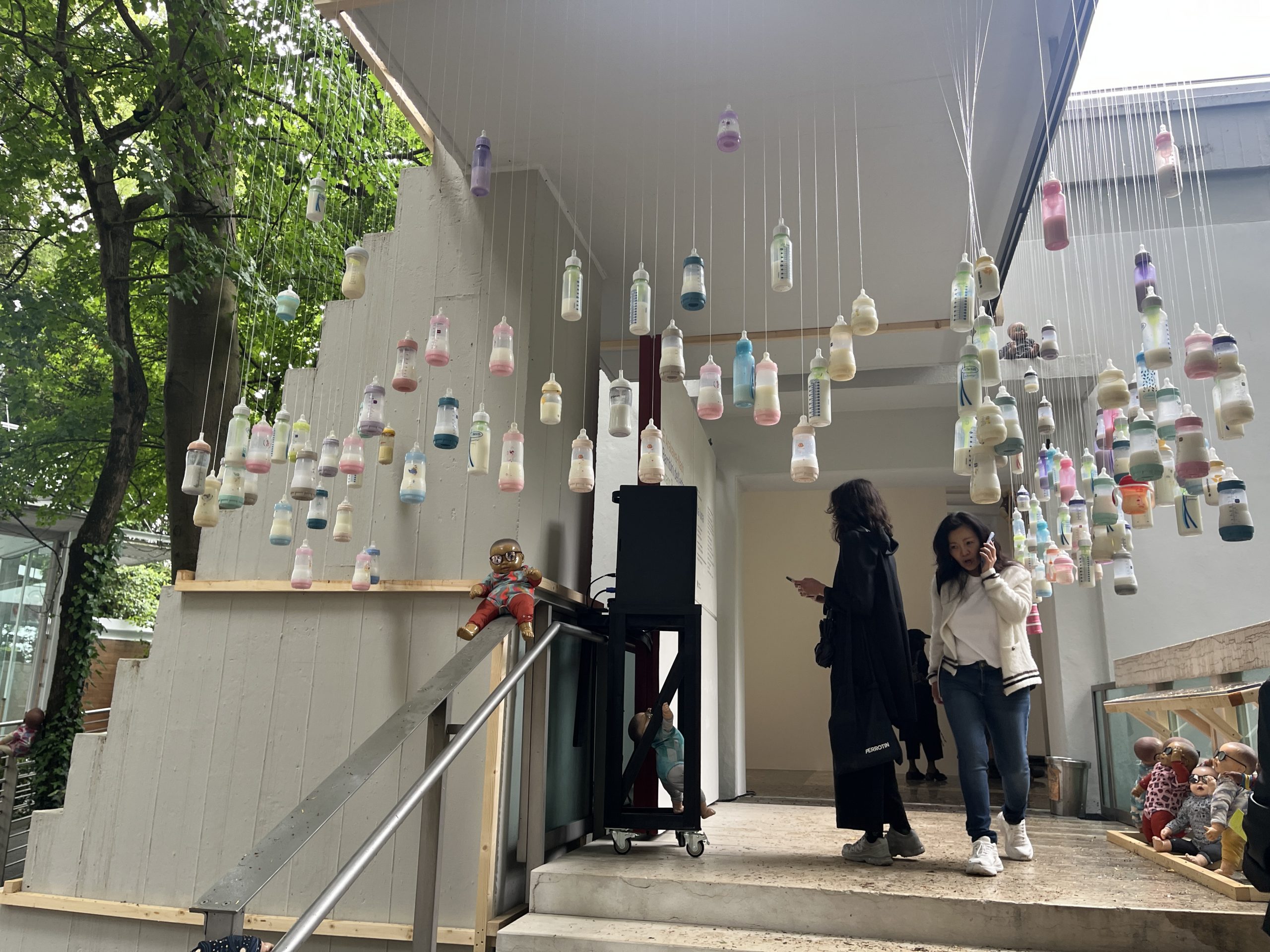
Artnet News writers highlight six standout exhibitions at the 2026 Venice Biennale, which opens to the public on May 9. Among the picks are Ei Arakawa-Nash's interactive installation "Grass Babies, Moon Babies" at the Japan Pavilion, featuring baby dolls and diaper-changing stations; Florentina Holzinger's provocative performance "Seaworld Venice" at the Austria Pavilion, involving nude performers, jet skis, and recycled wastewater; and Dayanita Singh's photographic exhibition "Archivio" at the State Archives of Venice, presenting intimate black-and-white images arranged as freestanding columns.

Numerous Venice Biennale Pavilions and Artists Go on Strike in Protest over Israel’s Participation

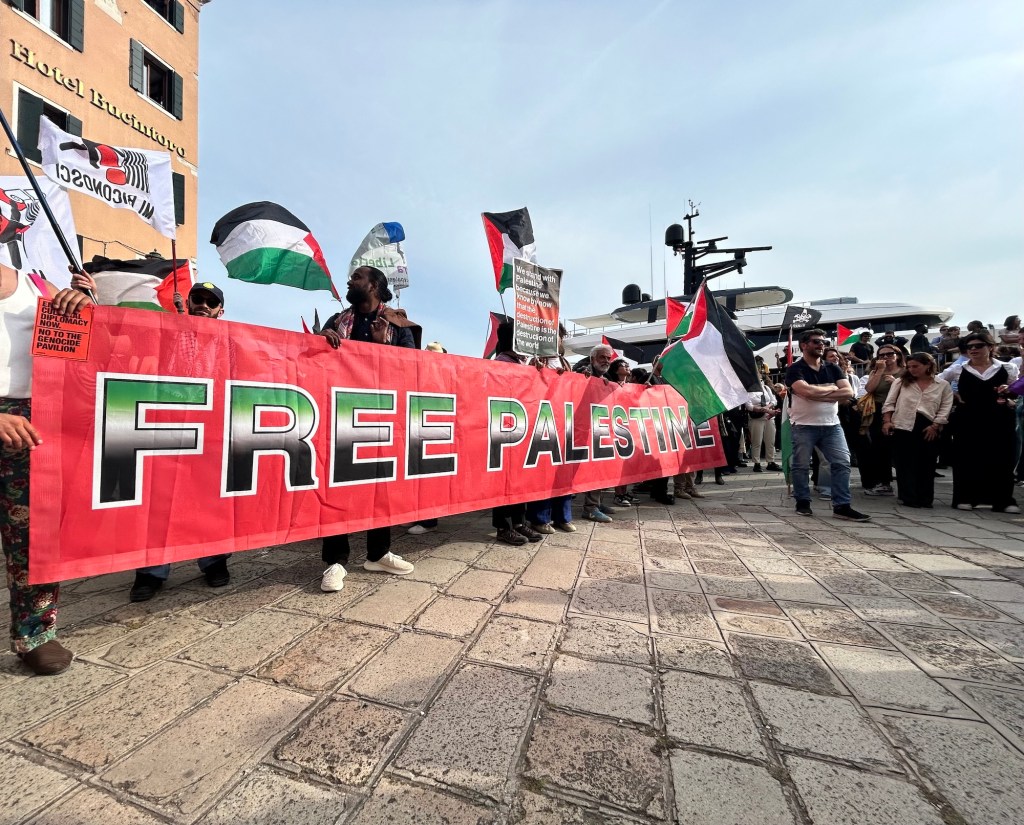
Thousands of protesters marched through Venice on the eve of the Venice Biennale's public opening, organized by Art Not Genocide Alliance (ANGA), to demand Israel's exclusion from the event. At least 18 national pavilions—including Austria, Belgium, France, Great Britain, and Ukraine—participated in a 24-hour strike, shutting down completely or partially. Protesters chanted slogans, waved Palestinian flags, and carried banners reading "no genocide pavilions," while ANGA released a statement with 236 signatories calling for Israel's removal, citing the humanitarian crisis in Gaza.

A Poetic and Material Institutional Critique: Gala Porras-Kim at kurimanzutto and the Venice Biennale

UNA CRÍTICA INSTITUCIONAL POÉTICA Y MATERIAL: GALA PORRAS-KIM EN KURIMANZUTTO Y LA BIENAL DE VENECIA

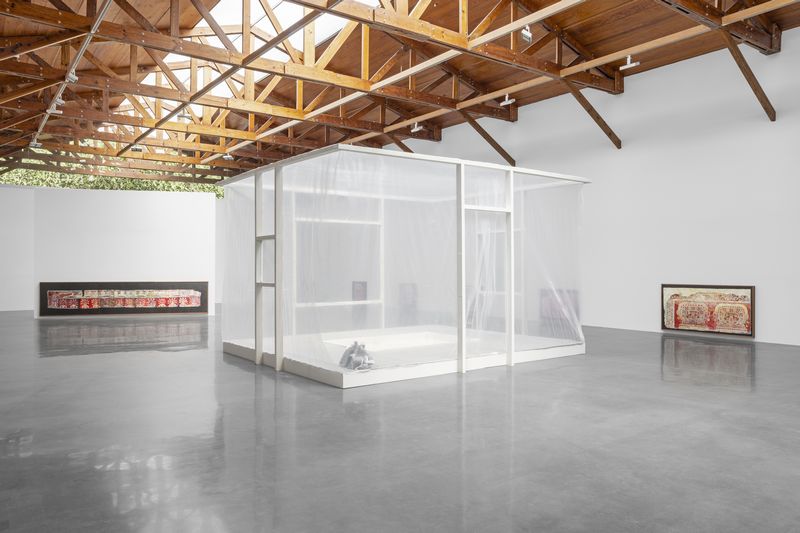
Colombian artist Gala Porras-Kim presents her first solo exhibition at kurimanzutto gallery in Mexico City, titled "Espacios del futuro replican los del pasado" (2026), alongside her participation in the 2026 Venice Biennale. The show critically examines how museum conservation protocols transform objects by detaching them from their original material, ritual, and spiritual contexts. Central to the exhibition is "The Motion of an Alluvial Record" (2024), a greenhouse that recreates the humidity and temperature of Yucatecan mangroves, allowing clay and sediment to shift continuously, resisting the linear, stratified time of Western archives and evoking cyclical Maya cosmologies. Another series, "Uprooted" (2026), reproduces fragments of looted Teotihuacan murals from Techinantitla, now held by the Metropolitan Museum of Art and the Ethnological Museum of Berlin, reinstalling them near the floor to restore their original architectural scale and orientation.

What to See at the 2026 Venice Biennial

The 2026 Venice Biennale, opening May 9 and running through November 22, features a main exhibition titled "In Minor Keys" organized by the late Koyo Kouoh, alongside 99 national pavilions. The event spans the Giardini and Arsenale sites, with concurrent shows across the city, including a group exhibition at the Fondazione Dries Van Noten, Melissa McGill's installation "Marea" at Corte Nova, Illy's artist-designed espresso cups at Giardini Reali, and a solo exhibition of Hernan Bas's paintings at Ca' Pesaro International Gallery of Modern Art.

15 Must-See Events Enriching the Venice Biennale 2026 Experience.

The article presents a curated guide to 15 must-see events accompanying the 61st Venice Biennale, titled "In Minor Keys" and curated by the late Koyo Kouoh, running from May to November 2026. It highlights key exhibitions beyond the main pavilions, including "Screen Melancholy: Li Yi-Fan" at Palazzo delle Prigioni, "Darkness Visible: The Long Shadow of Dictatorship" at Spazio Punch, "Elegy" by Gabrielle Goliath at Chiesa di Sant'Antonin, and "As Above, So Below" at Ex Church Santi Cosma e Damiano, among others. These events span museums, foundations, and historic palazzi, featuring performances, talks, and curatorial interventions that extend the Biennale's reach across Venice.

Ayan Farah and Asmaa Jama on Representing Somalia at the 61st Venice Biennale

Ayan Farah and Asmaa Jama, two of the three artists representing Somalia at the 61st Venice Biennale (2026), discuss their plans for the national pavilion in an interview with ArtReview. Farah will present an installation of large-scale embroidered landscape paintings using clay pigment sourced from Somalia and shell-derived pigment from Scotland, alongside silk paintings exploring time and nature. Jama will focus on the Somali poetry form saddexleey, creating a sensorial experience through moving image, installation, and visual artworks that draw on magical realism and cinematic surrealism. The pavilion is located in the Palazzo Caboto, and the third representative is poet Warsan Shire.

The Must-See Biennale Exhibitions in Venice

The 61st International Art Exhibition of La Biennale di Venezia, titled "In Minor Keys," opens May 9 as a tribute to its late curator Koyo Kouoh. Alongside the Biennale, Venice hosts numerous concurrent exhibitions: Marina Abramović's "Transforming Energy" at Gallerie dell'Accademia (the only living female artist with a major show there); the Matthew Wong Foundation's inaugural exhibition "Interiors" featuring unseen works by the late Chinese Canadian artist; retrospectives of Michael Armitage at Palazzo Grassi and Lorna Simpson at Punta della Dogana; Hernan Bas's new paintings at Ca' Pesaro; Lu Yang's "DOKU The Illusion" at Espaces Louis Vuitton Venezia; and "Minimal Legends" at the Vincenzo de Cotiis Foundation, staging a dialogue among Minimalist masters.