filter_list Showing 5147 results for "US" close Clear
search
dashboard All 5147 museum exhibitions 2801article local 769article news 423article culture 356trending_up market 310rate_review review 126person people 123article policy 114candle obituary 82gavel restitution 43
date_range Range Today This Week This Month All
Subscribe

The glories of Francisco de Zurbarán’s paintings | Letters

Two letters to the editor respond to Charlotte Higgins's article on Francisco de Zurbarán. Paul McGilchrist critiques the physical inaccuracy of crucifixion depictions, including Zurbarán's *The Crucified Christ*, noting that most paintings fail to convey the true weight and distortion of a body suspended by nails. Jean Wilson highlights Zurbarán's series *Jacob and his 12 Sons* at Auckland Palace in Bishop Auckland, describing its history since 1756 and its connection to Bishop Trevor's support for Jewish rights.
At the Venice Biennale, Ukraine’s Pinchuk Art Centre finds fragile moments of joy amid loss

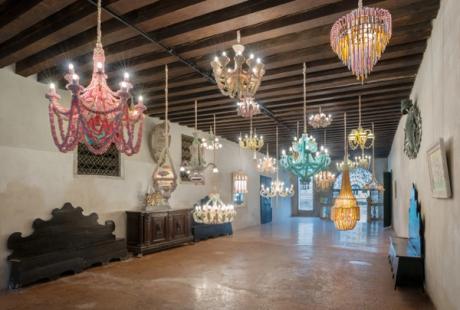
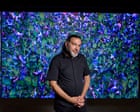
The Pinchuk Art Centre in Kyiv has transformed its Venice Biennale presentation from a glamorous celebration of young artists into a somber exhibition responding to the Russian invasion of Ukraine. This year's show, titled "Still Joy — From Ukraine into the World" (9 May-1 August) at the Palazzo Contarini-Polignac, features works by international artists like Tacita Dean and Julian Charriere alongside Ukrainian artists, as well as testimonials from soldiers collected by former marine Hlib Stryzhko. The exhibition explores how joy can persist amid trauma, with installations including pink scrolls bearing survivors' quotes, light box photographs of bombed interiors with rescued pot plants, and a sculpture of bells with displaced women's fingerprints.

Khaled Sabsabi is finally at the Venice Biennale: ‘Being here is already a win’

Khaled Sabsabi has opened his exhibition 'conference of one’s self' at the Australian Pavilion of the 61st Venice Biennale, alongside a second installation 'Khalil' in the Arsenale. This follows a tumultuous period in which Creative Australia rescinded his appointment as Australia’s representative in February 2025, sparking widespread backlash from the art community. After being reappointed in July 2025, Sabsabi presents two monumental multimedia works inspired by Sufi practice, created in Bangkok and described as 'one body with two limbs'.

Drained, Drowning, and Decay: The Best National Pavilions at the Venice Biennale

The 2026 Venice Biennale is defined by themes of ruin and decay, with standout national pavilions exploring bodily, infrastructural, and archaeological collapse. The Slovenian Pavilion features the Nonument Group repurposing materials from past Biennales into a ruin of a mosque for Bosnian Muslim soldiers from World War I. Syria presents its first national pavilion since the Civil War, with Sara Shamma invoking Palmyra, destroyed by ISIS. Germany's pavilion, titled "Ruin," features works by Henrike Naumann (who died in February) and Sung Tieu, questioning the pavilion's fascist architecture and nationalist residue. The Austrian Pavilion, curated by Florentina Holzinger, offers a visceral performance titled "Sea World." The Biennale is also marked by the abrupt resignation of its five-member jury, who refused to consider nations charged with crimes against humanity, leading to awards being chosen by public vote. Additionally, the main exhibition "In Minor Keys" was affected by the death of its curator, Koyo Kouoh.

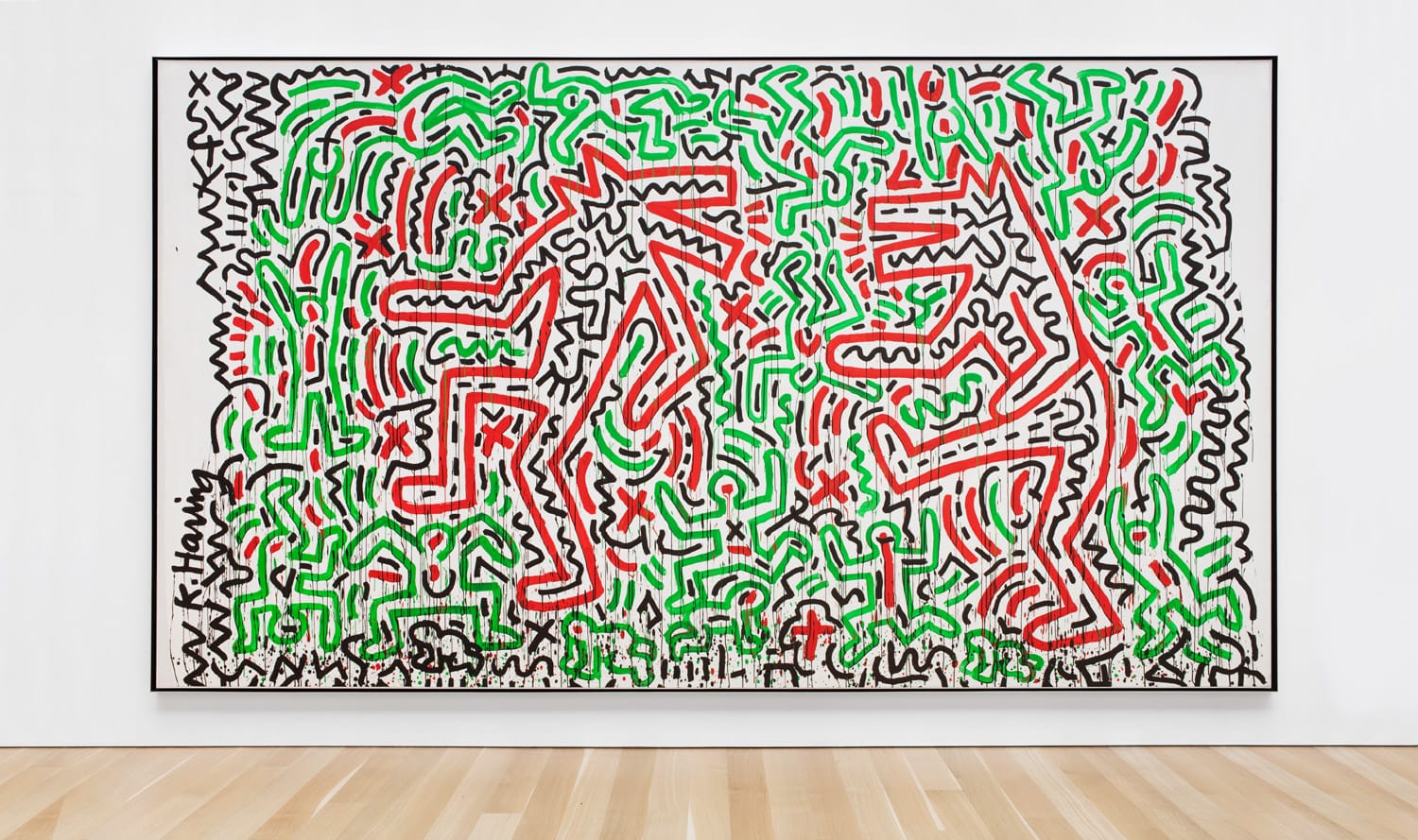
Keith Haring Before the End of the World

The article reviews Keith Haring's early work from 1980 to 1983, currently on view at the Brant Foundation in New York. The author reflects on initially dismissing Haring's graffiti-inspired style as trite and playful, but now sees darker, prophetic themes in pieces featuring apocalyptic imagery, UFOs, nuclear power, and mindless obedience to higher powers. The exhibition, curated by Dieter Buchhart and Anna Karina Hofbauer, runs through May 31.

Lithuanian, Latvian, and Estonian Pavilions Stage Pro-Ukraine Procession During Venice Biennale

On May 6, 2026, the Lithuanian, Latvian, and Estonian pavilions at the Venice Biennale organized a procession in solidarity with Ukraine, walking approximately one and a half miles from the Lithuanian Pavilion in the Fucina del Futuro to the Estonian pavilion. The action honored Ukrainian cultural workers creating under war conditions and those who have died. It is one of several political protests at the contentious 2026 Biennale, including demonstrations by Pussy Riot and FEMEN at the Russian pavilion, a "Solidarity Drone Chorus" opposing Israel's inclusion, and a planned 24-hour strike by the Art Not Genocide Alliance.

Fondazione Sandretto Re Rebaudengo’s New Art Island Made a Sunny Splash in a Rainy Venice Vernissage Week

Patrizia Sandretto Re Rebaudengo, an ARTnews Top 200 collector, inaugurated a new art site on the island of San Giacomo in Venice’s Northern Lagoon during the rainy preview week of the Biennale. The island, purchased in 2018, features two Napoleonic-era powder magazines transformed into exhibition spaces: one hosting the group show “Don’t have hope, be hope!” from the Sandretto Re Rebaudengo Collection, and the other presenting “Fanfare/Lament,” a solo exhibition by Matt Copson curated by Hans Ulrich Obrist. The site also includes permanent installations by artists such as Claire Fontaine, Mario Garcia Torres, Hugh Hayden, Goshka Macuga, Pamela Rosenkranz, and Thomas Schütte, and will serve as a venue for exhibitions, performances, and residencies.

An Unprecedented 24-Hour Strike Could Upend the Venice Biennale

An unprecedented 24-hour strike is set to interrupt the Venice Biennale's opening week on Friday, May 8, in protest of Israel's participation in the global art event. The action, organized by the activist group Art Not Genocide Alliance (ANGA), follows a letter signed by over 230 Biennale participants demanding Israel's exclusion. The strike has exposed divisions among participants, with some artists and pavilion teams weighing solidarity against the rare opportunity to platform their own political messages. The Slovenian pavilion, represented by Nika Grabar of the Nonument Group, has committed to the strike, while others like Ecuador's Tawna Collective remain undecided, balancing protest with their mission to highlight ecological crises in the Amazon.

Arch Hades Turns a Venetian Palazzo Into an Emotional Landscape

British artist Arch Hades has transformed the Scoletta Battioro e Tiraoro di Venezia, a historic palazzo on Venice's Grand Canal, into an immersive solo exhibition titled “Arch Hades: Return | Ritorno,” timed to the 61st Venice Biennale. The show features site-specific paintings, sculptures, and a soundscape, anchored by the monumental 22-panel painting *Return* (2025), which draws on Greco-Roman sculpture, Symbolism, Surrealism, and Romanticism, and echoes Gustav Klimt's lost “Faculty Paintings.” New works from Hades's “Confessions” series and the mirrored chrome piece *Sphinx* (2026) further explore themes of memory, connection, and existentialism.

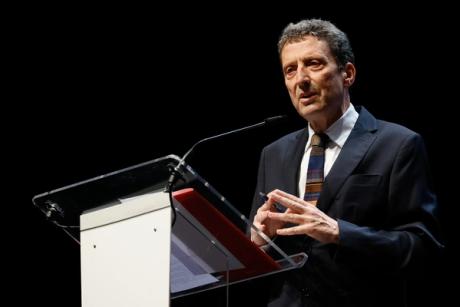
‘Exclusion can only satisfy the ego’: Venice Biennale president hits out at critics amid Russia and Israel controversy

Venice Biennale president Pietrangelo Buttafuoco defended the institution against critics at a conference on May 6, three days before the public opening, amid controversy over Russia's return to the event for the first time since its 2022 invasion of Ukraine and ongoing disputes over Israel's participation. He accused critics of “narcissism” and “censorship,” while Italian culture minister Alessandro Giuli sent inspectors to investigate whether Russia's involvement breached sanctions; a report was submitted to Prime Minister Giorgia Meloni's office. Meanwhile, the Biennale faces legal threats from the artist representing Israel over alleged discrimination, and protests have erupted, including a demonstration by Art Not Genocide Alliance and a Pussy Riot action at the Russia pavilion.

Parasol Unit returns with a showcase of women from Central Asia and beyond

Parasol Unit, the London non-profit exhibition space that closed in 2020 after 16 years, has relaunched with a new exhibition titled "Turandot: To the Daughters of the East" as an official collateral event of the Venice Biennale. Held at the historic Palazzo Franchetti, the show features 11 female artists from Central Asia and surrounding regions, curated by founder Ziba Ardalan. The exhibition spans video, installation, sculpture, painting, textile, and sound works by artists including Lida Abdul, Huma Bhabha, Mona Hatoum, and Tala Madani, and runs from 9 May to 31 October.

Venice Diary Day 2: “In Minor Keys” Is a Major Statement on Perseverance and Play

The article is a diary entry from the 2026 Venice Biennale, focusing on the exhibition "In Minor Keys" curated by the late Koyo Kouoh. The author describes an emotional experience, beginning with a poem by Refaat Alareer on the Arsenale wall, and highlights works by Guadalupe Maravilla, Alexa Kumiko Hatanaka, and others that address themes of perseverance, healing, and survival. Maravilla's sculptures reference a child kidnapped by ICE, while Hatanaka's linocuts explore bipolar disorder as an adaptive trait. The show also features artist-led collectives like Denniston Hill and fierce pussy, emphasizing institution-building and world-making.

First Impressions of a Venice Biennale Torn Apart by the Present

The 61st Venice Biennale, titled "In Minor Keys," opens amid turmoil: its curator Koyo Kouoh died of cancer during planning, and the festival jury resigned after a controversial statement about excluding Israel and Russia from prizes, replaced by a Eurovision-style people's choice award. The main exhibition, completed by a team of five collaborators using Kouoh's plans, features over 110 artists and collectives, with highlights including works by Big Chief Demond Melanchon, Tammy Nguyen, Guadalupe Maravilla, Ayrson Heráclito, and a section focused on Michael Armitage's Nairobi Contemporary Art Institute.

The Biennale Isn’t a Court. Tell That to the Protesters.

Pietrangelo Buttafuoco, president of the Venice Biennale, defended the decision to allow Russia to reopen its pavilion for the first time since its 2022 invasion of Ukraine, stating that the Biennale is "not a court; it is a garden of peace." The move has sparked widespread backlash, including threats to pull €2.3 million in EU funding. Protests have erupted on the ground, with Pussy Riot and FEMEN staging a theatrical demonstration outside the Russian Pavilion, setting off smoke flares and chanting slogans. Separately, around 60 artists performed a "Solidarity Drone Chorus" to protest Israel's participation, and the Art Not Genocide Alliance has called for a 24-hour strike and rallies across Venice. The Russian Pavilion will be open only during press preview days due to EU sanctions, with video projections visible from outside for the rest of the Biennale's run.

Pussy Riot protest at Venice Biennale forces Russian pavilion to briefly close

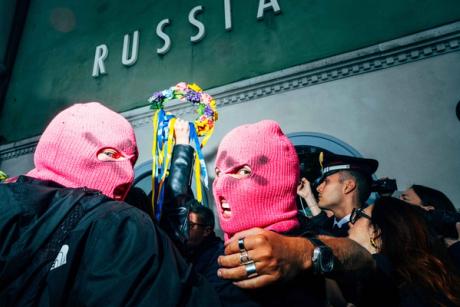
On the second day of the Venice Biennale preview, the activist group Pussy Riot staged a chaotic protest at the Russian pavilion, forcing it to temporarily close. Wearing pink balaclavas and carrying flares, about 40 activists—including members of Femen—gathered outside the pavilion, shouting slogans like "Blood is Russia's Art" and attempting to enter before being pushed back by police. Founding member Nadya Tolokonnikova led the protest, condemning Europe for allowing Russian participation despite the war in Ukraine. Separately, the Art Not Genocide Alliance (Anga) demonstrated outside the Israeli pavilion, which was locked from inside, over Israel's war in Gaza.

Malaysia Showcases Recovered 1MDB Artworks, From Picasso to Miró

Four artworks recovered from the 1MDB scandal—by Picasso, Miró, Balthus, and Maurice Utrillo—have gone on public display for the first time at the Malaysian Anti-Corruption Commission headquarters in Putrajaya. The paintings were repatriated from New York after being traced through Sotheby’s and shipped back to Malaysia on April 14. They are part of a broader art trail linked to the massive financial fraud, with Malaysian officials framing the display as an act of restitution rather than an art event.

Major protests take place at Venice Biennale previews

Major protests erupted during the preview days of the Venice Biennale, with multiple demonstrations targeting the Israeli and Russian pavilions. On Wednesday, the Art Not Genocide Alliance (ANGA) held a large protest outside the temporary Israeli pavilion in the Arsenale, attended by over 200 people calling for its closure. Separately, the Solidarity Drone Chorus performed a sound composition by Gazan artist Ahmed Muin, with 60 artists wearing T-shirts bearing names of artists from Gaza. Meanwhile, Pussy Riot and FEMEN protested Russian participation, forcing the Russian pavilion to shut its doors. These actions follow the resignation of the entire Golden Lion jury days before the opening, after they stated they would not consider pavilions from countries whose leaders are charged with crimes against humanity by the ICC—widely seen as a reference to Russia and Israel.

In Protest of Israeli Pavilion, Activists and Unions Plan Strike on Venice Biennale’s Opening Day

The Art Not Genocide Alliance (ANGA) has announced a 24-hour strike and rally on May 8, the day before the 2026 Venice Biennale opens to the public, in protest of the Israeli Pavilion. ANGA, formed in opposition to Israel's inclusion in the 2024 Biennale, refers to the current Israeli presentation—featuring Haifa-based artist Belu-Simion Fainaru—as the "Genocide Pavilion." Over 200 artists, curators, and culture workers have signed an open letter demanding Israel's exclusion, and a separate action called Solidarity Drone Chorus involved 60 artists. ANGA is collaborating with local labor and culture organizations including Biennalocene, Vogliamo Tutt'altro, S.a.L.E. Docks, and Mi Riconosci.

A Pavilion of Ruins: Germany Reconsiders Its Past in Venice

The German Pavilion at the 61st Venice Biennale features a dual presentation exploring the country's layered political history. Artist Sung Tieu has cloaked the pavilion's fascist-era facade with a mosaic reconstruction of a GDR housing estate for Vietnamese contract workers, where she lived as a child. Inside, the late Henrike Naumann's immersive installation 'The Home Front' uses furniture and design to stage a confrontation between East and West German domestic and political ideologies. Naumann died in February 2025 at age 41, but her fully realized concept was completed collaboratively by her partner and curator Kathleen Reinhardt.

The Price Points Powering the Art Market

The article, part of the Artnet Intelligence Report: Year Ahead 2026, analyzes art market performance by price bracket in 2025. The $1 million-to-$10 million range was the strongest segment, with sales totaling $3.5 billion—a 20.8% increase from 2024. Sales above $10 million rose 36.1% to $2.3 billion, boosted by high-priced masterpieces at New York's November auctions. The $100,000-to-$1 million bracket saw $3.2 billion in sales, up 6%. Meanwhile, works under $10,000 and in the $10,000-to-$100,000 range grew less than 1%, indicating cautious buyer behavior.

Dark clouds, protests and resignations dampen start of 61st Venice Biennale

The 61st Venice Biennale opened under grey skies and rain, with political tensions overshadowing the art world's premier event. The Russian pavilion, absent for two editions due to the Ukraine war, reappeared with a party atmosphere, though the Italian ministry of culture confirmed it would not be open to the public. The Ukrainian culture minister called Russia's symbolic presence powerful. The Iranian pavilion withdrew without explanation, and a protest by 60 artists from the In Minor Keys show marched through the Giardini humming in solidarity against Israel's participation. Over 200 artists, including Lubaina Himid and Alfredo Jaar, signed an open letter demanding the Israeli pavilion's cancellation. The event also proceeded without its curator, Koyo Kouoh, who died in May 2025; her curatorial team delivered the exhibition following her plans.

Venice Diary Day 1: At the Giardini, Artists Refuse to Make Fascism Cozy

Henrike Naumann's posthumous installation at the German Pavilion, which retains its 1938 Nazi-era fascist architecture, refuses to make the space 'cozy' by adorning windows with violently ripped domestic fabrics. The 2026 Venice Biennale is the first under president Pietrangelo Buttafuoco, associated with neo-fascist politics, and is overshadowed by controversy over his 'neutrality' policy allowing all countries to participate despite human rights concerns. The exhibition jury initially announced it would not consider pavilions from countries whose leaders are charged with crimes against humanity, then abruptly quit, leaving the situation unresolved. The US Pavilion features unimpressive blobs by Alma Allen, while the Russian Pavilion offers cut flowers and free vodka, and Andreas Angelidakis responds to fascist aesthetics at the Greek Pavilion.

Pleasure, parody and propaganda: rethinking the art of illustration in a new history of the genre

D.B. Dowd's new book "Reading Pictures" offers a sweeping 400-page history of illustration, tracing the genre from the Diamond Sutra frontispiece in Tang China (AD868) to Molly Crabapple's Gaza reports in 2015. The book examines key works such as Jules Chéret's 1891 poster for the Alcazar d'Été Club, Stuart Davis's caustic covers for The Masses, and Duong Ngoc Canh's Vietnamese propaganda poster, arguing that illustrations are meant to be "read" rather than admired like museum paintings.

May Book Bag: from a guide on entering the art world to a publication about artists influenced by Ovid’s Metamorphoses

The May Book Bag article from The Art Newspaper reviews four new art-related publications. It covers "Metamorphoses: Ovid and the Arts," edited by Francesca Cappelletti and Frits Scholten, which examines Ovid's influence on Western art through works by artists like Titian, Caravaggio, and Louise Bourgeois. Other featured books include Hettie Judah's "How to Enter the Art World," a practical guide for emerging artists; "Derrick Adams: Prints," showcasing the artist's printmaking from 2019-2025; and "Whistler's Legacy" by Daniel Sutherland, which explores the legacy of James Abbott McNeill Whistler through his close associates.

David Nahmad maintains that his Modigliani was not looted by the Nazis

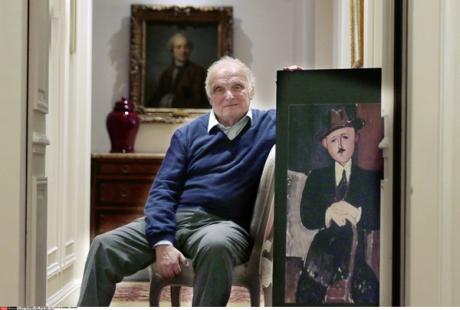
David Nahmad is continuing his legal battle to prove that his Modigliani painting, *Seated Man with a Cane* (1918), was not looted by the Nazis from the Jewish dealer Oscar Stettiner. Despite a recent New York ruling against him, Nahmad’s lawyers have filed a motion to review the case based on new eyewitness testimony. Two witnesses claim the painting they saw in the Van der Klip family—which bought the Nazi-looted work in 1944—is completely different from Nahmad’s painting, lacking a seated man or a cane. Nahmad’s legal team also cites a 1946 French bailiff report and a recent catalogue raisonné by Marc Restellini to argue that Mondex, the restitution firm working for Stettiner’s heirs, misidentified the work.

Nahmad Seeks to Reopen Modigliani Restitution Case With New Witnesses

David Nahmad's lawyers are asking a New York court to reconsider its April 3 decision in the restitution case over Amedeo Modigliani's *Seated Man with a Cane* (1918), which awarded the painting to the estate of dealer Oscar Stettiner. They cite new eyewitness testimony from Frédéric Allain, who recalls a different Modigliani—smaller, darker, and without a seated man or cane—hidden by the Van der Klip family in Paris during World War II, suggesting the wrong painting may have been the focus of the case. The filing also references a 1946 report describing the missing work as a self-portrait and a new catalogue raisonné by Marc Restellini that finds no link between the painting and Stettiner. Mondex, representing Stettiner's heirs, rejects the claims, asserting that *Seated Man with a Cane* bears Stettiner's name and was in the family's possession from 1944 to 1996.

Treasures From Matthew Perry’s Estate Head to Auction for a Good Cause

Heritage Auctions will sell a trove of artifacts from Matthew Perry's estate starting June 5, including scripts and memorabilia from the sitcom *Friends*, artworks by Banksy and Mel Bochner, and personal items like a 3D portrait of his invented superhero "Mattman." Proceeds benefit the Matthew Perry Foundation, a nonprofit focused on ending addiction stigma and expanding access to evidence-based care, founded after the actor's death in 2023.

‘She had a fresh, informed eye’: mural depicting late Venice Biennale curator Koyo Kouoh displayed in lagoon city

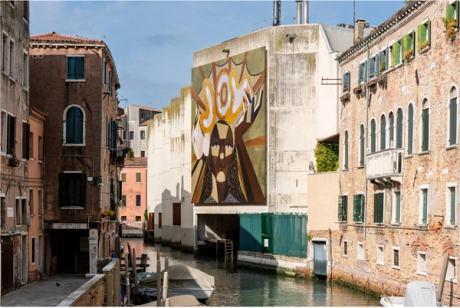
A mural honoring Koyo Kouoh, the late curator of the 2025 Venice Biennale, has been unveiled in Venice. Created by US artist Derrick Adams, the collage titled "Heavy is the head that wears the crown" adorns the facade of the Palazzetto dello sport Giobatta Gianquinto near the Arsenale. Kouoh died on 10 May 2025 at age 57 after a cancer diagnosis. The tribute was organized by curator Francesco Bonami, who had invited Kouoh to join the jury for the 50th Venice Biennale in 2003.

Venice Biennale’s fierce pussy Group Says City Censored Posters About Queer and Trans People

The lesbian artist collective fierce pussy, comprising Nancy Brooks Brody, Joy Episalla, Zoe Leonard, and Carrie Yamaoka, claims that the city of Venice censored their posters for the Venice Biennale. The posters, which feature phrases like "Welcome queers and trans people" and "we are queers and trans people" alongside a list of occupations, were intended to be pasted across the city. After the city blocked the full-scale posting, the group created stickers and placed them on walls, windows, and advertising spaces. As a concession, La Biennale installed the original posters inside the Arsenale entrance.

Lubaina Himid’s British pavilion at the Venice Biennale review – alienation in a green and pleasant land

Lubaina Himid's installation at the British pavilion of the Venice Biennale presents monumental paintings and a wall of painted oars depicting tailors, cooks, architects, gardeners, and sailors—figures who shape Britain. The work is accompanied by an audio piece of bucolic country sounds, but the black figures in the paintings exchange sideways glances of discomfort, questioning whether they truly belong. The exhibition is anchored by 26 philosophical questions on the wall, such as "Can flies settle here?" and "Can poison taste delicious?"