filter_list Showing 539 results for "Quest" close Clear
search
dashboard All 539 museum exhibitions 224article news 122article culture 60rate_review review 43trending_up market 20article policy 19person people 17article local 16gavel restitution 11candle obituary 7
date_range Range Today This Week This Month All
Subscribe

Lithuanian, Latvian, and Estonian Pavilions Stage Pro-Ukraine Procession During Venice Biennale

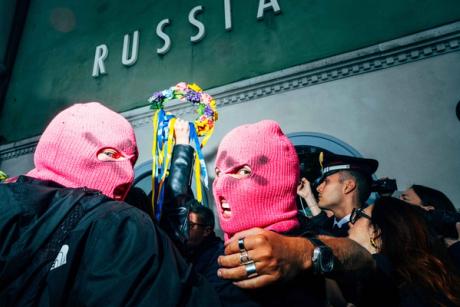
On May 6, 2026, the Lithuanian, Latvian, and Estonian pavilions at the Venice Biennale organized a procession in solidarity with Ukraine, walking approximately one and a half miles from the Lithuanian Pavilion in the Fucina del Futuro to the Estonian pavilion. The action honored Ukrainian cultural workers creating under war conditions and those who have died. It is one of several political protests at the contentious 2026 Biennale, including demonstrations by Pussy Riot and FEMEN at the Russian pavilion, a "Solidarity Drone Chorus" opposing Israel's inclusion, and a planned 24-hour strike by the Art Not Genocide Alliance.

An Unprecedented 24-Hour Strike Could Upend the Venice Biennale

An unprecedented 24-hour strike is set to interrupt the Venice Biennale's opening week on Friday, May 8, in protest of Israel's participation in the global art event. The action, organized by the activist group Art Not Genocide Alliance (ANGA), follows a letter signed by over 230 Biennale participants demanding Israel's exclusion. The strike has exposed divisions among participants, with some artists and pavilion teams weighing solidarity against the rare opportunity to platform their own political messages. The Slovenian pavilion, represented by Nika Grabar of the Nonument Group, has committed to the strike, while others like Ecuador's Tawna Collective remain undecided, balancing protest with their mission to highlight ecological crises in the Amazon.

First Impressions of a Venice Biennale Torn Apart by the Present

The 61st Venice Biennale, titled "In Minor Keys," opens amid turmoil: its curator Koyo Kouoh died of cancer during planning, and the festival jury resigned after a controversial statement about excluding Israel and Russia from prizes, replaced by a Eurovision-style people's choice award. The main exhibition, completed by a team of five collaborators using Kouoh's plans, features over 110 artists and collectives, with highlights including works by Big Chief Demond Melanchon, Tammy Nguyen, Guadalupe Maravilla, Ayrson Heráclito, and a section focused on Michael Armitage's Nairobi Contemporary Art Institute.

The Biennale Isn’t a Court. Tell That to the Protesters.

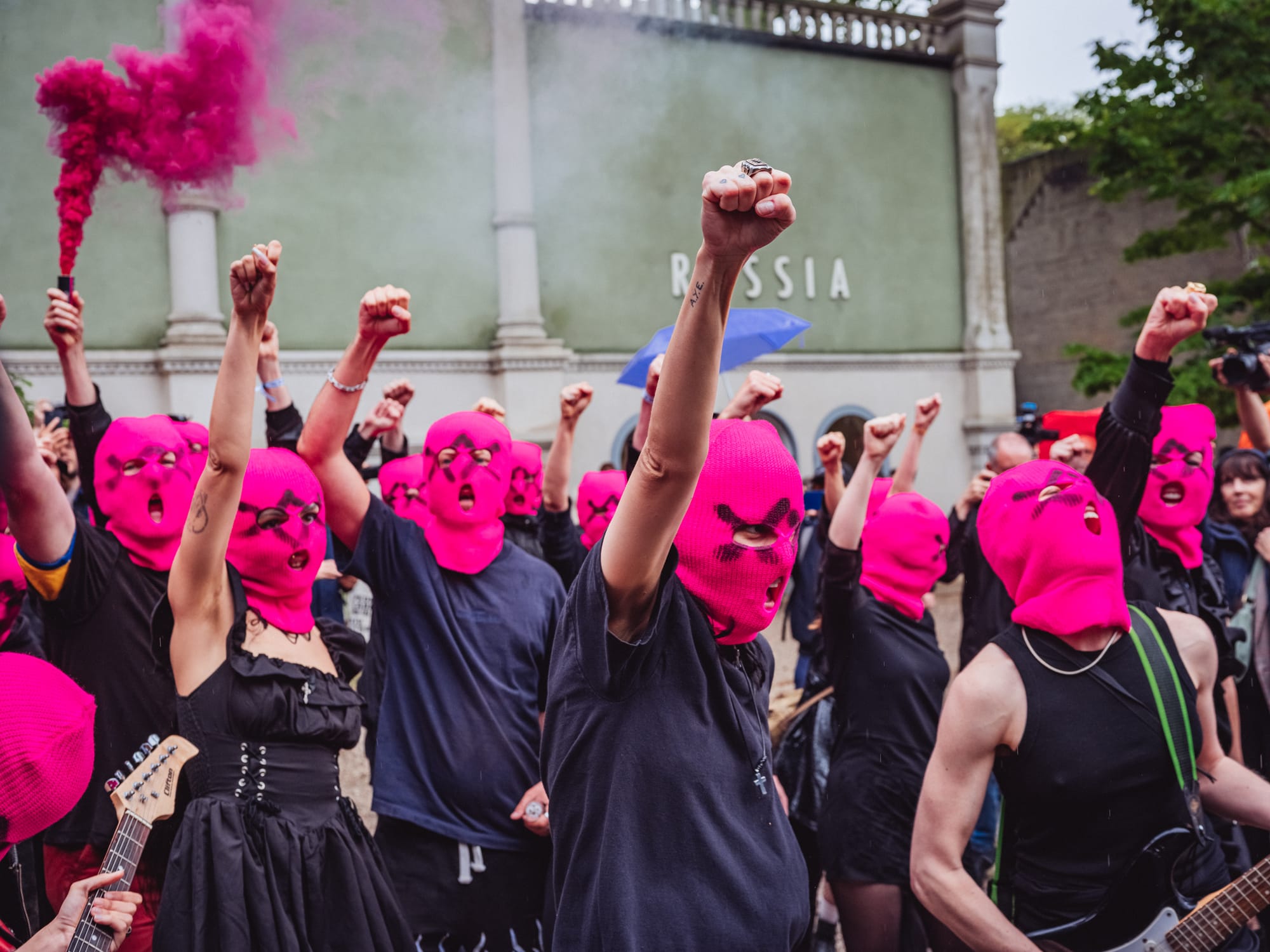
Pietrangelo Buttafuoco, president of the Venice Biennale, defended the decision to allow Russia to reopen its pavilion for the first time since its 2022 invasion of Ukraine, stating that the Biennale is "not a court; it is a garden of peace." The move has sparked widespread backlash, including threats to pull €2.3 million in EU funding. Protests have erupted on the ground, with Pussy Riot and FEMEN staging a theatrical demonstration outside the Russian Pavilion, setting off smoke flares and chanting slogans. Separately, around 60 artists performed a "Solidarity Drone Chorus" to protest Israel's participation, and the Art Not Genocide Alliance has called for a 24-hour strike and rallies across Venice. The Russian Pavilion will be open only during press preview days due to EU sanctions, with video projections visible from outside for the rest of the Biennale's run.

Major protests take place at Venice Biennale previews

Major protests erupted during the preview days of the Venice Biennale, with multiple demonstrations targeting the Israeli and Russian pavilions. On Wednesday, the Art Not Genocide Alliance (ANGA) held a large protest outside the temporary Israeli pavilion in the Arsenale, attended by over 200 people calling for its closure. Separately, the Solidarity Drone Chorus performed a sound composition by Gazan artist Ahmed Muin, with 60 artists wearing T-shirts bearing names of artists from Gaza. Meanwhile, Pussy Riot and FEMEN protested Russian participation, forcing the Russian pavilion to shut its doors. These actions follow the resignation of the entire Golden Lion jury days before the opening, after they stated they would not consider pavilions from countries whose leaders are charged with crimes against humanity by the ICC—widely seen as a reference to Russia and Israel.

Venice Biennale’s fierce pussy Group Says City Censored Posters About Queer and Trans People

The lesbian artist collective fierce pussy, comprising Nancy Brooks Brody, Joy Episalla, Zoe Leonard, and Carrie Yamaoka, claims that the city of Venice censored their posters for the Venice Biennale. The posters, which feature phrases like "Welcome queers and trans people" and "we are queers and trans people" alongside a list of occupations, were intended to be pasted across the city. After the city blocked the full-scale posting, the group created stickers and placed them on walls, windows, and advertising spaces. As a concession, La Biennale installed the original posters inside the Arsenale entrance.

Lubaina Himid’s British pavilion at the Venice Biennale review – alienation in a green and pleasant land

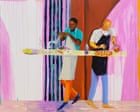
Lubaina Himid's installation at the British pavilion of the Venice Biennale presents monumental paintings and a wall of painted oars depicting tailors, cooks, architects, gardeners, and sailors—figures who shape Britain. The work is accompanied by an audio piece of bucolic country sounds, but the black figures in the paintings exchange sideways glances of discomfort, questioning whether they truly belong. The exhibition is anchored by 26 philosophical questions on the wall, such as "Can flies settle here?" and "Can poison taste delicious?"

BBC ‘Buried’ Footage of Banksy at NYC Mural Site, Former Reporter Claims

Former BBC New York correspondent Nick Bryant claims the BBC suppressed footage he captured of Banksy at a mural site in New York City in March 2018. In a Substack post, Bryant recounts being tipped off by Banksy's PR team about a new artwork at the Houston Bowery Wall, where he and his cameraman filmed the artist—described as a middle-aged man in a black beanie and grey coat—fleeing the scene with fresh paint on his fingers. Despite believing he had a world exclusive, Bryant says BBC editors in London decided not to air the footage, citing concerns about unmasking the artist and preserving the mystery for audiences, including a senior colleague's daughter who compared revealing Banksy's identity to telling children there is no Santa Claus.

‘In every drop of paint he slurped, you see the Holocaust’: the genius and torments of Georg Baselitz

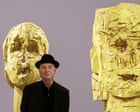
Georg Baselitz, the German painter and sculptor known for his provocative confrontations with Nazi history, has died. Born in 1938, he was one of the last living artists with direct childhood memories of the Third Reich. His early works, such as *Die große Nacht im Eimer* (1961) and his upside-down German eagles, deliberately shocked postwar West Germany by depicting obscene, shameful images of a society trying to forget the Holocaust. He famously exhibited a zombie Hitler woodcarving at the 1980 Venice Biennale alongside Anselm Kiefer, insisting on confronting rather than ignoring the Nazi heritage of the German Pavilion.

Nancy Holt review – cosmic thrills as the universe’s hidden power is unleashed

The Guardian reviews a major UK exhibition of land artist Nancy Holt (1938-2014) at Goodwood in West Sussex, the largest show of her work to date. The exhibition features two large outdoor installations—Ventilation System, a metallic tubular structure resembling building lungs, and Hydra’s Head, six concrete pools arranged like the Hydra constellation in a chalk quarry—alongside indoor photographs, diagrams, and light works. The review praises the cosmic scale and bodily connection of the outdoor pieces but finds the indoor works less effective at conveying Holt’s themes of universal vastness and interconnectedness.

Comment | The slopification of political art

The article critiques the rise of AI-generated political imagery, such as Donald Trump depicted as Jesus and viral Lego videos of the Iranian Revolutionary Guard Corps, arguing that these shallow, generic visuals fail to provide meaningful or lasting cultural commentary on current conflicts. The author contrasts this with the inventive, humorous resistance seen during the 2013 Gezi Park protests in Istanbul, which later influenced a generation of Turkish artists.

Wildenstein dispute over Monet work highlights art market opacity

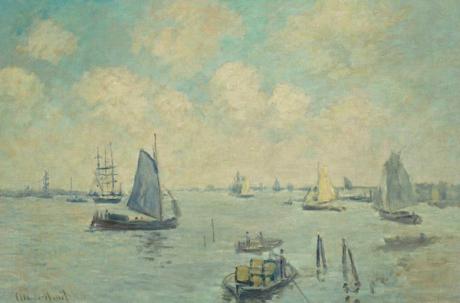
A long-running dispute involving the Wildenstein art dynasty has resurfaced over a 2004 transaction for Claude Monet's *Adolphe Monet Reading in a Garden* (1867). The painting was acquired by Guy Wildenstein through a €4.5m deal that included works by Pierre Bonnard and Alfred Sisley, among them Monet's *Marine, Amsterdam* (1874). That work was later resold via Christie's, but a 2020 sale attempt revealed that the original canvas had been lost during a transfer process, significantly reducing its value. Court-appointed specialists concluded in 2024 that the alteration predated the transaction and that the gallery likely knew of the damage. The sellers have filed a claim alleging "vitiated consent" under French law, with a court date set for 7 May in Rouen. The disputed Monet now reportedly belongs to billionaire Larry Ellison.

Is A Random Unknown Artist More Valuable Than Picasso? AI Thinks So.

An experiment using a custom AI model to evaluate artistic value independent of market context found that the model assigned a seven-figure price to an unknown street artist's work while valuing a Picasso at under $1,000. The project, run by an art journalist with a data scientist and an AI expert, trained a Fine Art Large Vision Model on millions of images and price data. Without metadata like artist name or gallery affiliation, the model's predictions were technically interesting but commercially useless; only when those market signals were added did predictions align with real auction outcomes.

When archaeology was dominated by men | Letters

A reader named Elke Bachler writes a letter to The Guardian challenging a sentence in a review of Thomas Laqueur's book *The Dog's Gaze*. The review described a prehistoric scene as showing "a boy and a dog" standing together in wonder before cave art. Bachler argues there is no evidence the child was a boy, noting that archaeology has historically been dominated by men who interpreted evidence through contemporary gender roles.

The Tabloids Are Fouling Mayor Mamdani Over His Knicks Art. Here’s the Story

Artist Tom Sanford loaned his hand-painted wooden "Knicks Cutout" portraits of legendary New York Knicks players to New York City Hall at the invitation of Mayor Zohran Mamdani, intended to celebrate the team's playoff run. Tabloid media, including the New York Post and New York Times, framed the gesture as a "curse" on the team, suggesting fans blamed the mayor for the Knicks' losses. Sanford defends the artwork as a sincere, community-driven tribute rooted in New York street-corner cutout traditions, not a cheap stunt.

Without Consciousness, No Creativity

"Ohne Bewusstsein keine Kreativität"

Matthias Hornschuh, a speaker at the German Creative Economy Summit in Hamburg, discusses artificial intelligence and its impact on art and creativity in an interview with Monopol. He argues that AI systems lack intentionality and true creativity, describing them as "probability-based imitation" rather than genuine creative tools. Hornschuh warns against the hype surrounding AI, noting that efficiency gains are often overstated and that users can become trapped in unproductive interactions with these systems.

Whispering Gallery: The Cratable Hedge and the Colonial Hangover

The article questions the appointment of James Taylor-Foster as the incoming director of Para Site in Hong Kong, noting his background as a curator of architecture and design rather than contemporary art, and his lack of prior engagement with Asia's curatorial scene. It also reports that Philip Tinari, former director of UCCA in Beijing, has been appointed to lead Tai Kwun, replacing Pi Li, who has become founding director of the Tencent-funded Róng Museum of Art in Shenzhen.

The Swiss Collector Building a Massive Trove of Chinese Art

Swiss businessman and former diplomat Uli Sigg has spent over three decades assembling one of the largest private collections of contemporary Chinese art, comprising thousands of works. Artist Ai Weiwei has referred to Sigg as “my maker,” highlighting the collector’s pivotal role in promoting Chinese contemporary art on the global stage.

Adam Budak dismissed as director of MOCAK amid controversy

Adam Budak has been dismissed as director of the Museum of Contemporary Art in Krakow (MOCAK), effective from 12 May, with his employment ending on 30 June. The city of Krakow cited improper performance of duties related to work organization and team management, following an investigation triggered by a complaint signed by 37 employees. Budak disputes the decision, calling it baseless and made under time pressure, and is considering an appeal. Artists including Paulina Ołowska and Robert Knoke have rallied in support, with several artists withdrawing from MOCAK's 2026–27 programme in solidarity.

Goen Choi and Hyeree Ro on Representing South Korea at the 61st Venice Biennale

Goen Choi and Hyeree Ro are representing South Korea at the 61st Venice Biennale, which runs from 9 May to 22 November 2026. In an interview with ArtReview, Choi describes his sculptural installation "Meridian," featuring ruptured copper pipes that traverse the Korean Pavilion in the Giardini, exploring unseen infrastructures and unstable relations between fixed structures. Ro presents "Bearing," a membranelike waxed fabric installation with eight stations for mourning, remembering, and mending, inspired by Korean gardens and temples. Both artists respond to the Biennale's theme "In Minor Keys," emphasizing subtle forces, low vibrations, and contemplative spaces.

Venice Biennale Swamped in Protests Ahead of Planned Strike

The Art Not Genocide Alliance (ANGA) has announced a 24-hour strike for Friday, May 8, coinciding with previews of the 2026 Venice Biennale, alongside a protest rally organized by local group Biennalocene and Italian trade unions. Earlier this week, sixty artists staged a sonic protest at the Giardini entrance to draw attention to the plight of those affected by genocide and war in Palestine and elsewhere. The Latvian pavilion has also encouraged attendees to wear a design by artist Krišs Salmanis reading “Death in Venice – Russia go home!” Meanwhile, dissident artists Pussy Riot stormed the Russian pavilion waving Ukrainian flags, and the entire 2026 Biennale jury resigned after the decision to exclude countries whose leaders are charged with crimes against humanity by the International Criminal Court from competing for top prizes.

Embattled US Venice Biennale Pavilion is Seeking Donations

The American Arts Conservancy (AAC), an organization founded last year by the Trump administration, has launched a crowdfunding campaign to support the United States Pavilion at the Venice Biennale. This comes amid widespread controversy and calls to exclude the US, Russia, and Israel from the event. The AAC website solicits donations starting at $100, claiming a "once-in-a-generation opportunity" to restore America's artistic presence abroad. The US government has already contributed $375,000, but the State Department says the total exhibition cost far exceeds that amount. This year's pavilion will feature sculptor Alma Allen, after Barbara Chase-Riboud and William Eggleston declined to participate.

Somali Artists Take Issue With Nation's First-Ever Venice Biennale Pavilion

Somalia's first-ever national pavilion at the 61st Venice Biennale has sparked controversy, with local cultural organizations accusing organizers of excluding Somalia-based artists. The pavilion, titled SADDEXLEEY, features only diaspora artists—Somali-Swedish painter Ayan Farfah, Somali-Danish poet Asmaa Jama, and Somali-British poet Warsan Shire—while the Somalia Arts Foundation (SAF) and queer collective Warbixinta Cidda have denounced the appointment of Italian co-curator Fabio Scrivanti, citing colonial tensions. SAF founder Sagal Ali and others allege that artists in Somalia were not meaningfully consulted, and that organizers used intimidation tactics against critics. The pavilion's organizers claim it includes Mogadishu-based painter 4C and will host accompanying events, but details remain unconfirmed.

One of the most important galleries in Brazil is in Rome these weeks with an exhibition. The interview

Una delle più importanti gallerie del Brasile in queste settimane è a Roma con una mostra. L’intervista

Brazilian gallery A Gentil Carioca has brought the first Italian solo exhibition of artist Miguel Afa to the Fondazione Capitolina in Rome, in collaboration with the Rhinoceros space. Titled "Il tempo che vive in me" (The Time That Lives in Me), the show features works created during Afa's residency in Rome, exploring themes of time, memory, and light through oil paintings that blend Brazilian and Roman imagery.

In Naples, an International Exhibition to Map Instability and Deactivate Borders

A Napoli una mostra internazionale per mappare l’instabilità e disattivare i confini

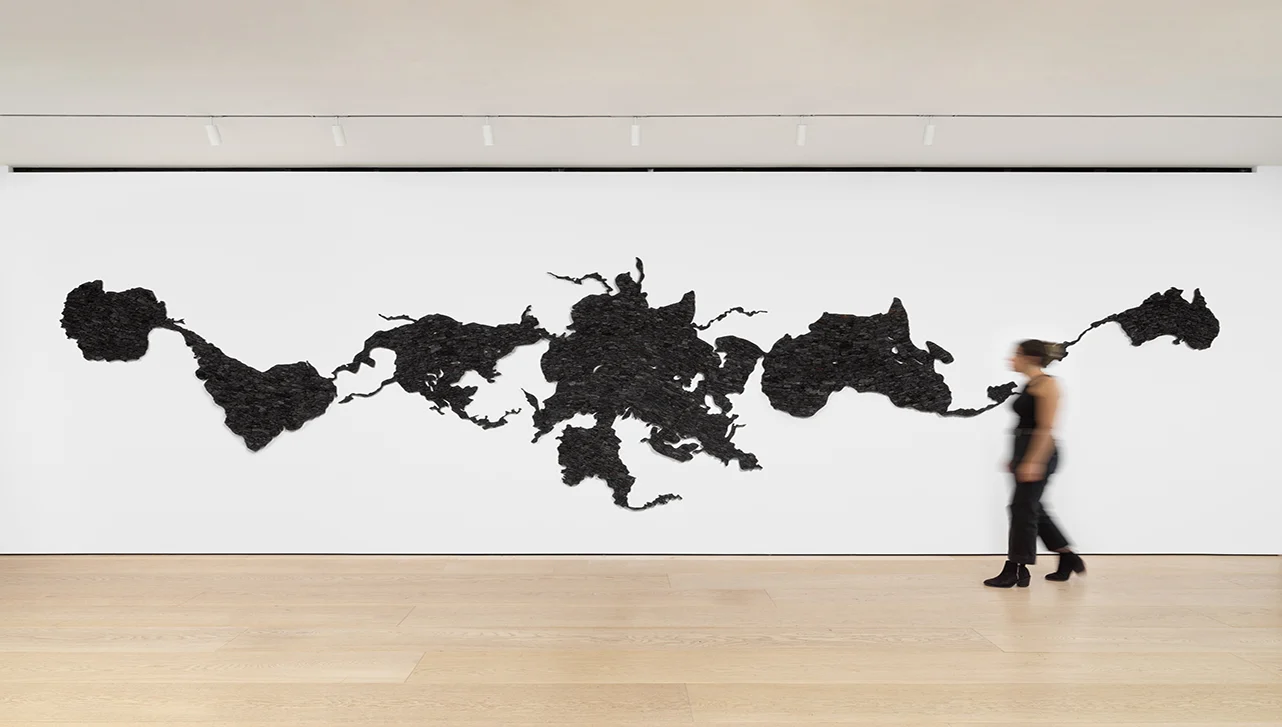
The exhibition "Atlante" at Thomas Dane Gallery in Naples, curated by James Lingwood, brings together works by eight international artists—Igshaan Adams, Teju Cole, Luigi Ghirri, Emma McNally, Claudio Parmiggiani, Anri Sala, Tatiana Trouvé, and Akram Zaatari—to challenge traditional cartographic representations. Through maps, drawings, textiles, and photographs, the show interrogates the ideological and political assumptions embedded in mapping, reframing the Mediterranean not as a border but as a connective space, and exposing the instability and power asymmetries underlying historical worldviews.

Berlin is the capital of contemporary performance. Here's why

Berlino è la capitale della performance contemporanea. Ecco perché

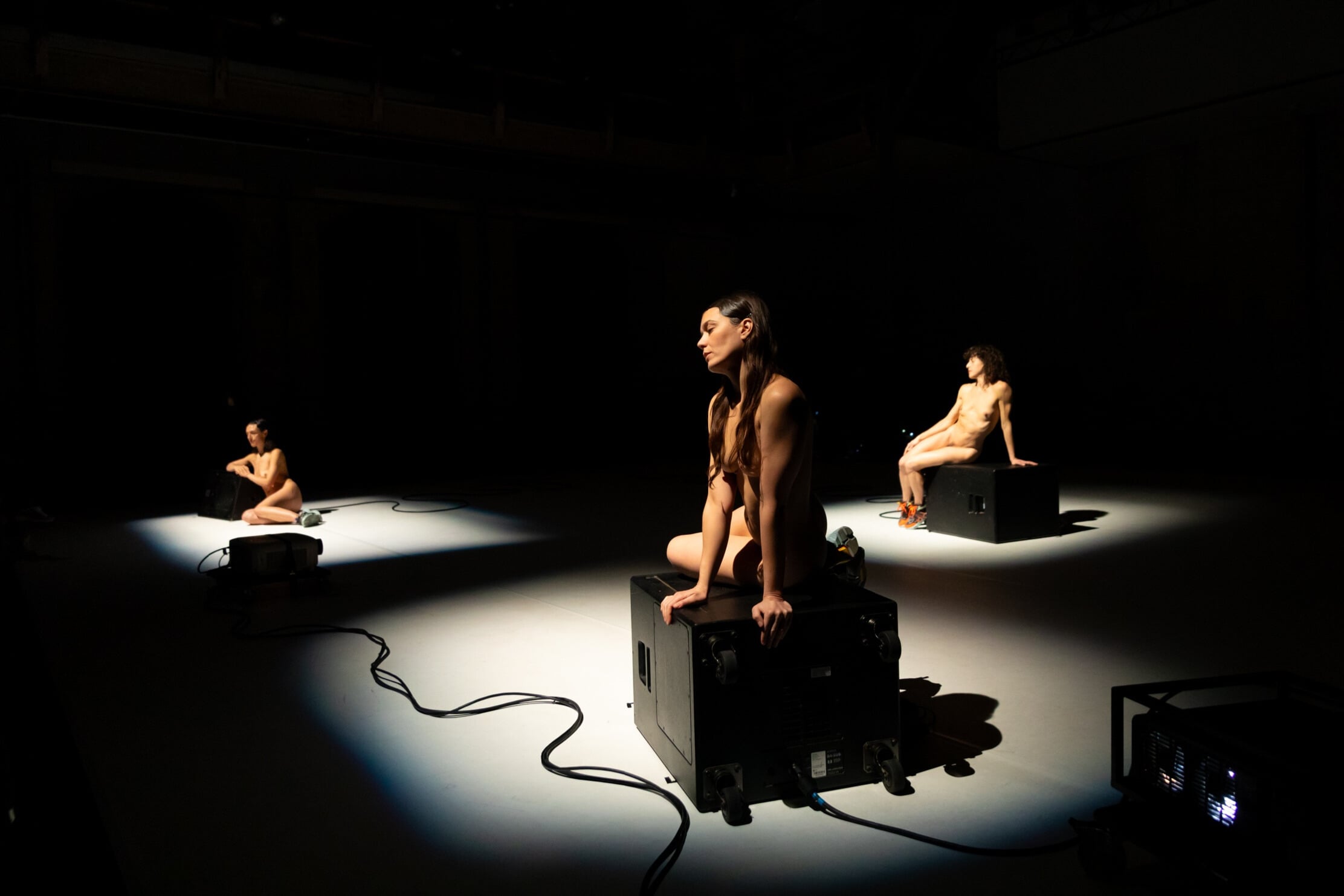
Berlino si conferma capitale della performance contemporanea, con musei e spazi non teatrali che diventano luoghi di azione e sperimentazione. L'articolo descrive quattro recenti performance: 'Glitch Choir – Vocal Variations' di Deva Schubert allo Schinkel Pavillon, dove il corpo e la voce esplorano il glitch come condizione fisica e politica; 'Roses Rising – The Movement' di Leila Hekmat al Gropius Bau, un rituale collettivo di danza e musica; e altre opere che trasformano istituzioni come l'Hamburger Bahnhof in dispositivi di produzione sensoriale. Anche il Bode Museum partecipa con 'The Healing Museum', uno spazio di meditazione interreligioso.

Pussy Riot and Topless Activists Rally Against Russian Pavilion at Venice Biennale

On May 6, 2026, the art collective Pussy Riot and the Ukrainian feminist group FEMEN staged a protest outside the Russian Pavilion at the 61st Venice Biennale. Approximately 50 activists released pink smoke and blue-and-yellow flares evoking the Ukrainian flag, while FEMEN members staged a topless protest with anti-war slogans like “RUSSIA KILLS, BIENNALE EXHIBITS.” Italian police and Biennale security blocked access to the pavilion, and some Pussy Riot activists were tackled after entering. The protest targeted Russia’s participation in the Biennale for the first time since its full-scale invasion of Ukraine in 2022, with activists condemning the event for lending legitimacy to Russian officials and artists aligned with the government.

Statement of Resignation

The international jury for the 61st edition of La Biennale di Venezia, titled “In Minor Keys” and curated by Koyo Kouoh, has resigned as of April 30, 2026. The jury members—Solange Oliveira Farkas, Zoe Butt, Elvira Dyangani Ose, Marta Kuzma, and Giovanna Zapperi—cite their earlier Statement of Intention issued on April 22, 2026, as the basis for their collective resignation.

Lydia Ourahmane “1752 Photos” at Galerie Chantal Crousel, Paris

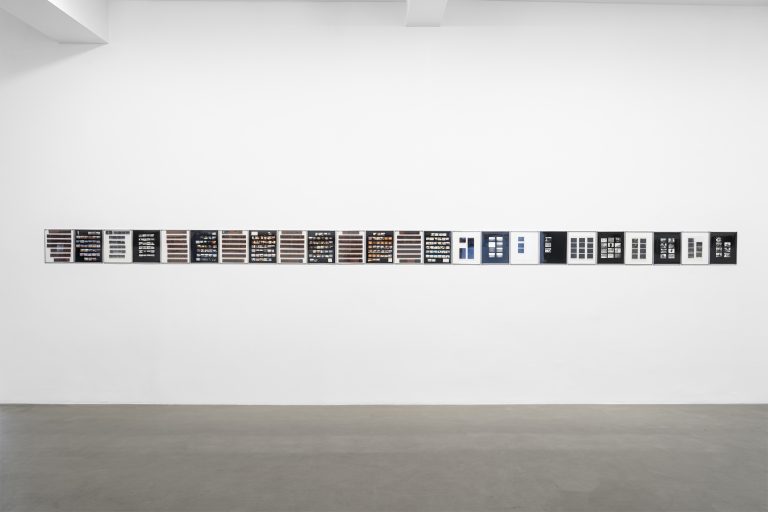
Lydia Ourahmane presents "1752 Photos" at Galerie Chantal Crousel in Paris, an exhibition centered on images that were never intended for public view. The works, stored in boxes and pressed between glass, explore themes of concealment, preservation, and the tension between visibility and obscurity.

Vancouver Art Gallery's "Future Geographies" Exhibit Explores How Art Responds to Climate Change

The Vancouver Art Gallery has opened "Future Geographies: Art in the Century of Climate Change," an exhibition curated by Eva Respini, the gallery's interim co-CEO and curator at large. Featuring over 30 artists and 35 works—including sculptures, paintings, video installations, and photographs—the show explores climate change through themes of living knowledge, consumed earth, speculative worlds, and material memory. Highlights include Brian Jungen's whale-skeleton sculpture made from plastic chairs and Clarissa Tossin's multimedia weaving of Amazon boxes. The exhibition also incorporates sustainability in its organization, using recycled cardboard for labels, overland shipping for loans, and commissioning local artists.