
filter_list Showing 3 results for "Bearing (2026)" close Clear
search
dashboard All 3 museum exhibitions 2person people 1
date_range Range Today This Week This Month All
Subscribe

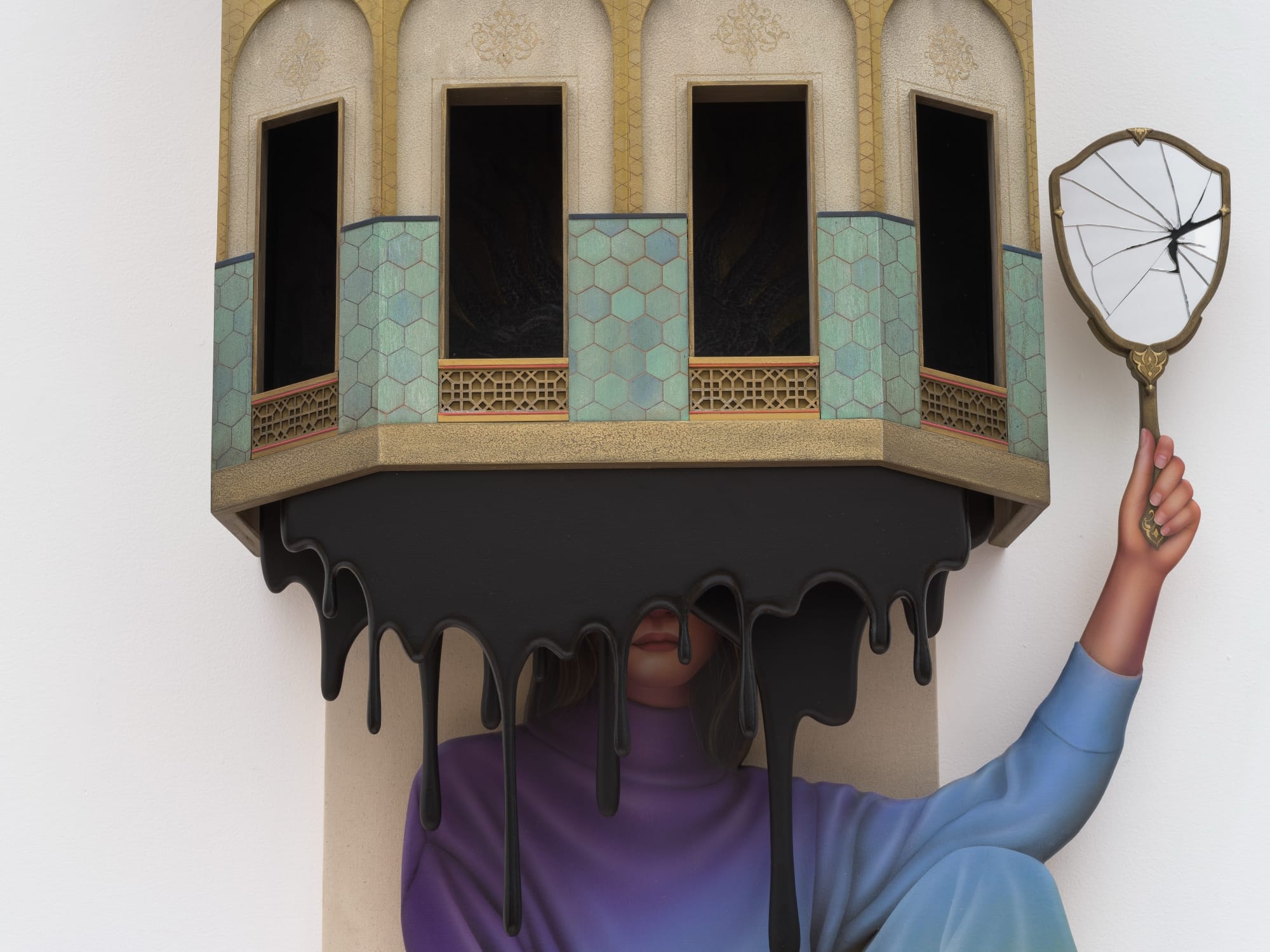
Arghavan Khosravi Breaks Through Gendered Restrictions in Her Architectural Portraits

Arghavan Khosravi's solo exhibition "What Remains" opens today at Uffner & Liu in New York, presenting a new body of sculptural paintings that fuse Persian architecture with Christian altarpieces. The works explore women's fight for equality under censorship and religious dogma in Iran, featuring figures restricted by domestic objects, hinged shutters, and suspended cords, with fragments of limbs or faces visible. Key pieces include "Suspended" (2026), "Bearing" (2026), and "The Whisper" (2026), running through July 2.

Hyeree Ro: What Bears

Hyeree Ro is preparing for the 2026 Venice Biennale, where she will present the work "Bearing (2026)" as part of the Korean Pavilion, titled "Liberation Space: Fortress/Nest." The article follows Ro in her temporary Brooklyn studio, where she works with salvaged objects and materials that migrate across multiple works over years—such as a sheet of organza purchased in 2023 that later appeared in "Niro (2024)" and "Carry (2025)" before being repurposed as the pavilion's fabric walls. Her practice is defined by a nomadic, accumulative material logic: objects enter without a fixed destination and gain meaning through repeated reuse.

The Venice Biennale Korean Pavilion was built in 1995 as the 26th national pavilion in Giardini Cast..

The article reports on the upcoming 61st Venice Biennale in 2026, focusing on the Korean Pavilion's exhibition titled "Liberation Space: Fortress and Nest." The Korean Pavilion, built in 1995 as the 26th national pavilion in Giardini Castello Park, will present itself as a temporary monument exploring Korea's post-colonial history, specifically the liberation period (1945-1948) and the concept of sovereignty. Artistic director Choi Bit-na has curated the exhibition to address Korea's geopolitical context, viewing the pavilion's 1995 entry as a key moment of decolonization alongside the demolition of the Government-General building and the founding of the Gwangju Biennale.