
filter_list Showing 3 results for "Canadian Pavilion" close Clear
dashboard All 3 museum exhibitions 3
date_range Range Today This Week This Month All
Subscribe

art abbas akhavan venice biennale canadian pavilion

Abbas Akhavan has transformed the Canadian Pavilion at the Venice Biennale into a greenhouse-like installation titled "Abbas Akhavan: Entre chien et loup." The pavilion's wooden doorway has been replaced with glass, revealing a pond with pinkish water illuminated by sunlight and LED grow-lamps. Visitors encounter mossy boulders, a vintage fur coat sprayed with water, sharpened bronze sticks, and custom frosted mirrors that blur the architecture. The centerpiece will be three giant Bolivian water lilies, grown from seeds sent from Kew Gardens to Padua, which will gradually take over the pond over the summer. The exhibition is curated by Kim Nguyen, commissioned by the National Gallery of Canada, and supported by the Canada Council for the Arts.
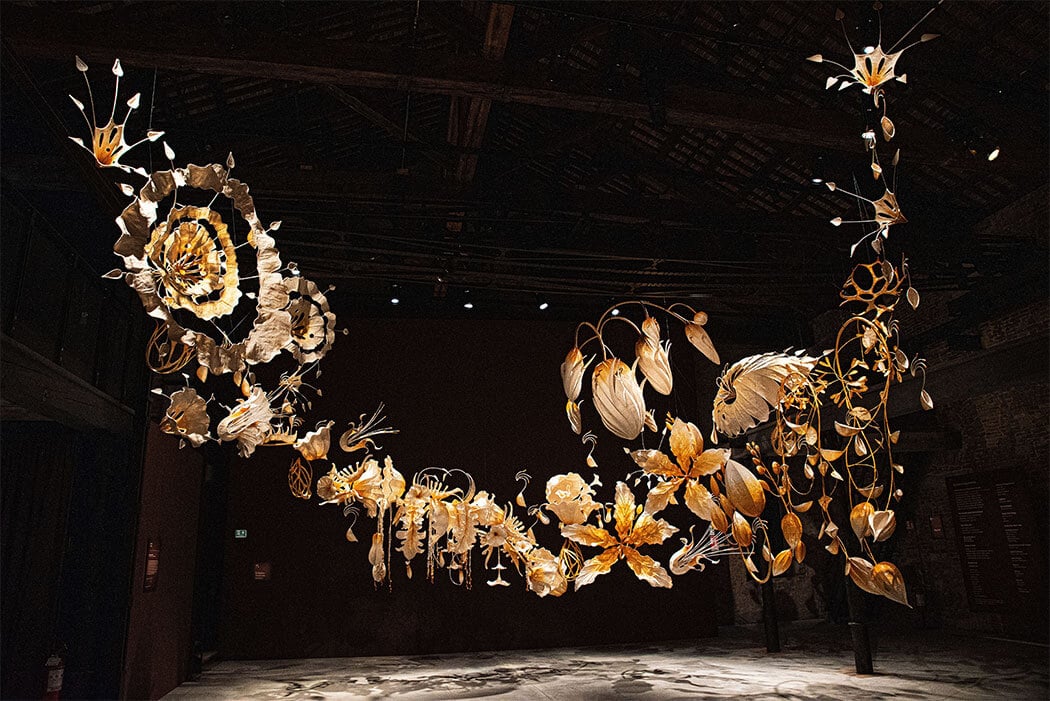
At the Venice Biennale, Canada’s entry blooms with unease

Montreal artist Abbas Akhavan's installation "Entre chien et loup" transforms the Canadian pavilion at the 2026 Venice Biennale into a living climate system, featuring a humid, Amazon-like environment with a pond of Victoria water lilies. The seeds were sourced from the Royal Botanic Gardens, Kew, and germinated at the Orto Botanico di Padova, with the lilies growing and blooming over the course of the biennale.

Venice Biennale 2026: The Pavilions Not to Be Missed

Biennale de Venise 2026 : les pavillons à ne surtout pas manquer

The 61st Venice Biennale, curated by Koyo Kouoh as an invitation to slow down and reconnect with emotions, features a constellation of contemplative and powerful proposals across the city. Notable national pavilions include the Holy See transforming a monastic garden into an immersive sound experience by Soundwalk Collective, Canada exploring colonial heritage through giant water lilies by Abbas Akhavan, and Austria electrifying the Giardini with radical performances by Florentina Holzinger. Other highlights include Spain dissecting collective memory through postcards, Poland imagining new forms of language between human and underwater worlds, and India's pavilion exploring notions of home.