filter_list Showing 15 results for "Central Pavilion" close Clear
dashboard All 15 museum exhibitions 7article news 4rate_review review 2article culture 1trending_up market 1
date_range Range Today This Week This Month All
Subscribe

The Venice Biennale Is High Stakes. James Cohan Gallery Is All In

James Cohan Gallery, a mid-sized New York gallery, is representing four artists in the 61st Venice Biennale's central exhibition, "In Minor Keys," curated by the late Koyo Kouoh. The artists are Ranti Bam, Tuan Andrew Nguyen, Kennedy Yanko, and Yinka Shonibare (whose Guest Artists Space Foundation is also participating). This marks a breakthrough for the gallery, which has more artists in the central exhibition than any of the four mega-galleries—Gagosian, Pace, David Zwirner, and Hauser & Wirth—none of which have as many. The gallery is investing heavily in production, logistics, travel, and events, including a luncheon at the St. Regis Hotel co-hosted with Salon 94 and Esther Schipper, and a dinner thrown by collector Pamela Joyner for Yanko.

The Venice Biennale’s Polite Fiction of Being ‘Above the Market’ Is Wearing Thin

The 61st Venice Biennale is underway, with art world figures flocking to Venice for the opening. While the Biennale is officially a non-selling curatorial platform, commercial interests are increasingly visible: galleries are funding artists' projects to recoup investments, auction houses like Christie's are hosting private selling exhibitions (including a 'Ghost Pavilion' at the Ca' Dario Palazzo), and fashion houses such as Bottega Veneta and Chanel are sponsoring events. Sotheby's has pulled support for the U.S. Pavilion, which is now crowdfunding, while Frieze is bankrolling the British Pavilion for a second time.

The Big Review | Venice Biennale 2026: In Minor Keys ★★★½

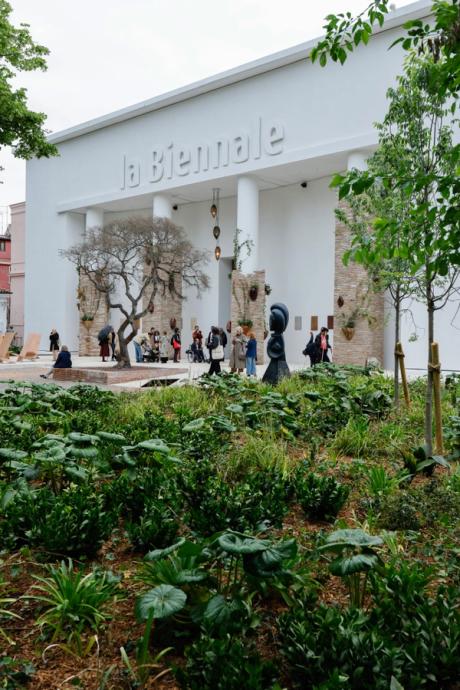
The Venice Biennale 2026, titled "In Minor Keys," was curated posthumously following the death of artistic director Koyo Kouoh in May 2025. A team of five curators and advisors—Gabe Beckhurst Feijoo, Marie Hélène Pereira, Rasha Salti, Siddhartha Mitter, and Rory Tsapayi—executed her vision across the Giardini and Arsenale venues. The exhibition features 110 artists, with a strong emphasis on new commissions, and is structured around themes of procession, resistance, and joy. Key works include Big Chief Demond Melancon's "Amistad Takeover" (2026), Nick Cave's "Amalgam (Origin)" (2025), and Otobong Nkanga's rewilded columns at the Central Pavilion.

What You Should Definitely Avoid in Venice

Was man in Venedig unbedingt vermeiden sollte

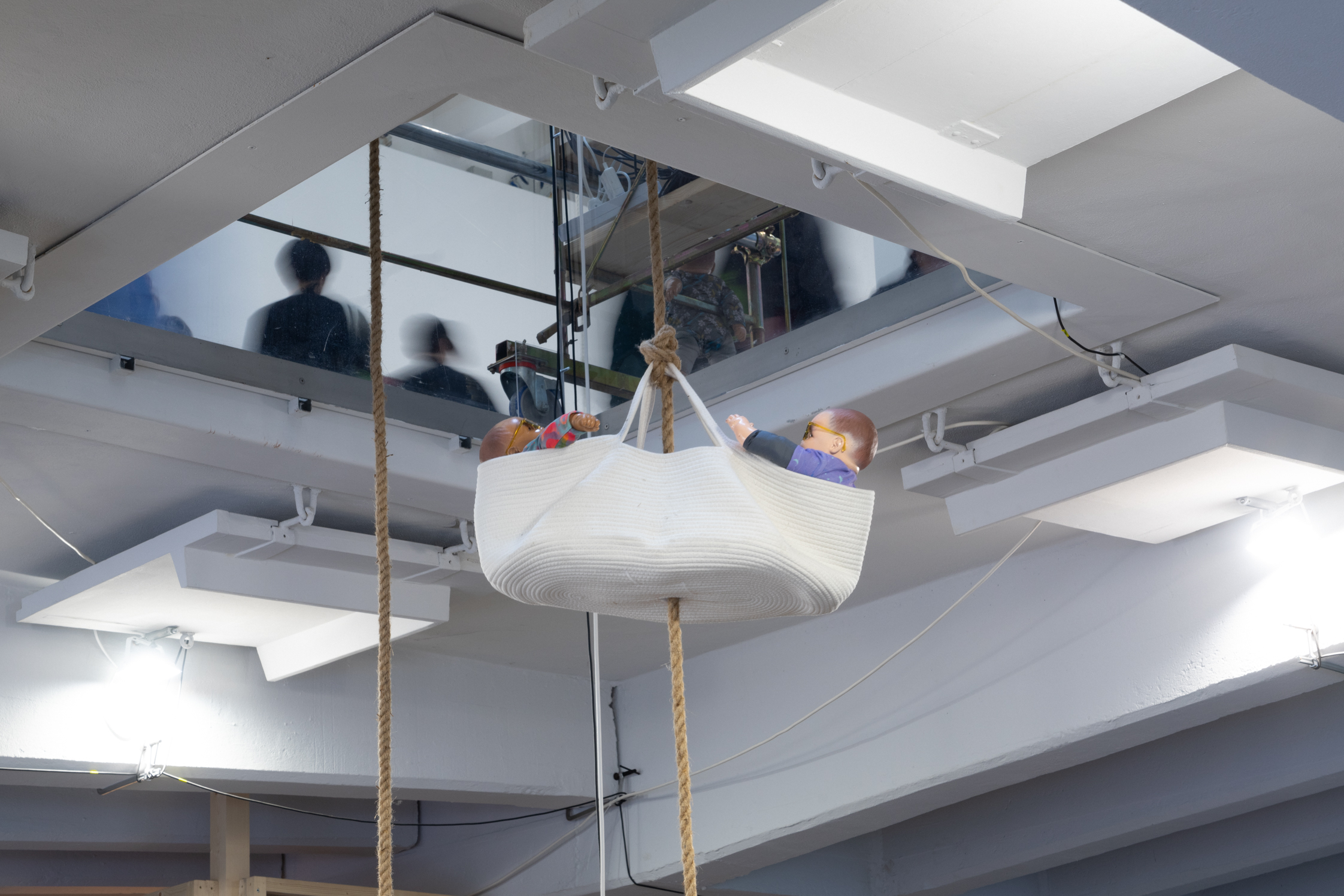
The article humorously critiques the Venice Biennale, highlighting several disappointments. It describes a Japanese pavilion installation by Ei Arakawa-Nash featuring baby dolls for diaper-changing, which a critic dismisses as a male artist over-romanticizing parenthood. Other flops include long queues for the German and Austrian pavilions, underwhelming main exhibition "In Minor Keys," and annoying self-promotional performers outside venues. The piece also laments the presence of loud American collectors and donors who dominate the event.

More than 70 Venice Biennale artists withdraw from awards

More than 70 artists participating in the 2025 Venice Biennale have withdrawn from consideration for the Golden Lion awards, which this year will be decided by public vote. The artists, including Walid Raad, Laurie Anderson, and Yto Barrada, signed a statement published on e-flux on May 9, withdrawing in solidarity with the entire prize jury that resigned last month over a dispute regarding the participation of Israel and Russia. The Biennale management replaced the traditional jury-selected awards with a new "Visitor Lion" system where ticket holders can vote, but the Biennale has acknowledged that if any of the withdrawing artists win, they will not collect the award.

Venice Biennale Special 2026—podcast

This episode of The Art Newspaper's podcast is a Venice Biennale special, covering the opening week of the 2026 edition. Host Ben Luke, along with Louisa Buck and Jane Morris, reviews the main exhibition "In Minor Keys," curated by the late Koyo Kouoh and realized by five collaborators. The podcast features interviews with artists Gabrielle Goliath, whose work for the South African pavilion was cancelled and is instead staged in a Venice church, and Lubaina Himid, showing in the British pavilion. It also includes conversations with writer Saidiya Hartman and Daniella Kaliada of Belarus Free Theatre about their collateral projects. The episode concludes with a focus on two restored Tintoretto paintings at the Basilica of San Giorgio Maggiore, funded by Save Venice.

At the Venice Biennale, Koyo Kouoh’s ‘In Minor Keys’ Looks Deeply at Lush Gardens and a Scarred Earth

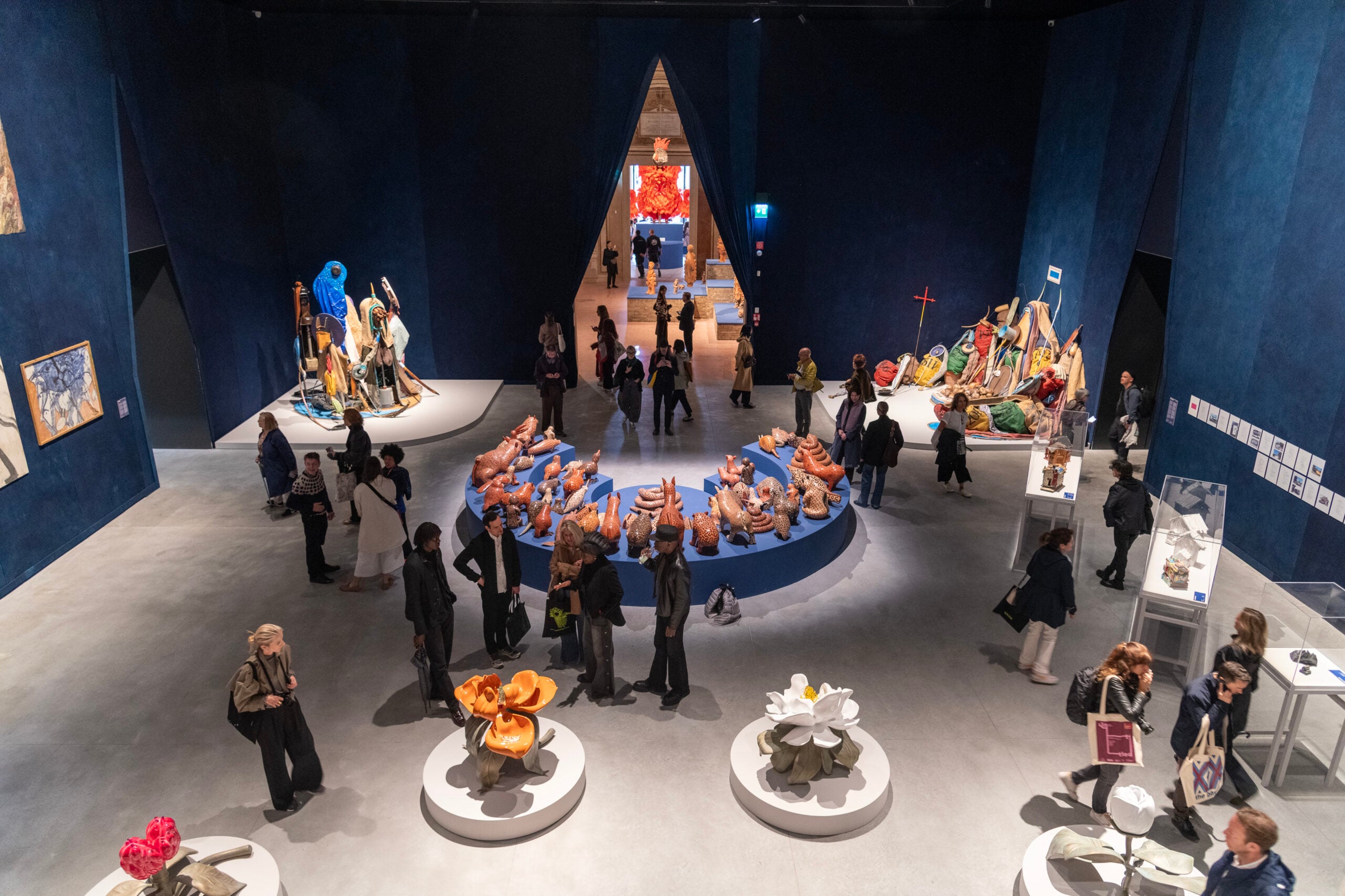
Koyo Kouoh's exhibition 'In Minor Keys' at the 2026 Venice Biennale centers on the practices of two deceased artists, Issa Samb and Beverly Buchanan, whose ways of thinking animate the show through dedicated 'Shrines' in the Central Pavilion. The exhibition also draws on Marcel Duchamp's legacy, featuring works by over a dozen contemporary artists including Akinbode Akinbiyi, Guadalupe Rosales, Natalia Lassalle-Morillo, Guadalupe Maravilla, Sofía Gallisá Muriente, and Avi Mograbi, whose installation 'Between a River and a Sea' contrasts pre-1948 business directories with a 2023 Gaza Yellow Pages. A section called 'The Schools' highlights artist-run spaces such as Denniston Hill, Guest Artists Space (G.A.S.) Foundation, blaxTARLINES, and the Nairobi Contemporary Art Institute.

There Has Never Been an Apolitical Venice Biennale

The Venice Biennale, with its national pavilion structure, has always been a platform for political expression and soft power, a reality evident from its early 20th-century origins. Contemporary critic Arturo Lancellotti's 1909 review of the German and British pavilions was steeped in geopolitical context, revealing how national artistic displays were interpreted through the lens of imperial power and military alliances.

Welcome to Venice: the shows you won’t want to miss at the 61st Biennale

The 61st Venice Biennale, titled "In Minor Keys," opens with a keynote exhibition conceived by the late Koyo Kouoh and realized by her team after her sudden death in May 2025. The show spans the Central Pavilion in the Giardini and the Arsenale, featuring 110 artists and collectives. Highlights include Bracha L. Ettinger's installation at the Hotel Metropole, where she transforms a room where Sigmund Freud wrote part of *The Interpretation of Dreams* into a feminist 'borderspace,' and works by artists such as Arthur Jafa, Richard Prince, Issa Samb, Beverly Buchanan, and Daniel Lind-Ramos. The exhibition explores themes of history, colonialism, war, and environmental destruction, aiming for a 'sotto voce' tone that nonetheless delivers powerful, liberating statements.

First Impressions of a Venice Biennale Torn Apart by the Present

The 61st Venice Biennale, titled "In Minor Keys," opens amid turmoil: its curator Koyo Kouoh died of cancer during planning, and the festival jury resigned after a controversial statement about excluding Israel and Russia from prizes, replaced by a Eurovision-style people's choice award. The main exhibition, completed by a team of five collaborators using Kouoh's plans, features over 110 artists and collectives, with highlights including works by Big Chief Demond Melanchon, Tammy Nguyen, Guadalupe Maravilla, Ayrson Heráclito, and a section focused on Michael Armitage's Nairobi Contemporary Art Institute.

The Biennale Isn’t a Court. Tell That to the Protesters.

Pietrangelo Buttafuoco, president of the Venice Biennale, defended the decision to allow Russia to reopen its pavilion for the first time since its 2022 invasion of Ukraine, stating that the Biennale is "not a court; it is a garden of peace." The move has sparked widespread backlash, including threats to pull €2.3 million in EU funding. Protests have erupted on the ground, with Pussy Riot and FEMEN staging a theatrical demonstration outside the Russian Pavilion, setting off smoke flares and chanting slogans. Separately, around 60 artists performed a "Solidarity Drone Chorus" to protest Israel's participation, and the Art Not Genocide Alliance has called for a 24-hour strike and rallies across Venice. The Russian Pavilion will be open only during press preview days due to EU sanctions, with video projections visible from outside for the rest of the Biennale's run.

Dozens of Venice Biennale Artists Stage ‘Drone’ Perfomance in Protest of Israel’s Participation

On the opening day of the Venice Biennale, around 60 artists and dozens of other participants staged a protest titled “Solidarity Drone Chorus” at the Giardini entrance, humming a viral song by Gazan composer Ahmed “Muin” Abu Amsha to sonically occupy the space. The action, organized by artists in the main exhibition over several months, protested Israel’s participation in the Biennale and expressed support for Palestine, with participants wearing T-shirts bearing the names and artworks of Gazan and Palestinian artists, many of whom have been killed. The protest follows an open letter from the Art Not Genocide Alliance demanding Israel’s exclusion.

The 2026 Venice Biennale is light and conscious

Quella del 2026 è una Biennale di Venezia leggera e consapevole

The 2026 Venice Biennale, titled "In Minor Keys" and curated by the late Koyo Kouoh, has opened with a focus on ecology and humanity's relationship with nature. The central pavilion at the Giardini presents a festive, craft-heavy exhibition that emphasizes connections with plants and animals, while the Arsenale offers a more spacious, symphonic experience featuring standout works such as Alfredo Jaar's "End of the World" (2023-2024) and Kader Attia's "Whisper of Traces" (2026). National pavilions, including those of Austria, Denmark, France, Germany, and Spain, explore themes of the body, memory, and ruin with notable installations.

Can we practice for crises in art?

"Können wir in der Kunst für die Krisen üben?"

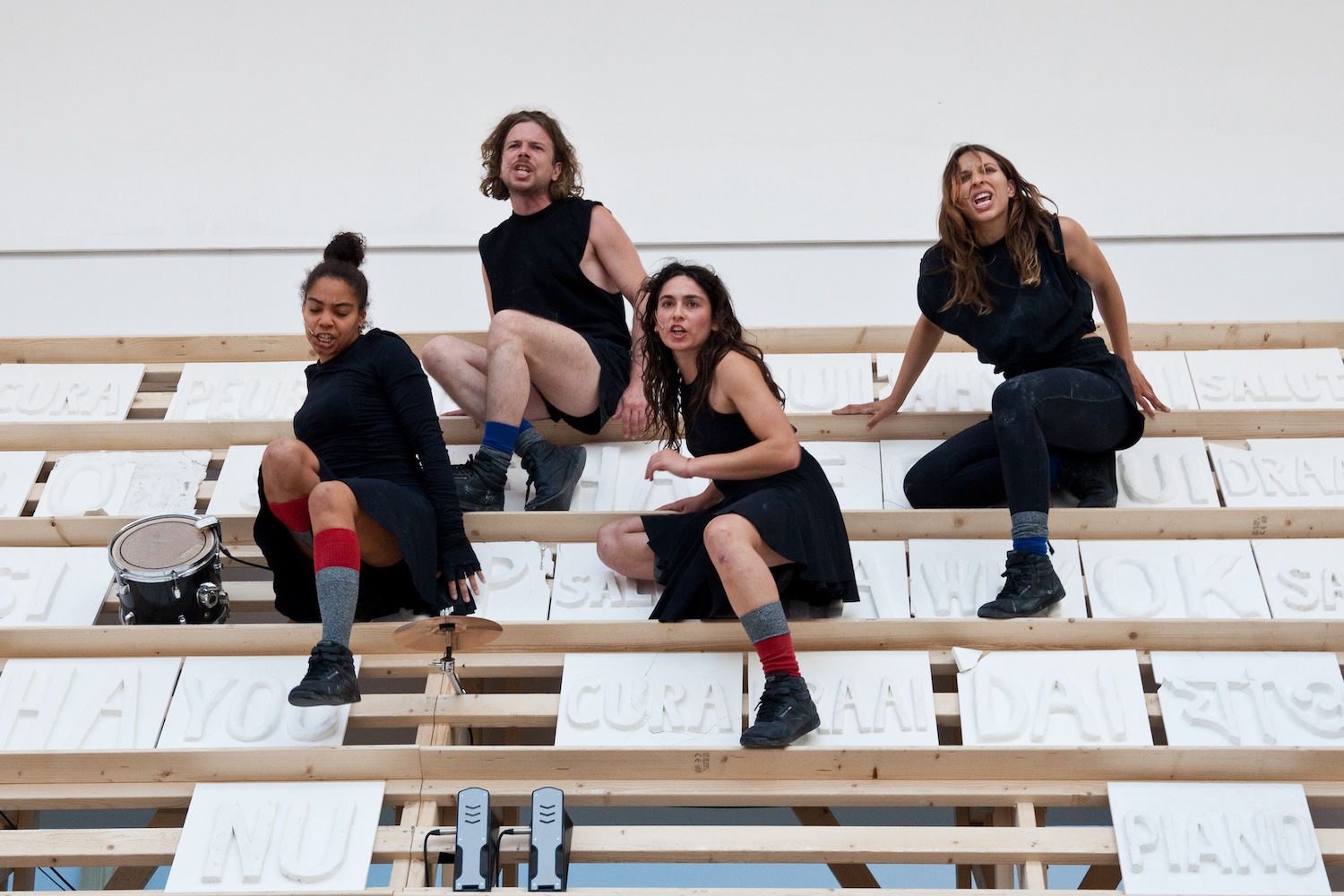
Belgian theater director Miet Warlop is presenting her work "It never SSST" at the Belgian Pavilion during the Venice Biennale. The installation combines performance, sculpture, a radio show, and objects, featuring six performers, musicians, dancers, and a sculptor who periodically calls "Freeze" to capture movements in plaster reliefs. Warlop, known for her physically exhausting ritualistic performances like "One Song," discusses the piece's themes of ceaseless activity and the body as a resource, as well as the challenge of engaging visitors who often rush through the pavilion.

Israel Criticizes Venice Biennale Jury over Pavilion’s Exclusion

The international jury of the 61st Venice Biennale has excluded the Israeli and Russian pavilions from consideration for official prizes, citing that countries whose leaders are charged with crimes against humanity by the International Criminal Court will not be eligible. Israel’s foreign ministry condemned the decision as a political boycott, and Israeli representative Belu-Simion Fainaru called it a hostile act that exceeds the jury’s mandate. The Biennale’s president, Pietrangelo Buttafuoco, has distanced the institution from the jury’s action, insisting the exhibition remain open to all nations recognized by Italy.