
filter_list Showing 2 results for "Condensation Cube" close Clear
search
dashboard All 2 article culture 2
date_range Range Today This Week This Month All
Subscribe

The 21st Century’s Biggest Art Trend is Not a Style. But Once You See It, You’ll Notice It Everywhere.

The article traces the evolution of "systems art," a term coined by critic Jack Burnham in 1968 to describe art that uses rules, seriality, and repetition to mirror and reveal the growing protocols of the Cold War era. It highlights early practitioners like Kenneth Noland, Robert Morris, Dan Flavin, and notably Hans Haacke and Adrian Piper, who shifted from atmospheric systems (e.g., Haacke's *Condensation Cube*) to social systems (e.g., Haacke's *Shapolsky et al. Manhattan Real Estate Holdings*). The piece argues that systems thinking has become unavoidable in contemporary life—from algorithms to systemic racism—and that art remains a crucial tool for making these invisible systems legible.
Beyond the prompt: when the medium is generative AI, the artist becomes a systemic director

Oltre il prompt: quando il medium è l’AI generativa l’artista diventa regista sistemico

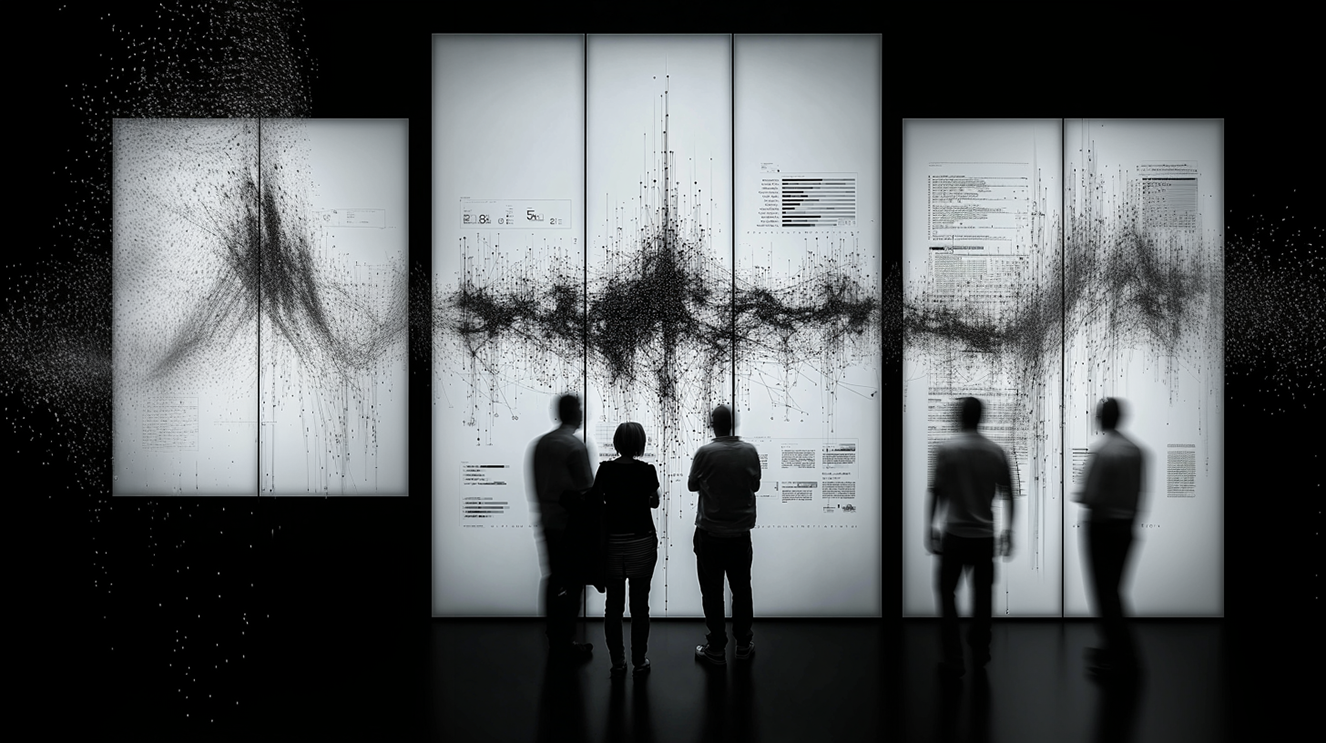
The article argues that as AI-generated images become more spectacular, the role of the artist is often misunderstood as merely writing prompts. Instead, the author contends that the most significant generative artworks are systems—predetermined rule-based environments where the artist designs the conditions for images to emerge. Works like Hans Haacke's "Condensation Cube" (1963-1965) and Refik Anadol's "Unsupervised" (2022) exemplify this shift from object to process, where the artwork is the behavior or architecture itself.