
filter_list Showing 2 results for "Duc de Berry" close Clear
dashboard All 2 article culture 1museum exhibitions 1
date_range Range Today This Week This Month All
Subscribe

illuminated medieval manuscripts to know 2710634

This article explores the history and significance of illuminated manuscripts, correcting the common misconception that they were exclusively produced by medieval European monks. It highlights five standout examples, including the Très Riches Heures du Duc de Berry, made for Jean I, Duke of Berry around 1411 by the Limbourg brothers, and the Book of Kells, created around 800 C.E. by monks of Iona Abbey. The article notes that illuminated manuscripts, defined by the decorative use of gold or silver, date back to the 4th century B.C.E. and span cultures from the Middle East to Africa and Mesoamerica, serving primarily as status symbols rather than reading material.
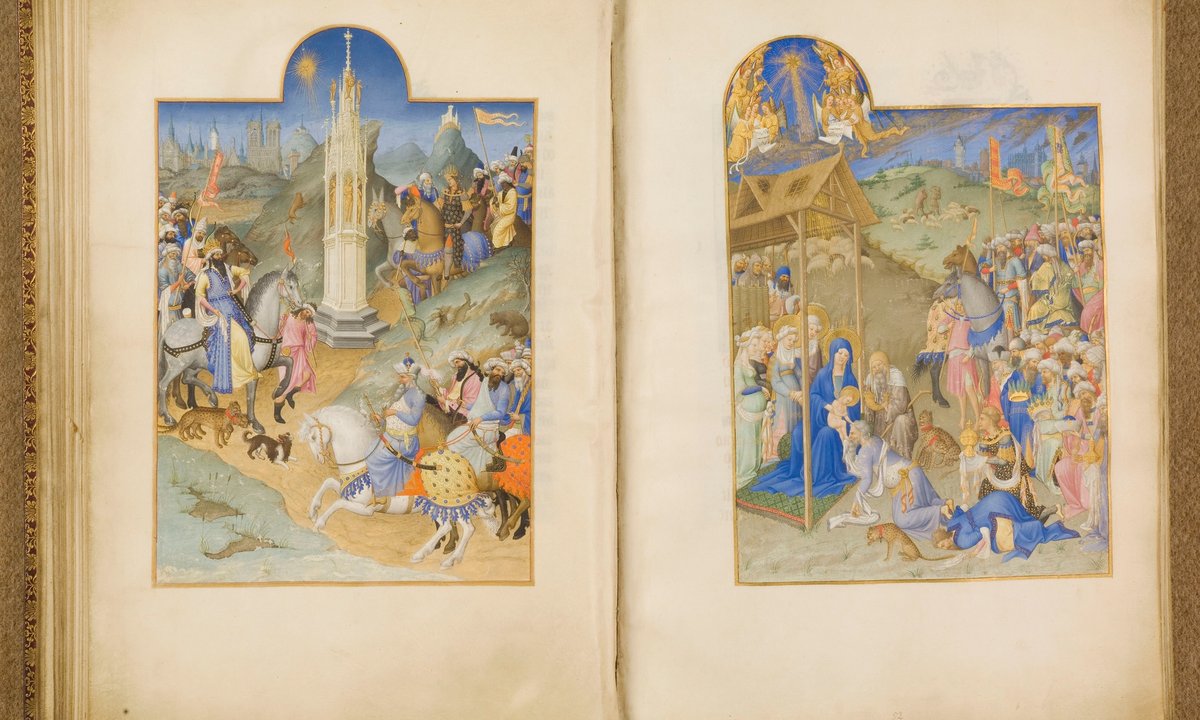
Très Riches Heures: Chantilly exhibition offers ‘once-in-a-lifetime opportunity’ to see famed medieval manuscript

The Condé Museum at the Château de Chantilly, north of Paris, has opened a special exhibition of the Très Riches Heures, the celebrated 15th-century illuminated manuscript. For the first time in decades, the public can view the 12 monthly calendar pages as independent works, detached from the manuscript after a painstaking conservation project. The exhibition, running until October, also features around 100 loaned medieval manuscripts, sculptures, and paintings to contextualize the manuscript's importance. The Très Riches Heures, commissioned by the Duc de Berry and begun by the Limbourg brothers around 1411, has been held at Chantilly since 1856 and is normally never lent out due to the conditions of the Duke d'Aumale's bequest.