filter_list Showing 6 results for "Elke Kretzschmar" close Clear
search
dashboard All 6 candle obituary 5museum exhibitions 1
date_range Range Today This Week This Month All
Subscribe

Georg Baselitz obituary

Georg Baselitz, the German painter and sculptor known for his provocative, expressionistic works and his iconic upside-down paintings, has died at the age of 88. The article traces his life from his childhood in war-torn Germany, through his early career as a rebellious artist in divided Berlin, to his rise as an international art star. It highlights his 1961 manifesto poster "Pandemonium I," his rejection of American abstraction, and his controversial 1963 exhibition that was raided by police for its explicit content.
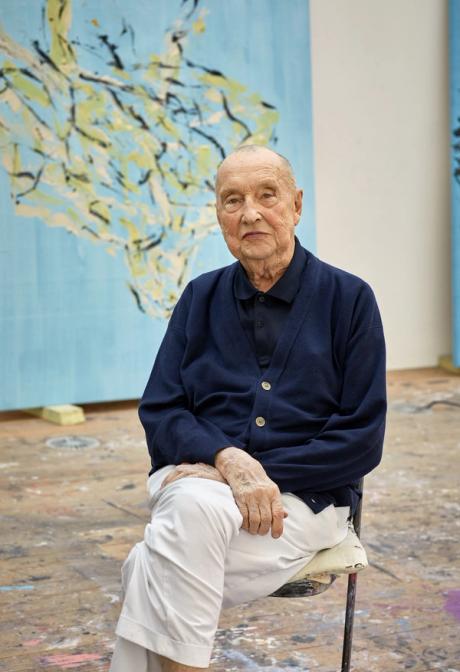
Georg Baselitz, German artist who turned figurative painting on its head, has died, aged 88

Georg Baselitz, the influential German painter and sculptor, died on 30 April at age 88. Born Hans-Georg Kern in 1938 in Deutschbaselitz, he grew up amid the ruins of Nazi Germany and later adopted his surname from his birthplace. Expelled from the East Berlin Academy for "sociopolitical immaturity," he moved to West Berlin, where he rejected both gestural abstraction and Expressionism. His first solo exhibition in 1963 was shut down for obscenity. In 1969 he pioneered his signature inverted paintings, turning subjects upside down to sever image from representation. He also created large carved sculptures using axes and chainsaws. His later series, from 2014 onward, are considered his most astonishing work, culminating in a sustained focus on his wife, artist Elke Kretzschmar.

Georg Baselitz, Lion of German Neo-Expressionism, Dead at 88

Georg Baselitz, the influential German Neo-Expressionist painter, printmaker, and sculptor, died on April 30 at age 88. His death was announced by Thaddaeus Ropac gallery, his longtime representative. Born Hans-Georg Kern in 1938 in Saxony, Baselitz was profoundly shaped by his childhood experience of war and the destruction of Nazi Germany. He was expelled from art school in East Berlin for "socio-political immaturity," moved to West Berlin, and adopted his pseudonym from his hometown. His first solo exhibition in 1963 was raided by police for obscenity, cementing his reputation as a provocateur. Known for his upside-down figures and fierce brushwork, he created series such as "Heroes" and "Fracture" that addressed trauma, violence, and the psychic toll of postwar life.

In His Last Interview, Georg Baselitz Unpacks His New Nudes, Identity Art, and Being a Lifelong Outsider

Georg Baselitz, the influential German painter known for his inverted, upside-down works, gave his final interview before his death on April 30 at age 88. In the conversation, he discussed his upcoming exhibition "Eroi d’Oro [Heroes of Gold]" at the Fondazione Giorgio Cini in Venice, featuring monumental gold-primed canvases depicting nude portraits of himself and his wife Elke. Baselitz reflected on his lifelong outsider status, his refusal to follow artistic movements, and the controversial nature of his work, including his 1963 painting that led to an obscenity trial.

art georg baselitz artist venice death

Georg Baselitz, the influential German painter known for his inverted, upside-down artworks, has died at age 88 on April 30. The news was announced by his longtime gallery, Thaddaeus Ropac, via an obituary written by Robert Isaf. Baselitz gave his final spoken interview weeks before his death, discussing his upcoming exhibition “Eroi d’Oro [Heroes of Gold]” at the Fondazione Giorgio Cini in Venice, which opened May 6. The show features monumental gold-primed canvases with inverted portraits of himself and his wife Elke, which he described as a summary of his career and a reflection on art history.

‘Where there’s a will, there’s a way’: Georg Baselitz incorporates his wheelchair into his art

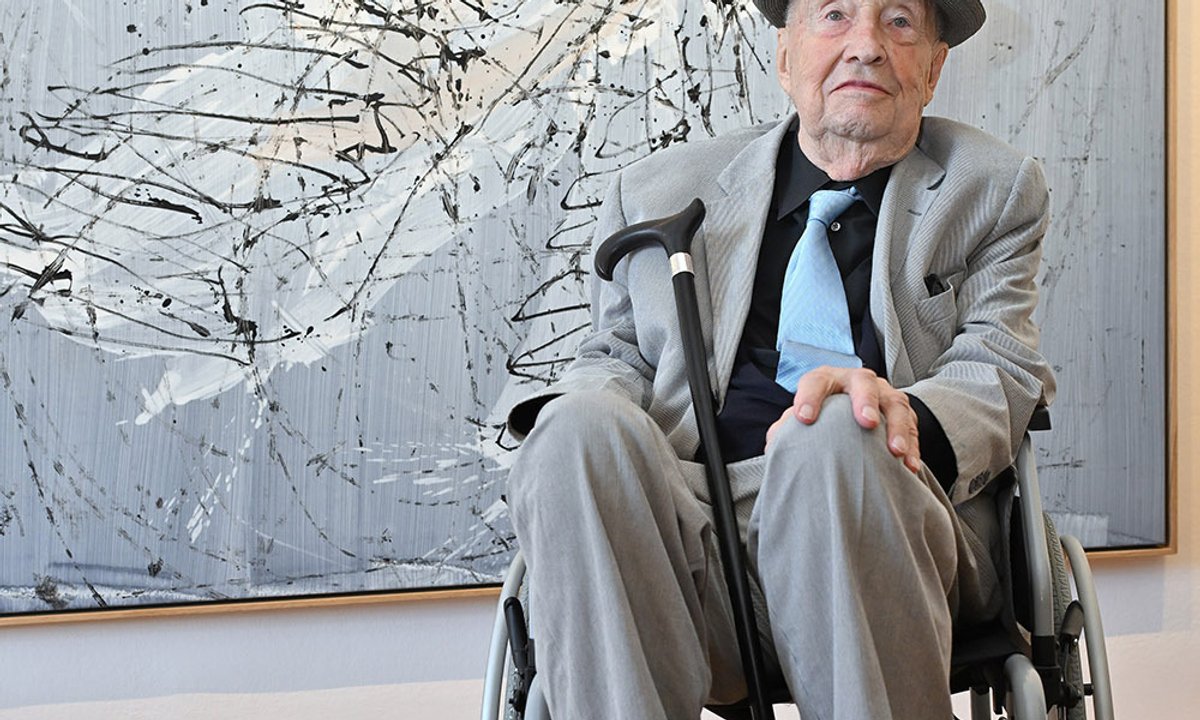
Georg Baselitz, the 87-year-old German painter, has incorporated his wheelchair into his artistic process for a new series of 22 large-format paintings, 14 ink-on-paper drawings, and his first sculpture in over a decade. The works, made by spreading canvases on the floor and using the wheelchair's tracks to create swirling parallel lines, are on view at Thaddaeus Ropac in Pantin, Paris, in an exhibition titled 'Ein Bein von Manet aus Paris' (until 26 July). The show continues Baselitz's long exploration of the human figure, particularly his wife Elke, while introducing a novel technique that turns his mobility aid into a mark-making tool.