filter_list Showing 7 results for "Hafsa Alkhudairi" close Clear
search
dashboard All 7 museum exhibitions 6person people 1
date_range Range Today This Week This Month All
Subscribe

Our pick of the best pavilions at the 61st Venice Biennale

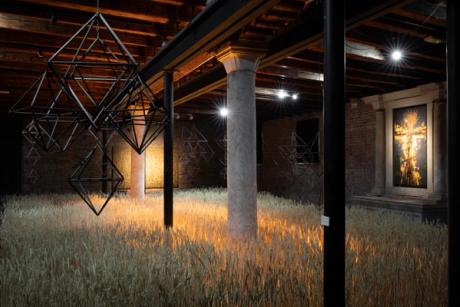
The article highlights standout national pavilions at the 61st Venice Biennale. The Belarus Pavilion features a powerful installation by the Belarus Free Theatre, including a wheat field built by former political prisoners, straw spiders made from prison bars, and a confession booth that runs facial recognition. The Brazil Pavilion presents a joint exhibition by Rosana Paulino and Adriana Varejão, focusing on colonial wounds and trauma through works like Paulino's 'Aracnes' and Varejão's 'Still Life amid Ruin'. The Bosnian Pavilion by Mladen Bundalo invites tactile engagement with themes of diaspora and migration, while the Austrian Pavilion by Florentina Holzinger draws attention with nude performers in water-filled pools.

Must-See National Pavilions at the 61st Venice Biennale

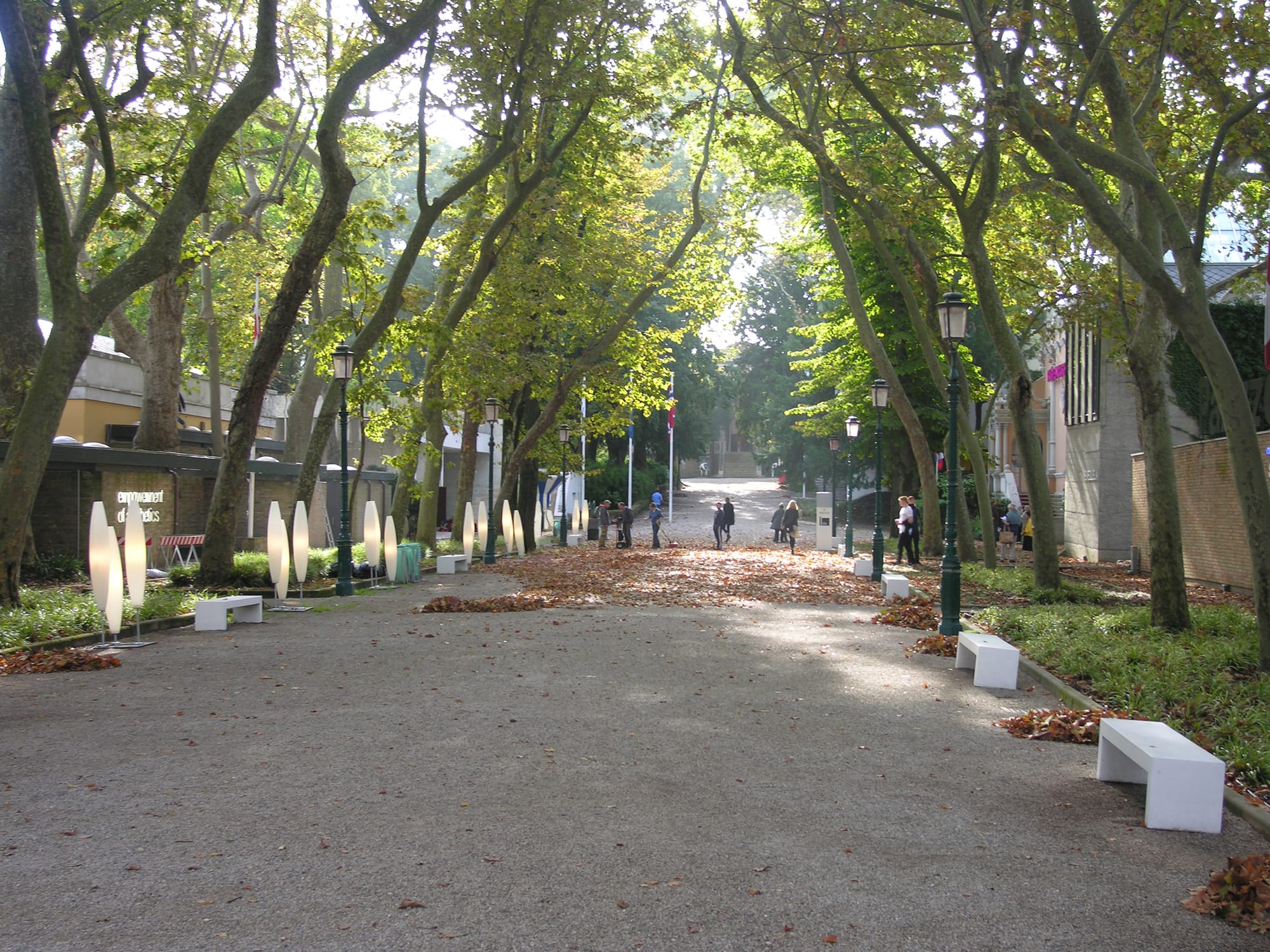
The 61st Venice Biennale features standout national pavilions from Japan, the Philippines, Timor-Leste, Singapore, and India. Japan presents Ei Arakawa-Nash's 'Grass Babies, Moon Babies,' an interactive exhibition with hand-sewn baby dolls and sound pieces exploring queer parenthood and collective care. The Philippines showcases Jon Cuyson's 'Sea of Love / Dagat ng Pag-ibig,' a solo show using 'mussel thinking' to highlight Filipino seafarers. Timor-Leste's 'Across Words' brings together three artists addressing ethnolinguistic diversity and cultural memory, while Singapore presents Amanda Heng's 'A Pause,' a feminist performance on vulnerability and resilience. India's pavilion features Ranjani Shettar's work, supported by Talwar Gallery.

Previews: 61st Venice Biennale: In Minor Keys

The 61st Venice Biennale, titled "In Minor Keys" and curated by the late Koyo Kouoh, opens amid global turmoil and internal controversy. Kouoh, who passed away in May 2025, conceived the exhibition around the metaphor of a "creole garden," emphasizing deep affinities between 111 artists from diverse locations such as Dakar, Beirut, and Salvador. The Biennale is overshadowed by recent geopolitical events, including US-Israeli airstrikes on Iran, and faces protests: over 70 participating artists signed an open letter opposing the participation of Israel, Russia, and the US, while the Australian pavilion saw the reinstatement of Khaled Sabsabi after being dropped, and South Africa withdrew its official pavilion over Gabrielle Goliath's femicide project, which she will still present independently.

dana awartani venice biennale 2026 saudi arabia 1234760850

Palestinian Saudi artist Dana Awartani has been selected to represent Saudi Arabia at the 2026 Venice Biennale. Her pavilion will be curated by Antonia Carver, director of Art Jameel, with assistance from Hafsa Alkhudairi. Awartani, known for her material interpretations of conflict in the Middle East, draws on Saudi Arabia's craft and cultural legacies, often collaborating with local artisans or displaced craftspeople. Her recent works include a response to heritage site destruction at the 2024 Diriyah Contemporary Art Biennale and an archive of recreated stone carvings at the 15th Sharjah Biennial.

Staying Curious: Isabelle de Caters on 20 Years of Gallery Isabelle

Gallery Isabelle, founded by Isabelle de Caters in Dubai's Al Quoz district, celebrated its 20th anniversary in April 2026 with a 20-day exhibition titled "Move, Pause, Return." The show unveiled one work per day before bringing all 20 artists together for a final gathering. De Caters, who opened her first space B21 Gallery in 2006 when contemporary art in the Gulf was seen as a passing fad, reflects on two decades of building a gallery through instinct, long-term artist relationships, and organic growth rather than commercial dictates.

Inside Saudi Arabia’s pavilion at the Venice Biennale

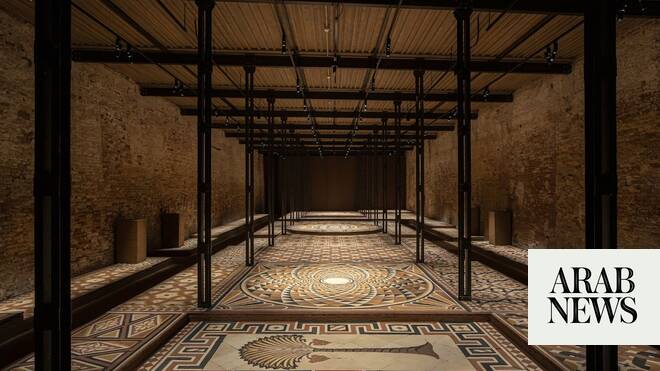
Saudi Arabia's national pavilion at the 61st Venice Biennale features a new installation by Saudi-Palestinian artist Dana Awartani titled "May your tears never dry, you who weep over stones." Curated by Art Jameel's director Antonia Carver and assistant curator Hafsa Alkhudairi, the work comprises over 29,000 handmade clay bricks arranged in intricate mosaics referencing 23 threatened cultural heritage sites across the Arab world, including Syria, Lebanon, and Palestine. The installation, which took more than 30,000 labor hours with 32 artisans, has become a crowd favorite since the biennale opened on May 9.

Saudi pavilion at Venice Biennale turns fractured heritage into monumental art installation

Saudi Arabia has unveiled a large-scale installation by artist Dana Awartani at the 61st Venice Biennale, held at the Arsenale. Titled "May your tears never dry, you who weep over stones," the work covers the entire floor of the Saudi national pavilion and incorporates over 29,000 sunbaked clay bricks and mosaic patterns inspired by Islamic geometric art. The installation references 23 heritage sites across the Arab world that have been damaged or destroyed by conflict, and was produced over nearly 30,000 artisan hours with 32 craftspeople at a studio outside Riyadh. Curated by Antonia Carver with assistant curator Hafsa Alkhudairi, the piece emphasizes traditional craftsmanship and collective skill-sharing.