
filter_list Showing 3 results for "Heritage Science" close Clear
dashboard All 3 article news 3
date_range Range Today This Week This Month All
Subscribe

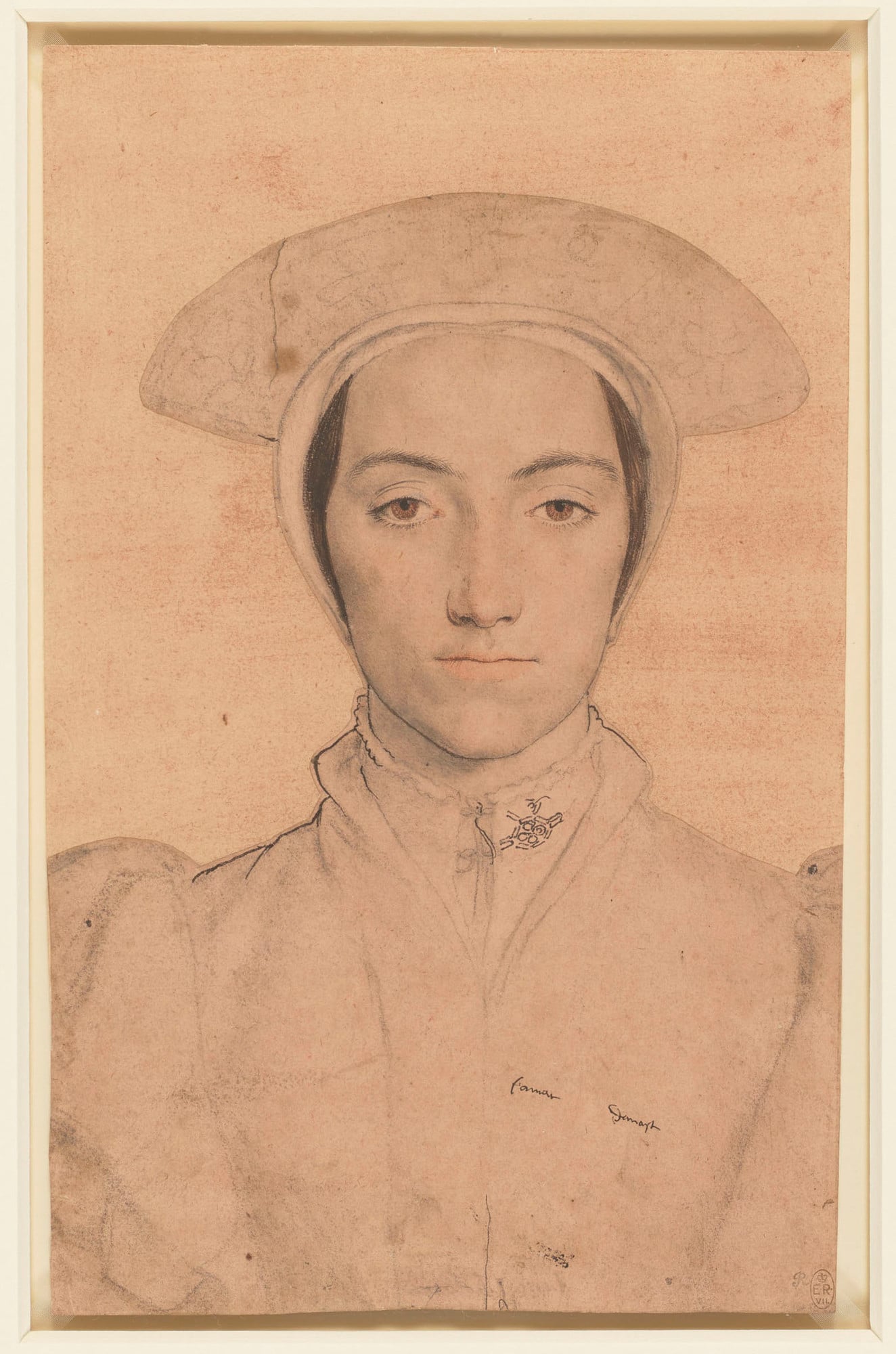
A.I. Identifies Holbein Drawing as Possible Portrait of Anne Boleyn

Researchers at the University of Bradford have used artificial intelligence to analyze preparatory drawings by Hans Holbein the Younger in the Royal Collection at Windsor Castle. The AI model, which previously identified a forgotten Raphael painting, suggests that a drawing long believed to depict Anne Boleyn actually shows her mother, Elizabeth Howard, while another drawing labeled "Unidentified Woman" likely portrays Anne Boleyn herself. The findings, published in Heritage Science, are based on biometric analysis of facial features, bone architecture, and proportional relationships, offering quantifiable evidence to resolve long-standing scholarly uncertainty about the sitters' identities.

AI Helps UK Researchers Identify Unknown Subject in Hans Holbein Drawing as Anne Boleyn

Researchers Karen L. Davies and Hassan Ugail used artificial intelligence facial recognition to analyze two Hans Holbein drawings from the Royal Collection Trust. Their study, published in npj Heritage Science, suggests that a portrait previously labeled as Anne Boleyn actually depicts her mother, Elizabeth Howard, while a drawing cataloged as an unidentified woman is the true likeness of Anne Boleyn. The findings challenge long-held identifications based on 18th-century inscriptions and align more closely with contemporary descriptions of Boleyn as slender with dark hair.

scientists recreate egyptian blue pigment 2653299

A team of researchers has successfully recreated Egyptian blue, the world's oldest synthetic pigment, which was used by ancient Egyptians from as early as 3100 B.C.E. The study, published in NPJ Heritage Science, was led by John S. McCloy of Washington State University and Edward P. Vicenzi of the Smithsonian Institution's Museum Conservation Institute, in collaboration with the Carnegie Museum of Natural History. The researchers experimented with various minerals, heating them in ovens at around 1,000 degrees Celsius for up to 11 hours, and used modern microscopy and analysis techniques to compare their results with ancient artifacts from the Carnegie Museum's collection.