
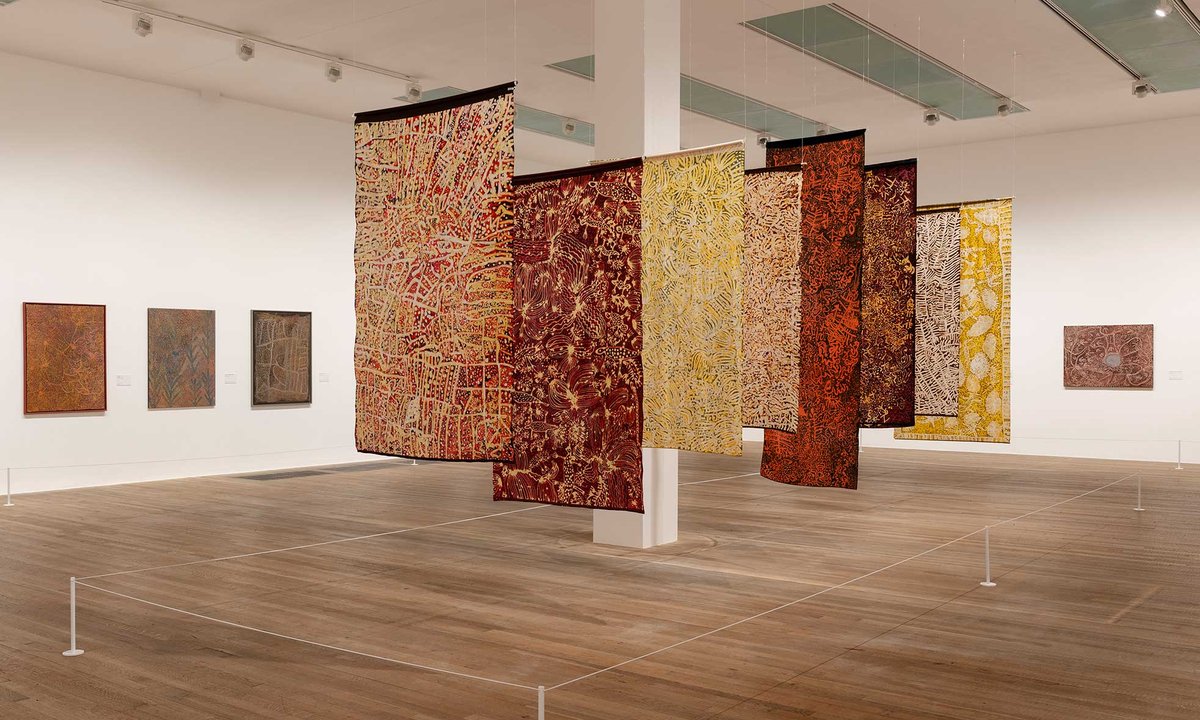
How Tate's Emily Kam Kngwarray show is revealing the fraught market dynamics of Aboriginal art
Emily Kam Kngwarray, a late-blooming Aboriginal artist who rose to fame in the late 1980s and early 1990s, is the subject of a major solo exhibition at Tate Modern in London, previously presented at the National Gallery of Australia (NGA) in Canberra. The show highlights her meteoric career—she painted around 2,000 works in seven years after her first painting, *Emu Woman* (1988-89), drew critical acclaim—but also exposes the fraught market dynamics that surrounded her, with dealers and entrepreneurs taking advantage of her and her community. Curators Kelli Cole and Hetti Perkins deliberately excluded some of her final works, made when she was frail, to focus on her peak period, and note the complex power dynamics in Australia's art world, where figures who benefited from land dispossession commercialized her deeply Country-connected art.