
filter_list Showing 3 results for "Kimiyo Mishima" close Clear
dashboard All 3 trending_up market 2museum exhibitions 1
date_range Range Today This Week This Month All
Subscribe

What does a so-called ‘buyer’s market’ look like at Art Basel?

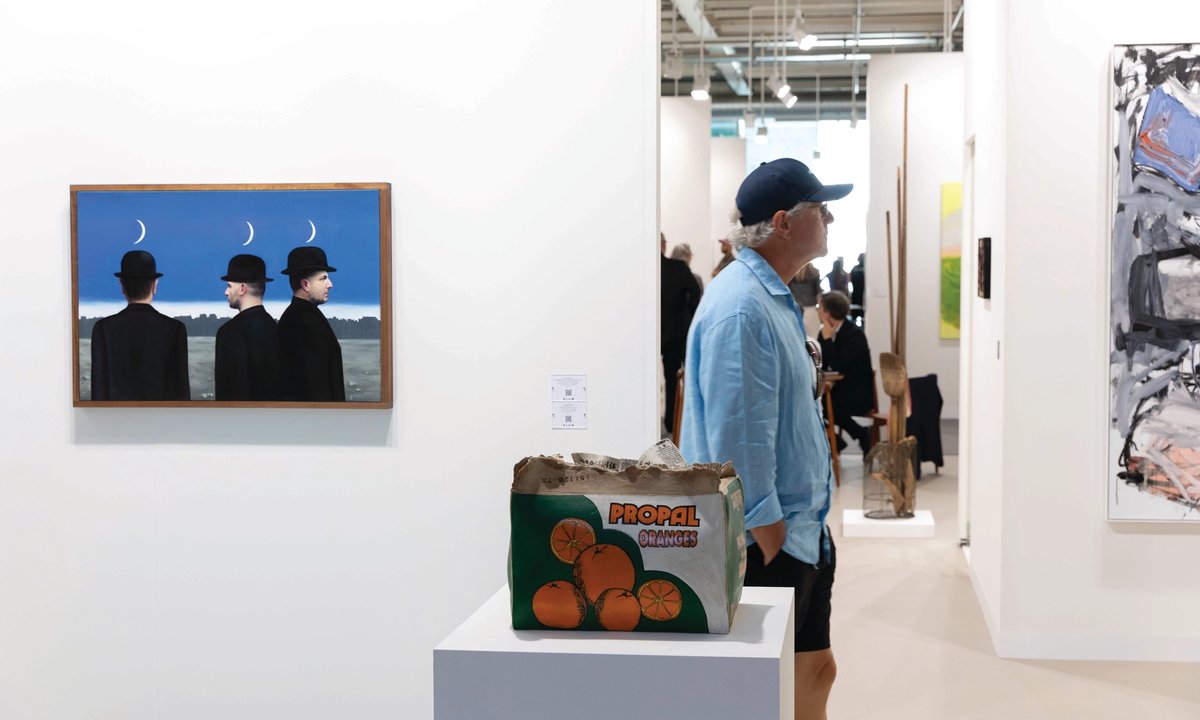
At Art Basel 2025, a consensus has emerged among dealers and advisers that the fair represents a 'buyer's market,' characterized by slow sales, modest expectations, and increased negotiating power for collectors. Galleries are offering discounts of 20-30% below asking prices, particularly for works under $1 million, though open discussion of discounts remains taboo in Switzerland. Some dealers, like Tim Blum of Blum gallery, acknowledge a paradigmatic shift, with galleries adapting by focusing on established artists and estates, while still seeing demand for reasonably priced younger artists.


life size labubu record asia art news 2659577

The article reports on a record-breaking auction sale of a 4-foot-4-inch Labubu doll, which sold for RMB 1.08 million ($150,300) at Yongle International Auction in Beijing, with premium reaching RMB 1.24 million ($174,000). The character was created by Hong Kong artist Kasing Lung, who also collaborated with Art Basel on a limited edition. Other key developments include the closure of the Art Basel Hong Kong satellite fair Supper Club after two editions, Frieze announcing a new year-round space called Frieze House Seoul in Yaksu, and Blum gallery taking on global representation of Japanese ceramic artist Kimiyo Mishima's estate. The article also covers upcoming exhibitions by Christine Ay Tjoe at White Cube New York, Seulgi Lee at Ikon Gallery Birmingham, Kenny Scharf at the Modern Art Museum Shanghai, and Trevor Yeung's adaptation of his Venice Biennale show at M+ Hong Kong.

Exhibition | Kimiyo Mishima, 'FRAGILE' at Nonaka-Hill, Los Angeles, United States

This article profiles Japanese artist Kimiyo Mishima, whose ceramic sculptures meticulously replicate discarded newspapers, cans, and other trash. Mishima, who died recently, began her career with painting and collage before pioneering a technique in 1971 of silk-screening and painting thin clay sheets rolled with an udon noodle roller to create fragile, lifelike sculptures of garbage. Her work was shaped by her experience growing up in postwar Osaka and her revulsion at consumer culture's disposable nature, leading her to collect trash from the streets of New York and Paris during artist grants.