
filter_list Showing 3 results for "Lee Welch" close Clear
dashboard All 3 article culture 1museum exhibitions 1rate_review review 1
date_range Range Today This Week This Month All
Subscribe

Isabel Nolan’s Work Challenges Everything We Think We Know About Creativity

Artist Isabel Nolan recently discovered she has aphantasia, a rare neurological condition that prevents her from visualizing mental images. Despite this, Nolan has built a successful career creating abstract sculptures, drawings, and tapestries, and her work is featured in the Irish Pavilion at the Venice Biennale. Her exhibition, "Dreamshook," explores themes of imagination versus reality and draws inspiration from late medieval history and the printer Aldo Manuzio.
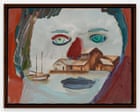
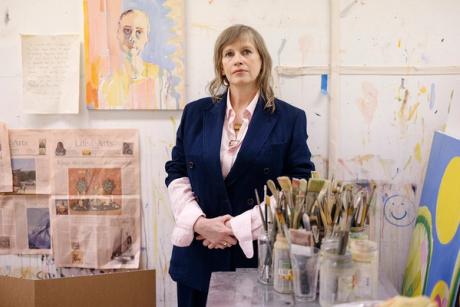
Salon review – like getting to know fascinating guests at a fabulous party

The article reviews a salon-style exhibition curated by Matthew Higgs, director of New York's White Columns gallery, at an unnamed gallery space. The show features 43 paintings by a diverse group of artists including Denzil Forrester, Andrew Cranston, Kaye Donachie, Merlin James, Margot Bergman, Gillian Carnegie, Bill Lynch, and Adam Keay, arranged around mismatched chairs facing white windows painted on the walls. The reviewer describes moving through the space, engaging with individual works, and highlights the eclectic, unthemed curation that prioritizes personal taste and conversation over academic or political messaging.

Thinking small and dreaming big in Isabel Nolan’s imaginary world

Dublin-born artist Isabel Nolan discusses her Ireland pavilion exhibition "Dreamshook" at the Venice Biennale, developed with curator Georgina Jackson. The show explores the liminal state between dreaming and waking, weaving a fictional narrative around Renaissance humanist Aldo Manuzio, who popularized portable books. Nolan draws on late Medieval and early Renaissance visual language, using intimate forms like textiles to tackle big ideas about cosmology, religion, and humanism. She describes her ambivalent relationship with European cultural inheritance and the need to recover occluded voices.