
filter_list Showing 3 results for "Liberation Space: Fortress/Nest" close Clear
search
dashboard All 3 person people 2museum exhibitions 1
date_range Range Today This Week This Month All
Subscribe

The Interview: Ei Arakawa-Nash

Ei Arakawa-Nash, a Japanese American performance artist, was selected to represent Japan at the 61st Venice Biennale, becoming the first non-Japanese national to do so in a solo presentation. This follows his first solo museum exhibition, "Paintings Are Popstars," at Tokyo's National Art Center in 2024, which was also the center's first solo show devoted to a performance artist. In an interview with ArtReview, Arakawa-Nash discusses his naturalization as a U.S. citizen, his complex relationship with national identity, and his upcoming Venice exhibition titled "Grass Babies, Moon Babies," cocurated by Lisa Horikawa and Takahashi Mizuki, which will explore themes of care and reparation using babies as a central motif.

Drained, Drowning, and Decay: The Best National Pavilions at the Venice Biennale

The 2026 Venice Biennale is defined by themes of ruin and decay, with standout national pavilions exploring bodily, infrastructural, and archaeological collapse. The Slovenian Pavilion features the Nonument Group repurposing materials from past Biennales into a ruin of a mosque for Bosnian Muslim soldiers from World War I. Syria presents its first national pavilion since the Civil War, with Sara Shamma invoking Palmyra, destroyed by ISIS. Germany's pavilion, titled "Ruin," features works by Henrike Naumann (who died in February) and Sung Tieu, questioning the pavilion's fascist architecture and nationalist residue. The Austrian Pavilion, curated by Florentina Holzinger, offers a visceral performance titled "Sea World." The Biennale is also marked by the abrupt resignation of its five-member jury, who refused to consider nations charged with crimes against humanity, leading to awards being chosen by public vote. Additionally, the main exhibition "In Minor Keys" was affected by the death of its curator, Koyo Kouoh.

Hyeree Ro: What Bears

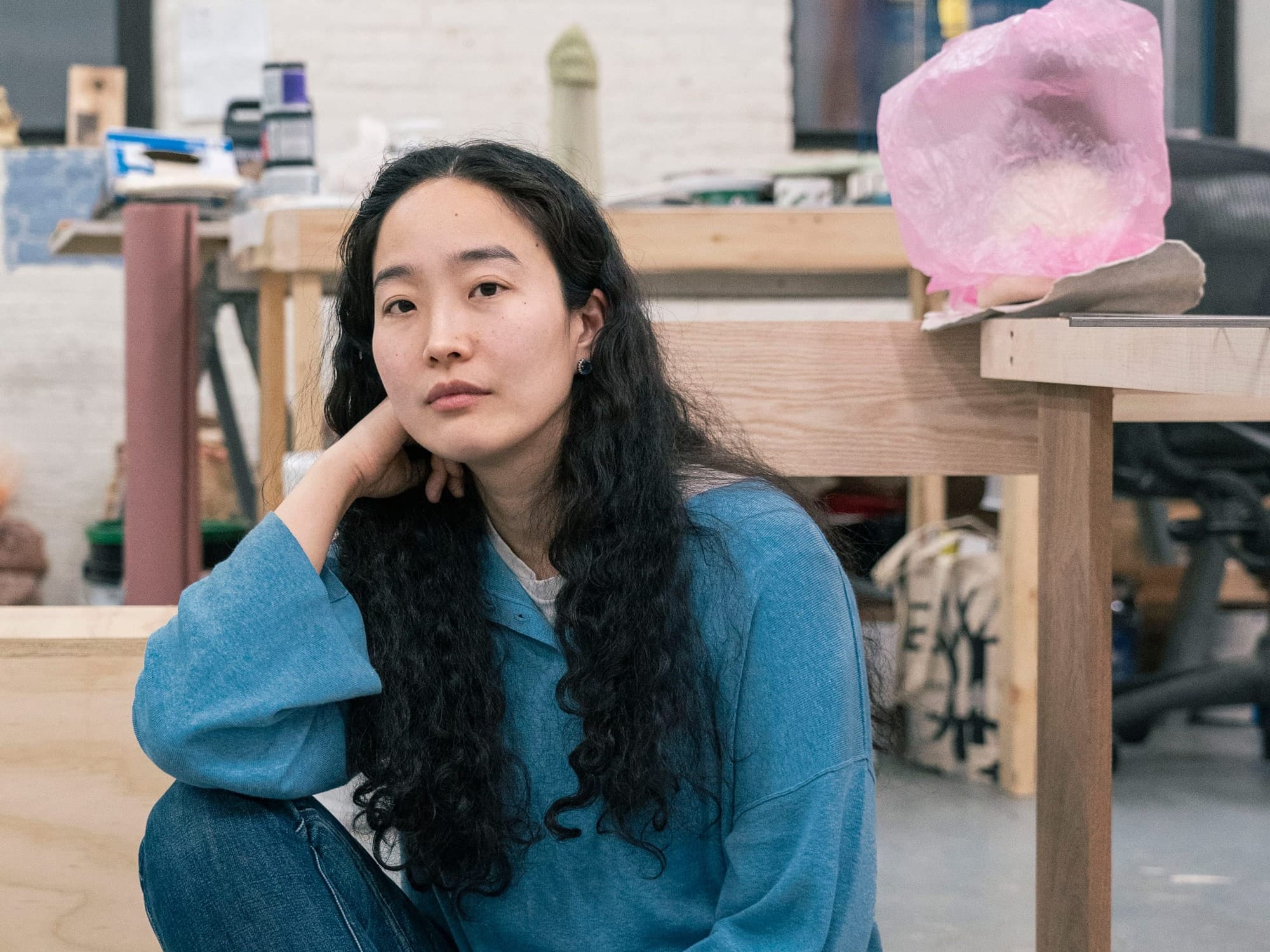
Hyeree Ro is preparing for the 2026 Venice Biennale, where she will present the work "Bearing (2026)" as part of the Korean Pavilion, titled "Liberation Space: Fortress/Nest." The article follows Ro in her temporary Brooklyn studio, where she works with salvaged objects and materials that migrate across multiple works over years—such as a sheet of organza purchased in 2023 that later appeared in "Niro (2024)" and "Carry (2025)" before being repurposed as the pavilion's fabric walls. Her practice is defined by a nomadic, accumulative material logic: objects enter without a fixed destination and gain meaning through repeated reuse.