filter_list Showing 199 results for "Minor Keys" close Clear
dashboard All 199 museum exhibitions 121article news 62rate_review review 8person people 4article policy 2article event 1article culture 1
date_range Range Today This Week This Month All
Subscribe

10 Shows Around Venice Not to Miss During the Biennale

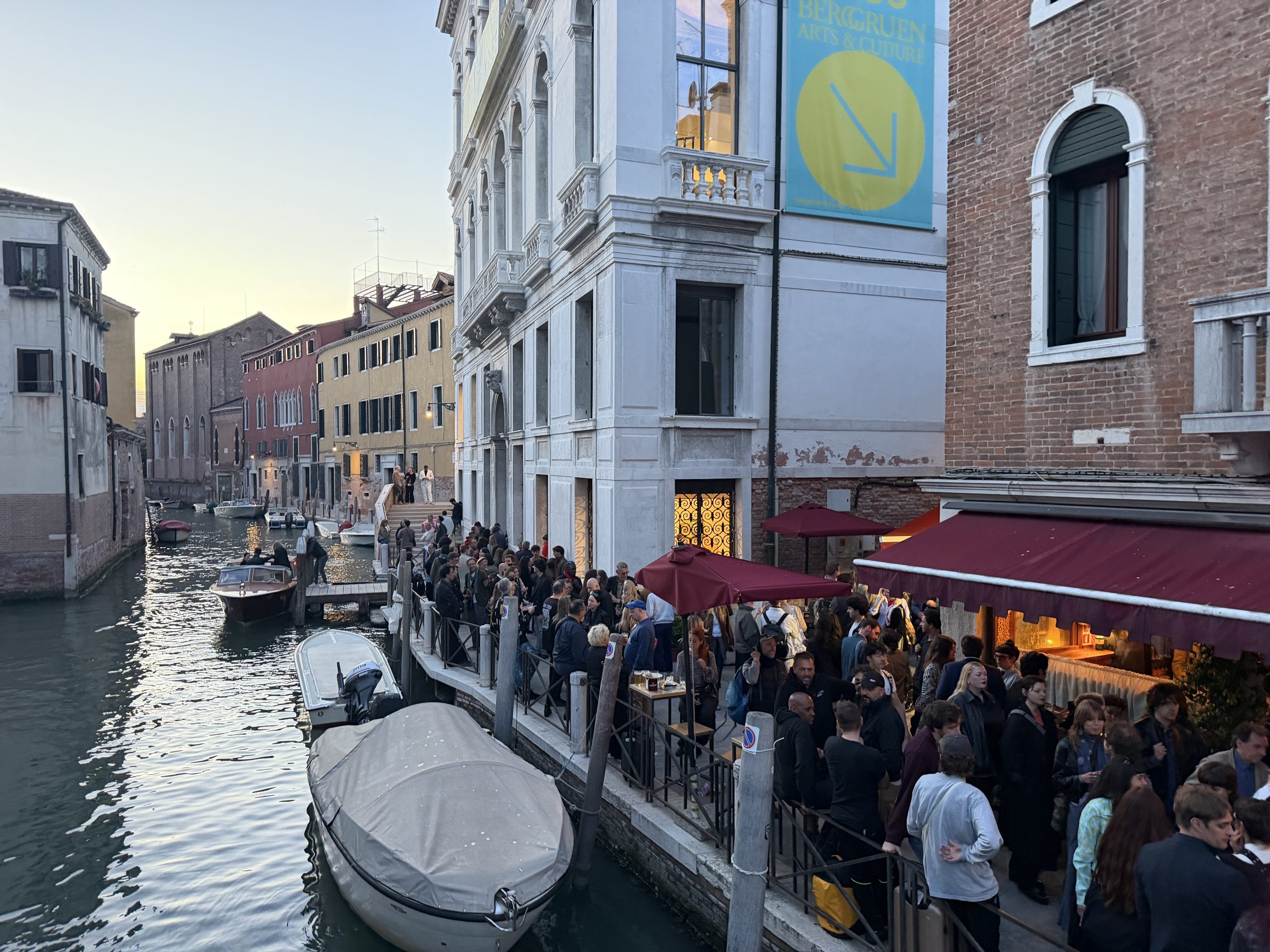
ARTnews has published a guide to 10 exhibitions in Venice worth seeing during the 2026 Biennale, beyond the central show "In Minor Keys" curated by the late Koyo Kouoh and the national pavilions. Highlights include a major survey of Lee Ufan at the San Marco Art Centre (SMAC Venice), organized by the Dia Art Foundation and curated by Jessica Morgan; "Helter Skelter: Arthur Jafa and Richard Prince" at Fondazione Prada, curated by Nancy Spector; and "Strange Rules" at Palazzo Diedo, conceived by Hans Ulrich Obrist with Mat Dryhurst and Holly Herndon, introducing the concept of "Protocol Art." Other venues include the Gallerie dell'Accademia, Pinault Collection, Berggruen Arts & Culture, Fondazione Sandretto Re Rebaudengo, and a three-night-only performance at Teatro Goldoni.

Zoe Leonard Departs Hauser & Wirth for New York’s Maxwell Graham Gallery

Zoe Leonard, a celebrated conceptual artist whose work will appear at the Venice Biennale next week, has left Hauser & Wirth—a global gallery with 14 locations—to join Maxwell Graham, a smaller New York-based gallery known for spare conceptual presentations. Leonard will continue to be represented by her longtime galleries, Cologne’s Galeria Gisela Capitain and Milan’s Raffaella Cortese. Maxwell Graham staged its first Leonard exhibition last year with “Display,” featuring photographs of historical objects in museums. Leonard is the second artist to depart Hauser & Wirth in the past year, following George Condo’s exit in November.

Who Went to Venice Last Week? Jenny Saville, Glenn Lowry, Jewel, and Many Other Power Players

Artnet News reporter Katya Kazakina recounts her experience at the opening week of the 61st Venice Biennale, describing a whirlwind of art, parties, and chance encounters. Notable figures spotted include former MoMA director Glenn Lowry, singer-songwriter Jewel (who debuted her visual art show "Matriclysm: An Archaeology of Connections Lost"), and Japanese Nintendo heir and collector Banjo Yamauchi. High-profile events included Thaddaeus Ropac gallery's reception for Georg Baselitz's final paintings (priced up to $1.5 million) and François Pinault's annual party at Fondazione Giorgio Cini, attended by Selma Hayek, Lorna Simpson, and JR. The article also highlights the social dynamics of the biennale, where dealers, curators, and collectors network across historic palazzos and hotels.

The Venice Biennale Is High Stakes. James Cohan Gallery Is All In

James Cohan Gallery, a mid-sized New York gallery, is representing four artists in the 61st Venice Biennale's central exhibition, "In Minor Keys," curated by the late Koyo Kouoh. The artists are Ranti Bam, Tuan Andrew Nguyen, Kennedy Yanko, and Yinka Shonibare (whose Guest Artists Space Foundation is also participating). This marks a breakthrough for the gallery, which has more artists in the central exhibition than any of the four mega-galleries—Gagosian, Pace, David Zwirner, and Hauser & Wirth—none of which have as many. The gallery is investing heavily in production, logistics, travel, and events, including a luncheon at the St. Regis Hotel co-hosted with Salon 94 and Esther Schipper, and a dinner thrown by collector Pamela Joyner for Yanko.

The Defining Themes of Today’s Biennial Art

The article analyzes the defining themes and styles of the past four years in the international biennial circuit, based on a survey of 130 biennials. It identifies a core group of artists who appeared most frequently, including Ali Eyal, Apichatpong Weerasethakul, Carolina Caycedo, Kapwani Kiwanga, and Tuan Andrew Nguyen, among others. Many of these artists are also featured in the upcoming 61st Venice Biennale curated by the late Koyo Kouoh. The piece categorizes their work under two broad themes: "Post-Colonial Post-Conceptualism," which involves poetic engagement with colonial history and artifacts, and "Families and Networks," where artists explore personal and political family histories.

The Big Review | Venice Biennale 2026: In Minor Keys ★★★½

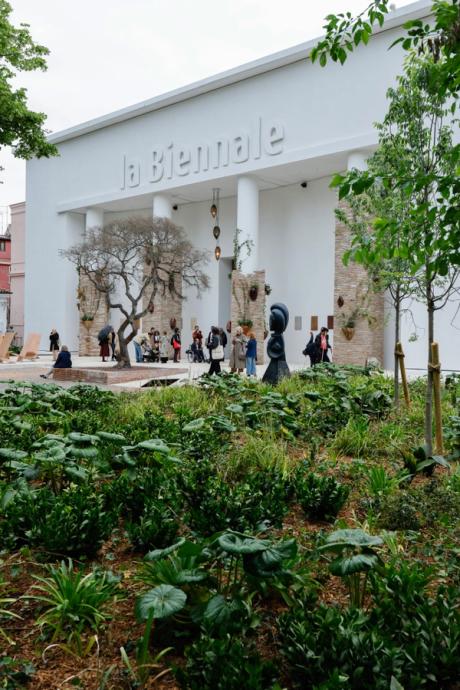
The Venice Biennale 2026, titled "In Minor Keys," was curated posthumously following the death of artistic director Koyo Kouoh in May 2025. A team of five curators and advisors—Gabe Beckhurst Feijoo, Marie Hélène Pereira, Rasha Salti, Siddhartha Mitter, and Rory Tsapayi—executed her vision across the Giardini and Arsenale venues. The exhibition features 110 artists, with a strong emphasis on new commissions, and is structured around themes of procession, resistance, and joy. Key works include Big Chief Demond Melancon's "Amistad Takeover" (2026), Nick Cave's "Amalgam (Origin)" (2025), and Otobong Nkanga's rewilded columns at the Central Pavilion.

Mom, I'm Gonna Be an Artist!

Hyperallergic's Saturday newsletter, edited by Valentina Di Liscia, rounds up a week of art-world activity marked by protests and resistance. Staff Writer Isa Farfan asked 15 artists to share advice from their mothers for Mother's Day, featuring responses from Pat Oleszko, whose work is in the Whitney Biennial. The newsletter also covers editor-in-chief Hakim Bishara's report on a historic strike for Palestine and workers' rights at the Venice Biennale, where dozens of national pavilions shut down, and Editor-at-Large Hrag Vartanian's review of the central exhibition "In Minor Keys." Additional stories include Damien Davis on artists and consignment agreements, Matt Stromberg on the LA Art Book Fair, a protest against Jeff Bezos at the Met Gala, MoMA PS1's upcoming Teresa Margolles survey, and a picket at the American Folk Art Museum.

Alma Allen Flops in Venice

Hyperallergic reports on the 2026 Venice Biennale, with Editor-in-Chief Hakim Bishara criticizing the U.S. pavilion's exhibition of Alma Allen's work as a disappointing departure from the previous editions' profound explorations of Indigenous life and Black sovereignty. Editor-at-Large Hrag Vartanian offers a positive review of the main exhibition "In Minor Keys," while Greta Rainbow covers a poetry procession honoring the late artistic director Koyo Kouoh. Additional stories include a review of the film "The Christophers" about an artist and forger, and news of workers at the American Folk Art Museum picketing for higher wages.

What You Should Definitely Avoid in Venice

Was man in Venedig unbedingt vermeiden sollte

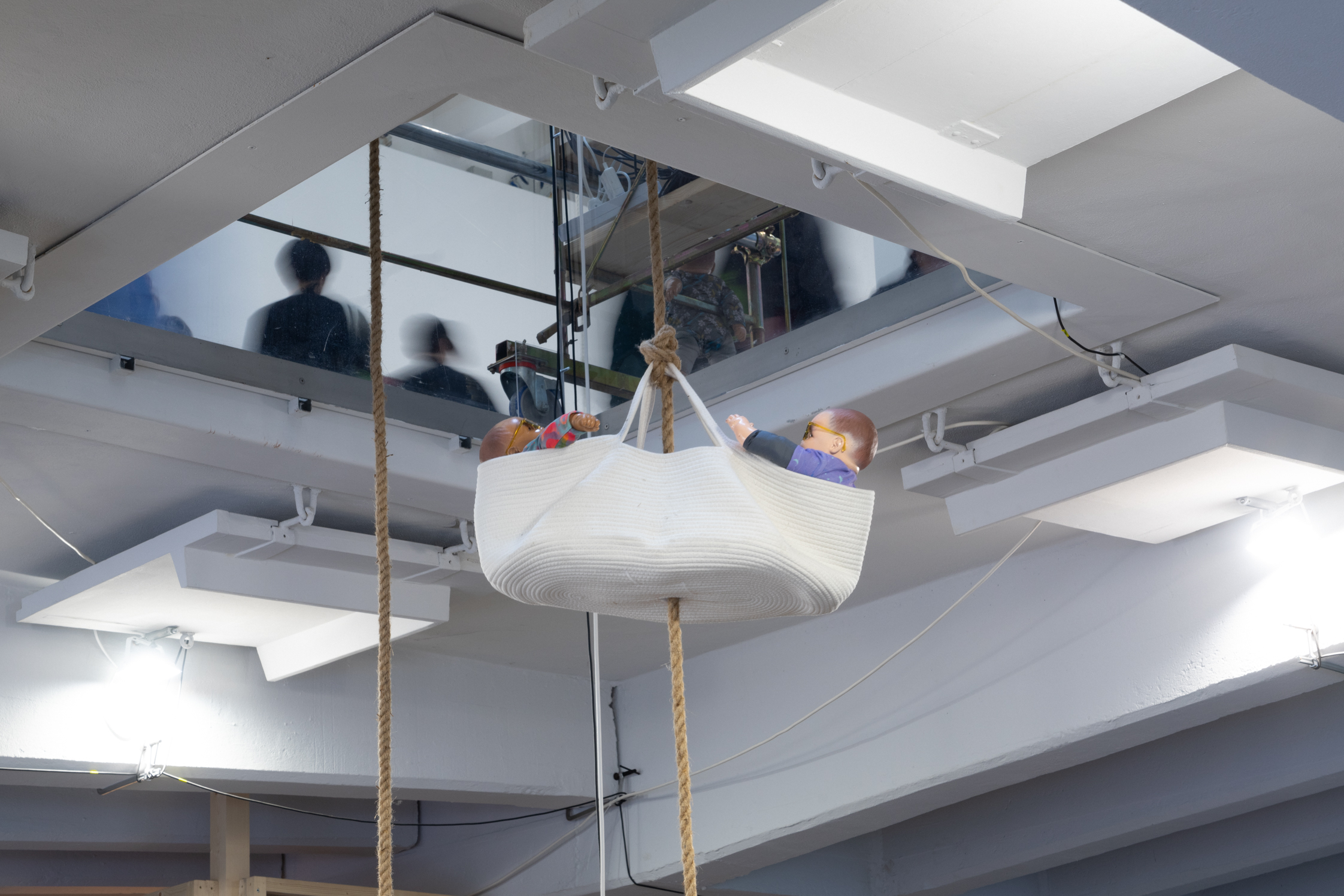
The article humorously critiques the Venice Biennale, highlighting several disappointments. It describes a Japanese pavilion installation by Ei Arakawa-Nash featuring baby dolls for diaper-changing, which a critic dismisses as a male artist over-romanticizing parenthood. Other flops include long queues for the German and Austrian pavilions, underwhelming main exhibition "In Minor Keys," and annoying self-promotional performers outside venues. The piece also laments the presence of loud American collectors and donors who dominate the event.

The 2026 Venice Biennale Is Quintessential Biennial Art

The 61st Venice Biennale, titled "In Minor Keys" and curated by the late Swiss-Cameroonian curator Koyo Kouoh, opened in 2026. The main exhibition at the Arsenale and Giardini features works by artists such as Éric Baudelaire, Maria Magdalena Campos Pons, Mohammed Z. Rahman, Sohrab Hura, and Rose Salane, among others. The exhibition centers on themes of mourning, colonial history, slavery, and healing, with works like Baudelaire's video installation linking the flower trade to the transatlantic slave trade, and a tribute section honoring artists Beverly Buchanan and Issa Samb.

Who is Yto Barrada, France's representative at the Venice Biennale with a world-spanning work?

Qui est Yto Barrada, représentante de la France à la Biennale de Venise avec une œuvre-monde ?

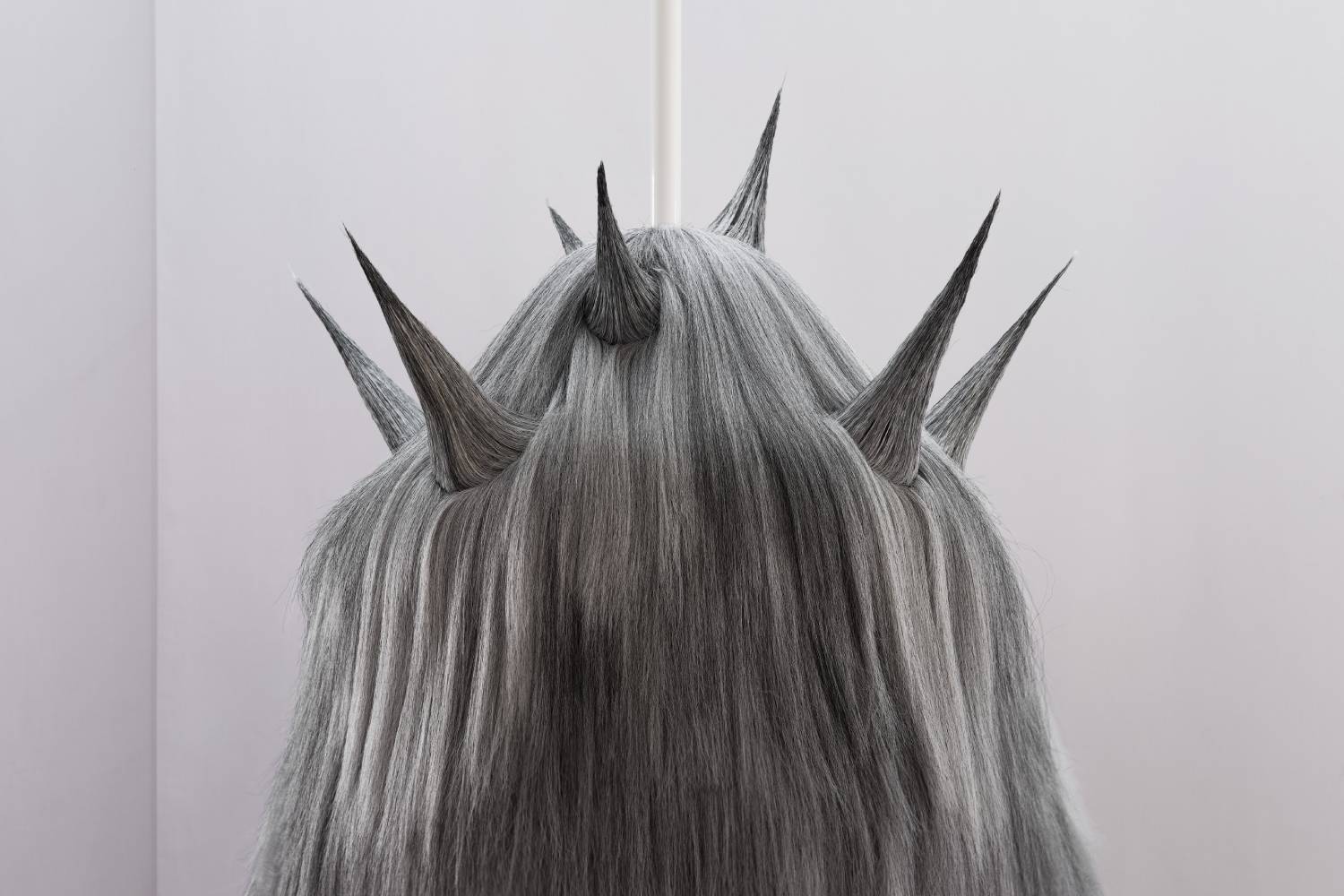
Yto Barrada, the artist representing France at the 2026 Venice Biennale, has created a multidisciplinary installation titled "Saturne" for the French Pavilion. The work centers on textiles and natural dyeing, weaving together themes of postcolonial history, migration, craft transmission, and the symbolism of Saturn—from its astronomical mystery to its mythological role as the devourer of children. The installation features wool curtains, Aubusson tapestry, goat skins, wasp-nest sculptures, masks, muzzles, a color chart, and video, all housed in a renovated pavilion designed with the help of numerous artisans. Barrada, born in Paris in 1971 and raised in Tangier, founded the Cinémathèque de Tanger and later The Mothership, a research center focused on textiles and natural dyes. The exhibition is curated by Myriam Ben Salah.

5 Trends Shaping the 2026 Venice Biennale

The 2026 Venice Biennale has opened to the public, featuring the main exhibition 'In Minor Keys' conceived by the late Cameroonian Swiss curator Koyo Kouoh, who died unexpectedly in May 2025. Kouoh, the first African woman appointed to lead the Biennale, had her curatorial team—including Rasha Salti, Marie Hélène Pereira, and Gabe Beckhurst Feijoo—carry forward her vision of art as a 'shared and sustaining force.' The opening was weighted with politics and emotion.

The Permanence of Refusal: Interview with Ding Yi

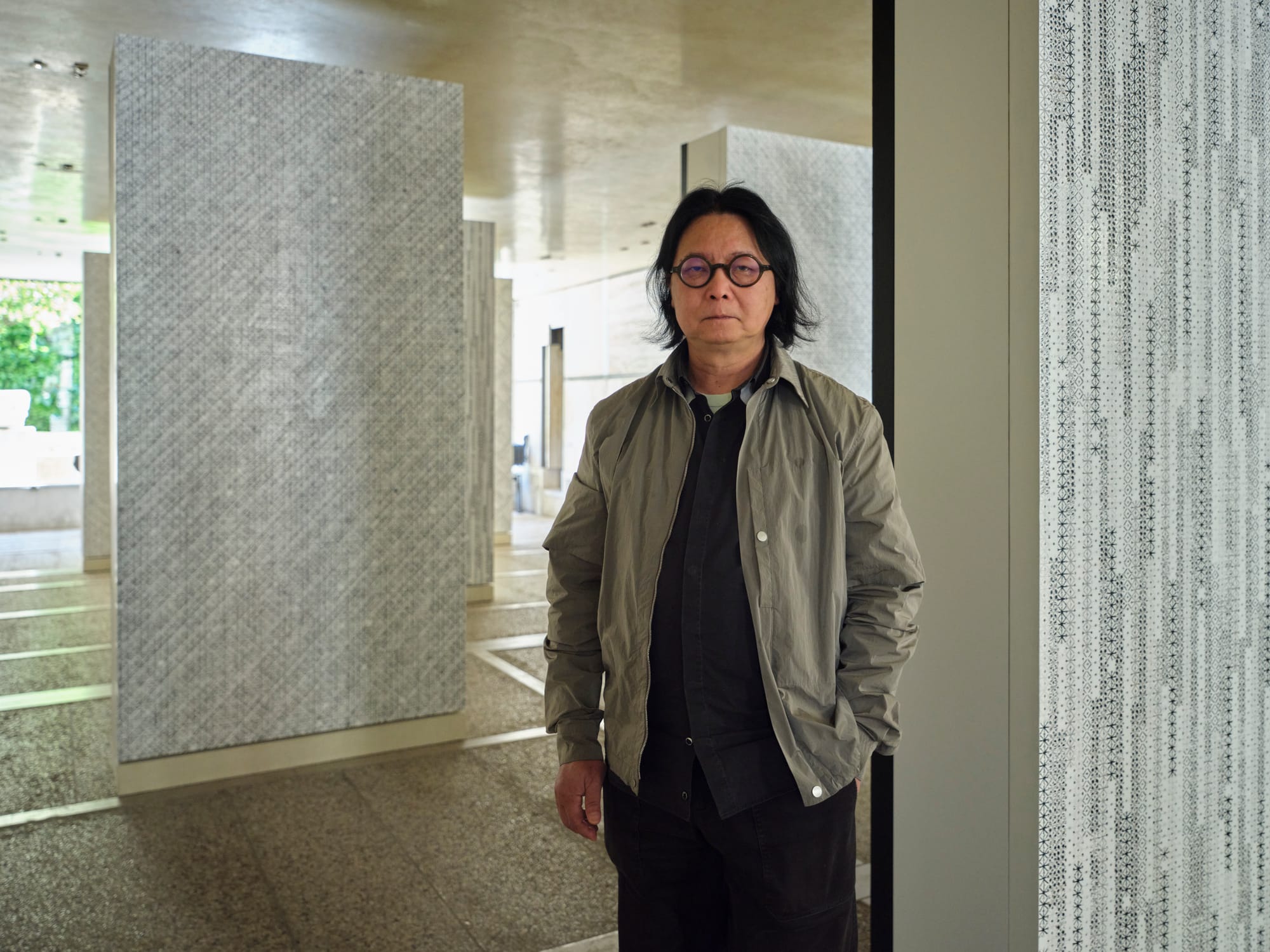
Chinese artist Ding Yi, who first appeared at the Venice Biennale in 1993 as part of the inaugural Chinese contemporary art exhibition, has returned to Venice with his first solo show in the city, titled “Cosmotechnics: Ding Yi as a Planetary Code” at Fondazione Querini Stampalia. The exhibition, referencing philosopher Yuk Hui's concept of cosmotechnics, traces Ding Yi's abstract visual language from the 1980s to the present, featuring new and historic works that engage with the modernist architecture of Carlo Scarpa. In an interview with ArtAsiaPacific during the 61st Venice Biennale preview week, Ding Yi reflects on the evolution of his practice, his travels, and the deep perceptual frameworks of ancient civilizations.

Guadalupe Rosales Brings East LA to Venice for the Biennale

Guadalupe Rosales, a Los Angeles–based artist known for her Instagram archive @veteranas_and_rucas documenting 1990s Chicana life, has been selected to participate in the main exhibition of the 2026 Venice Biennale, curated by the late Koyo Kouoh. In an interview with ARTnews, Rosales discusses how her invitation came about after Kouoh's passing, her evolving practice that includes photography, murals, and installations, and the emotional depth of her archival work—balancing joy and grief, as exemplified by her cousin's death certificate. She will also publish a memoir titled *East of the River* in September.

Beverly Buchanan’s Anti-Monuments

Beverly Buchanan's outdoor sculptures, such as 'Marsh Ruins' (1981) and 'Unity Stones' (1983), are quietly eroding in landscapes across Georgia, Florida, and North Carolina. These anti-monuments, made from tabby concrete and stone, blend into their surroundings while subtly referencing the region's layered histories, including Indigenous shell middens, plantation ruins, and the 1803 slave revolt on St. Simons Island. Buchanan, who died in 2015, is now receiving renewed attention: her work will be featured at the Venice Biennale this spring, and a touring retrospective is currently at Frac Lorraine in Metz, following a posthumous show at the Brooklyn Museum in 2016–17.

What does a woman swimming in urine tell us about the state of the world? Lots! – Venice Biennale review

The 2026 Venice Biennale, curated by the late Koyo Kouoh under the theme "In Minor Keys," has been plagued by months of turmoil including countries withdrawing, artists being fired, exhibitions cancelled, funding pulled, and protests during the preview. A five-person curatorial team took over after Kouoh's death, resulting in what the critic describes as a disjointed, committee-driven exhibition that prioritizes quiet contemplation and healing over direct political engagement. The central shows in the Giardini and Arsenale feature a vast, poorly explained array of art from the global south, with installations of ceramics, textiles, slide projectors, and serene natural scenes that the critic finds anachronistic and dull.

The Only Guide to This Year’s Venice Biennale You Will Ever Need

The 61st Venice Biennale opens amid significant turmoil. The entire jury of the International Art Exhibition resigned after a statement about withholding prizes from countries with leaders charged with crimes against humanity by the ICC, leading to the cancellation of the Golden Lion awards in favor of 'Visitors' Lions' to be given at the exhibition's end. The event has been further marred by the sudden death of artistic director Koyo Kouoh from liver cancer in early 2025, and the death of artist Henrike Naumann, who was set to debut work in the German pavilion. Additionally, the selection process for the American pavilion artist, Mexico-based sculptor Alma Allen, sparked controversy after a delayed grant application process.

Behind every great artist... there is a great gallery. A look at the 2026 Venice Biennale

Dietro ogni grande artista… c’è una grande galleria. Un punto sulla Biennale Arte 2026

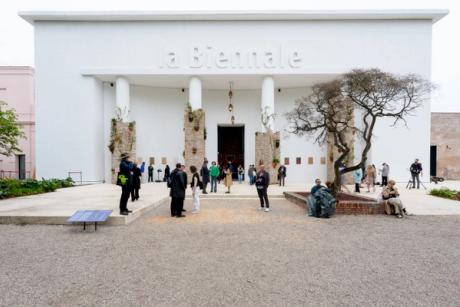
The 61st Venice Biennale, titled "In Minor Keys" (May 9 – November 22, 2026), features over 90% living artists, a significant shift from recent editions focused on historical rediscoveries. Curated by the late Koyo Kouoh (1967–2025), the first African woman to lead the Biennale, the exhibition includes 111 artists, with a majority of women (64 vs. 48 men) and the highest percentage of African-born artists ever (20%). Notable participants include Nick Cave, Carsten Höller, Alfredo Jaar, and Kader Attia, with a focus on mid-career and established figures rather than emerging or deceased artists.

art venice faustin linyekula the galeazze project dance

Congolese choreographer Faustin Linyekula is staging "The Galeazze Project," a performance commissioned by the Venice-based nonprofit Scuola Piccola Zattere (SPZ) in the 16th-century Galeazze shipyard complex, which has been inaccessible since World War II and never open to the public. The performance, a collateral event of the 2026 Venice Biennale, brings up to 500 people into the 32,291-square-foot open-air ruin for two nights, featuring local students, musicians from the Venetian label Cosmogram, and trumpeter Heru Shabaka-Ra, with a soundtrack composed collaboratively.

More than 70 Venice Biennale artists withdraw from awards

More than 70 artists participating in the 2025 Venice Biennale have withdrawn from consideration for the Golden Lion awards, which this year will be decided by public vote. The artists, including Walid Raad, Laurie Anderson, and Yto Barrada, signed a statement published on e-flux on May 9, withdrawing in solidarity with the entire prize jury that resigned last month over a dispute regarding the participation of Israel and Russia. The Biennale management replaced the traditional jury-selected awards with a new "Visitor Lion" system where ticket holders can vote, but the Biennale has acknowledged that if any of the withdrawing artists win, they will not collect the award.

Venice Biennale Special 2026—podcast

This episode of The Art Newspaper's podcast is a Venice Biennale special, covering the opening week of the 2026 edition. Host Ben Luke, along with Louisa Buck and Jane Morris, reviews the main exhibition "In Minor Keys," curated by the late Koyo Kouoh and realized by five collaborators. The podcast features interviews with artists Gabrielle Goliath, whose work for the South African pavilion was cancelled and is instead staged in a Venice church, and Lubaina Himid, showing in the British pavilion. It also includes conversations with writer Saidiya Hartman and Daniella Kaliada of Belarus Free Theatre about their collateral projects. The episode concludes with a focus on two restored Tintoretto paintings at the Basilica of San Giorgio Maggiore, funded by Save Venice.

As Her Venice Biennale Opens, Koyo Kouoh Foundation Launches in Memory of Late Curator

The Koyo Kouoh Foundation has launched in Basel, Switzerland, coinciding with the opening of the 2026 Venice Biennale, which features the late curator Koyo Kouoh's main exhibition "In Minor Keys." The foundation aims to continue Kouoh's work supporting contemporary African cultural production globally, including plans for the Koyo Kouoh Prize and a permanent home for the Koyo Kouoh Collection. It is led by her partner, saxophonist Philippe Mall, and includes board members such as artist Alfredo Jaar, curator Adrienne Edwards, and former Kunstmuseum Basel director Josef Helfenstein.

Here’s Why the Venice Biennale Main Show Lost One Artist During the Planning Stages

The Venice Biennale's main exhibition, curated by the late Koyo Kouoh, originally included 111 artists when announced in February, but now lists only 110. ARTnews reveals that the removed artist is Bodys Isek Kingelez, a Congolese sculptor known for his colorful cardboard "extreme maquettes" of fantastical cities. A Biennale spokesperson stated that works initially considered for Kingelez were ultimately unavailable. Kingelez, who died in 2015, was to be one of the few deceased artists in the show, alongside figures like Marcel Duchamp and Issa Samb.

At the Venice Biennale, Koyo Kouoh’s ‘In Minor Keys’ Looks Deeply at Lush Gardens and a Scarred Earth

Koyo Kouoh's exhibition 'In Minor Keys' at the 2026 Venice Biennale centers on the practices of two deceased artists, Issa Samb and Beverly Buchanan, whose ways of thinking animate the show through dedicated 'Shrines' in the Central Pavilion. The exhibition also draws on Marcel Duchamp's legacy, featuring works by over a dozen contemporary artists including Akinbode Akinbiyi, Guadalupe Rosales, Natalia Lassalle-Morillo, Guadalupe Maravilla, Sofía Gallisá Muriente, and Avi Mograbi, whose installation 'Between a River and a Sea' contrasts pre-1948 business directories with a 2023 Gaza Yellow Pages. A section called 'The Schools' highlights artist-run spaces such as Denniston Hill, Guest Artists Space (G.A.S.) Foundation, blaxTARLINES, and the Nairobi Contemporary Art Institute.

Alvaro Barrington takes a road trip to the Venice Biennale

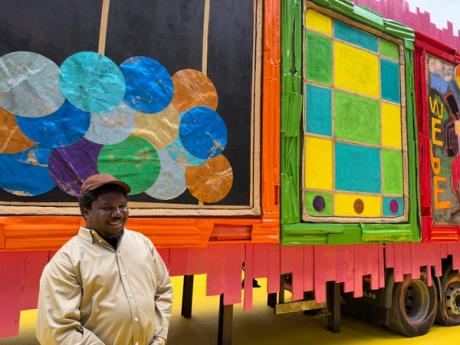
Artist Alvaro Barrington has created a vibrant haulage truck titled "Labor Day Parade ’91" (2026) as his contribution to the 61st Venice Biennale, part of the exhibition "In Minor Keys." The truck, decorated with scenes linked to his background and art historical references, was driven from London to Venice on an epic road trip across Europe. It is now parked in the Giardini next to the Austrian pavilion, with its front tyres punctured to prevent movement. During the preview, the work was admired by artist Julie Mehretu and Dia Art Foundation director Jessica Morgan.

Derrick Adams Offers Monumental Tribute to Koyo Kouoh in Venice

American artist Derrick Adams has installed a monumental portrait of the late curator Koyo Kouoh on a building façade near the Arsenale in Venice, ahead of the 2026 Venice Biennale that Kouoh was to curate. The painting, titled "Heavy is the head that wears the crown (2026)," depicts Kouoh with a crown that transforms into the word "JOY" emitting golden light. The project was spearheaded by curator Francesco Bonami, who invited Kouoh to serve on the jury of the 50th Venice Biennale, and is intended as an accessible public homage rather than an exclusive art-world event.

"Kultursenator ist kein Nebenjob"

Berlin's finance senator Stefan Evers is set to additionally take on the role of culture senator following the resignation of Sarah Wedl-Wilson, a move criticized as a stopgap solution that creates a conflict of interest between austerity and cultural advocacy. Meanwhile, the Venice Biennale faces multiple controversies: critics question how to evaluate curator Koyo Kouoh's posthumous main exhibition "In Minor Keys," completed after her death in May 2025; Israeli artist Belu-Simion Fainaru speaks out against his exclusion from the Biennale competition, calling it politically biased and reminiscent of historical persecution; and German press decries the politicization of the Biennale, particularly the exclusion of Israel and Russia from the competition.

ArtReview April & May 2026 Issue Out Now

ArtReview's April & May 2026 issue explores boundaries and limitations in art, with a focus on the 61st Venice Biennale opening amid global conflicts. The cover features Japanese-American performance artist Ei Arakawa-Nash with his husband and twin babies, whose collaborative installation at the Japanese Pavilion incorporates the unpredictability of childcare. The issue includes coverage of controversial national pavilions (Russian, Israeli, American), profiles of artists representing Mongolia and Singapore, and features on Beverly Buchanan, Arthur Jafa, Richard Prince, and Zehra Doğan's report from Rojava. It also reviews the 82nd Whitney Biennial, the 25th Biennale of Sydney, and the 15th Shanghai Biennale.

Venice Biennale 2026: How Do You Critique a Posthumous Exhibition?

The article, published by ArtReview, examines the upcoming 61st Venice Biennale (2026), titled *In Minor Keys*, which was conceived by artistic director Koyo Kouoh before her death from cancer in May 2025 at age 57. The exhibition, based on Kouoh's drafted concept and completed by a curatorial team including Rory Tsapayi, Siddhartha Mitter, Marie Hélène Pereira, Gabe Beckhurst Feijoo, and Rasha Salti, adopts a musical metaphor of "minor-ness" and aims to avoid the pitfalls of previous Biennales by focusing on soul frequencies and dissonant harmony rather than direct commentary on world crises. The author, Martin Herbert, questions how critics will respond to a posthumous exhibition of this unprecedented scale, noting that previous artistic directors like Robert Storr, Cecilia Alemani, Christine Macel, and Adriano Pedrosa have faced varied critical receptions.

In Minor Keys: how Venice's international exhibition was brought to life after the death of artistic director Koyo Kouoh

The 61st Venice Biennale's international exhibition, titled "In Minor Keys," was realized after the sudden death of its artistic director, Koyo Kouoh, in May 2025. A team of five of Kouoh's collaborators, known as "la squadra di Koyo Kouoh," worked with her before her death and finalized the exhibition's themes, artist list, and scenography. The exhibition features 111 invited artists, duos, collectives, and artist-led organizations, with the team emphasizing that this remains Kouoh's vision rather than a replacement.