
filter_list Showing 3 results for "Salon exhibition" close Clear
search
dashboard All 3 article culture 1museum exhibitions 1rate_review review 1
date_range Range Today This Week This Month All
Subscribe

Salon review – like getting to know fascinating guests at a fabulous party

The article reviews a salon-style exhibition curated by Matthew Higgs, director of New York's White Columns gallery, at an unnamed gallery space. The show features 43 paintings by a diverse group of artists including Denzil Forrester, Andrew Cranston, Kaye Donachie, Merlin James, Margot Bergman, Gillian Carnegie, Bill Lynch, and Adam Keay, arranged around mismatched chairs facing white windows painted on the walls. The reviewer describes moving through the space, engaging with individual works, and highlights the eclectic, unthemed curation that prioritizes personal taste and conversation over academic or political messaging.

Review: Manet-Morisot exhibition is a deep dive into artistic ways of seeing, making

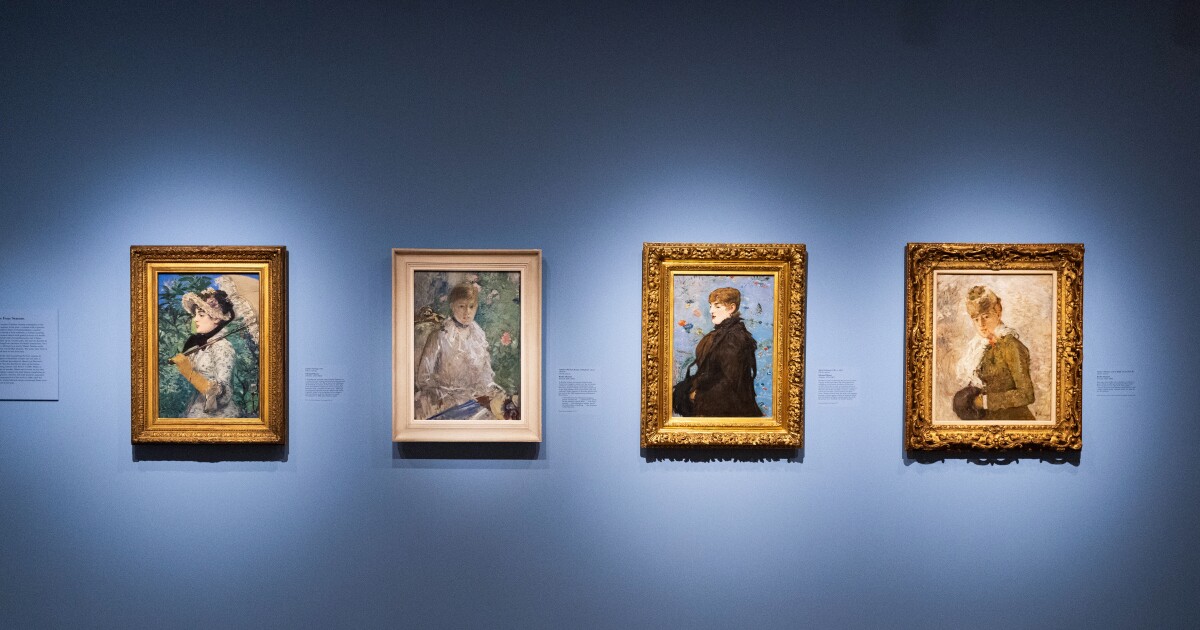
The Cleveland Museum of Art's spring exhibition examines the artistic relationship between 19th-century French Impressionist painters Édouard Manet and Berthe Morisot, showcasing 36 paintings and seven works on paper. Organized by curator Emily Beeny of the Fine Arts Museums of San Francisco, the show is the first to closely analyze how the two artists influenced each other, correcting the historical record that long positioned Manet as the dominant figure while undervaluing Morisot's contributions. Through side-by-side juxtapositions, the exhibition reveals that Manet may have taken more from Morisot than she from him, highlighting their collaborative and competitive dialogue over 15 years.

Salon | Impressionism, Realism & Post-Impressionism

The Salon was an official art exhibition sponsored by the French government, originating in 1667 when Louis XIV sponsored an exhibit of works by members of the Académie Royale de Peinture et de Sculpture. It was held in the Salon d’Apollon of the Louvre Palace in Paris, and after 1737 it became an annual event, with a jury system introduced in 1748. During the French Revolution, the Salon opened to all French artists, though academicians retained control through much of the 19th century. Its influence waned after the Société des Artistes Français took over in 1881 and as independent avant-garde exhibitions gained prominence.