
filter_list Showing 3 results for "Statue of Marcus Aurelius" close Clear
dashboard All 3 article culture 1article news 1museum exhibitions 1
date_range Range Today This Week This Month All
Subscribe

roman sculpture 2710619

This article explores the rediscovery of Roman sculpture during the Renaissance and its profound influence on artists like Raphael, Donatello, Michelangelo, and Leonardo da Vinci. It details how Roman sculptors, inspired by Greek methods after the conquest of Greece in 146 B.C.E., created highly realistic works that served both artistic and political purposes, glorifying emperors and reinforcing imperial power. The piece highlights six iconic Roman sculptures—including the Equestrian Statue of Marcus Aurelius, the Colossus of Constantine, Trajan's Column, and the Augustus of Prima Porta—describing their historical context, artistic features, and enduring legacy.
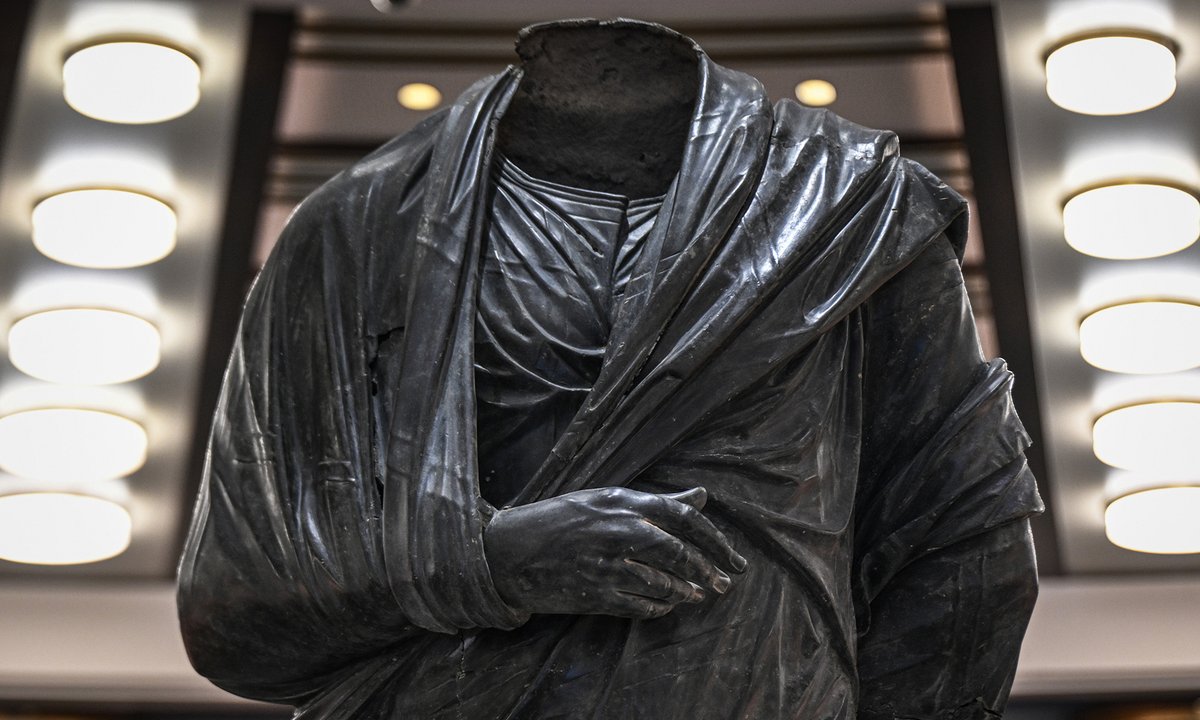
In a new exhibition, Turkey displays the success of its heavyweight heritage drive

Turkey has opened a new exhibition titled "The Golden Age of Archaeology" at a national library in Ankara, showcasing 570 ancient artifacts—most unearthed in the past two years and displayed for the first time. Highlights include 11,500-year-old Neolithic vessels, a Bronze Age tablet revealing a previously unknown language (Kalasma), and a repatriated bronze statue of Roman emperor Marcus Aurelius, which was smuggled out of Turkey in the 1960s and recently returned from the Cleveland Museum of Art after a legal battle. The exhibition is part of the government's Heritage for the Future project, which spends around $150 million annually on excavations, visitor centers, and museums, with active digs rising to about 800.

remnants enaissance equestrian statue french dig 2662751

Archaeologists from INRAP (the National Institute of Preventive Archaeological Research) have unearthed a Renaissance-era limestone equestrian statue in Toul, northeastern France. The statue, broken into 27 pieces, was found buried under a roadway among the remains of a medieval gate demolished around 1700. The largest fragment measures about three-and-a-half feet, and the intact work would have stood over five feet high. The horse's trunk and head are preserved, along with the rider's hips and upper thighs, but the rider's head and limbs are missing, making identification uncertain. INRAP suggests the rider may have been Henry II, King of France, or more likely John III of Lorraine, Cardinal of Lorraine and Bishop of Toul, and that Italian artists may have been involved in its creation.