filter_list Showing 11 results for "Sunflowers (August 1888)" close Clear
search
dashboard All 11 museum exhibitions 9trending_up market 1article news 1
date_range Range Today This Week This Month All
Subscribe

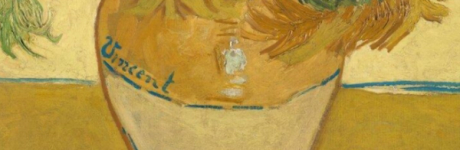
Why did Van Gogh sign his paintings as ‘Vincent’?

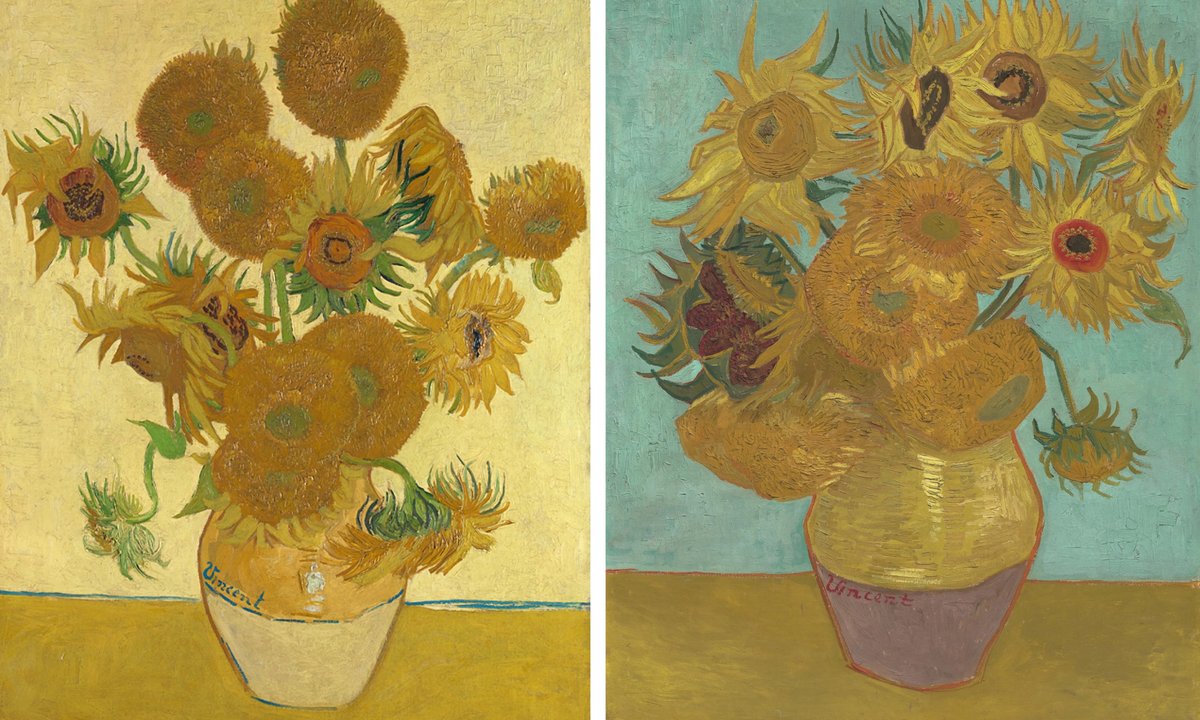
Art historian Julia Engelmayer has published a study titled 'Simply ‘Vincent’: An Overview of Van Gogh’s Signed Paintings' on the Van Gogh Museum's website, analyzing why and how Vincent van Gogh signed his works. The research reveals that only 133 of his 840 surviving paintings bear a signature (16%), an unusually low proportion for a 19th-century artist. Van Gogh signed with only his first name due to strained family relations and the difficulty non-Dutch speakers had pronouncing his surname. The study also highlights his predominant use of red signatures (on 75 works), angled signatures on over half of his signed pieces, and a distinctive horseshoe-shaped 'V' used during his Arles period.
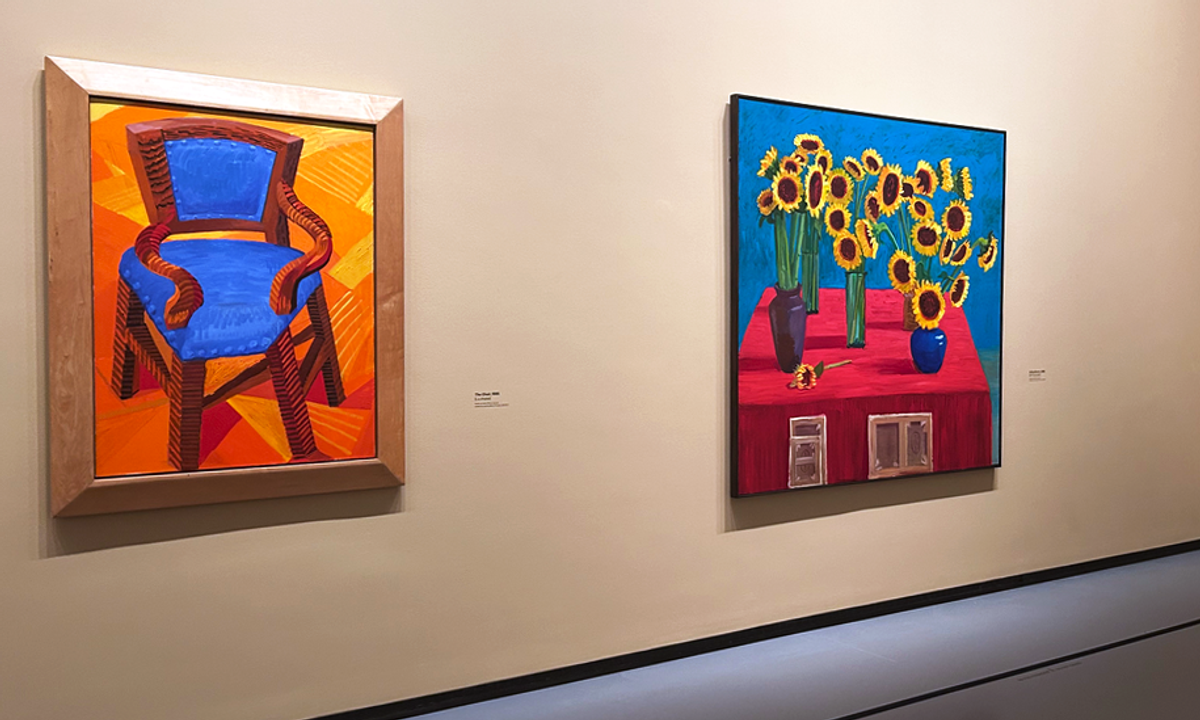
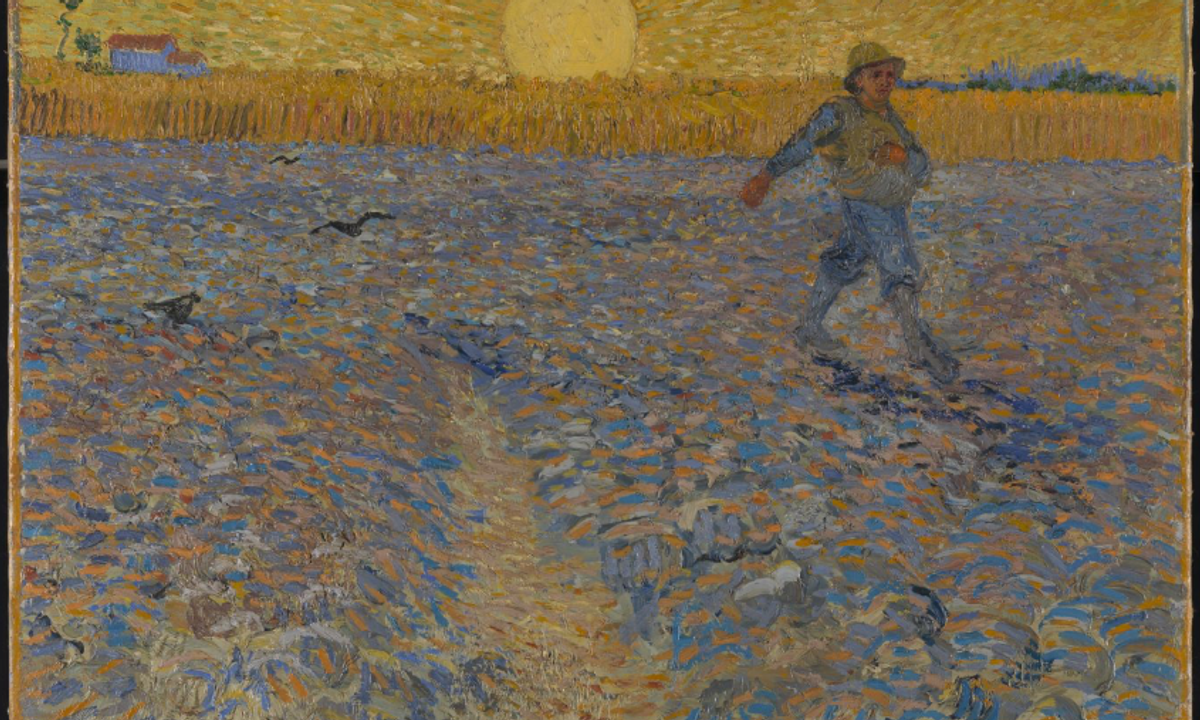
Huge Paris exhibition reveals David Hockney’s love of Van Gogh

A major exhibition at the Fondation Louis Vuitton in Paris, titled "David Hockney 25," showcases 400 works by the British artist, with a focus on the past 25 years of his career. The show highlights Hockney’s deep admiration for Vincent van Gogh, featuring a section called "The Great Wall" that includes 29 Van Gogh reproductions alongside works by other artists. Key pieces on display include Hockney’s portrait of his partner Jean-Pierre Gonçalves de Lima, inspired by Van Gogh’s "Sorrowing Old Man," and iPad drawings echoing Van Gogh’s sunflower still lifes. The exhibition runs until 31 August.

Van Gogh visited Georges Seurat's studio the day he left for Provence

The Courtauld Gallery in London is hosting a major exhibition of Georges Seurat’s work, highlighting the profound influence the Neo-Impressionist leader had on Vincent van Gogh. Historical records reveal that Van Gogh visited Seurat’s studio on February 19, 1888—the very day he departed Paris for Arles—to view masterpieces like 'A Sunday on La Grande Jatte.' This meeting underscores the deep respect Van Gogh held for Seurat’s scientific approach to color, even as he prepared to embark on his most famous creative period in Provence.

Why yellow was Van Gogh's favourite colour

The Van Gogh Museum in Amsterdam has launched a new exhibition titled "Yellow: Beyond Van Gogh’s Colour," running until May 17. The show explores Vincent van Gogh’s profound obsession with the color yellow, featuring eight of his works alongside pieces by contemporaries like Paul Gauguin and Aubrey Beardsley. It highlights Van Gogh's technical use of chrome yellow pigments to capture the "high yellow note" of the Provencal sun and the symbolic association of the color with modernity and life-giving energy.

Van Gogh shows in 2026: America, Japan and the Netherlands

A wave of Van Gogh exhibitions is scheduled for 2026 across the United States, Japan, and the Netherlands. Highlights include "Van Gogh’s Sunflowers: A Symphony in Blue and Yellow" at the Philadelphia Museum of Art (June–October 2026), featuring a rare loan of London's National Gallery version alongside Philadelphia's own. Amsterdam's Van Gogh Museum will present "Yellow: Beyond Van Gogh’s Colour" (February–May 2026), while the Kröller-Müller Museum in Otterlo will display all 88 Van Gogh paintings for the first time since 1984 in "Van Gogh, All Our Paintings" (September 2026–January 2027). In Japan, the Kröller-Müller's "The Grand Van Gogh Exhibition" tours Kobe, Fukushima, and Tokyo, and the Van Gogh Museum's "Van Gogh’s Home" is at Nagoya's Aichi Prefectural Museum of Art. Smaller shows take place at the Van Gogh House in Zundert, the Maison du Dr Gachet in Auvers-sur-Oise, and the Foundation Vincent van Gogh Arles.

Exclusive: Philadelphia Art Museum to host sensational Van Gogh exhibition featuring two ‘Sunflowers’

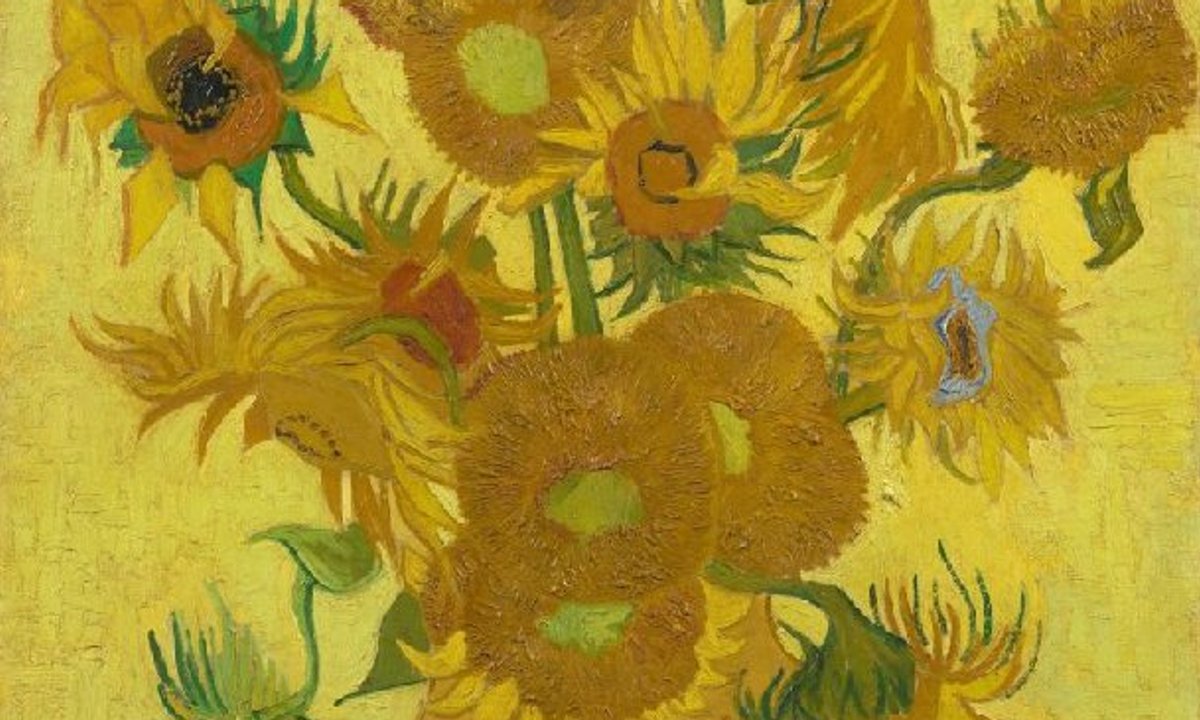
The Philadelphia Museum of Art will host a major exhibition titled *Van Gogh’s Sunflowers: A Symphony in Blue and Yellow* from June 6 to October 11, 2026, bringing together two iconic Sunflower paintings: the museum’s own turquoise-background version (January 1889) and the original yellow-background version (August 1888) from London’s National Gallery. This marks a rare international loan for the London painting, which has only traveled abroad four times since 1924. The exhibition will explore Van Gogh’s use of color and brushwork, and will reunite the two canvases in a triptych arrangement with *La Berceuse* (January 1889, Museum of Fine Arts, Boston), as originally envisioned by the artist in a letter to his brother Theo.

The story behind the Van Gogh still life that looks destined to become his most expensive Paris painting

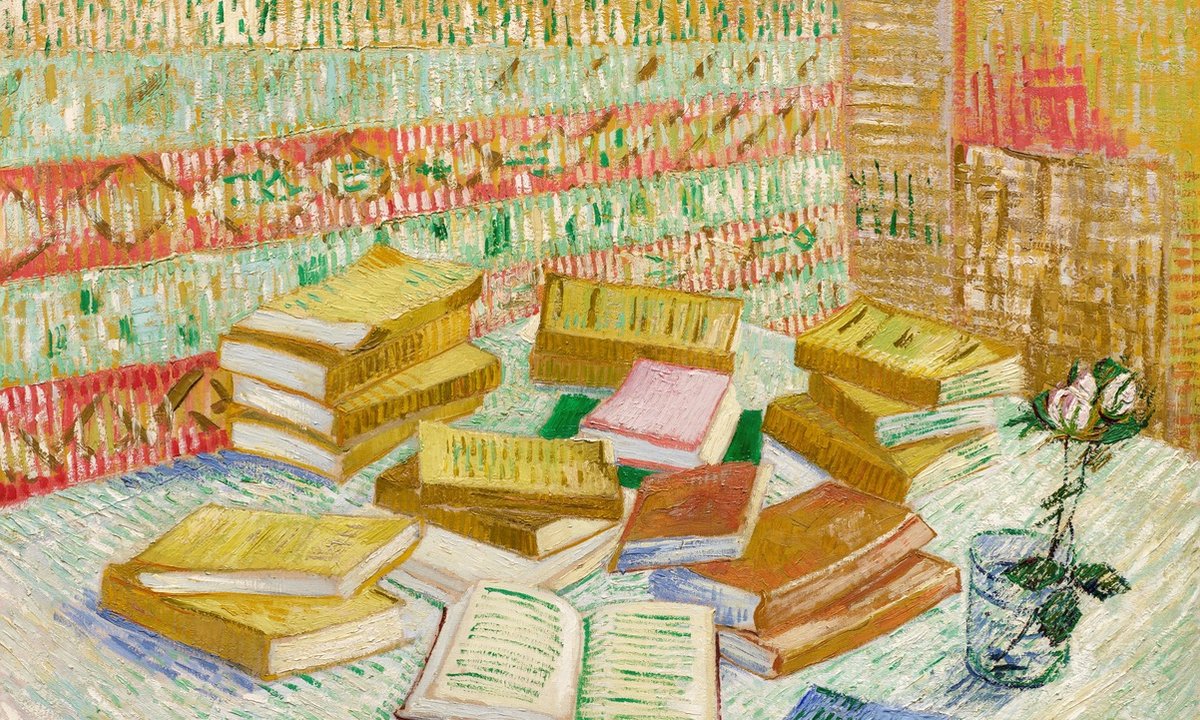
Van Gogh's 'Parisian Novels' (November-December 1887) will be the leading lot in the Pritzker sale at Sotheby's, New York on 20 November, with an estimate of $40 million. The still life, depicting 22 books and three pink roses, has been consigned by the estate of Cindy Pritzker, who died in March at age 101. The painting was created during Van Gogh's time living with his brother Theo in Paris and was among the first three works publicly exhibited during his lifetime, at the Société des Artistes Indépendants in March 1888. The Pritzker collection sale also includes 36 other works estimated at $120 million, featuring pieces by Paul Gauguin and Henri Matisse.

Framing Van Gogh: why the artist did not want to surround his works with gold

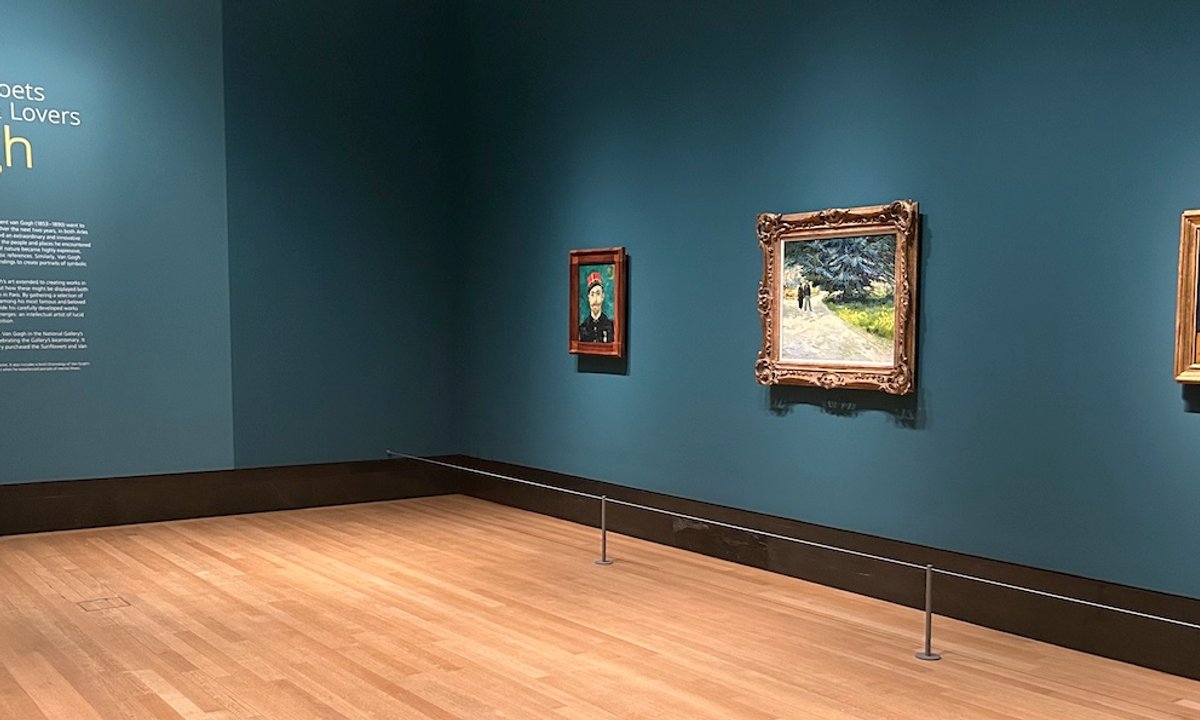
London's National Gallery exhibition "Van Gogh: Poets & Lovers" displayed nearly all of its loaned paintings in ornate gilded frames, despite the artist's documented preference for simple, unadorned wooden frames. Van Gogh wrote to his sister Wil questioning the need for gilding, and Paul Gachet Jr., son of the doctor who cared for the artist, called gold frames around Van Gogh's works "an act of moral barbarism." A few exceptions stood out, including six paintings from the Kröller-Müller Museum in Otterlo, which were shown in replica frames based on early 20th-century designs by Jacob van den Bosch, and a Van Gogh from Tokyo's National Museum of Western Art that was reframed in a replica of a frame once owned by Dr. Paul Gachet.

An exhibition in a most extraordinary building explores Japan’s love for Van Gogh

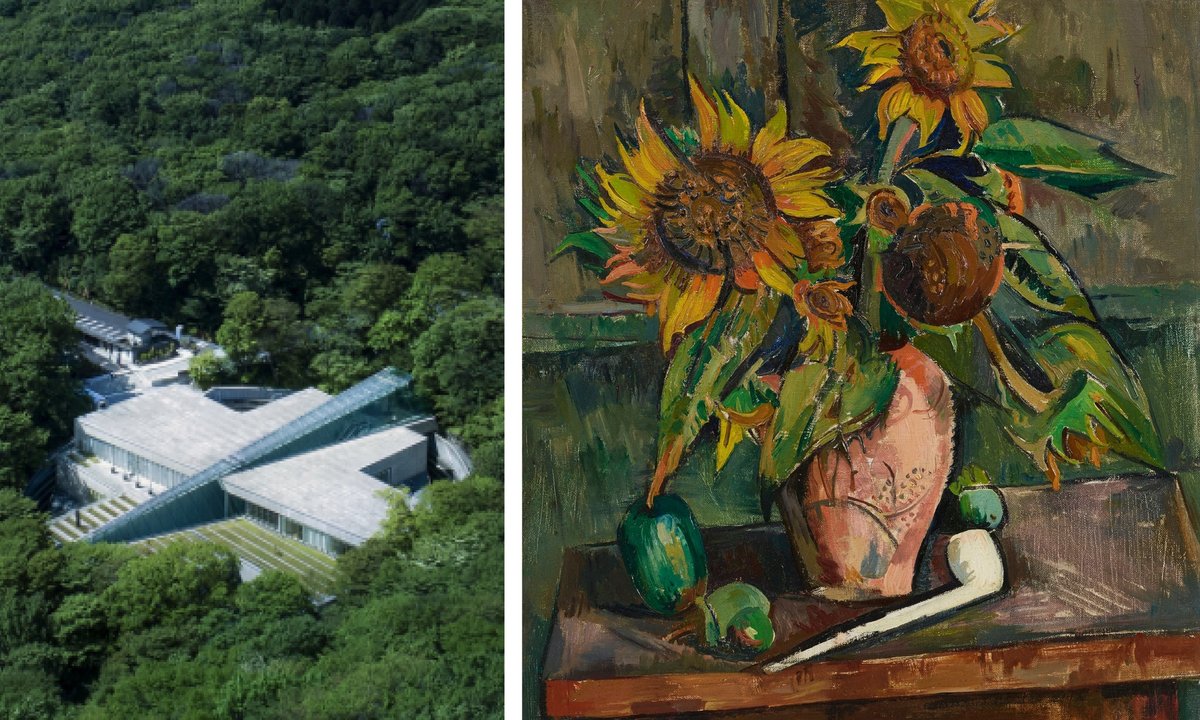
An exhibition titled 'A Renewal of Passion: The Impact of Van Gogh' opens at the Pola Museum of Art in Hakone, Japan, running from May 31 to November 30. It explores Van Gogh's influence on Japanese art, featuring three Van Gogh paintings from the museum's own collection—acquired by founder Suzuki Tsuneshi—alongside loans from other Japanese institutions, including the Morohashi Museum of Modern Art and the Kuboso Memorial Museum of Arts. The show highlights works by Japanese artists like Kishida Ryusei, Maeta Kanji, and Nakamura Tsune, who were inspired by Van Gogh, as well as contemporary pieces such as Fiona Tan's photographic series 'Ascent' (2016).

Van Gogh’s two pictures of the hospital in Arles—painted while he was recovering after cutting his ear—head to the Courtauld

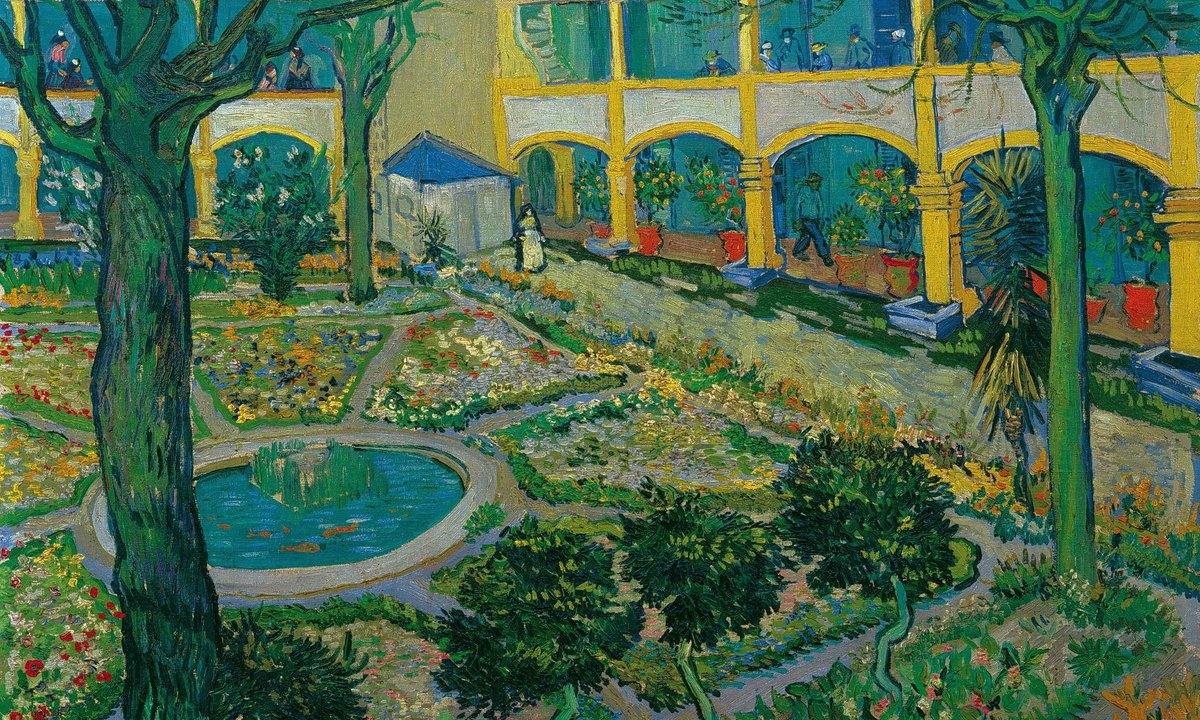
Van Gogh's two paintings of the hospital in Arles, created after he mutilated his ear, are being lent from the Oskar Reinhart Collection in Winterthur, Switzerland, to the Courtauld Gallery in London for the exhibition "Goya to Impressionism: Masterpieces from the Oskar Reinhart Collection" (14 February–26 May). The works—"The Courtyard of the Hospital at Arles" and "The Ward in the Hospital at Arles"—were both acquired in the 1920s by Swiss collector Oskar Reinhart and have rarely been lent due to restrictions that have now been modified. The museum in Winterthur is temporarily closed for renovations, enabling this loan.

Ten surprises at the National Gallery’s five-star Van Gogh exhibition

The National Gallery in London opened its exhibition "Van Gogh: Poets & Lovers" (14 September 2024–19 January 2025) to five-star reviews, attracting a record 335,000 visitors. The article reveals ten surprising details about individual paintings on loan from around the world, including a self-portrait that once hung in the American ambassador's residence in Regent's Park, a painting executed on a dish towel when Van Gogh ran out of canvas, and the revelation that casino mogul Steve Wynn owns The Trinquetaille Bridge. Other surprises include a stark white replica frame for Roses, inspired by frames designed by Dr. Paul Gachet, and the fact that The Public Garden, Arles is owned by a foundation set up by Bernard Arnault, the world's third richest person.