filter_list Showing 4 results for "The Fighting Temeraire" close Clear
search
dashboard All 4 article culture 1museum exhibitions 1article news 1rate_review review 1
date_range Range Today This Week This Month All
Subscribe

who was j m w turner why so important british artist

This article profiles British painter Joseph Mallord William Turner (1775–1851), detailing his rise from a barber's son to one of Britain's most famous artists. It covers his early training at the Royal Academy Schools, his mastery of watercolor and oil, and his prolific output of over 500 oil paintings and thousands of works on paper. Key works discussed include *Jedburgh Abbey* (c. 1832), *Fishermen at Sea* (1796), and *The Battle of Trafalgar* (1822), the latter of which sparked controversy for historical inaccuracies. The piece notes that for his 250th birthday, international institutions are celebrating his legacy.
Most famous image of JMW Turner not a self-portrait, says expert

Dr James Hamilton, a leading Turner expert, has claimed that the most famous portrait of JMW Turner—long believed to be a self-portrait and featured on the UK £20 banknote—is actually by the painter John Opie. Hamilton argues that the work, dated around 1799, was mistakenly included in the Turner Bequest after the artist's death in 1851, when his studio was in disarray and the attribution was never properly verified. He points to stylistic evidence, including Opie's characteristic use of dramatic light and shadow, and calls on Tate Britain to reattribute the painting.

Ten essential works of art to see at the National Gallery in London

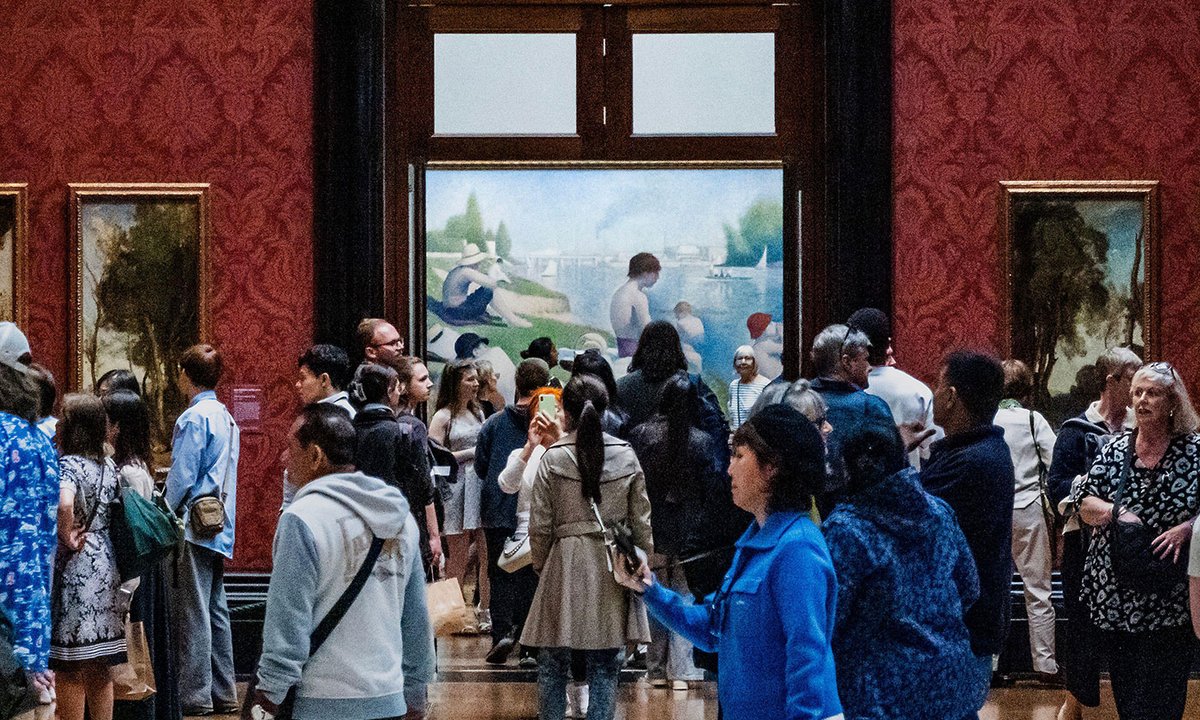
The National Gallery in London, home to over 2,300 paintings spanning Western European art from Giotto to Cézanne and including early modernism by Picasso, has recently completed a comprehensive rehang of its collection at its Trafalgar Square site. This coincides with the reopening of the Sainsbury Wing after a two-year renovation. The article highlights ten essential works to see, including Jan van Eyck's *The Arnolfini Portrait* (1434), Leonardo da Vinci's *The Burlington House Cartoon* (around 1506-08), and Paolo Veronese's *The Adoration of the Kings* (1573), emphasizing the gallery's free admission and its role as a cultural treasure.

Comment | Turner gets all the kudos, but it was Constable who was the truly radical painter

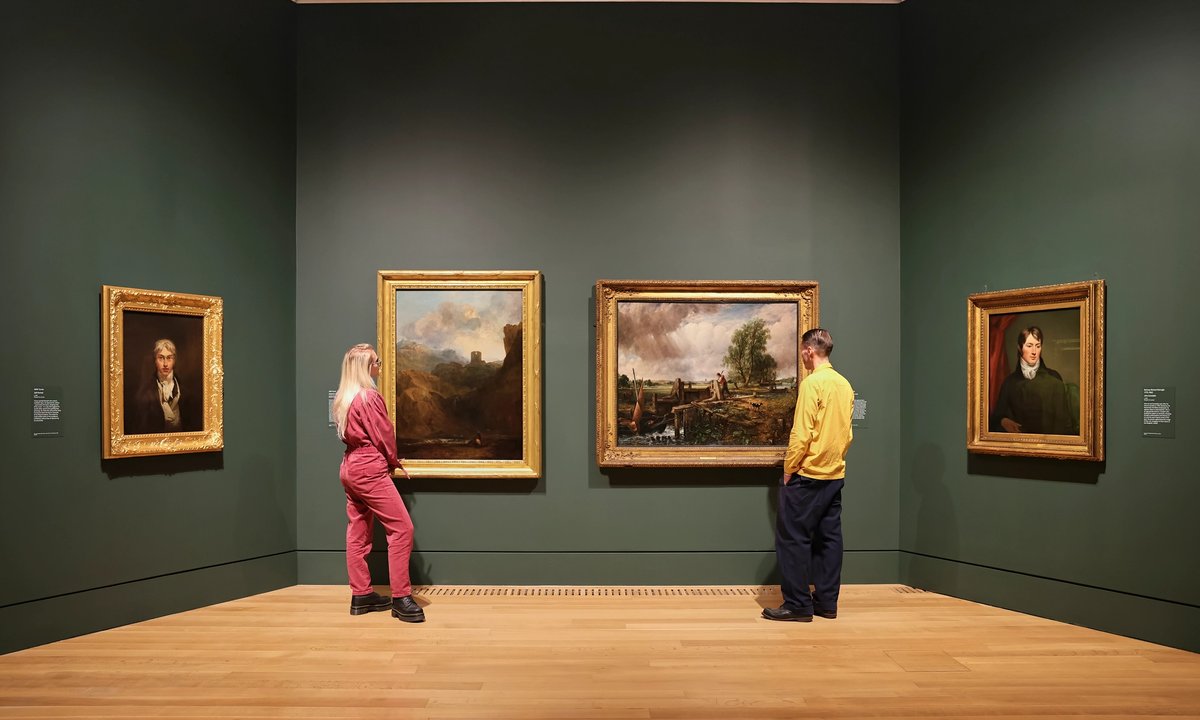
A commentary argues that John Constable, not J.M.W. Turner, was the truly radical painter, despite Turner receiving far greater public recognition through a museum, a prize, and a place on the £20 note. The article highlights a new exhibition, "Turner and Constable," opening at Tate Britain (until 12 April 2026), which recreates their 1831 Royal Academy display and contrasts Constable's English pastoral scenes with Turner's dramatic, un-British visions. It contends that Constable's full-size oil sketches, such as those at the Victoria and Albert Museum, had a deeper and more lasting effect on modern painting than Turner's work.