filter_list Showing 6 results for "The War" close Clear
dashboard All 6 article news 4article local 1rate_review review 1
date_range Range Today This Week This Month All
Subscribe

Saudis Renege on Met Opera Financial Aid, Berlin’s Culture Senator Resigns, and More: Morning Links for April 24, 2026

The Metropolitan Opera has announced that Saudi Arabia reneged on a noncommittal memorandum of understanding that would have provided up to $200 million over eight years to the cash-strapped New York institution. Met general manager Peter Gelb said the Saudis blamed the war in Iran and the blocked Strait of Hormuz, but funding had already failed to materialize before the conflict, prompting preemptive layoffs in January. Separately, Berlin culture senator Sarah Wedl-Wilson resigned after a state audit found she illegally authorized €2.6 million for 13 projects meant to combat antisemitism, violating budget regulations. Other news includes President Trump's plan to renovate the Lincoln Memorial reflecting pool, Ontario increasing support for the Art Gallery of Ontario and Royal Ontario Museum, Rome's new photography museum, and the appointment of Thiago de Paula Souza as curator of the eighth Athens Biennale.
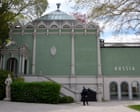
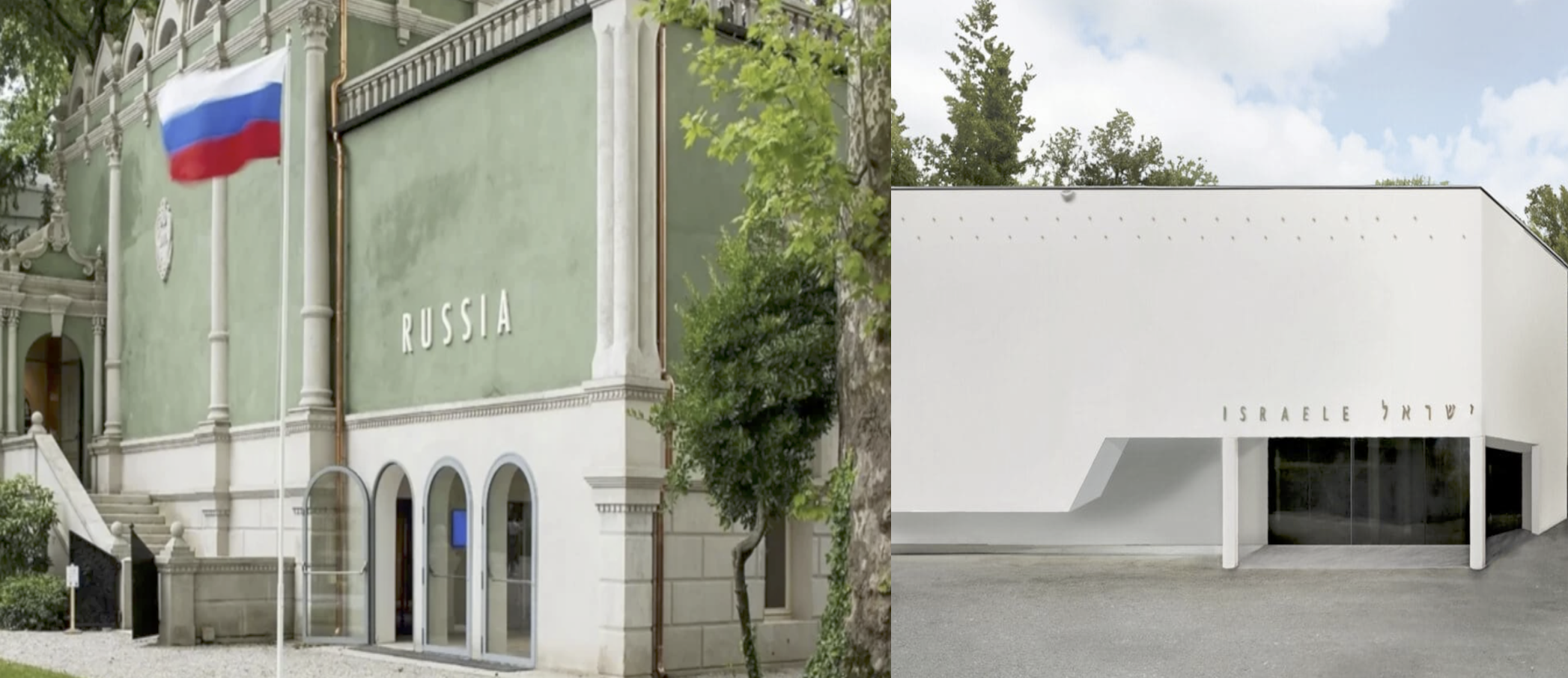
Venice Biennale jury ‘will not award artists from countries facing war crimes charges’

The jury of the Venice Biennale has announced it will not award prizes to artists from countries whose leaders face charges of crimes against humanity by the International Criminal Court, a decision widely seen as targeting Russia and Israel. The five-member jury, appointed by the late curator Koyo Kouoh, stated its commitment to human rights and will exclude artists from nations whose governments are under ICC investigation when selecting winners of the Golden and Silver Lion awards for the 2026 edition, which opens on 9 May. The move follows controversy over Russia’s participation in the biennale, with the European Commission threatening to suspend a €2m grant due to Russia’s involvement, and Italy’s far-right government opposing the decision.

Russia and Israel cannot win any prizes at the next Venice Art Biennale 2026. The jury takes a stand

Russia e Israele non potranno vincere nessun premio alla prossima Biennale Arte di Venezia 2026. La giuria prende posizione

The international jury for the 61st Venice Biennale, led by Solange Farkas, has unanimously declared it will not consider countries whose leaders are currently accused of crimes against humanity by the International Criminal Court. This means Russia and Israel are excluded from competing for the Golden Lion awards, including Best National Participation and Best Artist. The jury's statement, published on e-Flux Notes, emphasizes the Biennale's historical role as a platform connecting art with contemporary urgencies and acknowledges the complex relationship between artistic practice and state representation.

This Liminal Moment

The article reviews the exhibition "MONUMENTS" at the Geffen Contemporary at MOCA and the Brick in Los Angeles, which addresses the legacy of Confederate monuments through contemporary art. It highlights Cauleen Smith's installation "The Warden" (2025), which features a live-feed of the decommissioned Confederate sculpture "Vindicatrix" (also known as "Miss Confederacy") by Edward V. Valentine, originally atop the Jefferson Davis Memorial in Richmond, Virginia. The exhibition is curated by Hamza Walker, Kara Walker, and Bennett Simpson.

There Has Never Been an Apolitical Venice Biennale

"Es hat niemals eine unpolitische Venedig-Biennale gegeben"

The Venice Biennale is embroiled in political controversy, with the US Pavilion's selection process criticized for bypassing traditional curatorial expertise in favor of a politically connected outsider. Simultaneously, a collective of artists and academics is protesting Russia's return to the Biennale, arguing it uses art as a political instrument to normalize its actions amid the war in Ukraine. An analysis in ArtReview contends the Biennale has never been apolitical, serving as a stage for geopolitical power plays since its inception.

Islamophobia, motherhood, war and immigration: Indy artists get political

Four Indianapolis-based artists—Salma Taman, Alejandra Carrillo, Bailey Jörk, and Iryna Bondar—are creating work that directly responds to contemporary political and social crises, including the war in Gaza, immigration, and political division. Their art, ranging from Taman's Arabic calligraphy painting promoting forgiveness to Carrillo's digital drawing protesting a migrant detention center, serves as a form of personal and communal expression in a fraught global climate.