
filter_list Showing 3 results for "Uruguay Pavilion" close Clear
dashboard All 3 museum exhibitions 3
date_range Range Today This Week This Month All
Subscribe

A new art foundation in Uruguay highlights Latin American artists and curators

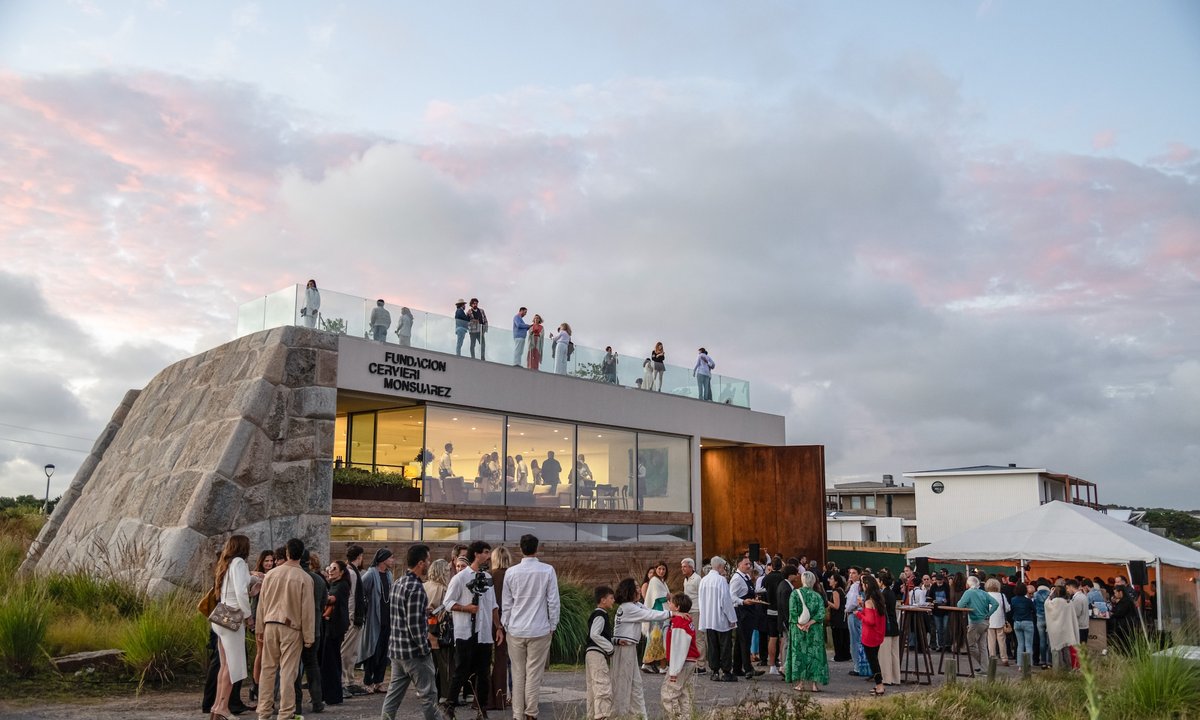
Fundación Cervieri Monsuárez (FCM), a contemporary-art space designed by the late Uruguayan architect Rafael Viñoly, has opened in the exclusive coastal village of José Ignacio, Uruguay. The foundation aims to become a year-round hub for Latin American art, launching with a reinstallation of the Uruguay Pavilion from the 2024 Venice Biennale, featuring artist Eduardo Cardozo's work "Latente." FCM presents three exhibitions per year, giving curators carte blanche, and has already hosted shows by Vivian Suter, Claudia Casarino, and Gabriel Chaile, with upcoming exhibitions by Chonon Bensho and Ana Segovia.
Margaret Whyte on Representing Uruguay at the 61st Venice Biennale

Margaret Whyte, an artist from Uruguay, is set to represent her country at the 61st Venice Biennale in 2026, with her pavilion located in the Giardini. In an interview with ArtReview, Whyte discusses her exhibition, which builds on her earlier show "Tiempo de Escuchar" at the National Museum of Visual Arts in Uruguay, curated by Patricia Bentancur. Her work is inspired by Nassim N. Taleb's book "Antifragile" (2012), exploring themes of chaos, uncertainty, and resilience. She sees her antifragile approach as complementary to the Biennale's theme, "In Minor Keys," curated by Koyo Kouoh, emphasizing emotional depth, silence, and healing.

MARGARET WHYTE TURNS FRAGILITY INTO LANGUAGE AT THE 2026 VENICE BIENNALE

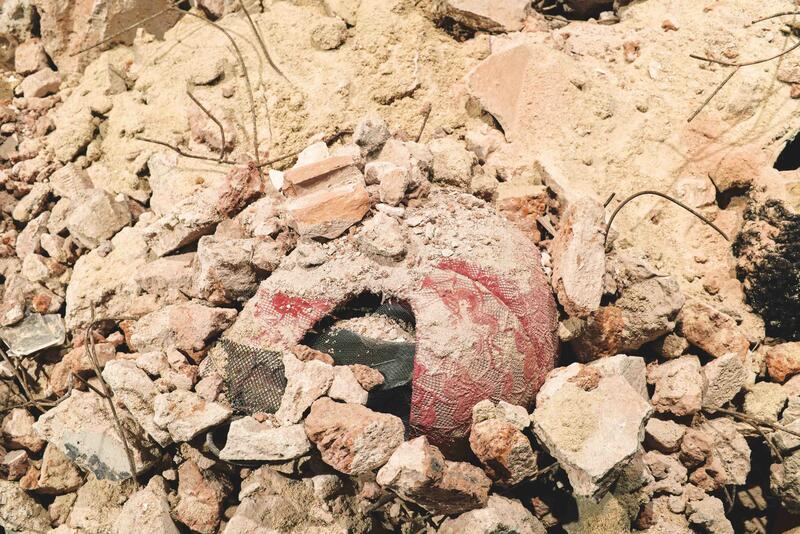
The Uruguay Pavilion at the 2026 Venice Biennale presents "ANTIFRAGIL," a new installation by artist Margaret Whyte, curated by Patricia Bentancur. The work combines textiles with obsolete technological objects such as old machines, motorcycle helmets, and waste fragments, embodying the concept of antifragility developed by Nassim Taleb—systems that grow stronger through disorder and instability. Whyte's practice transforms fragility and vulnerability into poetic resistance, challenging traditional hierarchies between craft and contemporary art.