
filter_list Showing 3 results for "Virgil Ortiz" close Clear
search
dashboard All 3 article culture 1museum exhibitions 1article news 1
date_range Range Today This Week This Month All
Subscribe

museum artists

The article reflects on the final 2025 edition of the Museum Artists list, which tracks the most exhibited artists in U.S. museums each quarter. The author notes that the top artists—such as Marie Watt, Jeffrey Gibson, and Rose B. Simpson—have remained consistent throughout the year, with a narrow band of stars appearing in many shows while a long tail of artists have limited visibility. Below the top 15, notable names include Julie Mehretu, Wangechi Mutu, and Jean Shin, with a cluster of older white female artists like Petah Coyne and Joyce Kozloff also gaining recognition.

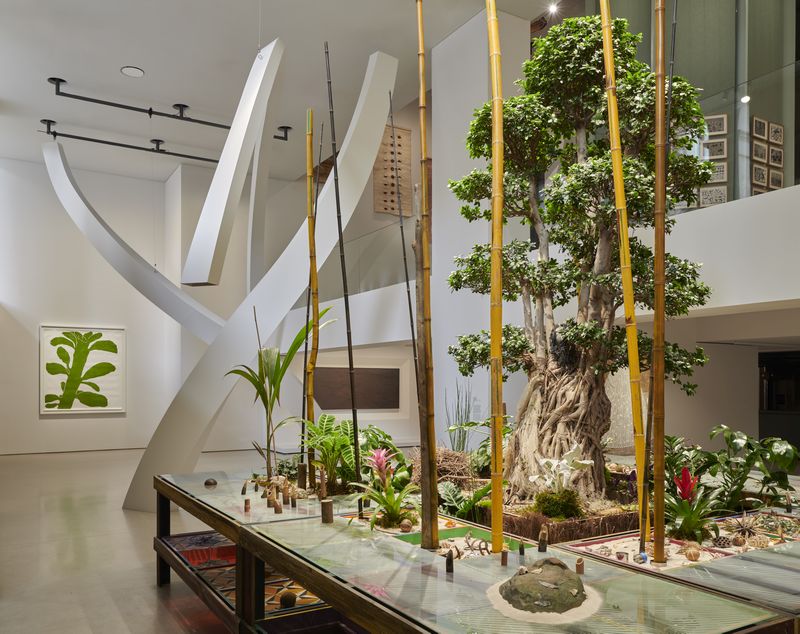
These 16 Artists Are the Biggest at U.S. Museums Right Now

This article presents a quarterly analysis of which living artists are most featured in temporary exhibitions across U.S. museums during September 2025. The author ranks artists based on the number and type of shows they appear in, prioritizing career retrospectives, dedicated exhibitions, and special commissions. The list is dominated by Black and Indigenous artists whose work addresses racism, colonialism, and nature, with Jeffrey Gibson topping the chart due to his Met facade commission, Broad show, and Venice Biennale U.S. Pavilion recreation. Other prominent artists include Firelei Báez, Rashid Johnson, Anila Quayyum Agha, and Ai Weiwei, the only non-U.S.-based artist on the list.

CARTIER FOUNDATION. A THIN LINE BETWEEN EXTRACTIVISM AND CULTURAL RECLAMATION

FUNDACIÓN CARTIER. UNA DELGADA LÍNEA ENTRE EXTRACTIVISMO Y REIVINDICACIÓN CULTURAL

The Cartier Foundation inaugurated its new Paris headquarters on October 25 with the exhibition "Exposition Générale." The curatorial approach and, most notably, the labyrinthine architectural design by Jean Nouvel have drawn criticism from the specialized press, described as disappointing and patchwork. The new space, a dense black cube in central Paris, represents a radical departure from the foundation's previous luminous, glass-walled hall, forcing a complete rethinking of how to present its 40-year collection.