filter_list Showing 6 results for "Zora Neale Hurston" close Clear
search
dashboard All 6 museum exhibitions 4article culture 2
date_range Range Today This Week This Month All
Subscribe

guerrilla girls feminist collective why so important 1234745911

The feminist collective Guerrilla Girls began its activism in May 1985 by wheat-pasting posters in SoHo, New York, that listed prominent male artists and revealed that their galleries showed 10 percent or fewer women artists. The group formed after the 1984 MoMA exhibition 'An International Survey of Recent Painting and Sculpture' included only 13 women out of 169 participants, sparking protests that failed to gain traction. For 40 years, the Guerrilla Girls have used statistics-driven, provocative posters to call out sexism and racism in galleries, museums, and the broader art world. This year, their anniversary is marked by retrospective exhibitions at the National Museum for Women in the Arts in Washington, D.C., the Getty Research Institute in Los Angeles, and the National Gallery of Bulgaria in Sofia.

superfine met museum costume institute black dandy 1234740801

The Metropolitan Museum of Art's Costume Institute will open "Superfine: Tailoring Black Style" on May 10, an exhibition tracing over 300 years of Black dandyism. The show features around a dozen paintings, fashions, works on paper, photography, sculpture, and decorative objects, including a 1758 portrait of Roch Aza, a ten-year-old enslaved boy from Martinique, depicted in elegant livery alongside his enslaver. The exhibition examines how well-dressed Black figures appeared in European art as symbols of their owners' wealth and status during the transatlantic slave trade, and how subsequent generations have reappropriated and subverted that imagery.

"The Great Camouflage" Rockbund Museum of Art / Shanghai

"The Great Camouflage" at the Rockbund Museum of Art (RAM) in Shanghai, curated by X Zhu-Nowell and Kandis Williams, is a multilevel exhibition that responds to global political and social exhaustion. Anchored in Black feminist thought and taking Suzanne Césaire's writings as a starting point, the show revisits revolutionary attitudes and builds new networks of solidarity across Asia, Africa, and Latin America, deliberately decentering Euro-American narratives. It features works by artists including Christine Tien Wang, Hao Jingban, and Wang Tuo, and highlights figures such as Amy Ashwood Garvey, Eslanda Robeson, Shirley Graham Du Bois, and Grace Lee Boggs.

The Armory Show puts spotlight on the American South

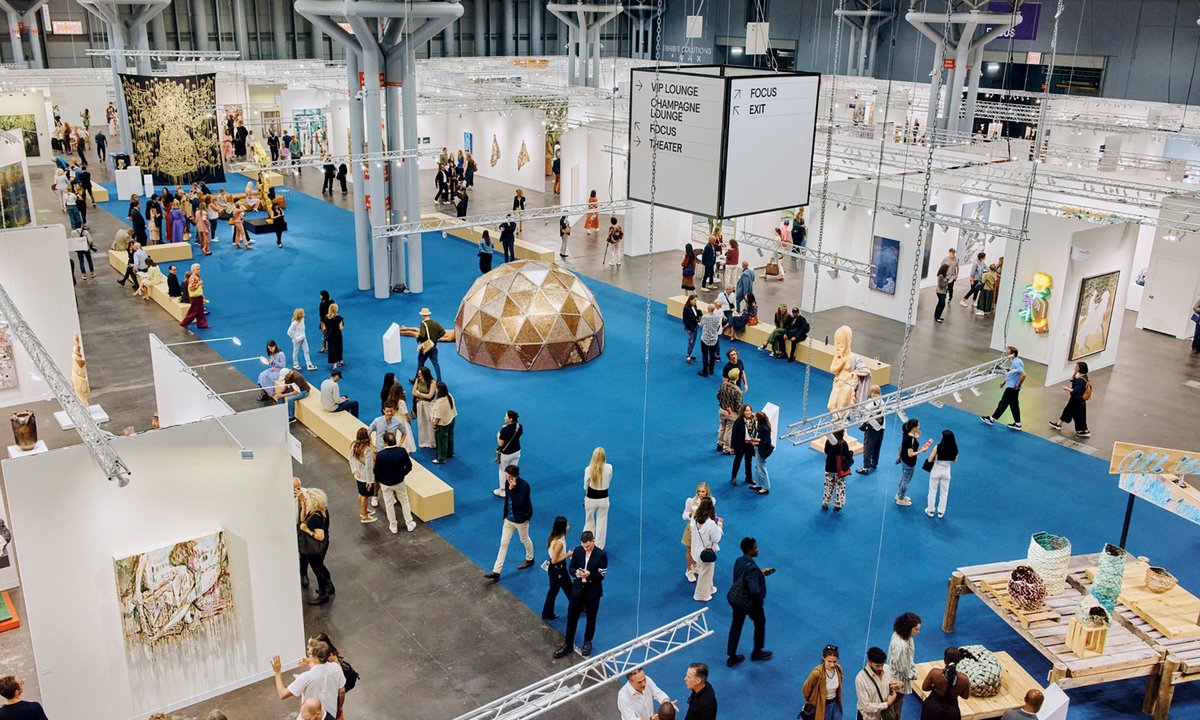
The Armory Show, New York's premier art fair, is dedicating its 2025 Focus section to artists and galleries from the American South, running September 4-7. Curated by Jessica Bell Brown, executive director of the Institute for Contemporary Art at Virginia Commonwealth University, the section features 13 galleries, including Martha's from Austin and Wolfgang Gallery from Atlanta, with works exploring themes of queer identity, Black communities, and Southern cuisine. The fair, now under director Kyla McMillan and owned by Frieze, aims to amplify the region as a nexus for diasporas and challenge preconceived notions about the South.

art kenturah davis los angeles artist studio

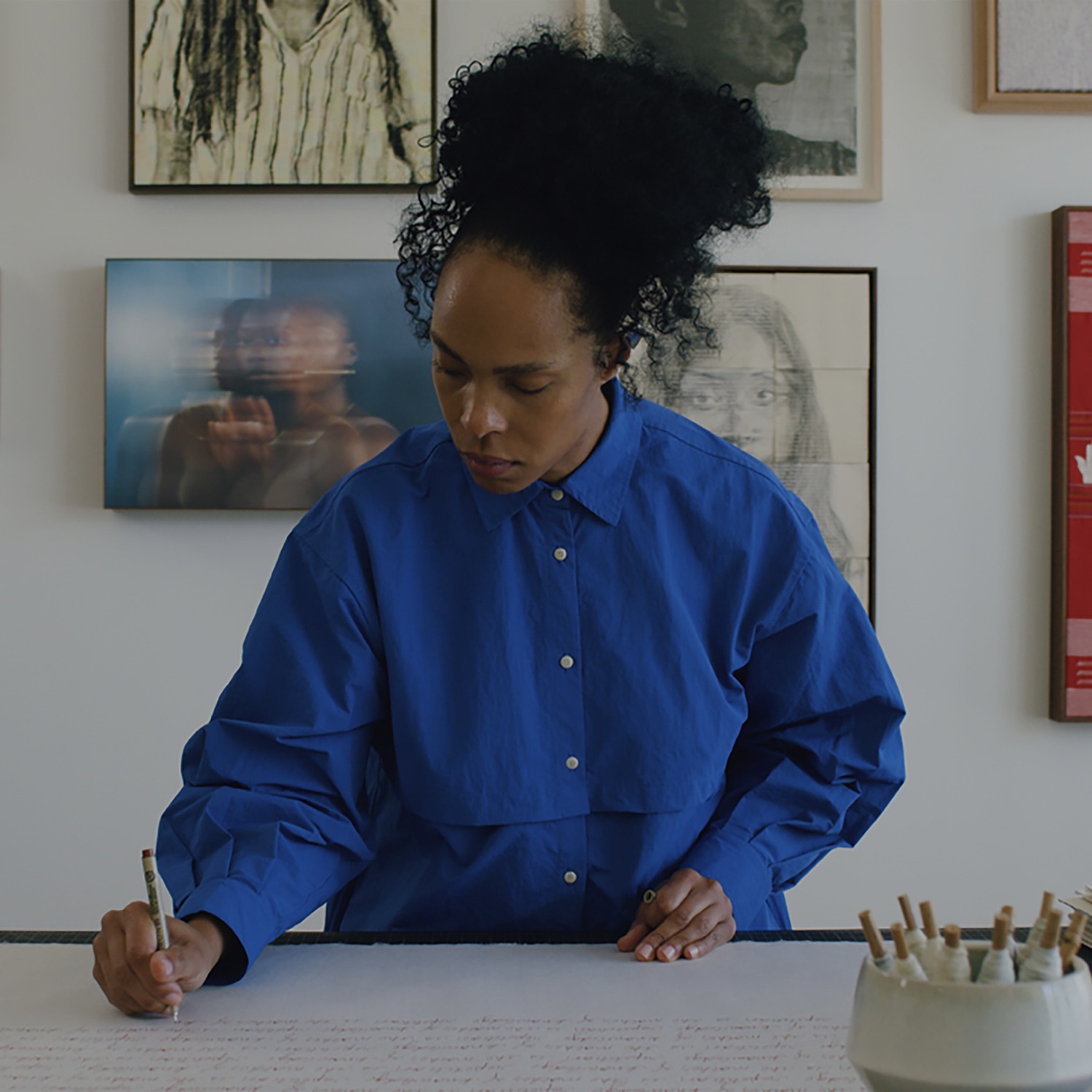
Kenturah Davis, a Los Angeles- and Accra-based artist known for large-scale drawings and carbon pencil rubbings that incorporate text, lost her Altadena home and studio in the Eaton fire last year. In response, she helped organize “Ode to ‘Dena,” a group show at the California African American Museum honoring the neighborhood, and is now launching Rest Stops, a restorative public art project and community garden aiming to establish 10 green spaces by 2027. She has also taken up pottery classes and rebuilt her studio practice in a new Altadena sanctuary.

‘The Queen of the Ghetto’ Gave New York’s Immigrant Community a Voice. A Century Later, It’s Re-emerging

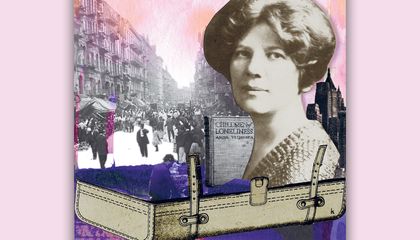
Anzia Yezierska, a Polish-Jewish immigrant who arrived in New York in 1890, defied traditional gender expectations to become a leading literary voice of the 1920s. Dubbed the 'Queen of the Ghetto,' she documented the raw struggles of immigrant women on the Lower East Side using a unique 'immigrant English' style that captured Yiddish idioms. After escaping a restrictive marriage and pursuing an education at Columbia University, she channeled her personal frustrations into stories of poverty, ambition, and the psychological toll of assimilation.