filter_list Showing 6 results for "abbas akhavan" close Clear
dashboard All 6 museum exhibitions 6
date_range Range Today This Week This Month All
Subscribe

5 Trends Shaping the 2026 Venice Biennale

The 2026 Venice Biennale has opened to the public, featuring the main exhibition 'In Minor Keys' conceived by the late Cameroonian Swiss curator Koyo Kouoh, who died unexpectedly in May 2025. Kouoh, the first African woman appointed to lead the Biennale, had her curatorial team—including Rasha Salti, Marie Hélène Pereira, and Gabe Beckhurst Feijoo—carry forward her vision of art as a 'shared and sustaining force.' The opening was weighted with politics and emotion.
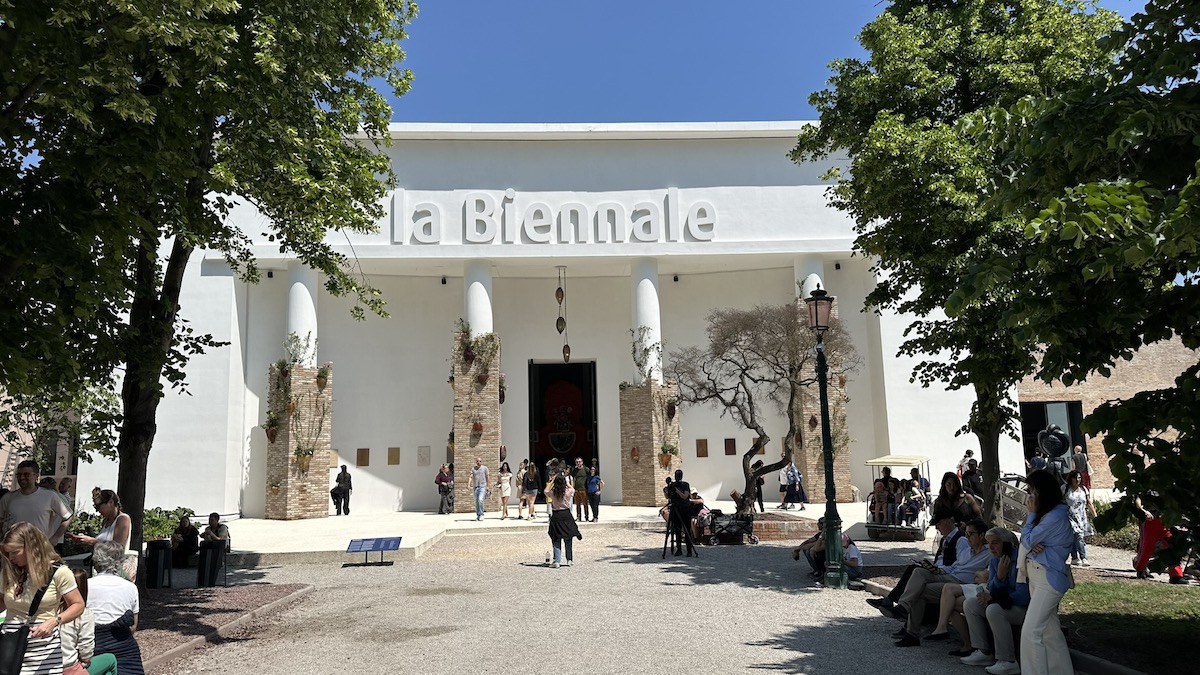
We visited the 2026 Venice Art Biennale: the exhibitions and pavilions you shouldn’t miss

The 2026 Venice Art Biennale has opened across the Giardini, Arsenale, and venues throughout the city, with geopolitics, climate collapse, and national identities dominating the exhibitions. Notable pavilions include Austria's "Seaworld Venice" by Florentina Holzinger, the Czech and Slovak Pavilion's "Il Silenzio della Talpa" by Jakub Jansa and Selmeci Kocka Jusko, India's "Geographies of Distance: remembering home" featuring multiple artists, and the Taiwan Pavilion's "Screen Melancholy" by Li Yi-Fan. The Russian Pavilion has become a focal point of controversy, with guards and empty beer bottles outside, and the Pussy Riot collective staging a protest nearby.

At the Venice Biennale, Canada’s entry blooms with unease

Montreal artist Abbas Akhavan's installation "Entre chien et loup" transforms the Canadian pavilion at the 2026 Venice Biennale into a living climate system, featuring a humid, Amazon-like environment with a pond of Victoria water lilies. The seeds were sourced from the Royal Botanic Gardens, Kew, and germinated at the Orto Botanico di Padova, with the lilies growing and blooming over the course of the biennale.

Ten Political Statements By Artists At The 2026 Venice Biennale

The 61st Venice Biennale opened with unprecedented political tension, set against the backdrop of the international jury's mass resignation, the death of curator Koyo Kouoh, Russia's closed pavilion, threats from the European Commission to withdraw funding, and Italy's culture minister boycotting the opening. The article highlights ten works and moments where art and power intersected most explicitly, including Alfredo Jaar's 'Red Room' installation in the Chilean pavilion confronting humanitarian crisis, and Ukraine's collateral event 'Still Joy' at Palazzo Contarini Polignac, which frames joy as an act of resistance amid war.

Venice Biennale 2026: The Pavilions Not to Be Missed

Biennale de Venise 2026 : les pavillons à ne surtout pas manquer

The 61st Venice Biennale, curated by Koyo Kouoh as an invitation to slow down and reconnect with emotions, features a constellation of contemplative and powerful proposals across the city. Notable national pavilions include the Holy See transforming a monastic garden into an immersive sound experience by Soundwalk Collective, Canada exploring colonial heritage through giant water lilies by Abbas Akhavan, and Austria electrifying the Giardini with radical performances by Florentina Holzinger. Other highlights include Spain dissecting collective memory through postcards, Poland imagining new forms of language between human and underwater worlds, and India's pavilion exploring notions of home.

The 10 best pavilions to see at the 2026 Venice Art Biennale. Artribune's top ten

I 10 migliori padiglioni da vedere alla Biennale d’Arte di Venezia 2026. La top ten di Artribune

Artribune presents its top ten must-see national pavilions at the 2026 Venice Biennale, which features a record 100 participating countries. The article highlights standout projects including Greece's escape room by Andreas Angelidakis critiquing nationalist populism, Belgium's participatory dance installation by Miet Warloop, and Canada's greenhouse-like pavilion by Abbas Akhavan exploring colonial botany. The Biennale, curated by Koyo Kouoh under the theme "In Minor Keys," is marked by last-minute jury resignations leading to public voting for the Golden Lions, as well as protests over the participation of Russia and Israel.