filter_list Showing 5 results for "american values" close Clear
search
dashboard All 5 museum exhibitions 4rate_review review 1
date_range Range Today This Week This Month All
Subscribe

Alma Allen’s US Pavilion Is One of the Emptiest Shows at the Venice Biennale

Alma Allen represents the United States at the 2026 Venice Biennale with a subdued, apolitical exhibition inside the US Pavilion. The show features roughly 25 sculptures—mostly in bronze, wood, and stone—many titled "Not Yet Titled," and deliberately avoids overt political messaging. This marks a stark departure from the previous two US pavilions, curated by Simone Leigh (2022) and Jeffrey Gibson (2024), which directly confronted colonialism and empire. The Trump administration’s call for proposals explicitly asked for work that "reflects and promotes American values," and Allen’s presentation has been criticized as safe, unremarkable, and lacking the incisive edge of contemporary American art.

Alma Allen Offers a Quiet Vision in Venice—Even as Questions Swirl the U.S. Pavilion

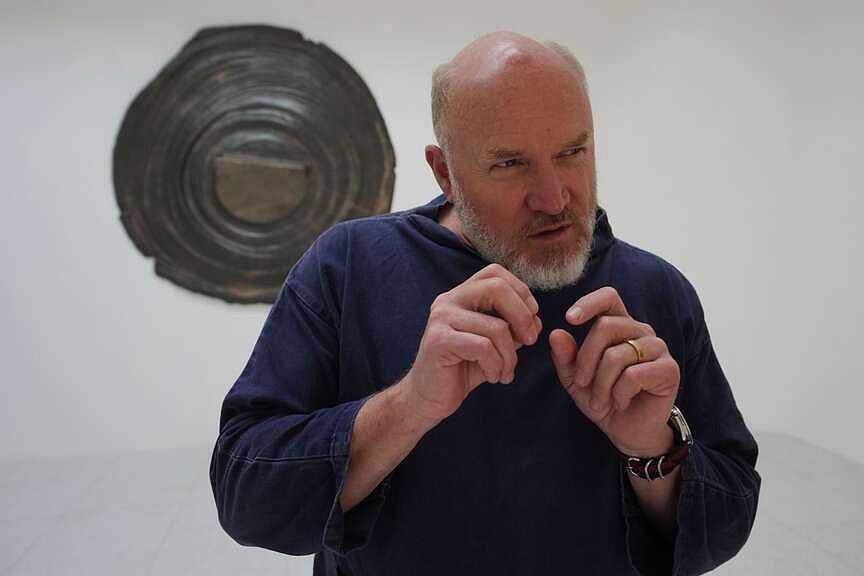
Alma Allen's exhibition "Call Me the Breeze" has opened at the U.S. Pavilion for the 61st Venice Biennale. The Utah-born sculptor presents a pared-down, whimsical show that contrasts with the bombastic work of his predecessors, grouping new and old pieces to explore themes of conflict, mourning, and transcendence inspired by Hieronymus Bosch's *Visions of the Afterlife*. The exhibition was produced hurriedly over a few months, and Allen, who typically leaves his works untitled, felt compelled to explain his art for the first time in 30 years amid controversy surrounding his commission.

An outsider artist takes the world's biggest stage with the US Pavilion at the Venice Biennale

U.S. artist Alma Allen, a self-taught sculptor from Utah who works in Mexico, has been selected to represent the United States at the Venice Biennale with his exhibition "Call Me the Breeze" at the U.S. Pavilion. The selection process was fraught and opaque, with institutions declining to bid for the commission due to concerns about administration politics after the open call removed diversity, equity and inclusion language in favor of promoting "American values." A prior proposal for artist Robert Lazzarini fell apart after its institutional sponsor backed out, and Allen's project was quickly assembled with the American Arts Conservancy as sponsor and Jeffrey Uslip as curator. Allen, who has lived outside the critical art world for three decades, created a bronze evil eye for the pavilion's exterior and a headless sheep sculpture as a self-portrait of an outsider.

US artist takes stage in Venice exhibition

U.S. artist Alma Allen, a self-taught sculptor based in Mexico, has mounted an exhibition titled "Call Me the Breeze" at the U.S. Pavilion for the Venice Biennale after a fraught selection process. The process, which removed language on diversity, equity, and inclusion in favor of promoting "American values," caused several institutions to withdraw from vying for the commission. Allen created a bronze evil eye for the pavilion's exterior to ward off bad vibes, and his show includes a dozen new works alongside pieces from the last 20 years. The prior proposal for artist Robert Lazzarini fell apart after its institutional sponsor backed out, leading to a new project with the American Arts Conservancy as sponsor and Jeffrey Uslip as curator.

The Smithsonian National Museum of African Art Opens First & Largest Exhibition of LGBTQ+ African Art

The Smithsonian National Museum of African Art has opened "Here: Pride and Belonging in African Art," the largest exhibition of LGBTQ+ African art to date, featuring nearly 60 artworks by 30 queer artists from across Africa and its diasporas. Curated by Kevin D. Dumouchelle and Serubiri Moses, the exhibition was originally scheduled to coincide with WorldPride DC 2025 but was delayed to early winter 2026, shortly after President Donald Trump issued an executive order targeting the Smithsonian for material deemed "divisive ideology," including discussions of gender identity. Museum officials attributed the postponement to budget and fundraising challenges rather than political pressure.