filter_list Showing 9 results for "art and activism" close Clear
search
dashboard All 9 museum exhibitions 5article news 2article culture 1candle obituary 1
date_range Range Today This Week This Month All
Subscribe

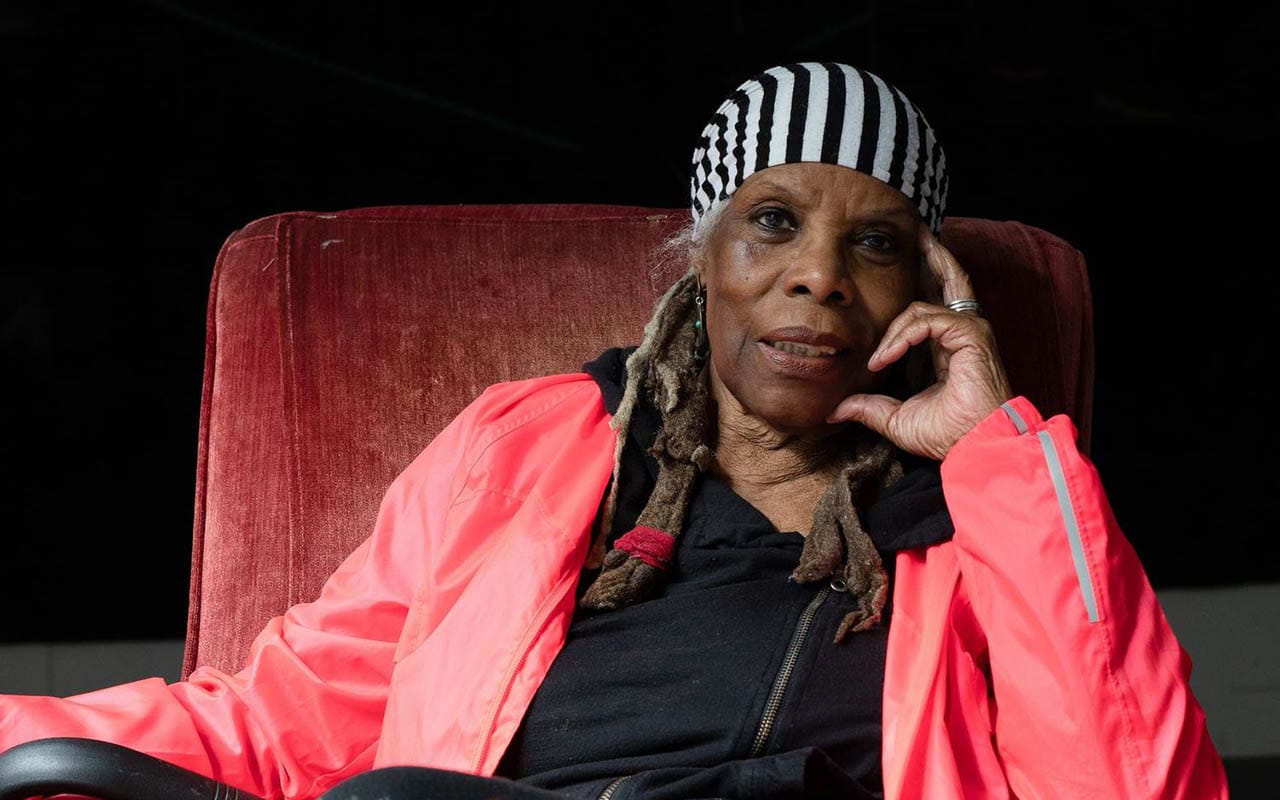
Mary Lovelace O’Neal, Painter and Civil Rights Luminary, Dies at 84

Mary Lovelace O’Neal, a painter, educator, and Civil Rights activist, died on May 10 at age 84 in Mérida, Mexico. Known for her monumental canvases and inventive “lampblack” works, she moved fluidly between abstraction and figuration, using layers of black pigment to assert Blackness and presence. Her career included studies at Howard University and Columbia University, activism with the Student Nonviolent Coordinating Committee, and connections to the Black Arts Movement.
Picture gallery in transformation: recent gifts

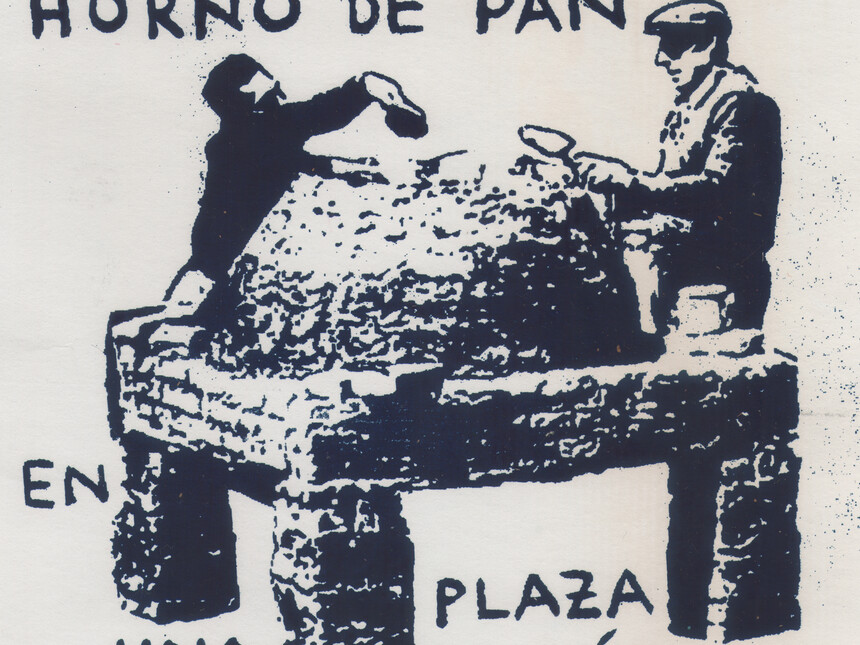
MASP — Museu de Arte de São Paulo Assis Chateaubriand will present the exhibition "Picture gallery in transformation: recent gifts" starting May 15, as part of its Latin American histories series. The show features two sets of silkscreen prints recently added to the museum’s collection: 51 prints (2002–2007) by the Argentine collective Taller Popular de Serigrafía, which combined art and activism during the 2001 economic crisis, and the series "Ink and blood: 1968–2009" by Mexican artist Abraham Cruzvillegas, comprising 41 facsimiles of protest ephemera from Latin American social movements. The exhibition is curated by MASP artistic director Adriano Pedrosa, curator Regina Teixeira de Barros, and curatorial assistant Matheus de Andrade.

Art as Collective Responsibility: Hestia Artistic Journey Grant Programme Winners

The Hestia Artistic Journey National Grant Programme (Artystyczna Podróż Hestii) has announced the winners of its third edition, selecting eight projects from nearly 200 applications across Poland. The programme, subtitled "Opening Time" (Czas otwarcia), supports artists and cultural institutions planning exhibitions that address collective responsibility for global issues. Winners include "Ślady pamięci" by Fundacja Szałfynster in Katowice, exploring memory and dementia; "Głodne drzewa/Thirsty Trees" by Przemek Branas at the Central Museum of Textiles in Łódź, critiquing human greed through eucalyptus metaphors; and "Tymczasowa pława" by Norbert Delman at the State Art Gallery in Sopot, an installation on ecocide using a sunken fishing boat and amber. Each project will present an exhibition between July 2026 and the last quarter of 2027, with increased funding due to exceptional submissions.

Basel Abbas & Ruanne Abou-Rahme: Archivists and Activists

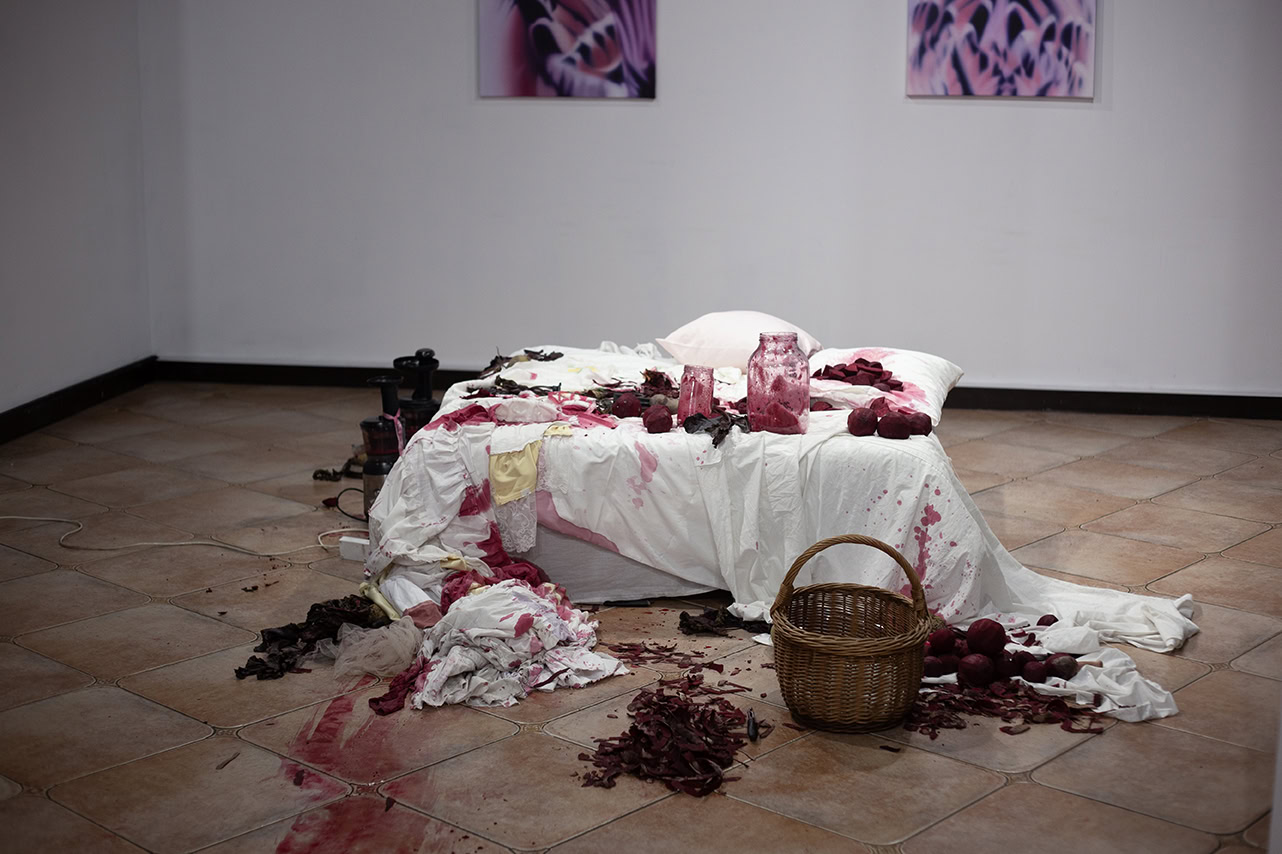
New York- and Ramallah-based Palestinian artists Basel Abbas and Ruanne Abou-Rahme present *Prisoners of Love: Until the Sun of Freedom* (2025), an hour-long four-channel film installation at The Bell/Brown Arts Institute in Providence. The work layers psychedelic imagery of figures in nature with spoken and written testimonies from Palestinians formerly detained by Israeli authorities, exploring themes of incarceration, surveillance, and resistance through fragmented montage and poetic text. The exhibition also includes drawings by Abou-Rahme’s father and printed screenshots of reflections on the genocide in Gaza.

I'm a punk artist, I don't give a damn

"Ich bin Punk-Künstlerin, ich geb einen Scheiß drauf"

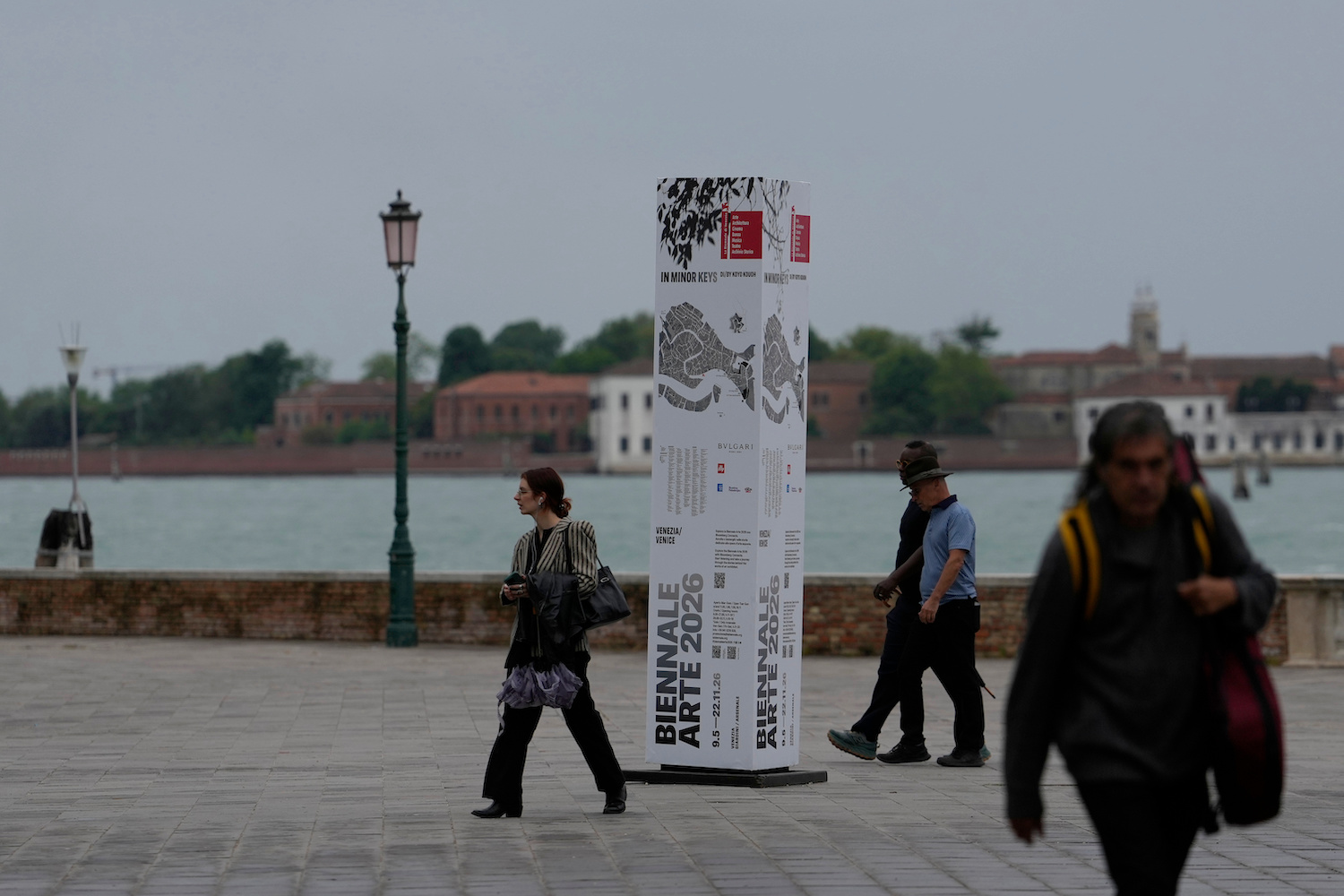
During the opening week of the Venice Biennale, the Russian activist and Pussy Riot member Nadya Tolokonnikova staged a protest against the Russian pavilion, wearing pink balaclavas and chanting slogans like "Blood is Russia's Art." Meanwhile, Florentina Holzinger's Austrian pavilion, subtitled "I Live in Your Piss," drew massive crowds with its scatological installations and extreme performances, causing wait times of up to two and a half hours. German media critics have widely covered the Biennale's heightened political tone, with debates over boycotts of Russia and Israel, and the tension between art and activism.

Where to go for the next scandal?

Wo bitte geht's zum nächsten Skandal?

The article reports on the 2024 Venice Biennale preview days, where the atmosphere is dominated by political protests, media stunts, and social-media pressure rather than the art itself. Incidents include a solidarity drone choir for Gaza, a Pussy Riot and FEMEN protest at the Russian Pavilion, and a planned demonstration near the Israeli Pavilion, all amplified by PR agencies and WhatsApp alerts. A journalist describes being pressured by editors to cover scandals and political controversies instead of art reviews, which they say no longer attract clicks.

Disobedience Archive (Canopy for Broken Time) In Dialogue with Raqs Media Collective at Migros Museum für Gegenwartskunst, Zürich

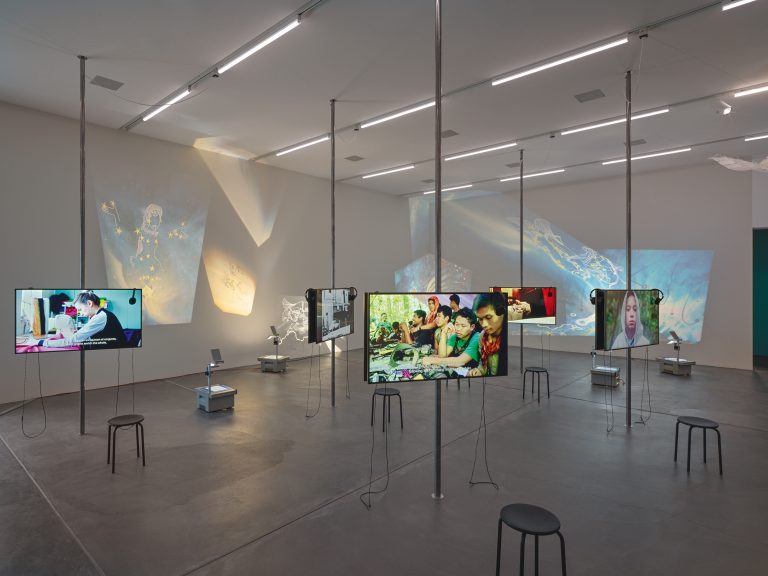
The Disobedience Archive, a mobile video archive initiated by Marco Scotini in 2005, is presented in dialogue with Raqs Media Collective at the Migros Museum für Gegenwartskunst in Zürich. The archive contains over one hundred documentary and art films at the intersection of art and activism, documenting forms of resistance, social struggle, and collective self-organization.

From Eurovision to the Venice Biennale, culture contests are being overshadowed by politics

The Venice Biennale and Eurovision Song Contest are being overshadowed by political controversies rather than artistic merit. At the Venice Biennale, the Russian pavilion opened for press previews for the first time since the Ukraine invasion, a decision that may cost the festival €2m in EU funds. The Israeli pavilion will open despite protests from 200 artists and curators, while the South African pavilion will remain empty after its government blocked an artist's tribute to a Palestinian poet. The Iranian pavilion is also shut, and the awarding jury has resigned en masse, meaning no Golden or Silver Lion awards will be given for the first time in 40 years. Similarly, Eurovision's 70th anniversary is dominated by five countries boycotting over Israel's participation, with little focus on the music.

Pavilions of the Venice Biennale go on strike

Pavillons der Venedig-Biennale werden bestreikt

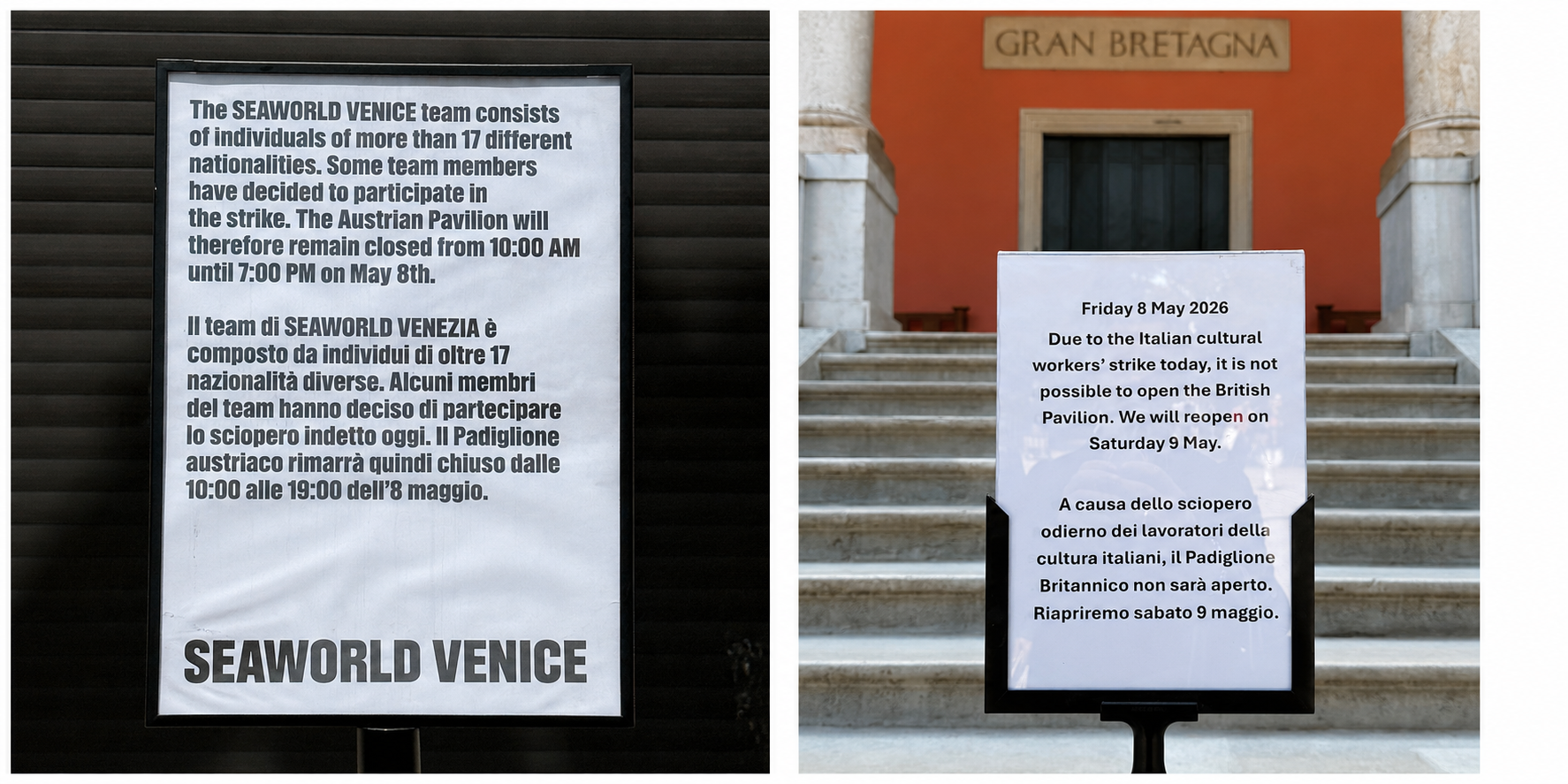
Cultural workers and participants of the Venice Biennale went on strike on Friday, protesting Israel's participation in the art exhibition. Organized by the Art Not Genocide Alliance (ANGA) alongside several cultural groups and Italian grassroots unions, the 24-hour walkout led to the closure of several national pavilions on the final preview day. A rally was planned near the Arsenale grounds. The strike aims to oppose the "normalization of genocide in culture" and poor working conditions at the Biennale, following an earlier open letter signed by over 230 artists and curators demanding the exclusion of the Israeli pavilion. Israel is represented by sculptor Belu-Simion Fainaru, who opposes cultural boycotts and advocates for dialogue. The Biennale's leadership has distanced itself from the strike, emphasizing adherence to regulations and support for freedom of speech and pluralism.