
filter_list Showing 3 results for "barbican london" close Clear
search
dashboard All 3 museum exhibitions 3
date_range Range Today This Week This Month All
Subscribe

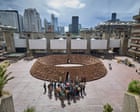
‘It smells like my ranch!’ Diva of dirt Delcy Morelos and her amazing 30-tonne earthworks

The article profiles Colombian artist Delcy Morelos and her immersive earthwork installations, focusing on two major works: 'The Womb Space' in Mexico City, which has drawn over 60,000 visitors in its final month, and 'Origo', a new 24-metre-wide outdoor pavilion opening at the Barbican in London. Morelos creates vast soil sculptures sourced from specific regions, evoking sensory experiences of smell, touch, and memory, and invites visitors to contemplate their connection to the earth. The piece includes her reflections on Andean cosmovision, the sacredness of nature, and her 14-year artistic inquiry into soil as a humble yet life-sustaining material.

delcy morelos barbican london commission

The Barbican in London will present a major commission by Colombian artist Delcy Morelos, her first in the United Kingdom, from May 15 to July 31. The centerpiece is an oval-shaped pavilion measuring roughly 78 feet in circumference, constructed from soil, clay, spices, and plant materials, sited in the Barbican's outdoor Sculpture Court. It is the third public-realm commission by the Barbican and the first in its Sculpture Court. The project is supported by the London-based Bukhman Foundation, founded by Anastasia Bukhman, a new addition to ARTnews's Top 200 Collectors list.

Comment | Exhibitions comparing artists can be problematic, but the Barbican brings Giacometti, Bhabha and Hatoum together with perfect judgement

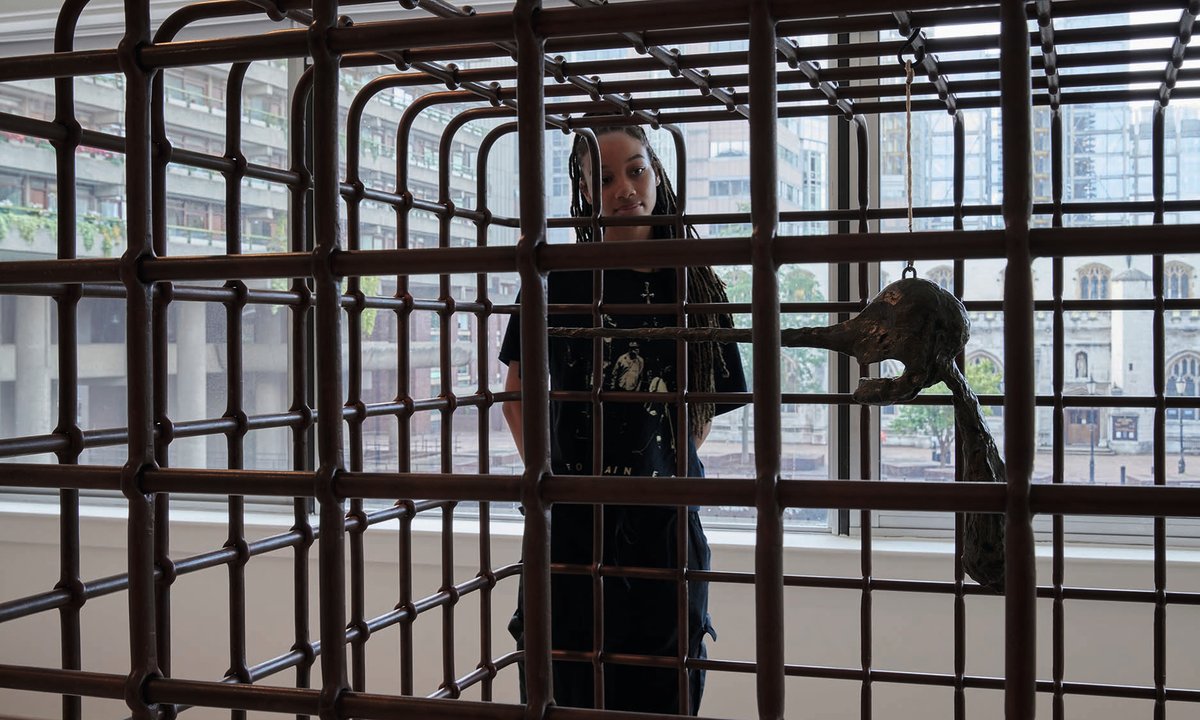
The Barbican in London has opened two new exhibition spaces in a redesigned former restaurant, showcasing the work of Alberto Giacometti alongside contemporary artists Huma Bhabha and Mona Hatoum. Curated by Shanay Jhaveri and Émilie Bouvard, the shows pair Giacometti's sculptures with Bhabha's and Hatoum's works, drawing formal and thematic connections without forcing comparisons. The exhibitions highlight shared preoccupations with the human body, vulnerability, and resilience, while allowing each artist's distinct approach—Giacometti's figuration versus Hatoum's found-object manipulation—to remain clear.