filter_list Showing 10 results for "basma al-sharif" close Clear
search
dashboard All 10 article policy 5article news 3museum exhibitions 2
date_range Range Today This Week This Month All
Subscribe

"Du bist nun in die ewigen Jagdgründe der Kunst entschwunden"

This week's art news roundup covers several stories: Jonathan Meese publishes an obituary for his mother Brigitte Meese in Der Spiegel, describing her as a central figure in his life and work. Pussy Riot seeks to take over the Russian Pavilion at the Venice Biennale. The European Media Art Festival (EMAF) in Osnabrück faces controversy over antisemitism allegations linked to Palestinian-American filmmaker Basma al-Sharif, leading the city and state government to distance themselves from the festival. In the NZZ, Christian Wildhagen reports on conflicts over official political portraits, citing examples like Swiss councilor Martin Neukom rejecting paintings and Donald Trump criticizing his portrait. Art historian Horst Bredekamp pays tribute to Italian philosopher Federico Vercellone (1955–2026) in the FAZ, highlighting his theory of the 'self-activity of form.'

kunstakademie duesseldorf basma alsharif jewish groups 1234770067

Three Jewish groups issued an open letter to the Kunstakademie Düsseldorf, a prominent German art school, calling for the cancellation of a lecture by Palestinian artist and filmmaker Basma Al-Sharif, scheduled for January 21. The groups alleged, without providing proof, that Al-Sharif's past events and social media posts—including one referring to Israel as a "Zionist entity" and stating "The lie of #neveragain is over"—trivialized terrorism and constituted antisemitism. The Kunstakademie Düsseldorf declined to cancel the event, affirming its commitment to free dialogue and noting that Al-Sharif was invited based on her CV, while also condemning the Hamas terrorist attack as a grave crime.

Foreign Office Reprimands Goethe-Institut for Exhibition

Auswärtiges Amt rügt Goethe-Institut für Ausstellung

The German Foreign Office has formally reprimanded the Goethe-Institut for its involvement in an exhibition in Vilnius, Lithuania, featuring Palestinian-American artist Basma al-Sharif. The ministry stated that events organized by German cultural intermediaries must leave no doubt about the government's firm rejection of antisemitism and hatred of Israel, and demanded greater care in planning and conceptualizing such events with partners. The exhibition, "Bells and Cannons - Contemporary Art in Times of Militarization," was a collaboration between the Goethe-Institut Vilnius, the Contemporary Art Centre Vilnius, and the Berlin Academy of Arts.

Prominent German Art Foundation Accuses Top Culture Official of ‘Attempted Intimidation’

Jurors from the Kunstfonds Foundation, a major German contemporary art funding body, have accused Minister of State for Culture Wolfram Weimer of attempted intimidation and political interference. The conflict erupted after Weimer requested the names of the independent jury members, a move the foundation views as a threat to artistic freedom. This follows a separate controversy where Weimer reportedly consulted domestic intelligence to exclude bookstores with left-wing leanings from a national award.

University of Richmond Museums kicks off a new season with immersive exhibitions and films

The University of Richmond Museums has launched a new season with three exhibitions at the Harnett Museum of Art. The centerpiece is 'Politics of Place,' a rotating film program curated by professor Jeremy Drummond, featuring works by nine contemporary filmmakers and two collectives exploring identity and power through geography. Other shows include a newly commissioned installation by sculptor Abigail DeVille examining Black mental health care, and 'Black Work: Absence/Absorption,' a group exhibition investigating the material and conceptual nature of the color black.

Berlin Atonal, the first biennial rooted in music and sound, pushes the boundaries of what ‘art’ can mean

Berlin Atonal, recently recognized by the Biennial Foundation as the first biennial rooted in music and sound, defies conventional categories of festival and exhibition. Held in the decommissioned Kraftwerk power station, the event prioritizes sound as a central art form, with artists like Billy Bultheel, Anne Imhof, and Basma al-Sharif creating immersive, site-specific works. The festival sold out on Resident Advisor, reflecting growing demand for experimental sound in visual culture settings.

Islamic Futurism Here and Now

Hyperallergic's daily newsletter highlights several key art world stories, including a protest by nearly 200 artists, curators, and staff at the 61st Venice Biennale calling for Israel's exclusion from the event. It also features a guide to New York's spring art fairs, a new exhibition on Frida Kahlo, a campaign against a Palestinian artist in Germany, and a profile on artists advancing Islamic Futurism through calligraphy and installation.

When a Palestinian Artist Asserts Her Own Humanity

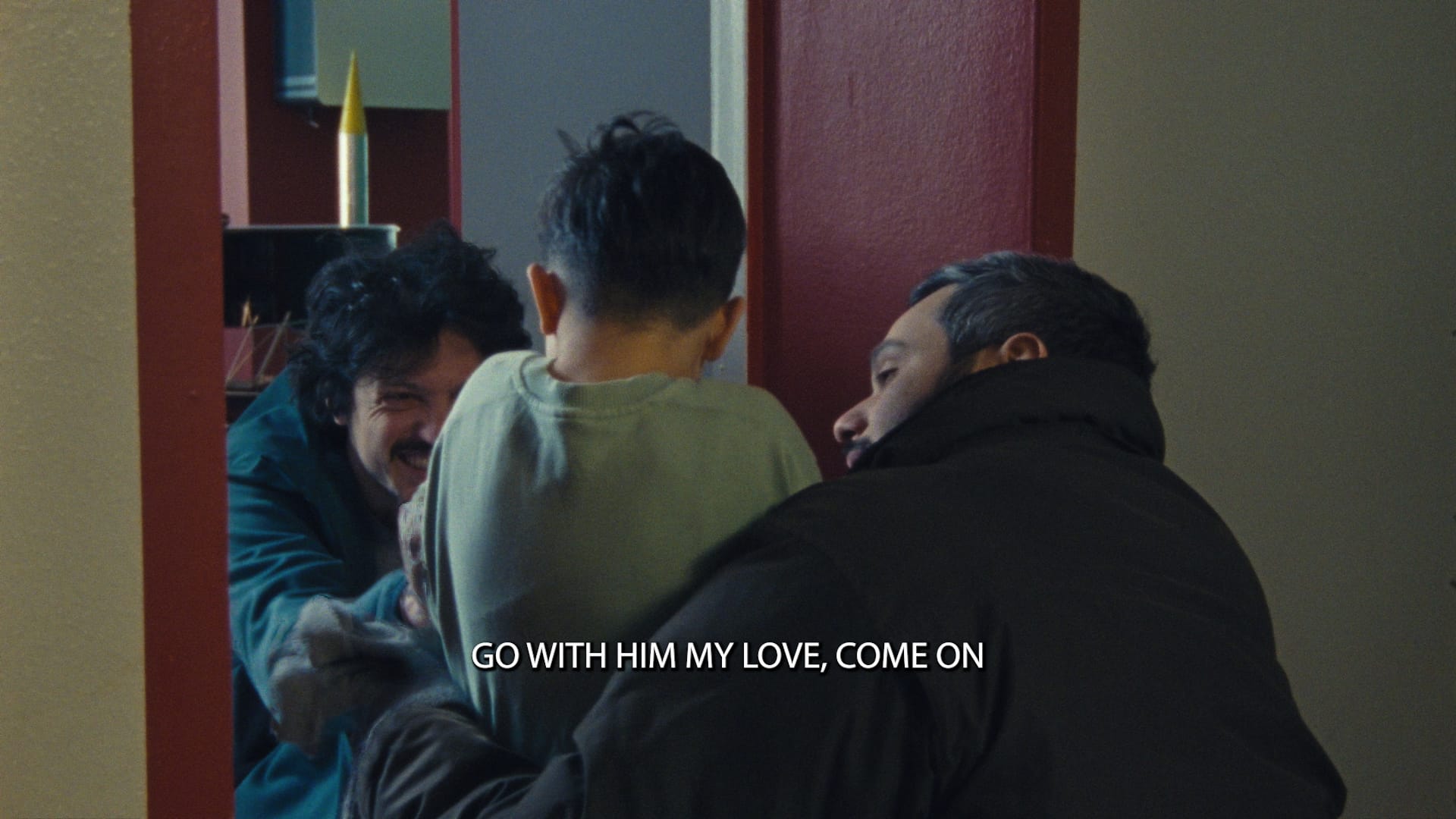
Palestinian artist Basma al-Sharif faced a coordinated smear campaign and threats after being invited to screen her film "Morgenkreis" at the Kunstakademie Düsseldorf. The controversy erupted not over the film's content, but over her social media posts referencing Palestinian resistance and historical injustices, leading to demands from public officials and advocacy groups to cancel the event.

What is Art Allowed to Do?

Was darf die Kunst?

German Minister of State for Culture Wolfram Weimer has sparked a heated debate over artistic freedom after excluding three bookstores from the German Bookstore Prize due to undisclosed intelligence reports. The controversy has escalated into a broader confrontation with cultural institutions, highlighted by the Berlin Volksbühne's public criticism and Weimer's subsequent refusal to participate in a scheduled panel discussion. This incident follows a string of high-profile disputes regarding political expression in the arts, particularly concerning the Berlinale and documenta fifteen.

Why Do the Women Have to Be Naked?

"Warum müssen die Frauen nackt sein?"

A series of cultural controversies highlight growing tensions between artistic freedom and political pressure. In Germany, cultural minister Wolfram Weimer faces criticism for opaque funding decisions and alleged interference in jury processes, with critics arguing this undermines artistic freedom and free speech. Simultaneously, the European Media Art Festival in Osnabrück defends filmmaker Basma al-Sharif against accusations of antisemitism, illustrating how cultural funding can become a test of political ideology.