
filter_list Showing 3 results for "black identity in art" close Clear
search
dashboard All 3 museum exhibitions 2rate_review review 1
date_range Range Today This Week This Month All
Subscribe

Ruminations on Rashid Johnson’s “A Poem for Deep Thinkers”

The article is a reflective review of Rashid Johnson's exhibition "A Poem for Deep Thinkers" at the Modern Art Museum of Fort Worth. The author describes standing before Johnson's work "Falling Man" (2016), a piece incorporating broken mirrors, burned wood, and personal objects like a copy of Harry Haywood's "Black Bolshevik" and shea butter, which prompts meditations on visibility, identity, and Frantz Fanon's "Black Skin, White Masks." The review also examines Johnson's large-scale installation "Antoine's Organ" (2016/2026), which fills a gallery typically reserved for Ellsworth Kelly's minimalist canvases, transforming the space with scaffolding, plants, books, and video monitors.
New Chrysler exhibition at NSU puts Black identity front and center

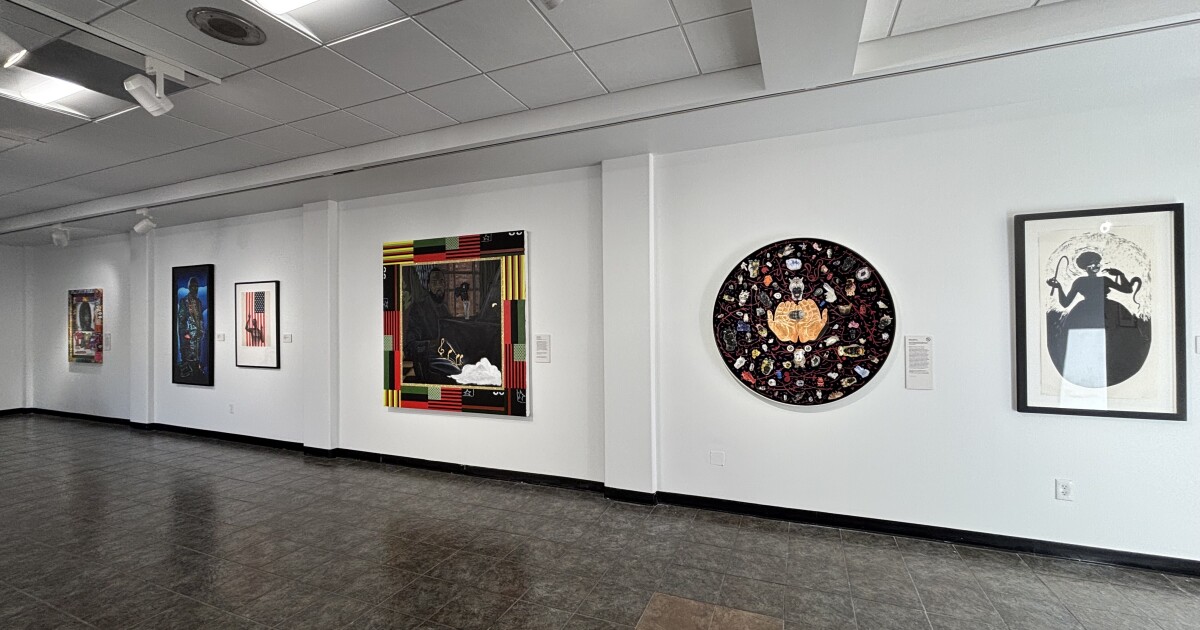
The James Wise Gallery at Norfolk State University has unveiled "Define Yourself!", a traveling exhibition organized in partnership with the Chrysler Museum of Art. Inspired by James Baldwin’s "The Fire Next Time," the show features 15 works by artists including Kara Walker, Emma Amos, and Carl Van Vechten that explore themes of Black identity, media representation, and double consciousness. The initiative is part of the Atlantic Coast Cohort, a program funded by the Art Bridges Foundation to share museum collections with historically Black colleges and universities (HBCUs).

Consequences of Being and the Process of Becoming.

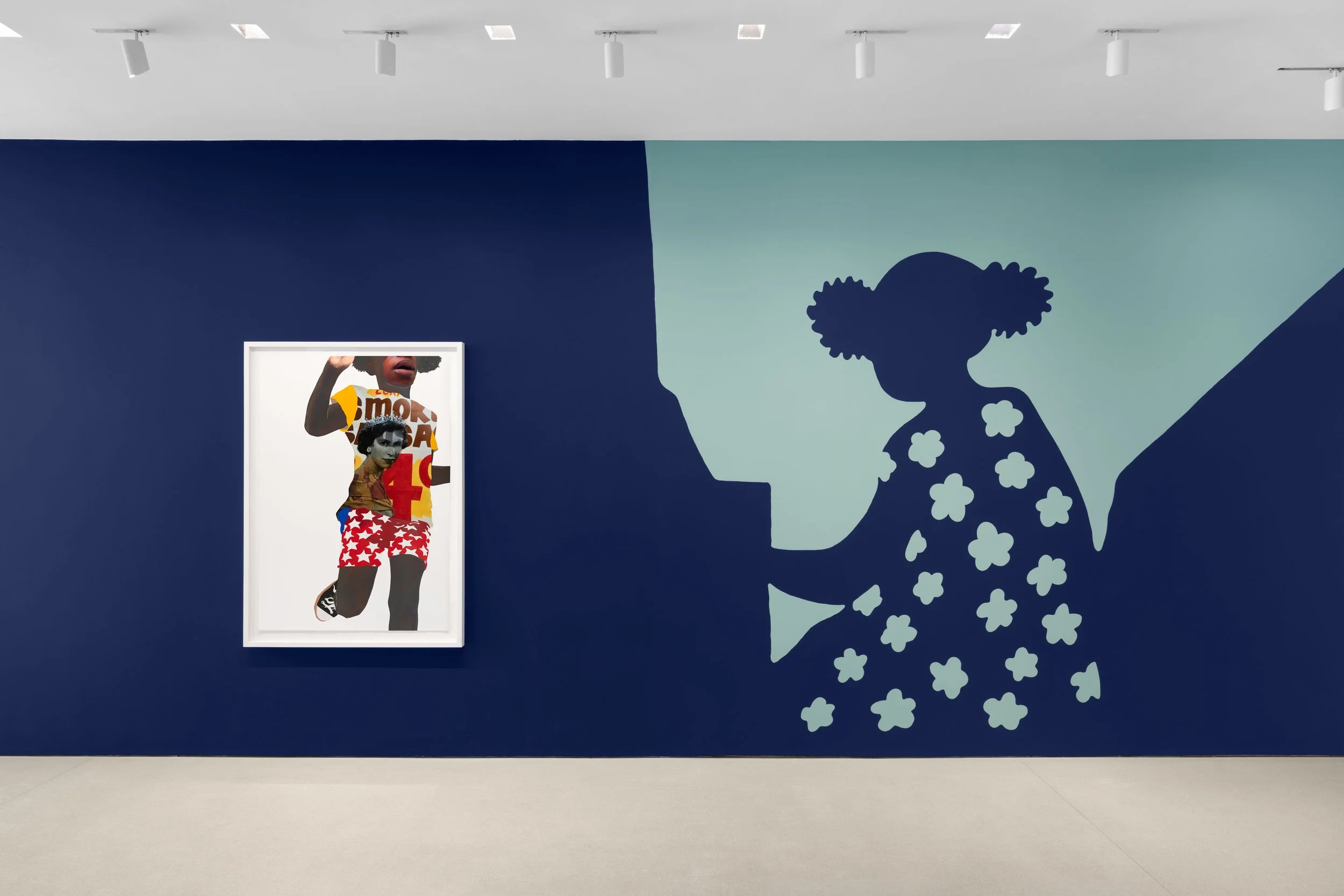
Deborah Roberts’s solo exhibition, 'Consequences of Being,' at The FLAG Art Foundation showcases a significant evolution in her practice, featuring new large-scale paintings, works on paper, and her debut in ceramic sculpture. Her signature collage-based figures are presented as fragmented, composite bodies that challenge fixed notions of Black identity and subjecthood. By blending archival imagery with vernacular signage, Roberts explores how colonial legacies and historical narratives continue to influence the perception of Black bodies across the globe.