
filter_list Showing 2 results for "exhibition spaces" close Clear
search
dashboard All 2 museum exhibitions 2
date_range Range Today This Week This Month All
Subscribe

Between Ritual and Institution: Andrea Canepa's Interventions in Spain

ENTRE EL RITO Y LA INSTITUCIÓN: LAS INTERVENCIONES DE ANDREA CANEPA EN ESPAÑA

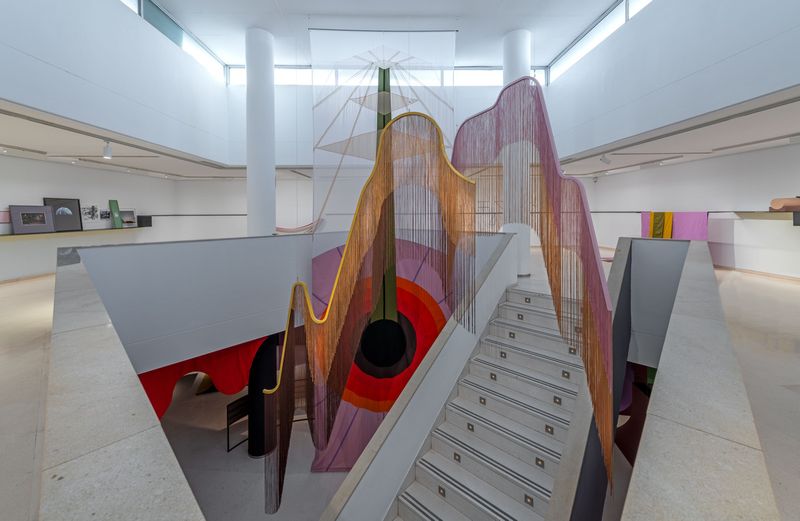
Andrea Canepa, a Peruvian artist born in 1980, has installed "Fardo" at the Palacio de Cristal in Madrid's Parque del Retiro, running from January 13, 2026 to January 1, 2027. The work wraps the building's perimeter in a printed fabric bearing patterns from Paracas funerary textiles, a pre-Columbian culture from southern Peru. Created during the palace's ongoing restoration (which began in 2023), the installation challenges the building's colonial history—it was built for the 1887 Exhibition of the Philippine Islands—by introducing indigenous visual and ritual references. Canepa also presented "Entre lo profundo y lo distante" at the IVAM in Valencia until April 12, 2026, which uses Andean huacas (sacred spaces) to propose a non-linear relationship between time, body, and space. Both works transform passive contemplation into active, bodily participation, using ritual as a means to reorganize the exhibition experience.
The Italian Way of Symbolism in the Exhibition at the Fondazione Magnani-Rocca

La via italiana del Simbolismo nella mostra alla Fondazione Magnani-Rocca

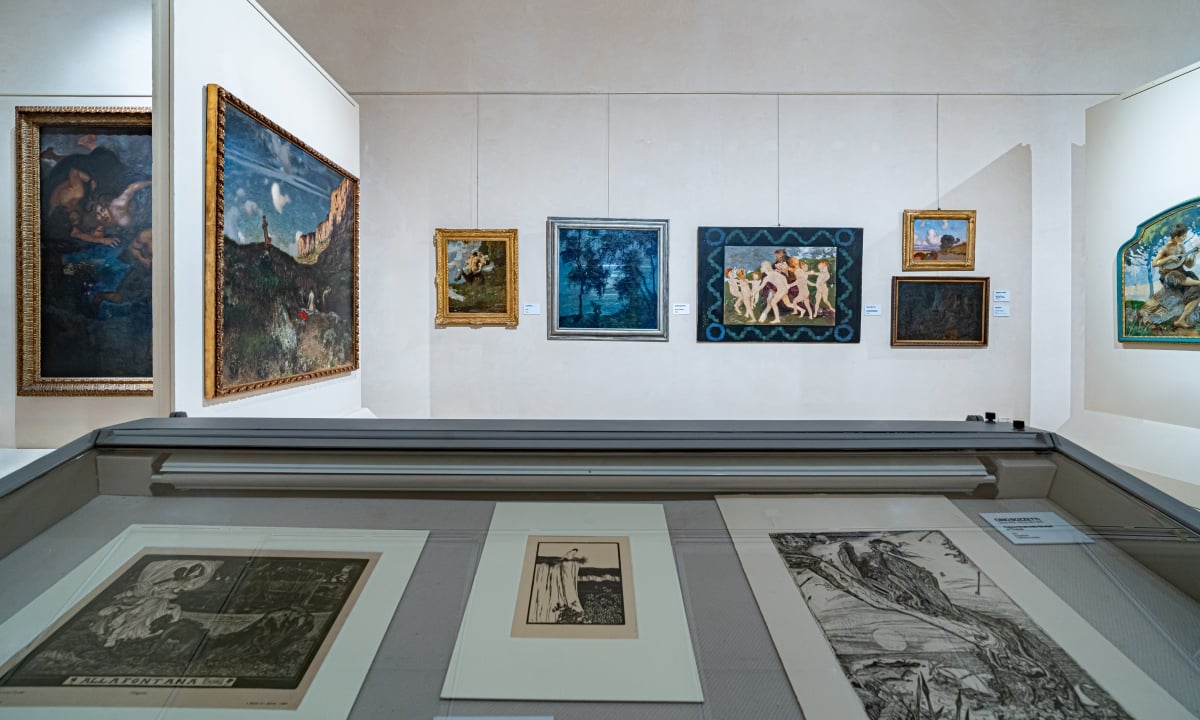
The Fondazione Magnani-Rocca in Mamiani di Traversetolo, Parma, recently made headlines due to a dramatic theft targeting its permanent collection. Despite the incident, the museum's temporary exhibition spaces remain unaffected, and the show "Simbolismo in Italia" (Symbolism in Italy), curated by Francesco Parisi, continues without disruption. The exhibition aims to update critical discourse on Symbolism, a movement that spread across Europe from the 1880s to the early 1900s and arrived in Italy with a distinct, often tradition-rooted character. It features works by artists such as Cesare Saccaggi, Giulio Aristide Sartorio, and Adolfo Wildt, organized into thematic sections exploring literary sources, mythological landscapes, and the dual nature of femininity.