filter_list Showing 6 results for "foreigners everywhere" close Clear
dashboard All 6 museum exhibitions 5article news 1
date_range Range Today This Week This Month All
Subscribe

Two Brazilian curators selected to organise 2027 Bienal de São Paulo

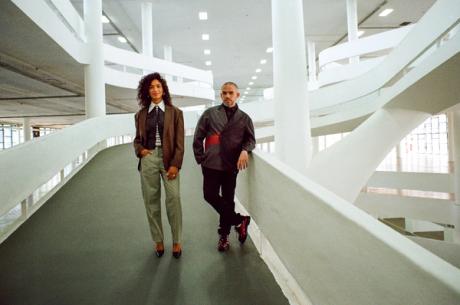
The Fundação Bienal de São Paulo has appointed Brazilian curators Amanda Carneiro and Raphael Fonseca as chief curators for the 2027 Bienal de São Paulo, Latin America's largest and longest-running visual arts event. Carneiro, a curator at the Museu de Arte de São Paulo (MASP) since 2018, also organized the main exhibition at the 2024 Venice Biennale. Fonseca, based in Lisbon, works at Culturgest, serves as curator-at-large for Latin American art at the Denver Art Museum, and is curating the Taiwan Pavilion at the 61st Venice Biennale. The event will take place at the Pavilhão Ciccillo Matarazzo in Ibirapuera Park, with further details expected in coming months.

Venice Biennale 2026: How Do You Critique a Posthumous Exhibition?

The article, published by ArtReview, examines the upcoming 61st Venice Biennale (2026), titled *In Minor Keys*, which was conceived by artistic director Koyo Kouoh before her death from cancer in May 2025 at age 57. The exhibition, based on Kouoh's drafted concept and completed by a curatorial team including Rory Tsapayi, Siddhartha Mitter, Marie Hélène Pereira, Gabe Beckhurst Feijoo, and Rasha Salti, adopts a musical metaphor of "minor-ness" and aims to avoid the pitfalls of previous Biennales by focusing on soul frequencies and dissonant harmony rather than direct commentary on world crises. The author, Martin Herbert, questions how critics will respond to a posthumous exhibition of this unprecedented scale, noting that previous artistic directors like Robert Storr, Cecilia Alemani, Christine Macel, and Adriano Pedrosa have faced varied critical receptions.

Venice Art Biennale: The Time of Nuances

Biennale d’art de Venise : le temps des nuances

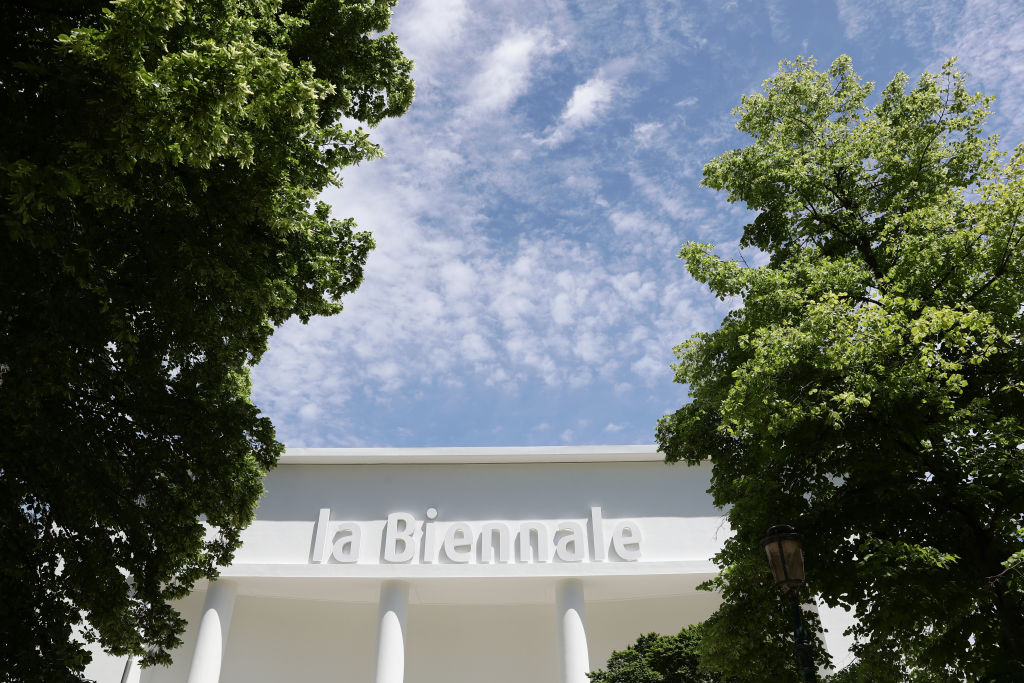
The 61st Venice Biennale, titled "In Minor Keys," opened under the artistic direction of the late Swiss-Cameroonian curator Koyo Kouoh. The exhibition features 111 artists and collectives, presenting a more subdued, poetic, and experiential approach compared to the previous edition's explicit decolonial program. It navigates contemporary political tensions, including the participation of Israel and the reopening of the Russian pavilion, while aiming for a radical return to art's own environment and its place in society.

First Impressions of a Venice Biennale Torn Apart by the Present

The 61st Venice Biennale, titled "In Minor Keys," opens amid turmoil: its curator Koyo Kouoh died of cancer during planning, and the festival jury resigned after a controversial statement about excluding Israel and Russia from prizes, replaced by a Eurovision-style people's choice award. The main exhibition, completed by a team of five collaborators using Kouoh's plans, features over 110 artists and collectives, with highlights including works by Big Chief Demond Melanchon, Tammy Nguyen, Guadalupe Maravilla, Ayrson Heráclito, and a section focused on Michael Armitage's Nairobi Contemporary Art Institute.

A Data Analysis of the 2026 Venice Biennale Signals a Shift to the Present

The 2026 Venice Biennale, titled "In Minor Keys," marks a significant pivot from the historical revisionism of recent editions toward a focus on contemporary, mid-career artists. Posthumously realized based on the vision of the late Koyo Kouoh, the exhibition features 111 participants, including a notable inclusion of artist-led organizations from Africa. Data analysis reveals a balanced demographic split between the Global North and South, moving away from the retrospective focus of predecessors like Adriano Pedrosa and Cecilia Alemani to prioritize living artists and subtler, emotional themes.

data dive venice biennale artists 2450374

Adriano Pedrosa, the first Latin American and openly queer curator of the Venice Biennale, has unveiled a record-breaking artist list for the 60th edition titled "Foreigners Everywhere." Featuring 331 artists, the main exhibition is the largest in the event's history and introduces a "nucleo storico" designed to provide belated recognition to overlooked figures from the Global South and marginalized communities. Pedrosa’s selection process intentionally challenges the Western-centric traditions of the art world by focusing on themes of displacement and the "stranger."