
filter_list Showing 4 results for "frank o'hara" close Clear
search
dashboard All 4 article culture 2museum exhibitions 1person people 1
date_range Range Today This Week This Month All
Subscribe

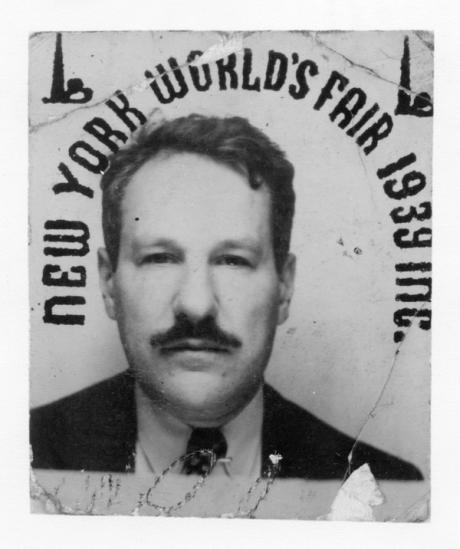
Book uncovers the life of Barnett Newman, an artist who ran for New York mayor

A new biography titled "Barnett Newman: Here" by Amy Newman (no relation) explores the life of Abstract Expressionist painter Barnett Newman, revealing his little-known 1933 run for mayor of New York City at age 28 under a platform of cultural and environmental reforms. The book details his upbringing as the son of Jewish immigrants in the Bronx, his philosophical studies, and his eventual reinvention as a painter who pioneered the 'zip' painting style with works like Onement I, while also chronicling his combative personality and lifelong battles against political machines and critics.
Mario Schifano, the artist who anticipated Arte Povera and beyond. What the exhibition in Rome looks like

The Palazzo delle Esposizioni in Rome has opened a major retrospective of Mario Schifano, curated by Daniela Lancioni and titled simply "Mario Schifano," running until July 12. The exhibition reconstructs the career of the Italian artist (1934–1998), who worked across painting, film, and music, and highlights his role as a precursor to Arte Povera. A centerpiece is the reconstructed dining room Schifano created for the Rome home of Marella and Gianni Agnelli in 1968, featuring 14 canvases and a planned but unrealized sand-filled room with a pyramid, a detail revealed by film producer Ettore Rosboch in a conversation with the curator.

Inside the technicolour world of Jack White

Jack White, the musician best known as the frontman of The White Stripes, has begun showing his visual art, which he has been creating since his teenage years. The article offers a glimpse into his vibrant, technicolour artistic practice, marking his debut as a visual artist in the public eye.

Frank O’Hara and the end of the ‘American Century’

Frank O’Hara, the poet and curator at the Museum of Modern Art, was a central figure in the mid-20th-century effort to promote American high art globally as a cultural counterpart to U.S. military and economic power. The article examines how O’Hara’s work, alongside the Abstract Expressionists and other artists, helped establish New York as the capital of the art world, projecting American cultural influence abroad through exhibitions, poetry, and institutional support.