filter_list Showing 5 results for "gaza genocide" close Clear
search
dashboard All 5 museum exhibitions 3article news 2
date_range Range Today This Week This Month All
Subscribe

Across Venice, Artists Defy Censorship to Mourn and Memorialize Gaza

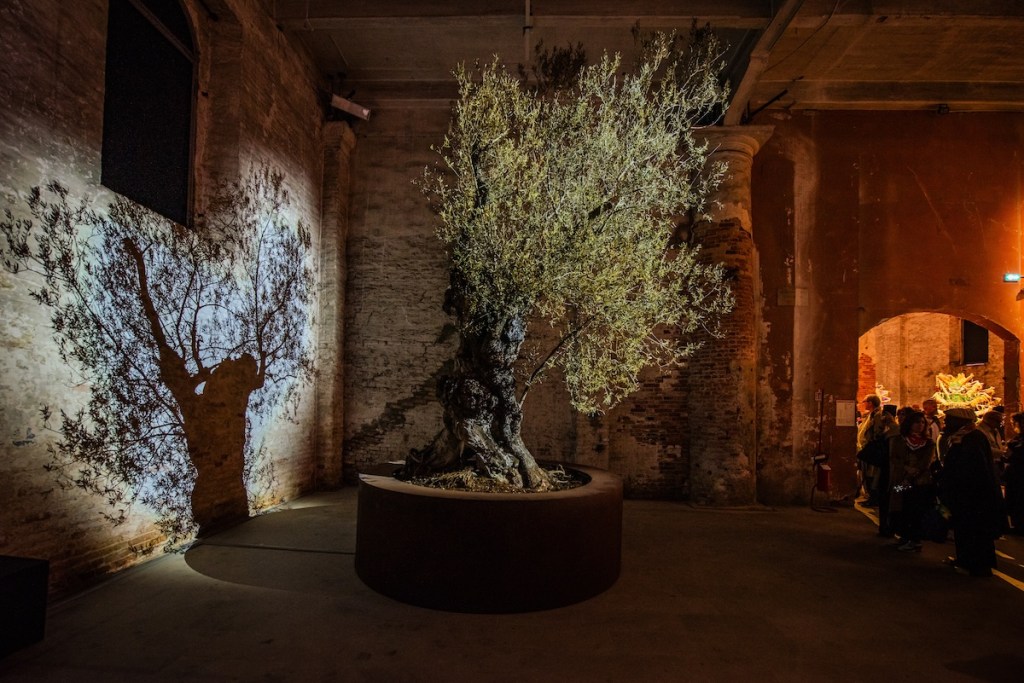
The 2026 Venice Biennale, titled “In Minor Keys,” features numerous artworks that mourn and memorialize the destruction of Gaza, despite censorship pressures. The main exhibition opens with a poem by slain Palestinian poet Refaat Alareer, and includes works by artists such as Theo Eshetu, Mohammed Joha, Manuel Mathieu, and Avi Mograbi that directly or indirectly address the conflict. Outside the official Biennale, South African artist Gabrielle Goliath’s performance series “Elegy” was censored by her country’s culture minister after she proposed a version honoring murdered Palestinian poet Hiba Abu Nada, leading her to present the work independently at a church in Venice.
An Artist’s MFA Show Confronts Columbia University Over Gaza

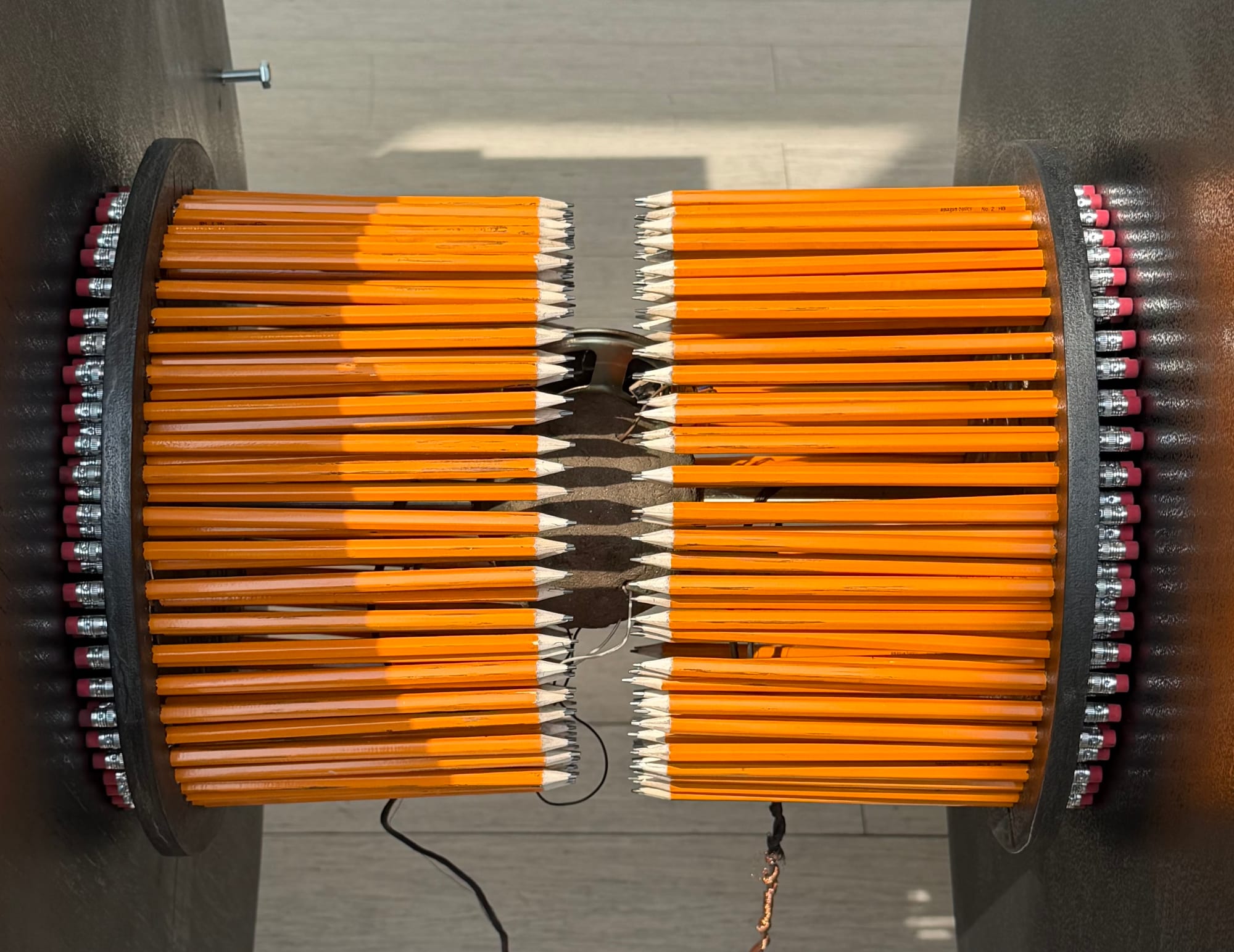
Artist Alejandro Valencia's MFA thesis installation at Columbia University, titled "DYNAMO (RATM01)" (2026), confronts the institution's response to the Gaza genocide. The multipart work, on view at the Miriam and Ira D. Wallach Art Gallery, includes a keffiyeh worn by fellow student Ridwana Rahman—who was banned from campus and denied her MFA degree after a protest—along with sundials, pencils, and a broken microphone referencing Palestinian scholar Edward Said. The piece critiques Columbia's crackdown on pro-Palestinian student activism and the suppression of dissenting voices.

Culture Workers Announce Venice Biennale Strike in Israeli Pavilion Protest

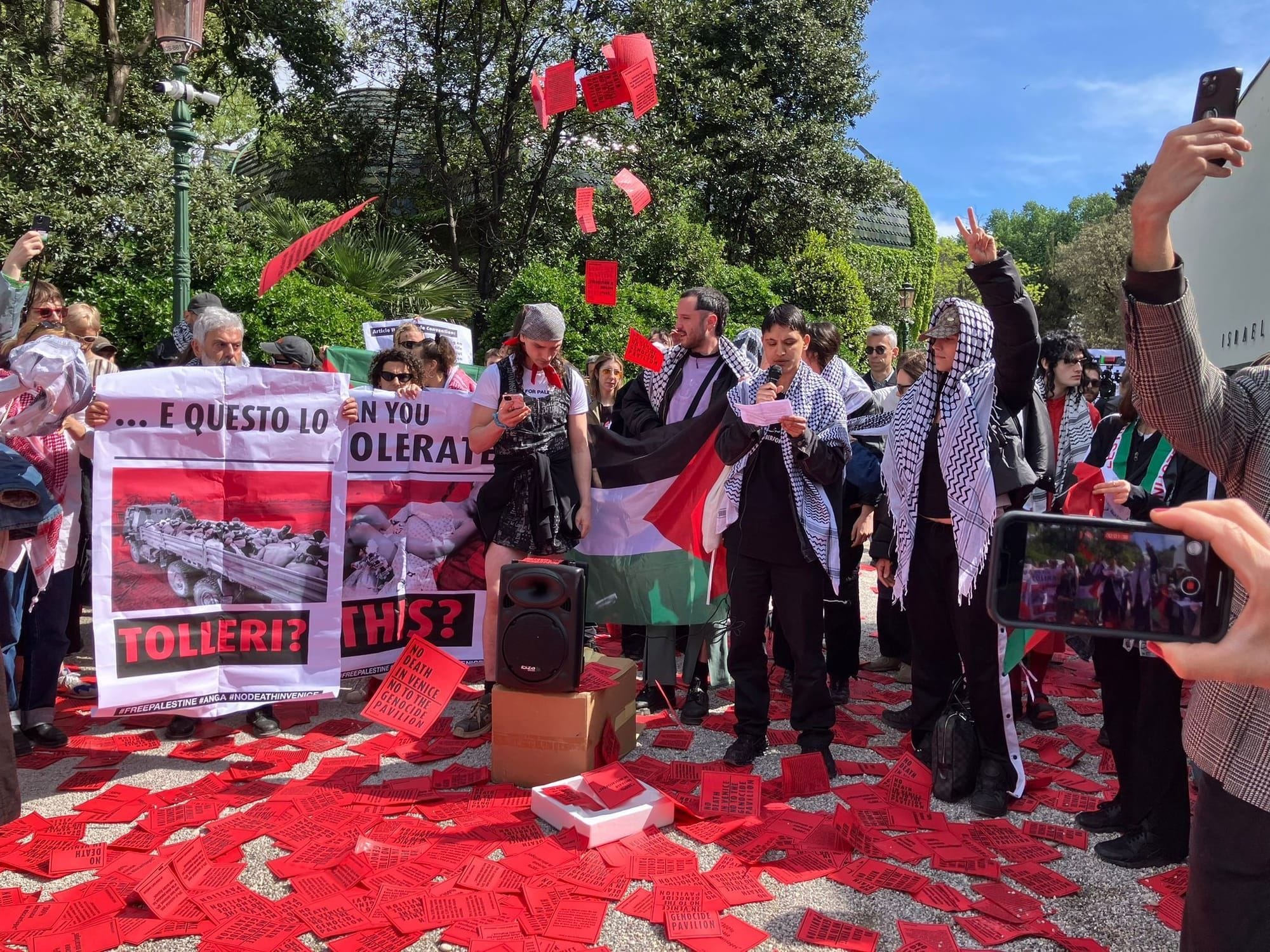
Cultural workers, unions, and grassroots groups are planning a 24-hour strike on Friday, May 8, at the Venice Biennale to protest Israel's participation amid the ongoing genocide in Gaza. Organized by the Art Not Genocide Alliance (ANGA), the action includes a rally on Viale Garibaldi and calls for a boycott of Israel's "genocide pavilion." Participating groups include Biennaleocene, Sale Docks, Mi Riconosci, Vogliamo Tutt’altro, and several Italian trade unions. The strike follows months of activism, including a letter signed by over 200 event participants, and comes after the Biennale jury resigned over award eligibility rules that initially excluded Israel and Russia.

From Minor Keys to Uproar: The Crisis of the Venice Biennale

DE LAS MINOR KEYS AL ESTRUENDO: LA CRISIS DE LA BIENAL DE VENECIA

The 61st Venice Biennale is engulfed in a structural crisis, marked by geopolitical tensions over the inclusion of Russia (amid its invasion of Ukraine) and Israel (amid the Gaza genocide). The Biennale Foundation, led by Pietrangelo Buttafuoco, defended their participation on legalistic grounds, sparking outrage from over 200 artists, curators, and cultural workers who demanded Israel's exclusion, aligning with Art Not Genocide Alliance (ANGA). The international jury, chaired by Solange Farkas and including Zoe Butt, Elvira Dyangani Ose, Marta Kuzma, and Giovanna Zapperi, resigned collectively on April 30 after deciding not to award prizes to countries whose leaders face International Criminal Court arrest warrants. This led to the cancellation of the traditional Golden and Silver Lions, replaced by audience-voted "Visitor Lions," with awards deferred until November. The European Commission suspended a €2 million subsidy over Russia's participation, and Italian Culture Minister Alessandro Giuli notably skipped the May 9 opening.

How Do You Curate an Exhibition on Genocide? Faisal Saleh and the Palestinian Question That Crosses the Venice Biennale

“Come si cura una mostra sul genocidio?”: Faisal Saleh e la domanda palestinese che attraversa la Biennale di Venezia

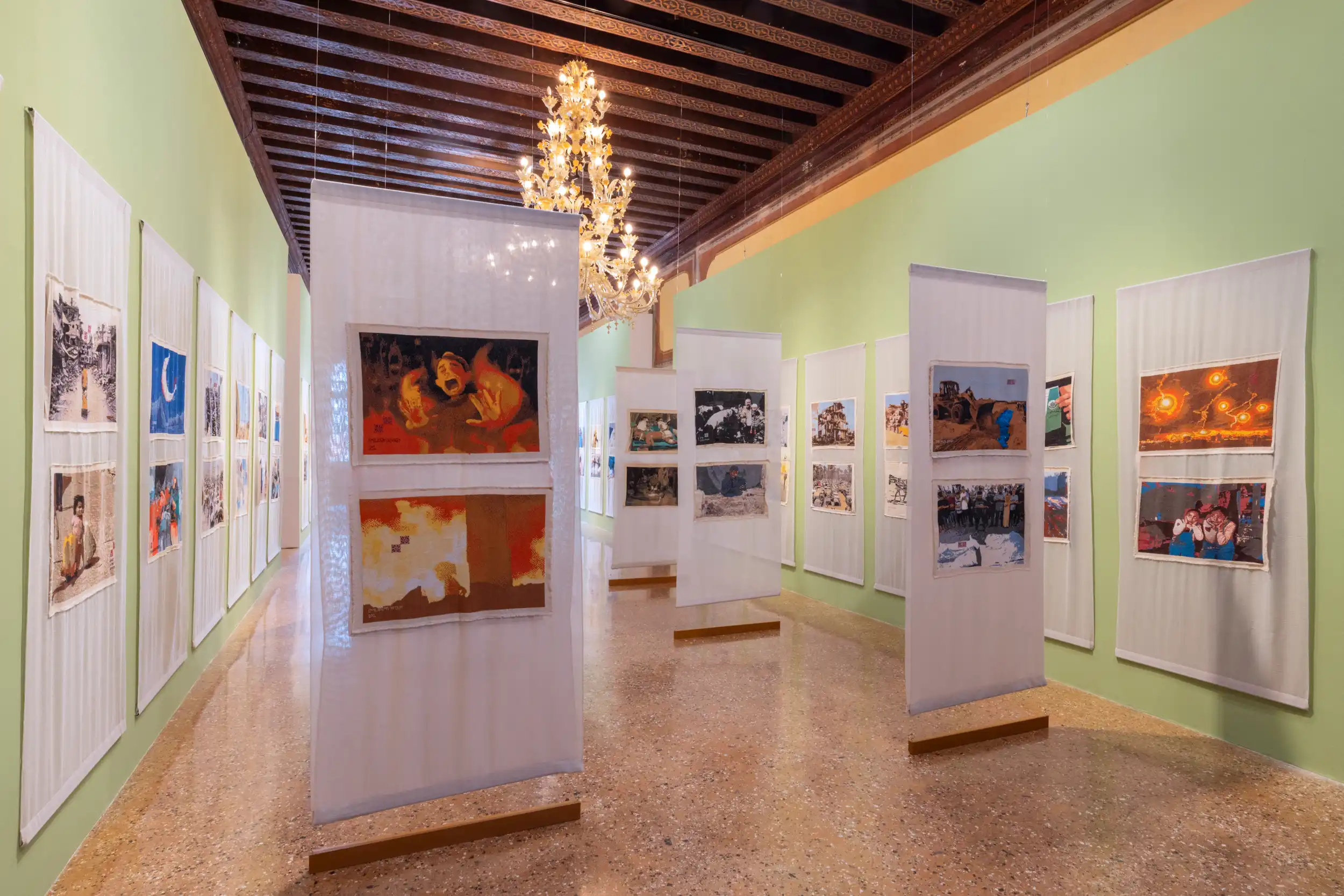
At the 2026 Venice Biennale, a collateral exhibition titled “Gaza – No Words – See the Exhibit” presents 100 embroidered works using the traditional Palestinian technique of Tatreez. Curated by artist Faisal Saleh, founder of the Palestine Museum US, the show transforms embroidery from decoration into political testimony, reconstructing scenes from Gaza over the past two and a half years: shrouded bodies, killed children, mothers bidding farewell, bombed hospitals. The exhibition is housed at Palazzo Mora and has been called by many visitors “the real Palestinian Pavilion” of the Biennale, though it is not an official national pavilion.