filter_list Showing 7 results for "gender bias" close Clear
search
dashboard All 7 article culture 3museum exhibitions 3rate_review review 1
date_range Range Today This Week This Month All
Subscribe

The Making of a Maintenance Artist

A new documentary titled "Maintenance Artist" (2025) traces the decades-long practice of Mierle Laderman Ukeles, a pioneering artist who focused on marginal, unpaid, and feminine labor. The film covers her career from her 1969 "CARE" manifesto, through her role as artist-in-residence at the New York City Department of Sanitation, to her first retrospective at the Queens Museum in 2017. It highlights her critique of art-world gender biases and her efforts to recognize discounted labor in all fields.
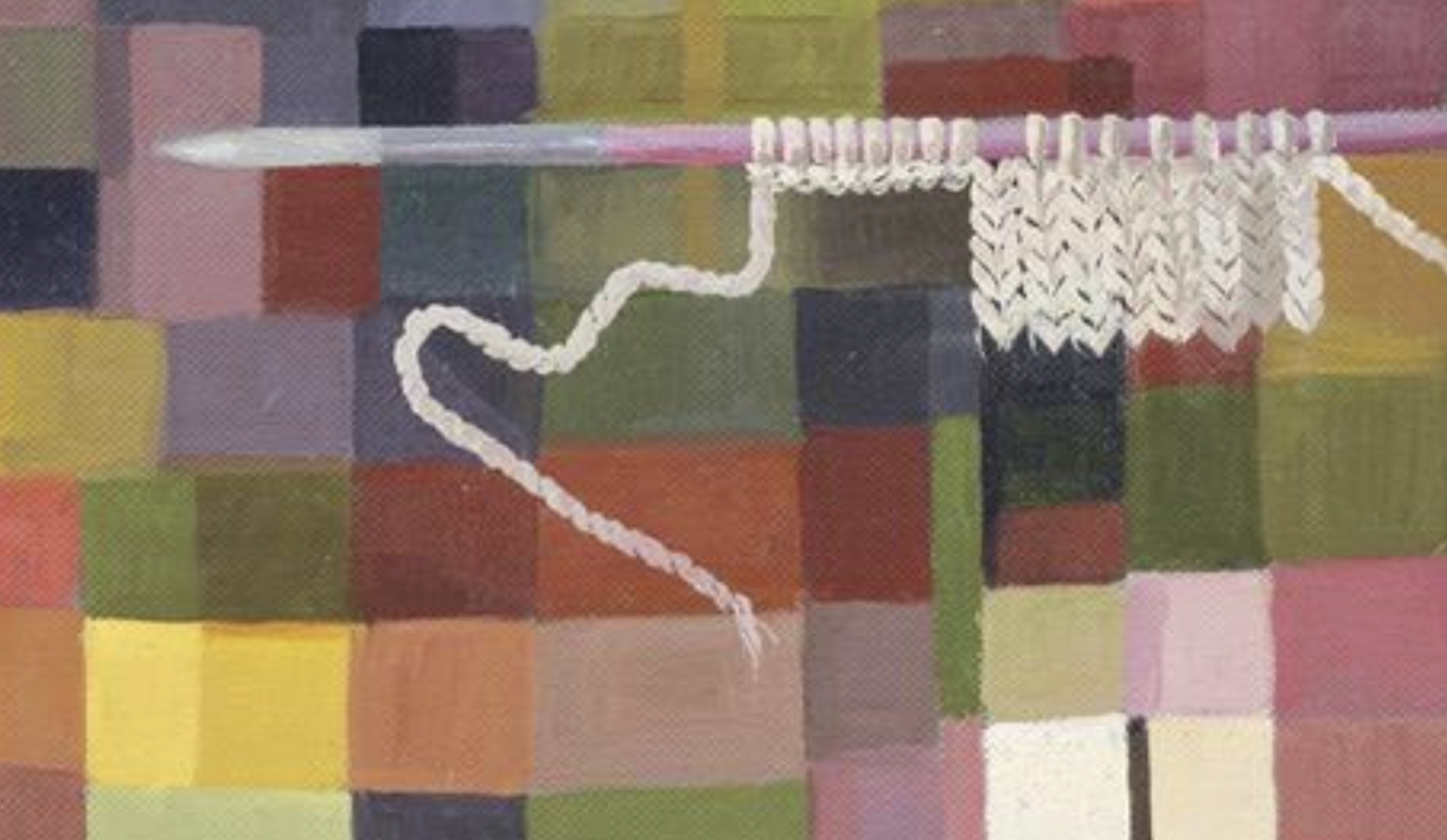

"There are no minor or feminine arts." Domitilla Dardi explains this in her new book

“Non esistono arti minori o femminili”. Ce lo spiega Domitilla Dardi nel suo nuovo libro

Domitilla Dardi's new book "Cucire Universi" (published by Einaudi) presents a counter-history of design, focusing on techniques traditionally dismissed as "feminine" and "minor"—such as sewing, ceramics, cooking, and knitting. The book argues that these practices have been systematically undervalued by official art histories, yet have contributed significantly to technologically advanced research fields. Dardi uses real historical figures like Emily Dickinson to illustrate how women's creative and scientific talents were channeled into these marginalized domains, and she calls for overcoming the dualistic view that separates art from craft.

When archaeology was dominated by men | Letters

A reader named Elke Bachler writes a letter to The Guardian challenging a sentence in a review of Thomas Laqueur's book *The Dog's Gaze*. The review described a prehistoric scene as showing "a boy and a dog" standing together in wonder before cave art. Bachler argues there is no evidence the child was a boy, noting that archaeology has historically been dominated by men who interpreted evidence through contemporary gender roles.

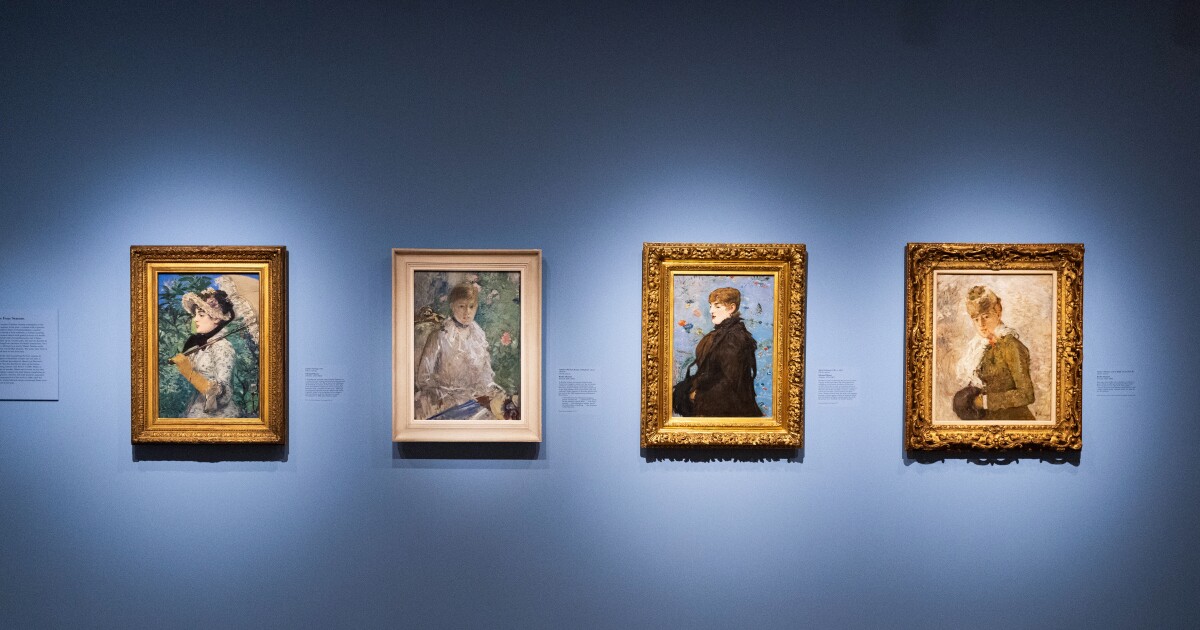
Review: Manet-Morisot exhibition is a deep dive into artistic ways of seeing, making

The Cleveland Museum of Art's spring exhibition examines the artistic relationship between 19th-century French Impressionist painters Édouard Manet and Berthe Morisot, showcasing 36 paintings and seven works on paper. Organized by curator Emily Beeny of the Fine Arts Museums of San Francisco, the show is the first to closely analyze how the two artists influenced each other, correcting the historical record that long positioned Manet as the dominant figure while undervaluing Morisot's contributions. Through side-by-side juxtapositions, the exhibition reveals that Manet may have taken more from Morisot than she from him, highlighting their collaborative and competitive dialogue over 15 years.

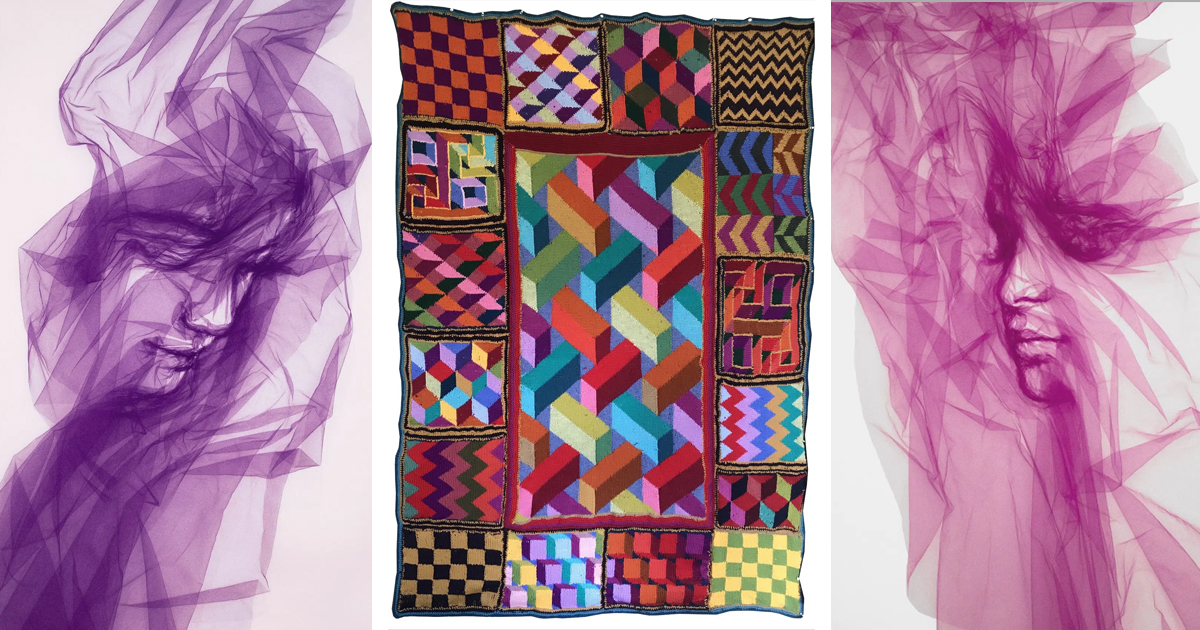
15 Top Artists Showcase the Power of Textile Art in Stunning Group Exhibition

The Saatchi Gallery in London is hosting "Textile Art Redefined," a group exhibition featuring 15 artists from the UK and around the world, including Ian Berry, Kaffe Fassett, Magda Sayeg, and Jakkai Siributr. Curated by Helen Adams based on her book "Textile Fine Art," the show presents a wide range of techniques such as embroidery, quilting, weaving, knitting, and crochet, with works like Fassett's "Geometric Sampler" and Berry's "Secret Garden" made from recycled denim. The exhibition runs from April 10 to May 10, 2026.

Hilma af Klint en 2 minutes

Hilma af Klint (1862–1944) is profiled as a pioneering Swedish abstract artist who created a vast body of visionary, large-scale abstract paintings decades before Kandinsky, yet kept them secret during her lifetime. The article traces her life from a childhood steeped in science and nature, through her studies at the Royal Academy of Fine Arts in Stockholm, to her dual artistic practice: conventional landscapes and portraits for income, and radically abstract works guided by spiritualist séances and theosophical beliefs. She founded the group "The Five" with fellow female artists, and from 1906 onward produced the monumental series "Paintings for the Temple" (193 works), convinced she was channeling a higher force. She stipulated in her will that her abstract works not be revealed until 20 years after her death, and they were only rediscovered in the late 1960s.

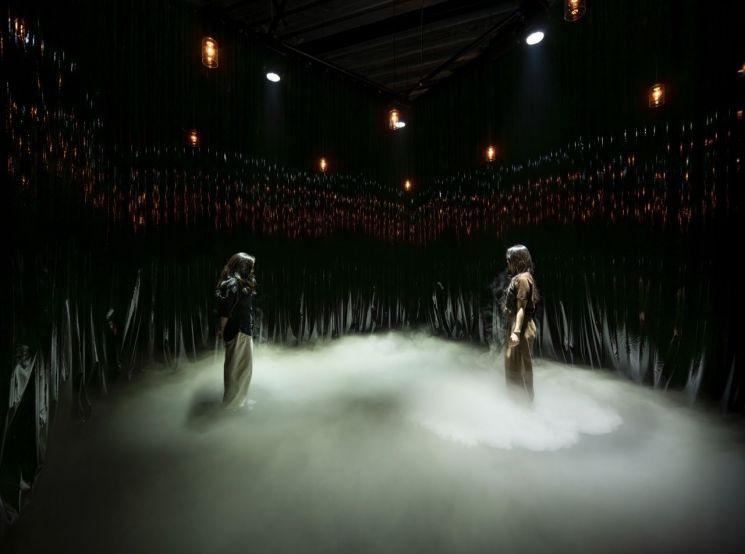
[Gallery Walk] The Vanished Rooms of Women Reopened

Leeum Museum of Art in Seoul is presenting "Into Other Spaces: Synesthetic Environments by Women Artists 1956-1976," a major exhibition opening May 5 that reconstructs immersive environmental artworks by 11 women artists from Asia, the Americas, and Europe. The show features full-scale recreations of works that were often dismantled or lost, including Jeong Gangja's "Muchejeon" (1970), which was shut down by authorities after just days. Curators Andrea Lissoni and Marina Pugliese used archival materials, photographs, and direct consultations with artists or their estates to piece together these ephemeral pieces.