filter_list Showing 13 results for "israel boycott" close Clear
search
dashboard All 13 article news 10museum exhibitions 2article policy 1
date_range Range Today This Week This Month All
Subscribe

"Kultursenator ist kein Nebenjob"

Berlin's finance senator Stefan Evers is set to additionally take on the role of culture senator following the resignation of Sarah Wedl-Wilson, a move criticized as a stopgap solution that creates a conflict of interest between austerity and cultural advocacy. Meanwhile, the Venice Biennale faces multiple controversies: critics question how to evaluate curator Koyo Kouoh's posthumous main exhibition "In Minor Keys," completed after her death in May 2025; Israeli artist Belu-Simion Fainaru speaks out against his exclusion from the Biennale competition, calling it politically biased and reminiscent of historical persecution; and German press decries the politicization of the Biennale, particularly the exclusion of Israel and Russia from the competition.
Hyperallergic’s Guide to the 2026 Venice Biennale

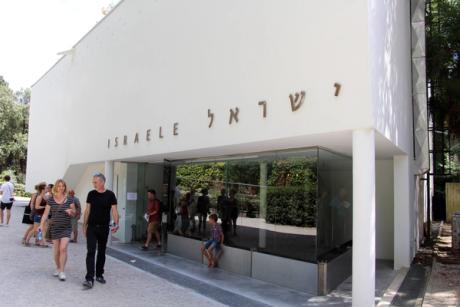
Hyperallergic has published its guide to the 2026 Venice Biennale, detailing what to see and do at this year's edition. The guide covers the three main categories of the Biennale—the Giardini with 29 permanent national pavilions, the Arsenale with temporary rented spaces, and collateral events across the city. Key developments include the return of Russia to its permanent Giardini pavilion and Israel's participation with a new contractual stipulation preventing its artist from closing the pavilion, after Ruth Patir's protest in 2024. South Africa withdrew following the cancellation of Gabrielle Goliath's video installation 'Elegy,' which mourns victims of Israel's genocide in Gaza and will now be shown at a historic church. The United States will be represented by Alma Allen after Barbara Chase-Riboud stepped down, and Qatar is set to become the first country in decades to build a new pavilion in the Giardini.

Israel’s foreign ministry accuses Venice Biennale's jury of ‘politicising’ exhibition

Israel’s foreign ministry has accused the Venice Biennale's jury of politicizing the exhibition after jurors announced they would not consider for prizes countries whose leaders face International Criminal Court charges for crimes against humanity. The jury’s statement, which did not name specific nations, is broadly understood to apply to Israel and Russia, both returning to the Biennale for the first time since the Gaza war and the Ukraine invasion, respectively. The Israeli ministry posted on X that the jury had decided to 'boycott' Israeli sculptor Belu-Simion Fainaru, calling it 'a contamination of the art world.' The Biennale distanced itself from the jury’s announcement, stating the jury acts autonomously, while the Russian pavilion is reportedly set to open only for a limited pre-opening period due to budget constraints amid sanctions.

Venice Bound? Here’s All the News You Need to Know About This Year’s Biennale

The 61st Venice Biennale is embroiled in geopolitical controversy over Russia's return to the event in 2026, which has sparked widespread backlash. Nearly 10,000 artists and cultural leaders signed an open letter opposing Russia's participation, and the European Union withdrew €2 million in funding for the 2028 edition. Leaked emails reveal Biennale officials worked with Russian pavilion commissioner Anastasia Karneeva to circumvent EU sanctions, while Italy's culture minister Alessandro Giuli plans to boycott the opening week. Meanwhile, activists continue to push for Israel's removal from the Biennale, though Israel will be accommodated in the Arsenale this year.

Yto Barrada Says France Had ‘Full Awareness’ of Her Views on Israel When It Chose Her for Venice Biennale

Artist Yto Barrada, selected to represent France at the Venice Biennale, has stated that the French government and pavilion organizers were fully aware of her political views when they chose her. This follows criticism from the Representative Council of French Jewish Institutions (CRIF), which denounced Barrada for signing an open letter calling for Israel's exclusion from the Biennale and suggested the government should force her to withdraw her signature.

Venice Biennale Swamped in Protests Ahead of Planned Strike

The Art Not Genocide Alliance (ANGA) has announced a 24-hour strike for Friday, May 8, coinciding with previews of the 2026 Venice Biennale, alongside a protest rally organized by local group Biennalocene and Italian trade unions. Earlier this week, sixty artists staged a sonic protest at the Giardini entrance to draw attention to the plight of those affected by genocide and war in Palestine and elsewhere. The Latvian pavilion has also encouraged attendees to wear a design by artist Krišs Salmanis reading “Death in Venice – Russia go home!” Meanwhile, dissident artists Pussy Riot stormed the Russian pavilion waving Ukrainian flags, and the entire 2026 Biennale jury resigned after the decision to exclude countries whose leaders are charged with crimes against humanity by the International Criminal Court from competing for top prizes.

Islamic Futurism Here and Now

Hyperallergic's daily newsletter highlights several key art world stories, including a protest by nearly 200 artists, curators, and staff at the 61st Venice Biennale calling for Israel's exclusion from the event. It also features a guide to New York's spring art fairs, a new exhibition on Frida Kahlo, a campaign against a Palestinian artist in Germany, and a profile on artists advancing Islamic Futurism through calligraphy and installation.

"Eine Idee, die gut ist, kann fast alles verändern"

Henrike Naumann's final major artistic project, the German Pavilion at the Venice Biennale, is completed posthumously by friends after her death from cancer at age 41. Meanwhile, the sudden death of curator Koyo Kouoh at 57 has left her team to finish the central exhibition "In Minor Keys" for the Biennale, opening May 9. The US Pavilion is openly crowdfunding for its 2026 presentation by sculptor Alma Allen, citing opaque funding under the Trump administration. Israel's foreign ministry has accused the Venice Biennale jury of boycotting its artist Belu-Simion Fainaru by excluding countries whose leaders face International Criminal Court charges.

Israel Addresses Venice Biennale Jury’s ‘Boycott’ of Pavilion: ‘A Contamination of the Art World’

Israel’s foreign ministry has condemned a statement by the Venice Biennale jury, in which the five curators declared they would not consider pavilions from countries charged with crimes against humanity by the International Criminal Court. The jury’s decision effectively boycotts Israel and Russia, whose leaders face ICC arrest warrants. Israel called the move a “contamination of the art world,” while the artist representing Israel, Belu-Simion Fainaru, also denounced the jury for creating a hostile environment. The Biennale’s organizers have distanced themselves from the jury, stating they cannot exclude any recognized state from the exhibition.

Venice Biennale jury ‘will not award artists from countries facing war crimes charges’

The jury of the Venice Biennale has announced it will not award prizes to artists from countries whose leaders face charges of crimes against humanity by the International Criminal Court, a decision widely seen as targeting Russia and Israel. The five-member jury, appointed by the late curator Koyo Kouoh, stated its commitment to human rights and will exclude artists from nations whose governments are under ICC investigation when selecting winners of the Golden and Silver Lion awards for the 2026 edition, which opens on 9 May. The move follows controversy over Russia’s participation in the biennale, with the European Commission threatening to suspend a €2m grant due to Russia’s involvement, and Italy’s far-right government opposing the decision.

Israel’s Artist Said to Have Threatened Legal Action Before Venice Biennale Jury Resignation

Belu-Simion Fainaru, the artist representing Israel at the 2024 Venice Biennale, allegedly threatened legal action against Biennale officials, accusing them of “racial discrimination” and “antisemitism” after the international prize jury announced it would exclude countries whose leaders are charged with crimes against humanity—effectively barring Israel and Russia from awards. The jury, handpicked by late artistic director Koyo Kouoh, resigned en masse on April 30, citing their earlier statement of intent. Fainaru had previously opposed calls to exclude Israel over its military actions in Gaza, arguing for dialogue over boycotts.

Alessandro Giuli Threatens to Boycott the Vernissage of the Biennale

Alessandro Giuli menace de boycotter le vernissage de la Biennale

Alessandro Giuli, a prominent Italian cultural figure, has threatened to boycott the vernissage of the Venice Biennale. This action is a response to the ongoing controversy surrounding the potential return of Russia to the event, which has sparked political debate in Italy and drawn an ultimatum from the European Commission. The Biennale has also decided not to award prizes to Russia or Israel, further intensifying the situation.

Venice Biennale jury to avoid artists from nations with ICC-charged leaders

The jury for the Venice Biennale International Art Exhibition announced on April 24, 2026, that they will not consider artists from countries whose leaders face charges at the International Criminal Court, an apparent reference to Israel and Russia. The five jury members, tasked with selecting Golden and Silver Lion winners among 110 participants, stated they felt compelled to commit to the defense of human rights. The ICC has issued arrest warrants for Russian President Vladimir Putin and Israeli Prime Minister Benjamin Netanyahu for alleged war crimes. The decision follows criticism of the Biennale for allowing Russia to reopen its pavilion after its 2022 invasion of Ukraine.